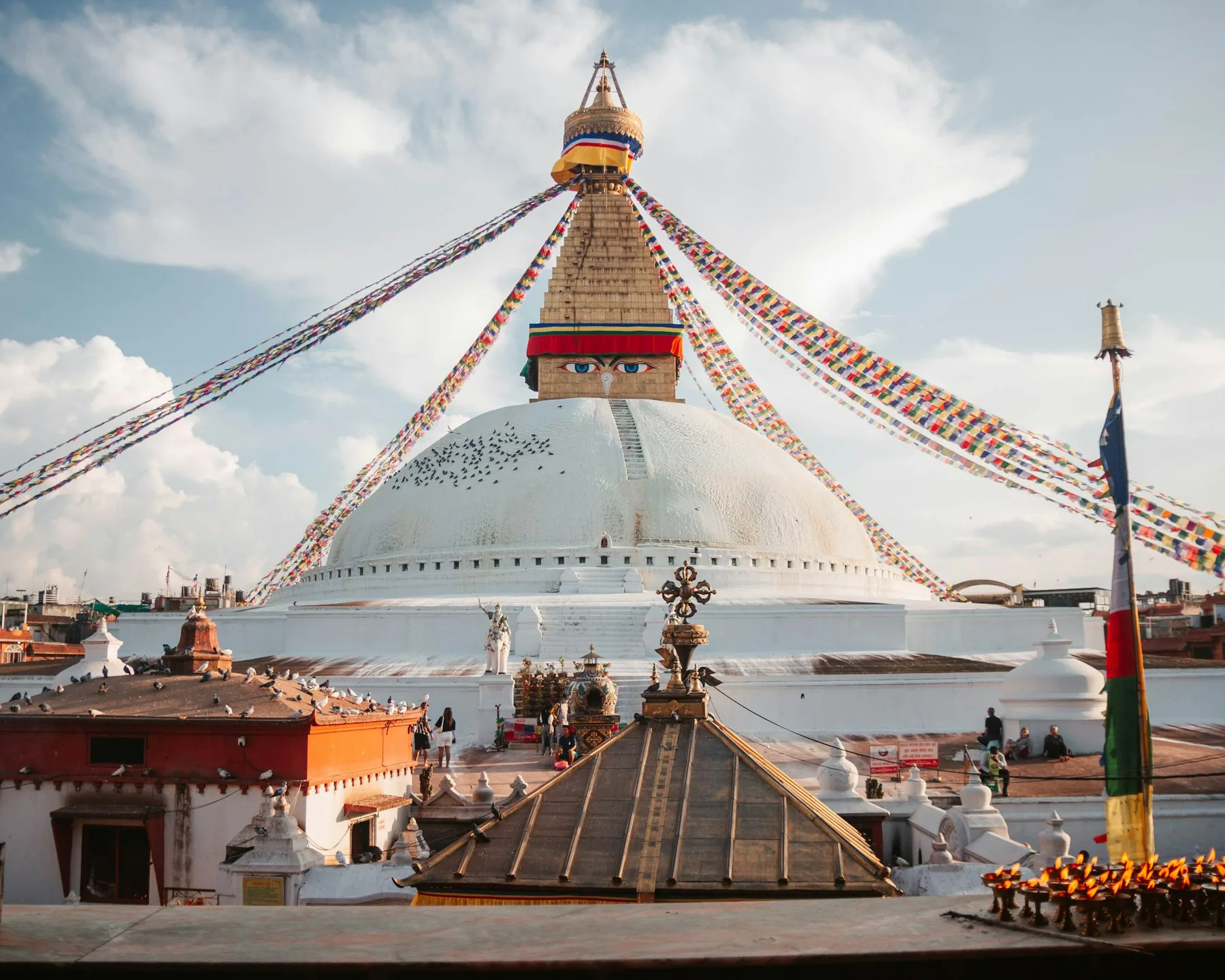
How to choose tours in Nepal: UNESCO sites in Kathmandu, sunrise at Nagarkot, an Everest flight, Pokhara adventures and a jungle safari in Chitwan.
Nepal has a moment worth flying for: five in the morning, the cold goes through to the bones, you sit on a viewpoint with a cup of hot tea, and the sky in the east slowly turns pink. Then white peaks float out of the darkness — Annapurna, Manaslu, Fishtail — and you realise that any words about mountains will be too small. But Nepal is not only the Himalayas. It is also the temple squares of Kathmandu where ancient gods live, and the Boudhanath stupa around which pilgrims walk from dawn, and Phewa Lake in Pokhara, and the jungles of Chitwan with rhinos. There are many tours, the names repeat, the roads in Nepal are not fast, and it is easy to spend a day in the wrong place. So let us work it out: what to see in Kathmandu, what to do in Pokhara, whether to go to Chitwan and how to choose a tour so that you return feeling Nepal has touched you. We collected offers from the Trip.com catalogue — with duration, language and cancellation terms.
- Kathmandu: four or seven UNESCO sites in a day — the most important introduction to the country.
- Sunrise at Nagarkot and a flight over Everest — two ways to see the mountains without trekking.
- Pokhara: sunrise at Sarangkot, paragliding over the lake, Tibetan villages.
- Chitwan: a jeep safari and canoe in the jungle — a separate day or two nights.
Kathmandu: a city where gods live on every corner
Kathmandu deafens. Scooters, bells, the smell of incense, flower garlands on every step, and amid all this — temples hundreds of years old. To avoid drowning in impressions it is better to start with a guide who explains what you see. The catalogue has several options for the first day:
- Four main UNESCO sites in Kathmandu with lunch — 5–6 hours (rating 4.9);
- Four UNESCO sites in Kathmandu — 6–7 hours (5.0);
- Seven UNESCO sites in Kathmandu — 8–12 hours (5.0);
- Seven heritage sites with lunch — 6 hours (4.8);
- Royal Palace, Swayambhunath, Pashupatinath and Boudhanath — 6 hours;
- a private tour of Kathmandu: 2, 4 or 7 sites — 3–9 hours (5.0).
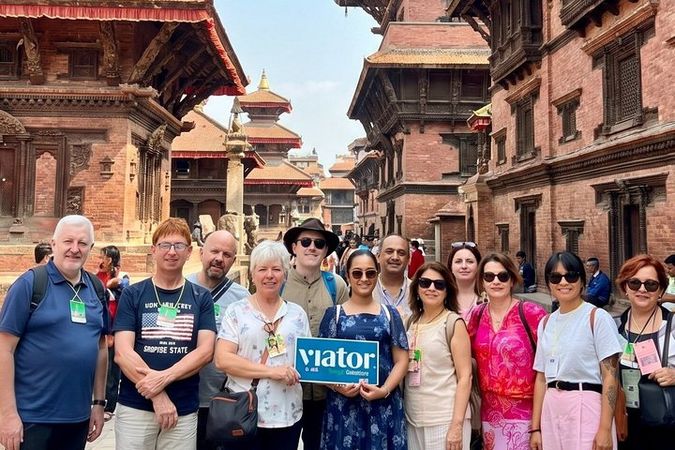 Tour from the article · ExcursionThe four main UNESCO sites in Kathmandu with lunchCheck dates →Live price · Trip.com
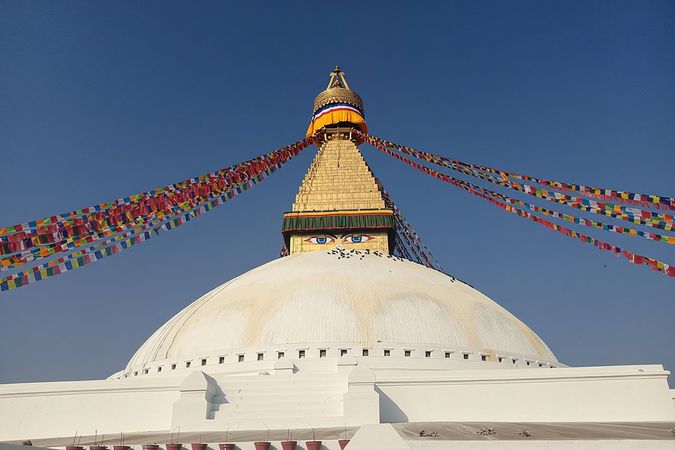 Tour from the article · ExcursionFour UNESCO sites in KathmanduCheck dates →Live price · Trip.com
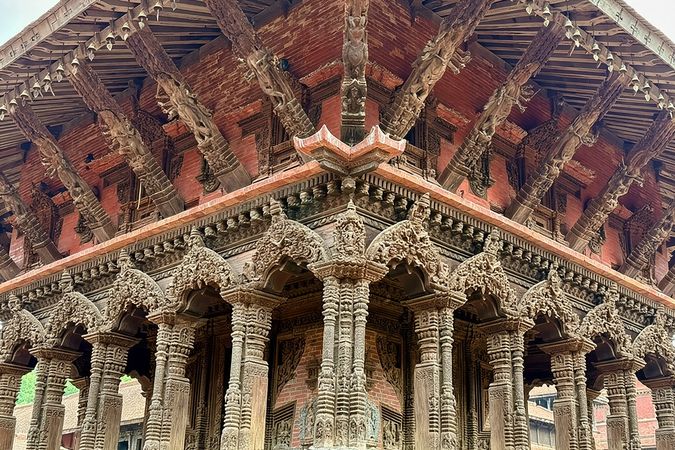 Tour from the article · ExcursionSeven UNESCO sites in KathmanduCheck dates →Live price · Trip.com
Which places are included in “UNESCO”? Durbar Square in old Kathmandu, the “monkey temple” Swayambhunath on a hill, the Boudhanath stupa with the Buddha’s huge eyes and Pashupatinath — a sacred cremation site on the Bagmati River. The last should be approached calmly and with respect: it is not scenery but a living rite. Come in covered clothing, do not photograph families saying farewell to relatives and listen to the guide.
If you must choose between four and seven sites, take four: Kathmandu is hot and dusty, and by the fifth temple tiredness beats curiosity. Seven sites are for those who came for a day and definitely will not return. A private tour is for a family with children or for those who want to stay longer where they like it.
Sunrise at Nagarkot and Bhaktapur
An hour’s drive from Kathmandu is Nagarkot — a village on a ridge from where the Himalayas are visible in clear weather. You will have to get up early, but whoever has seen snow peaks light up in dawn light remembers that morning for a long time. In the catalogue: sunrise at Nagarkot and a hike with lunch (7–8 hours, rating 4.8), Nagarkot: sunrise and a day hike (8 hours, 5.0), Nagarkot: sunrise and sunset (3 hours) and Bhaktapur and Nagarkot with lunch: a private tour (6–7 hours, 4.9). Bhaktapur is an ancient city of brick squares and potters; the famous juju dhau yogurt is sold there, more in the article Newari cuisine: Bhaktapur and juju dhau. For an independent trip there is a Nagarkot ticket.
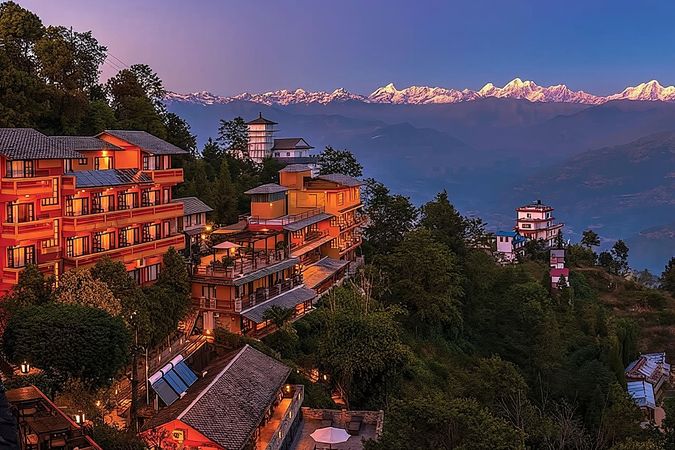 Tour from the article · ExcursionSunrise in Nagarkot and a hike with lunch from KathmanduCheck dates →Live price · Trip.com
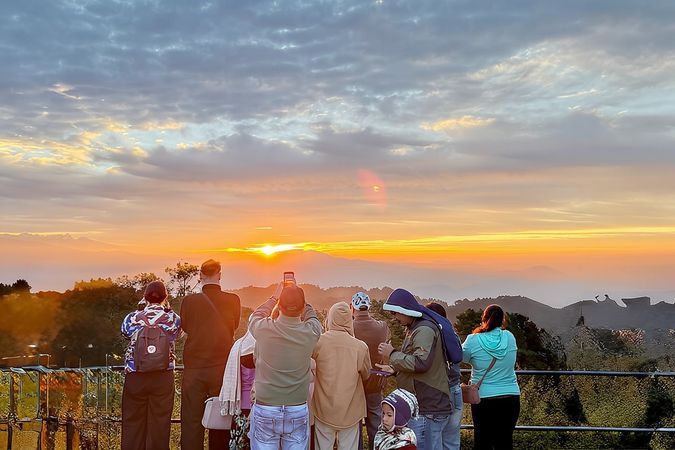 Tour from the article · ExcursionNagarkot: sunrise and a day hike with lunchCheck dates →Live price · Trip.com
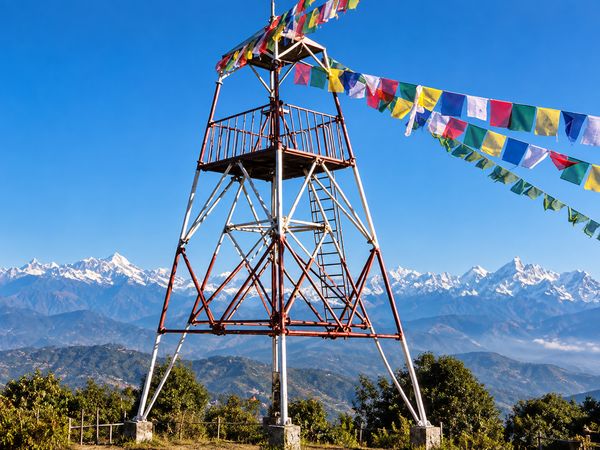 Tour from the article · ExcursionNagarkot: sunrise and sunsetCheck dates →Live price · Trip.com
Honestly: the mountains are not always visible. In the monsoon season and in haze at dawn you may see only milky-white fog. So it is better to plan sunrise for the second or third day to leave a reserve for the weather.
A flight over Everest
If you cannot walk to Everest, you can fly to it. A flight over Everest from Kathmandu (1.6 hours, rating 5.0), a sightseeing flight to Everest (1.9 hours) and daily departures (2.8 hours) are an hour in the air, a view from the window of the highest peaks and the feeling that you have touched something enormous. Flights depend on weather and may shift, and a window seat is better chosen in advance. For those who want to go to Everest for a long time there is an Everest tour from Kathmandu and trekking: Annapurna, Langtang, Everest, Mustang (rating 5.0). Before trekking check permits: e-visa and trekking permits, and about what is open after the floods see the article Nepal after the floods: what is open. For those without time for a long trek there is a one-day trek from Kathmandu (8 hours).
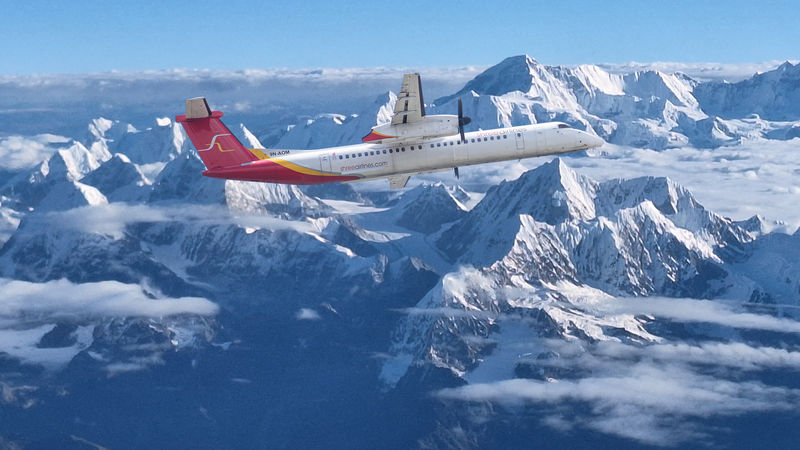 Tour from the article · ExcursionEverest flight from KathmanduCheck dates →Live price · Trip.com
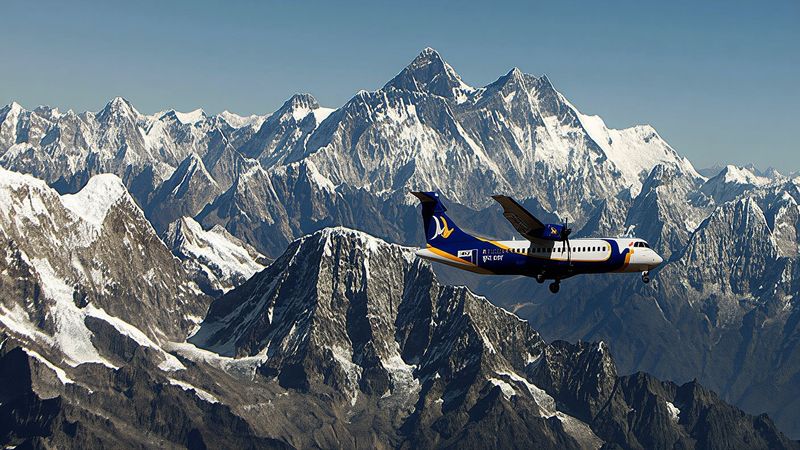 Tour from the article · ExcursionEverest scenic flight from KathmanduCheck dates →Live price · Trip.com
Pokhara: lake, mountains and the air of freedom
After Kathmandu Pokhara seems another world: the quiet Phewa Lake, boats with coloured sails and Annapurna on the horizon. You want to slow down here, but if you crave adventure there is plenty. For sunrise choose Sarangkot: sunrise at Sarangkot with a view of Annapurna and Fishtail (3 hours), Sarangkot at sunrise and a descent to Phewa Lake (5.1 hours) or a private tour with sunrise (7 hours, 4.7).
For an overview of the city there are Pokhara in one day: the best places (10 hours), seven viewpoints (3.8 hours), Mahendra Cave, the Shiva statue, Begnas and Sarangkot (7 hours), Phewa, Sarangkot, the Seti Gorge and Mahendra with a car and driver (8.6 hours) and sights by shared bus (5–7 hours, 5.0). To get to know Tibetan culture there are three formats: half a day, a day tour (4 hours) and a full day (8 hours, rating 5.0). For an independent trip there are a Pokhara ticket and Phewa.
Adrenaline over the lake
Pokhara is called the capital of paragliding: take-off over the lake, warm currents and a view of the mountains. Paragliding with photo and video (4.5) and a 30-minute tandem paraglide fit. For lovers of strong sensations — a zip line, an ultralight flight, quad bikes (4.9) and rafting on the Upper Seti (4.8). For those who like walking — a trek to Poon Hill. Before any active leisure check your insurance: not all policies cover paragliding and rafting.
Chitwan: jungle, rhinos and silence
Chitwan is a national park where you can see the one-horned rhino, deer, crocodiles and, if lucky, a Bengal tiger. The best way to feel the jungle is a canoe at dawn and a jeep safari. The catalogue has Chitwan: canoe, jungle and a jeep safari (10 hours, rating 5.0), jungle survival skills (3.2 hours) and a Chitwan ticket (4.7); you can get to know Tharu culture in the Chitwan Tharu village. Treat elephants consciously: choose places where they are not ridden and read reviews — ethics differ. From Chitwan to Pokhara runs a bus (6 hours); the road is long and winding, so allow a whole day.
Lumbini: the birthplace of the Buddha
If Buddhism is close to you or you simply want silence, go to Lumbini: Lumbini: the birthplace of the Buddha (5.6 hours). There is a calm park with monasteries of different countries and a pond in which, by tradition, the Buddha’s mother bathed before giving birth. It is a long trip, but it has what you will not find in tourist centres — quiet, slow time.
Connection: eSIM for Nepal
In Kathmandu and Pokhara the internet works reasonably, but in the mountains there is none. For first connection convenient are an eSIM for Nepal, a 5G eSIM: daily package, a 4G eSIM: daily package or data and a 4G eSIM from 1 to 30 GB. Install offline maps in advance and download a translator: in the mountains and on roads the signal vanishes.
About people and silence
What you remember most in Nepal are not temples or mountains but small things. Someone waves to you from a porch and says “namaste” just because you walked past. A grandmother at the stupa whispers a prayer and tells her beads. Boys fly a kite on the square, and behind them a guide walks unhurriedly with a flask of tea. Nepal teaches you to slow down: here you cannot be late for sunrise, because mountains do not wait, and you cannot hurry the road, because it decides itself when you arrive. Do not make plans too dense, leave a morning for tea on the roof and a talk with the guesthouse owner — these hours turn out the warmest.
How people look after themselves in Nepal
Nepal is a country of altitude, dust and unfamiliar food, and a few simple rules make the trip nicer. Drink only bottled water, eat hot and freshly cooked food, wash your hands and bring medicine for stomach upsets. At altitude do not hurry: headache and tiredness are a signal to slow down. Dress in layers: in the mountains it is cold in the morning and evening, hot by day. In temples take off shoes, do not touch sacred objects and walk around stupas clockwise. About alcohol safety and prices in Kathmandu we wrote in the article alcohol in Nepal.
When to go
The best seasons are autumn (October to November), when after the rains the air is clear and mountains are visible, and spring (March to April), when rhododendrons bloom. In summer monsoon rains fall and mountains are often hidden in clouds; in winter valleys are cool but views at dawn can be stunning. The festival calendar is in the articles Nepal festivals 2027 and Dashain and Tihar 2027; about new hotels see the guide new hotels in Nepal.
How to spread a week
- Days 1–2 — Kathmandu. Four UNESCO sites, Bhaktapur, evening Thamel.
- Day 3 — mountains. Nagarkot at sunrise or a flight over Everest.
- Days 4–5 — Pokhara. Sarangkot at sunrise, Phewa Lake, paragliding or a Tibetan village.
- Days 6–7 — Chitwan. Canoe, jungle and a jeep safari.
Frequently asked questions
How many days does Nepal need?
Five to six days are enough for Kathmandu and Pokhara; with Chitwan and Lumbini a week to a week and a half; treks separately.
When is the best time to go?
Autumn and spring: clear sky and warmth.
Do I need a visa?
For Russians an electronic visa is issued; details in our article on the e-visa and permits.
Are the mountains always visible?
No, it depends on the weather: so leave a spare day for sunrise in the mountains.
Useful links
- Tours in Nepal
- E-visa and trekking permits
- Nepal after the floods: what is open
- Nepal festivals 2027
Nepal is not about ticking boxes — it is about the feeling that you have become a little calmer and kinder. Bring a warm jacket, patience and a free morning for the mountains: it will reward you many times over.
Current as of November 2026. Schedules, tickets and offer conditions change: check them on the tour page and on Trip.com.
Tours and tickets from this article
Live dates, availability and the final price are on Trip.com. These are affiliate links — the price does not change for you.
Tour from the article · ExcursionThe four main UNESCO sites in Kathmandu with lunchCheck dates →Live price · Trip.comTour from the article · ExcursionFour UNESCO sites in KathmanduCheck dates →Live price · Trip.comTour from the article · ExcursionSeven UNESCO sites in KathmanduCheck dates →Live price · Trip.com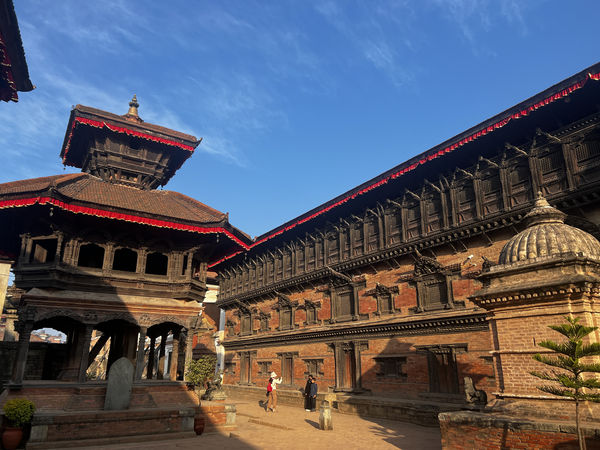 Tour from the article · ExcursionKathmandu: seven heritage sites with lunchCheck dates →Live price · Trip.com
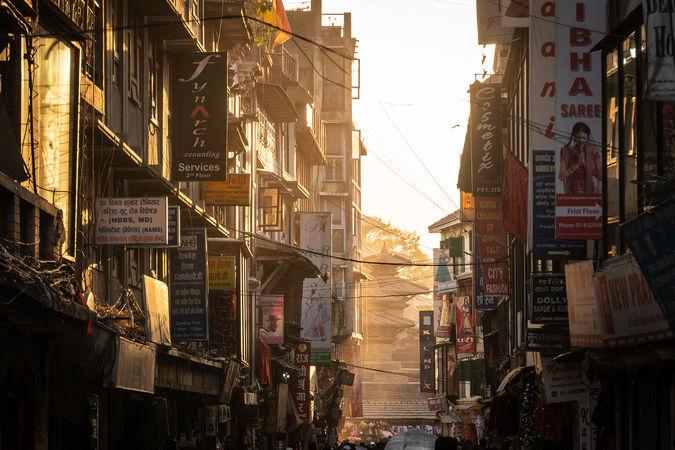 Tour from the article · ExcursionRoyal Palace, Swayambhunath, Pashupatinath and BoudhanathCheck dates →Live price · Trip.com
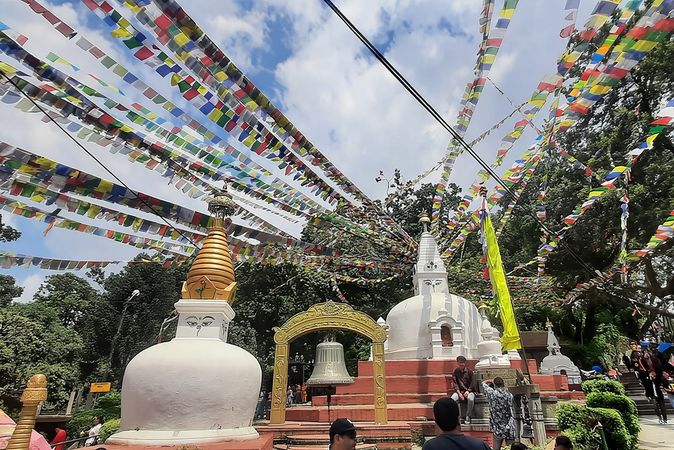 Tour from the article · ExcursionPrivate tour of Kathmandu: 2, 4 or 7 UNESCO sitesCheck dates →Live price · Trip.com