Damnoen Saduak, Amphawa and the Maeklong railway market — three floating and "impossible" markets near Bangkok, including the one where the stalls stand right on an active railway line.
Imagine a market where the stall can roll away along the rails at any moment. Literally: a vendor lays out mangoes and prawns right on the tracks of an active railway, and when a horn sounds in the distance, she has less than ten seconds to fold the awning and pull back the baskets in a single motion — and the train passes within a few centimetres of her goods, so that a minute later everything is back in place as if nothing had happened. A couple of hours from Bangkok there are three such “impossible” markets at once — and all three stubbornly stay out of the frame for those who plan a trip only from a checklist of the main temples and skyscrapers.
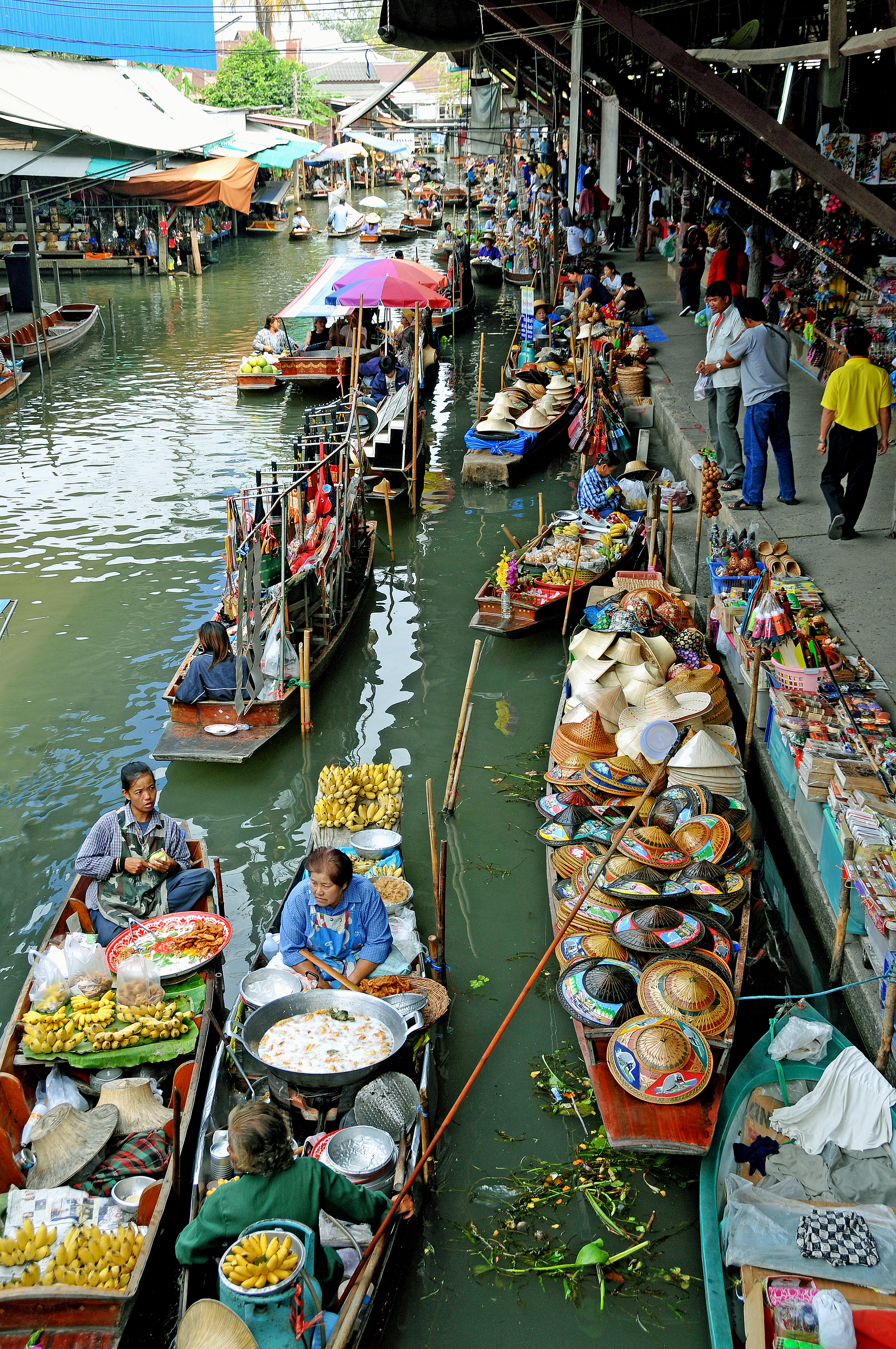
Damnoen Saduak: a postcard that really exists
The canal around which the market grew is not a random waterway but an engineering project: it was dug in 1866 by decree of King Rama IV to connect the Mae Klong and Tha Chin rivers and simplify trade between provinces. Today Damnoen Saduak in Ratchaburi Province is the largest floating market in the world and perhaps the most widely reproduced photo of Thailand after the temples of Bangkok: narrow wooden boats piled high with mangoes, dragon fruit and soup served straight from the boat glide along the canal, while women vendors in wide straw hats bargain with buyers from boat to boat.
The secret of a successful visit is timing. The market officially works from 7:00 to 16:00, but the truly authentic, non-commercial atmosphere lasts only until nine in the morning, while the main flow of tourist buses is still on its way from Bangkok: it is in these early hours that locals still come to the market along the canals for everyday shopping, and not only boats geared to tourists. Prices are almost always initially inflated for foreigners — polite bargaining that knocks the price down by 30–60% is not rudeness here but part of the usual ritual of buying.
Amphawa: a Thai Venice with fireflies at sunset
Amphawa is a market with a much longer history: the settlement on the water has existed since the 17th century, since the time of Ayutthaya, and still preserves wooden houses along the canal and a slow, non-commercial way of life, because of which the place is called the “Thai Venice”. Unlike Damnoen Saduak, trade here unfolds not from early morning but towards the evening and works mainly on Fridays, Saturdays and Sundays — dishes are cooked right on boats rocking by wooden piers, and small cafés and shops with home cooking open along the embankment.
Amphawa’s main evening attraction is not shopping at all but a boat tour to watch fireflies on the waterside trees after sunset: hundreds of tiny lights flash in sync in the crowns, creating the effect of a living Christmas garland in the middle of a tropical night — a spectacle worth staying in Amphawa until dark for, rather than hurrying back to Bangkok by daylight.
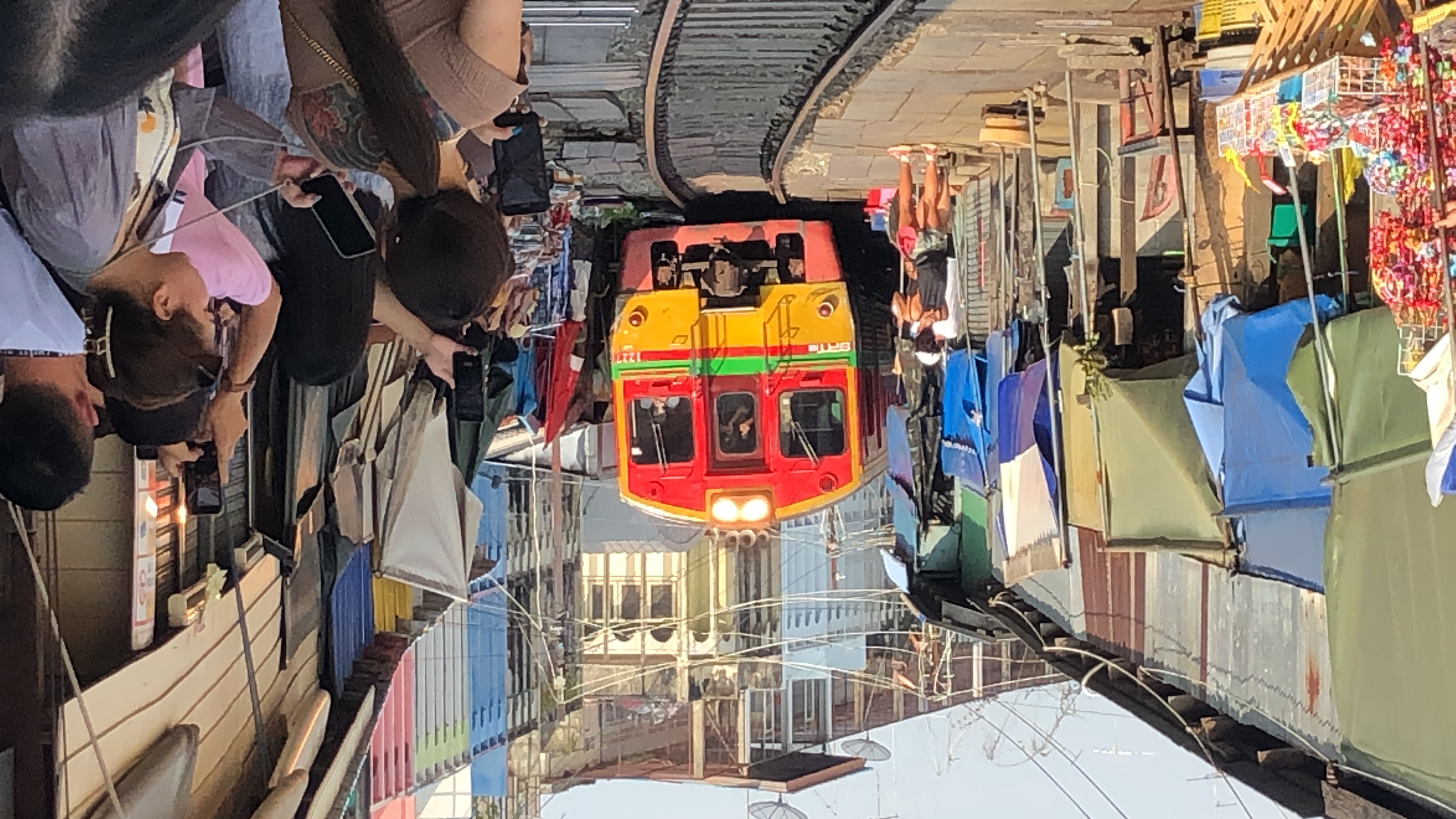
The Maeklong railway market: trade that parts for the train
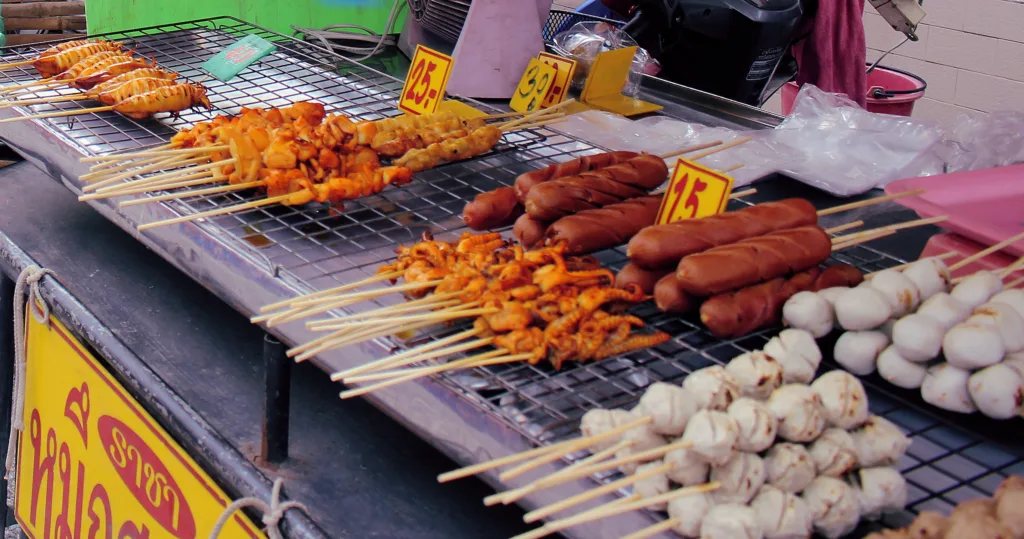
The market’s Thai name is “Talat Rom Hup”, literally “the market where umbrellas are folded”, and it describes what happens far more accurately than the dry “railway market”. Stalls with fish, vegetables, spices and street food stand literally right up against the active rails of the Maeklong line — and eight times a day (by the 2025 timetable: arrivals at 8:30, 11:10, 14:30 and 17:40, departures at 6:20, 9:00, 11:30 and 15:30) a real passenger train passes slowly, at minimum speed, through the trading rows.
A few minutes before it appears, a synchronised wave seems to run through the market: vendors fold the cloth awnings in one coordinated motion and pull the baskets of goods back literally ten centimetres from the rails — the whole procedure of the market “collapsing” and then “opening” again takes less than ten minutes. It is worth arriving 10–15 minutes before the announced train time — and arriving early is worth it: the way matter-of-factly and without a trace of panic the vendors perform this trick several times a day over decades is in itself far more interesting than the final result in a photo.
How to combine all three spots in one day
Geography plays in your favour: Damnoen Saduak, Amphawa and the Maeklong railway market are located close enough to each other in Ratchaburi and Samut Songkhram provinces to combine them into one busy day from Bangkok — most organised tours are built this way: early morning at Damnoen Saduak, then the railway market timed to the nearest train, and Amphawa at sunset with fireflies as the final chord. Getting there on your own is harder and longer — you will need a combination of a bus or train to Samut Songkhram followed by local transfers — but that is exactly why most tourists choose a group or private transfer, which saves a whole day of logistics for the sake of the experience itself.
FAQ
Which market should I choose if I only have time for one? Damnoen Saduak — if you want the classic postcard picture of a floating market; Maeklong — if the unusualness and spectacle of the moment matter more; Amphawa — if you prefer a calm atmosphere and are ready to stay until the evening for the fireflies.
Is it true that the train passes that close to the goods? Yes, literally within a few centimetres — which is why the vendors have drilled the procedure of folding awnings and baskets to automatism, and the spectacle has become the main reason for the market’s popularity among tourists.
Is it worth going to Damnoen Saduak during the day? You can, but the atmosphere will be noticeably more touristy and commercial — the main flow of bus groups arrives by 9–10 a.m., pushing out local buyers and changing the very atmosphere of the market.
Can I get there on my own, without a tour? Yes, but the logistics are harder: you will need to get to Samut Songkhram by public transport and then change to local routes between the three spots — most tourists choose an organised transfer to save time.
Does the railway market work every day? Yes, the trains and, accordingly, the ritual of folding the awnings happen daily on schedule — it is part of a working railway line rather than a tourist staging.
Train timetables and market opening hours may change — check the current information before your trip.