Loy Krathong is Thailand's full-moon festival: thousands of floating offering rafts on the water and Yi Peng sky lanterns in Chiang Mai. The 2026 date, history, where to celebrate and how to make a krathong by hand.
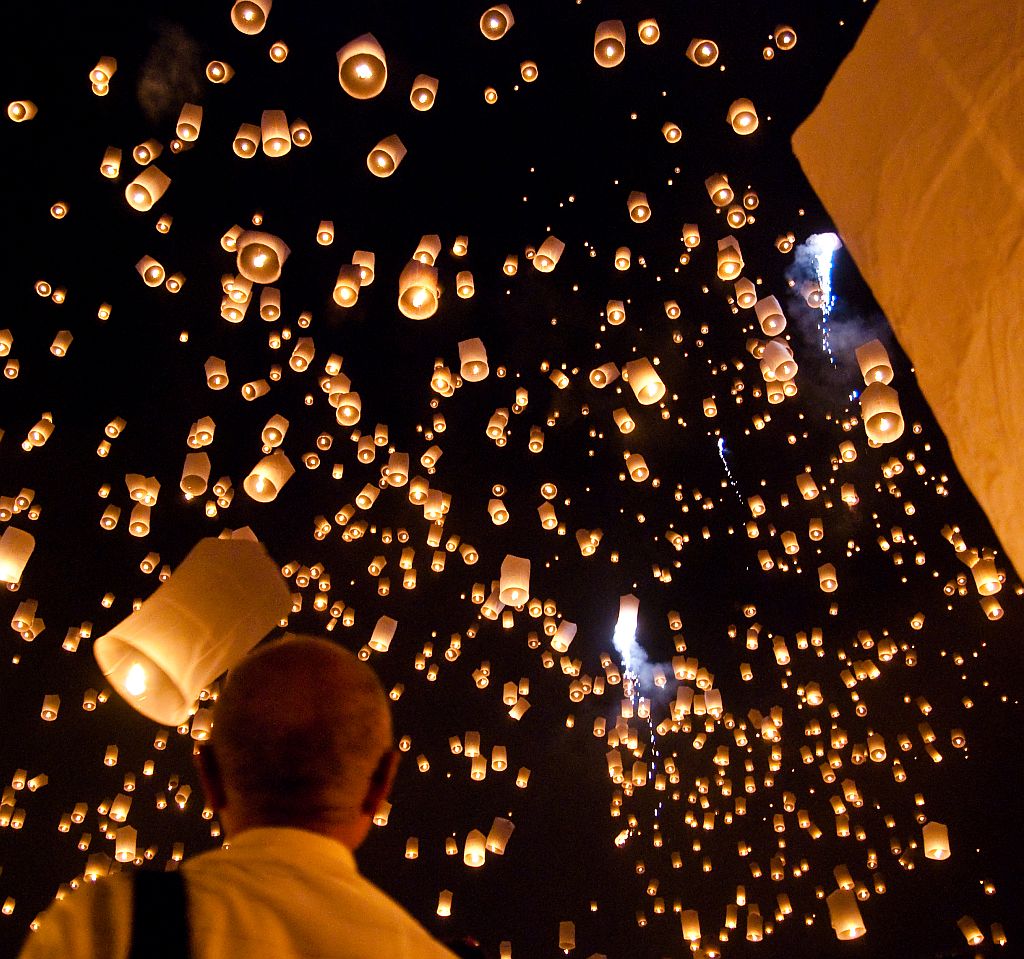
Imagine: thousands of small rafts made of banana leaves, each with a candle and a smouldering incense stick, slowly float down a dark river while overhead hundreds of paper lanterns on open flame rise into the sky at once — and all this in complete silence, occasionally broken by the splash of water and the soft crackle of flame. This is not a staged shot for a Thailand advertisement but an ordinary November full-moon night in Chiang Mai — the moment when the whole country at once asks the river for forgiveness and lets a year of misfortunes go down the current.
The river that is asked for forgiveness
The festival has several layers of origin that over the centuries merged into one ritual. By one version the tradition goes back to Sukhothai — the ancient Thai capital of the 13th–15th centuries, now a UNESCO World Heritage site. By another, the roots go into Brahmanic practices, later reinterpreted by Thai Buddhists as veneration of the Buddha. But in the popular understanding the meaning is perfectly clear: a krathong is floated on the water to thank the water goddess Phra Mae Khongkha for the rice harvest and at the same time to apologise to the river for people polluting it all year round. Together with the candle, trimmed nails or a lock of hair float away in the raft — a symbol that with it misfortunes, anger and everything bad accumulated over the year leave the person, and a real fresh start begins.
A krathong made by hand — not a shop-bought one
A traditional krathong is made from a slice of banana tree trunk or a water-lily stem, decorated with neatly folded banana leaves, three incense sticks and a candle; sometimes a coin is added — an offering to the river spirits. Many Thais and tourists make a krathong by hand right before the festival — in temples and at special workshops along the rivers in the days before the full moon. A separate and increasingly relevant topic is the material: polystyrene krathongs, popular in past decades because of their cheapness, are today actively being displaced by biodegradable versions made of banana trunk and bread crumb (the latter, among other things, serve as fish food) — the environmental load on the rivers after the festival is tangible, and more and more cities and temples consciously promote natural materials.
Yi Peng: the sky version of the same festival
In the north of the country, in Chiang Mai and its surroundings, one more layer is added to the water ritual — Yi Peng, a tradition of Lanna origin, meaning “second full moon” in translation (by the Lanna calendar, corresponding to November in the Gregorian). Here “khom loi” are launched into the sky — paper lanterns on a frame, lifted by warm air from an open flame inside, as a symbol of expressing reverence to the Buddha and sending one’s own wishes upward rather than down the river’s current. Organised Yi Peng venues (for example in the San Sai area near Chiang Mai) sell tickets to a mass simultaneous launch of thousands of lanterns — a spectacle for which photographers from all over the world specially converge on the city; in 2026 the main Yi Peng dates fall on 24–25 November, a day or two before and together with Loy Krathong itself.
Where to celebrate
In Bangkok the main points are the Chao Phraya River embankment, the Asiatique the Riverfront complex, Wat Arun (lit up especially strikingly for the occasion), the Rama VIII Bridge and Santichaiprakan Park; the city administration officially designates more than thirty large parks for floating krathongs, including Lumphini and Chatuchak — that is, the festival is officially organised, not spontaneous. In Chiang Mai the focus shifts to the Ping River in the old town and to the paid organised Yi Peng venues outside the city, where the safety of the simultaneous mass launch of lanterns is professionally controlled — which matters given the open flame and the large crowd.
FAQ
When exactly is Loy Krathong in 2026? The night of 25 November — the festival is tied to the full moon of the twelfth month of the Thai lunar calendar, so the date changes every year in the Gregorian calendar.
How does Loy Krathong differ from Yi Peng? Loy Krathong is a nationwide festival connected with water and floating rafts; Yi Peng is a regional tradition of northern Thailand (Chiang Mai and surroundings) connected with launching paper lanterns into the sky. Both are celebrated at the same time, but historically they are different traditions that merged over time.
Do I need to buy a ticket to see the festival? The city points in Bangkok and the spontaneous floating of krathongs on the river in Chiang Mai are free. Organised mass launches of Yi Peng sky lanterns at special venues near Chiang Mai are usually paid — this is a separate, more spectacular and safer event.
Which krathong should I choose — buy a ready-made one or make it myself? Both are acceptable, but it is more eco-friendly to choose natural materials (banana trunk, bread crumb) instead of polystyrene — many temples and workshops before the festival specifically teach how to make exactly these.
Is it safe to launch sky lanterns on your own? At official Yi Peng venues — yes, the launch is controlled by the organisers. A spontaneous independent launch of open-flame lanterns within the city is less safe and is restricted or forbidden in a number of areas — check local rules on the spot.
Dates, ticket prices and conditions of holding may change — check the current information before your trip.