How the Vietnamese save: life hacks on food, transport, tours, shopping, connectivity and housing in Vietnam — practical tips from locals, not tourist clichés.
The Vietnamese save not because they are poor but because it is part of the culture: haggling at the market, comparing the price from three drivers and eating at a table without an English sign are as natural here as checking for discounts before an online purchase is for us. A foreigner who does not know these rules regularly pays two or three times more for the same services — not because they are deliberately cheated but because they don’t know where to look for a fair price. In this article: specific life hacks used by the Vietnamese themselves and the few foreigners who have lived in the country long enough to spot them — how to save on housing, food, transport, tours, shopping and connectivity without cutting corners where it is dangerous.
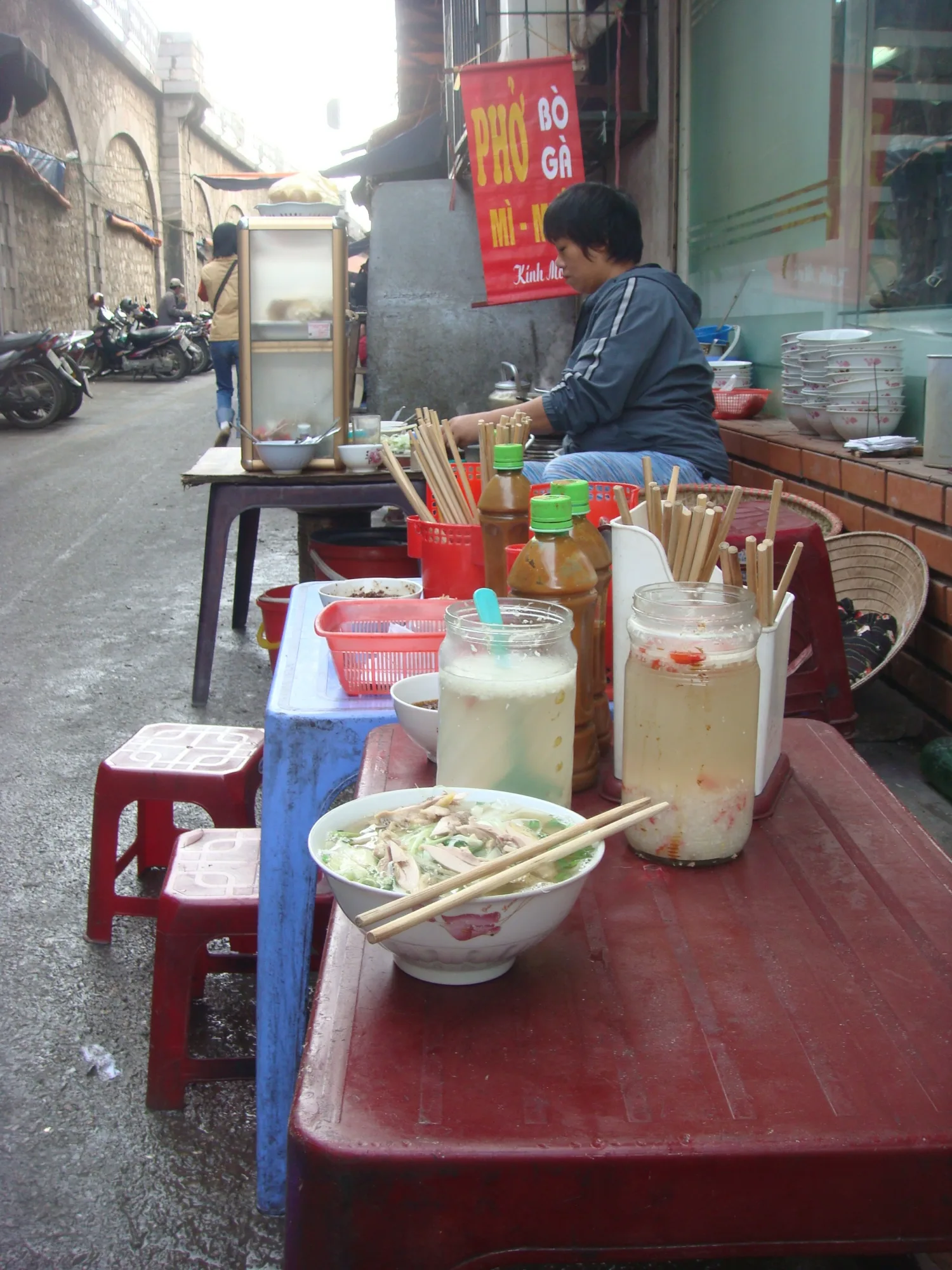
- Food: a plate of pho or bun cha on a plastic stool — 20–40 thousand dong versus 80–150 in a café for tourists.
- Transport: a sleeper bus between cities saves both the ticket and a night in a hotel; in the city an app instead of a street driver.
- Connectivity: a local SIM from a telecom shop costs 5–8 dollars versus 15–20 at the airport.
- Shopping: at markets without price tags haggling is a must — the starting price for a foreigner is two to three times too high.
- Tours: a tour directly from a tourist office in town is cheaper than through a hotel.
- The main principle: a price in Vietnam is almost always negotiable, except in supermarkets and chain stores.
Why Vietnam has no fixed prices where you wouldn’t expect them
The Vietnamese street economy is built on negotiation. A market seller, a motorbike taxi driver, the owner of a mini-hotel — all build a margin for haggling into the first price they name, and this applies even in areas where prices are fixed in other countries. The reason is simple: the market is competitive, and information about the “normal” price spreads slowly, so the seller tries to get the maximum from each particular buyer. For a foreigner who looks like a tourist the starting price can be two to three times higher than for a local. This is not malice — it is standard practice that the Vietnamese themselves apply to each other, they just read it better and bring it down faster.
Food: plastic stools versus restaurants with laminated menus
The most reliable guide is low plastic stools and a table slightly above knee height. Such places exist for local regular customers rather than for the tourist flow, so the price is fair: 20–40 thousand dong (less than a dollar) for a plate of pho, bun cha or com tam. Restaurants with laminated menus in several languages and waiters who greet you at the door charge 80–150 thousand dong for a similar dish — sometimes this is justified by atmosphere and cleanliness, but if the goal is simply to eat tasty and cheap food, look for places without an English sign and with a local queue. A separate life hack is markets at the exit from residential neighbourhoods rather than on central tourist streets: the price of the same street food there is usually 30–50% lower.
Transport: sleeper buses, Grab and haggling with motorbike drivers
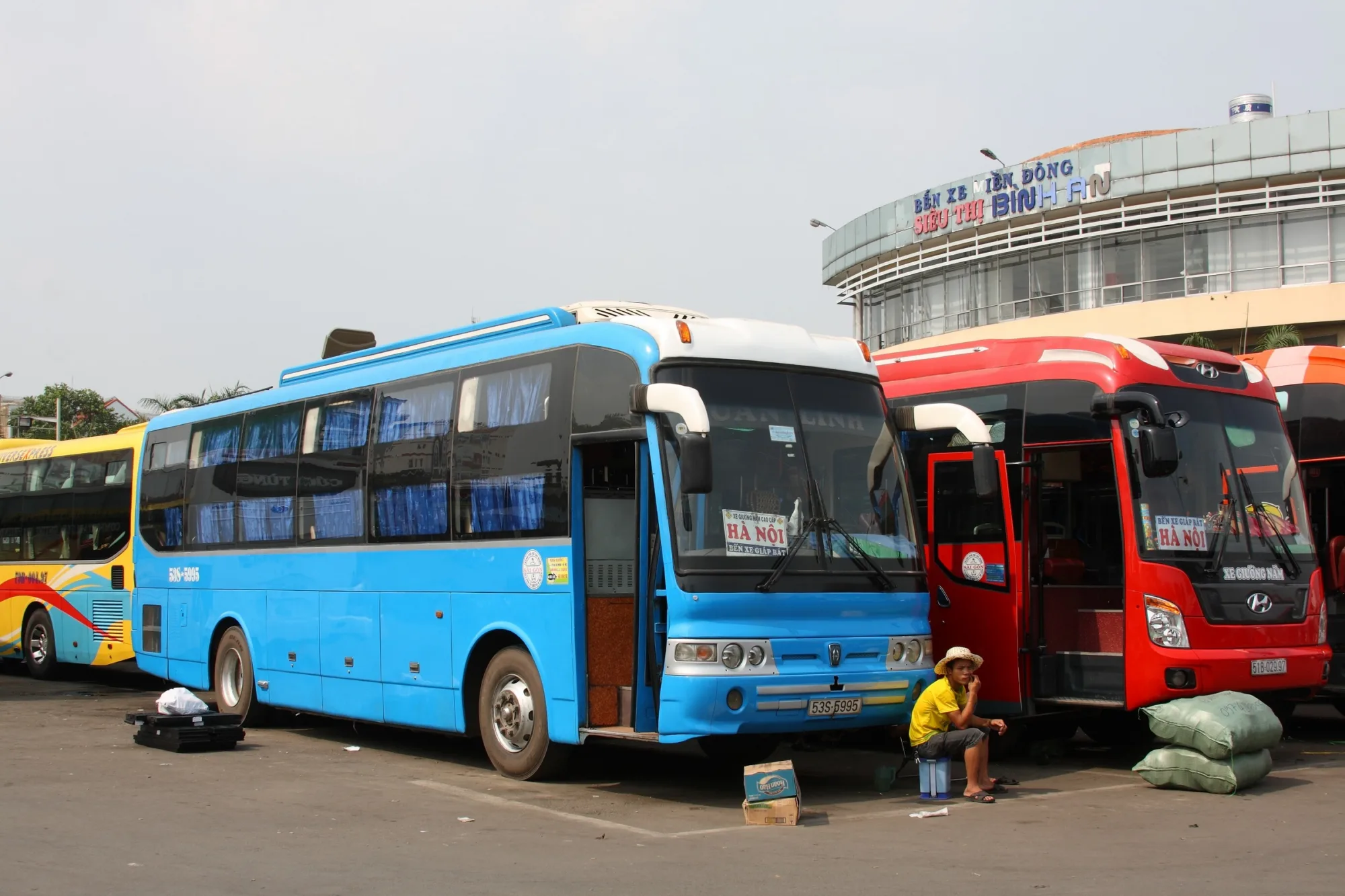
Vietnam’s main transport life hack is the night bus with lying-down seats, the sleeper bus. A ticket between big cities (Hanoi — Hue, Nha Trang — Dalat, Ho Chi Minh City — Dalat) costs 8–15 dollars and lets you save on both the journey and the lodging at once: you sleep on the road and wake up at your destination. Vietnamese who go to visit relatives in another province use this very way almost always, rather than a plane. Within the city the Grab app gives a fixed price before the ride and spares you haggling with motorbike and taxi drivers, who may ask a foreigner for three times the standard fare. If you do agree with a street driver directly, always name the price yourself, going by what Grab shows for the same route — this is standard practice even among local people.
Housing: how to get a discount without booking sites
Mini-hotels and guesthouses in Vietnam are family businesses, and owners are happy to lower the price in a personal conversation, especially if you book several nights ahead or walk in off the street without a booking through an aggregator. Booking sites’ commission is 15–20% of the room price, and the host will gladly give part of that sum to you as a discount if you write directly on WhatsApp or Zalo (the local messenger used by almost the entire population of the country). Ask the administrator of your current hostel for a recommendation in the next city — this often gives a better price than an open booking, because hostels work through a network of acquaintances and recommend each other without a markup.
Tours: an office on a tourist street instead of a hotel desk
As in the neighbouring countries, booking an excursion through a hotel desk usually includes a commission of 20–30% over the operator’s price. In Hoi An, Dalat, Ninh Binh and Hanoi tourist offices stand in a dense row on central streets — comparing the price at three neighbouring offices takes five minutes and can save a noticeable sum. Check what is included in the price: lunch, entrance tickets, equipment — without this, comparing offers is pointless. In the evening before the desired date operators sometimes lower the price to gather a group of the required size — this doesn’t always work, but asking costs nothing.
Shopping: markets, haggling and fakes
At markets without price tags — in Hoi An, at Ben Thanh in Ho Chi Minh City, at any street clothing market — the starting price for a foreigner is two to three times higher than what is named to a local. Bringing it down politely and with a smile to half of the initial sum is normal practice, not an insult to the seller. In shops with fixed price tags and in supermarkets haggling is inappropriate. A separate subject is fakes of branded clothing and electronics, which are sold openly at many markets: the price for them is already low from the start, and there is less point in haggling there than over handmade goods and souvenirs, where the markup for tourists is especially large.
Connectivity and ATMs: where locals buy SIMs
A SIM card at the airport costs two to three times more than the same card bought at an official Viettel, Mobifone or Vinaphone shop in the city. Registration takes a few minutes with a passport, and a package with unlimited internet for a month costs 5–8 dollars versus 15–20 at the airport counter. ATMs in Vietnam charge a fixed fee for withdrawals with a foreign card, so locals and experienced foreigners withdraw large sums less often rather than a little every day. It is better to exchange cash currency at jewellery shops, which historically deal in currency exchange and often give a better rate than banks, let alone airport exchangers.
Five rules the Vietnamese themselves use
Name the price yourself, going by the app. Especially for motorbike taxis and taxis without a meter.
Look for places without an English sign. This applies to food, minor repairs, laundry services — everywhere there is no tourist markup.
Negotiate directly with the host of the accommodation. A direct booking through a messenger is often 15–20% cheaper than the site.
Compare at least two or three offers. For tours, bike rental and currency exchange the difference between neighbouring points can be substantial.
Withdraw cash less often and in larger amounts. The ATM fee is fixed, so the bigger the sum, the smaller the loss per dong.
Apps the Vietnamese themselves use
Besides Grab, “be” operates actively in Vietnam — a local taxi and motorbike app that local people often compare with Grab before ordering: the price on the same route can differ by 10–20%, and checking both apps takes a few seconds. For food delivery ShopeeFood and GrabFood are popular, where discount coupons of up to 30–50% regularly appear, absent when ordering at the venue in the usual way. For communication and booking housing directly, the Vietnamese almost universally use Zalo — the local messenger that works faster and more reliably than international analogues inside the country and through which guesthouse owners readily give a discount for a direct booking.
Morning and evening markets: what is the difference
In most Vietnamese cities markets divide into morning ones, oriented to groceries and the everyday purchases of local people, and evening tourist ones, which open towards sunset specially for guests. Prices at morning markets are noticeably lower: local housewives haggle there who know exactly the fair price of vegetables, meat and textiles, and competition between sellers is high. Evening markets like the night market in Hoi An or on Con Dao island are designed for the tourist flow, and prices there for a casual buyer are one and a half to two times higher than in the daytime rows a couple of blocks away. If you want precisely the atmosphere and souvenirs, an evening market is justified; if you need an everyday purchase, go in the morning to the local rows.
Medicine and pharmacies: how the Vietnamese save
Pharmacies at private clinics for foreigners in tourist districts are usually 30–50% more expensive than ordinary district pharmacies for the same drugs. For simple medicines for colds, traveller’s diarrhoea or sunburn, the Vietnamese go to the nearest pharmacy in a residential neighbourhood, where the pharmacist often advises on the spot and sells many over-the-counter drugs without a prescription. For more serious cases state hospitals cost much less than private clinics for foreigners, although explaining symptoms may require a translator on your phone. Always keep a copy of your insurance policy and a list of the medicines you take in English at hand — this speeds up any visit.
Coffee and street drinks: the local price versus the tourist price
Vietnamese coffee culture is an economy of its own. Iced coffee with condensed milk on a plastic stool by the road costs 15–25 thousand dong, while in a café with wooden furniture and Wi-Fi for laptops it is 40–60 thousand for a similar drink. Both formats are legitimate and both are used by local people, but for different occasions: the stool for a quick meeting on the way, the café with sockets for work or a long conversation. The difference is not in the quality of the coffee but in the rent of the premises and the furniture, so the choice is a matter of comfort, not of deception.
What even experienced travellers often forget
Insurance rarely makes it into the daily budget, but in a motorbike accident or food poisoning its absence costs many times more than all the savings on transport. The deposit for a bike rental is sometimes not returned in full for the slightest scratch — photograph the vehicle from all sides before and after rental. An international driving licence of the right category is required to rent a motorbike legally — local rental shops often hand over equipment without documents, but in an accident the insurance may not pay out. And finally, the e-visa and entry rules change quite often, so check the current conditions for your citizenship before buying tickets rather than relying on year-old information — details are in our guide to the Vietnam e-visa.
Haggling with motorbike drivers: how locals do it
In cities where Grab and be have not yet fully arrived or where the app shows an inflated price because of demand, the Vietnamese haggle with street motorbike drivers directly. The rule is simple: name your price first, going by the average cost of similar rides, and be ready to walk away if the driver doesn’t agree — usually he calls after you a few steps later with a more reasonable offer. Never get on a motorbike without agreeing the price beforehand: a dispute after the ride almost always ends not in your favour. In the evening and in the rain prices are objectively higher even for locals — this is not deception but a real rise in demand, which it is pointless to argue with.
Long-term stay: Da Nang and Hoi An
If you plan to stay in Vietnam for a month or longer, Da Nang and Hoi An remain among the most affordable coastal cities of the region for this format: monthly apartment rent, cheap food and developed infrastructure for those who combine travel with remote work make them popular among long-term guests. A detailed breakdown of a monthly budget is in the articles on the monthly budget in Da Nang and long-term rental in Da Nang. For moving between cities see the article on transport in Vietnam, and for the seasonality of prices Vietnam’s seasons.
FAQ
How much cheaper is street food than a restaurant? Two to four times: 20–40 thousand dong on a stool versus 80–150 thousand in a restaurant with a multilingual menu.
Where is it better to buy a SIM card? In a city telecom shop rather than at the airport — a difference of two to three times.
Is it worth booking tours through a hotel? Usually not: booking directly at a tourist office is 20–30% cheaper.
How can I save on moving between cities? A night sleeper bus saves both the ticket and a night in a hotel.
Do I need to haggle at markets? Yes, the starting price for a foreigner is usually two to three times too high.
What is most often forgotten in the budget? Insurance, a bike deposit and the current visa requirements.
Prices and rules change depending on the season and currency rates — check current information on the spot.