Digital nomads in Asia: Chiang Mai, Bali, Da Nang, Phnom Penh and Osaka — remote-work visas, real prices for housing and coworking spaces, communities and the pitfalls of a long-term move.
Five years ago “digital nomad” sounded exotic; today in Chiang Mai and Canggu they are half the customers of any decent café with sockets. Asia has become the main proving ground for remote work not by chance: cheap living, fast internet almost everywhere, visa regimes that more or less allow you to stay for months, and already formed communities where you don’t need to explain what a coworking space is and why you need it all came together here. But behind the beautiful photos of a laptop against a backdrop of rice fields lies routine: searching for housing with decent Wi-Fi, sorting out visa nuances that officially often forbid working on a tourist visa, and choosing between a city you can afford and a city where you can actually work. This article is an honest look at five Asian cities that have become digital-nomad centres: what it is really like to live, work and stay long-term there.

- Chiang Mai (Thailand): the cheapest and most settled centre — from $700–900 a month for comfortable living.
- Canggu and Ubud (Bali): the most coworking spaces and community, but prices have also risen noticeably in recent years.
- Da Nang and Hoi An (Vietnam): a fast-growing alternative to Chiang Mai with the sea close by.
- Phnom Penh (Cambodia): cheaper than its neighbours, but community and infrastructure for nomads are weaker.
- Osaka (Japan): for those who value big-city infrastructure but not at Tokyo prices.
- The main question before moving: not “where is it cheaper” but “which visa lets you stay there legally and for how long”.
The visa is the first question, not the last
Before choosing a city from photos of coworking spaces, sort out the legal side. In most Asian countries a tourist visa formally does not give the right to work, even remotely for a foreign employer — in practice this is rarely checked, but the rules officially exist and are periodically tightened. Some countries have in recent years introduced separate visas for remote workers with clearer conditions — Thailand offers the Destination Thailand Visa (DTV), which is aimed among others at digital nomads; details and requirements change, so before moving check the current conditions for your citizenship on an official source rather than relying on forums of past years. More in our article on the DTV visa in Thailand. Indonesia introduced a separate visa for remote workers, the E33G — with an income of $5,000 a month from abroad and a contract with a foreign company; it should not be confused with the more accessible but not remote-work-oriented B211A visa — details of the latter in the article on the B211A visa in Bali.
Chiang Mai: the city where it all began
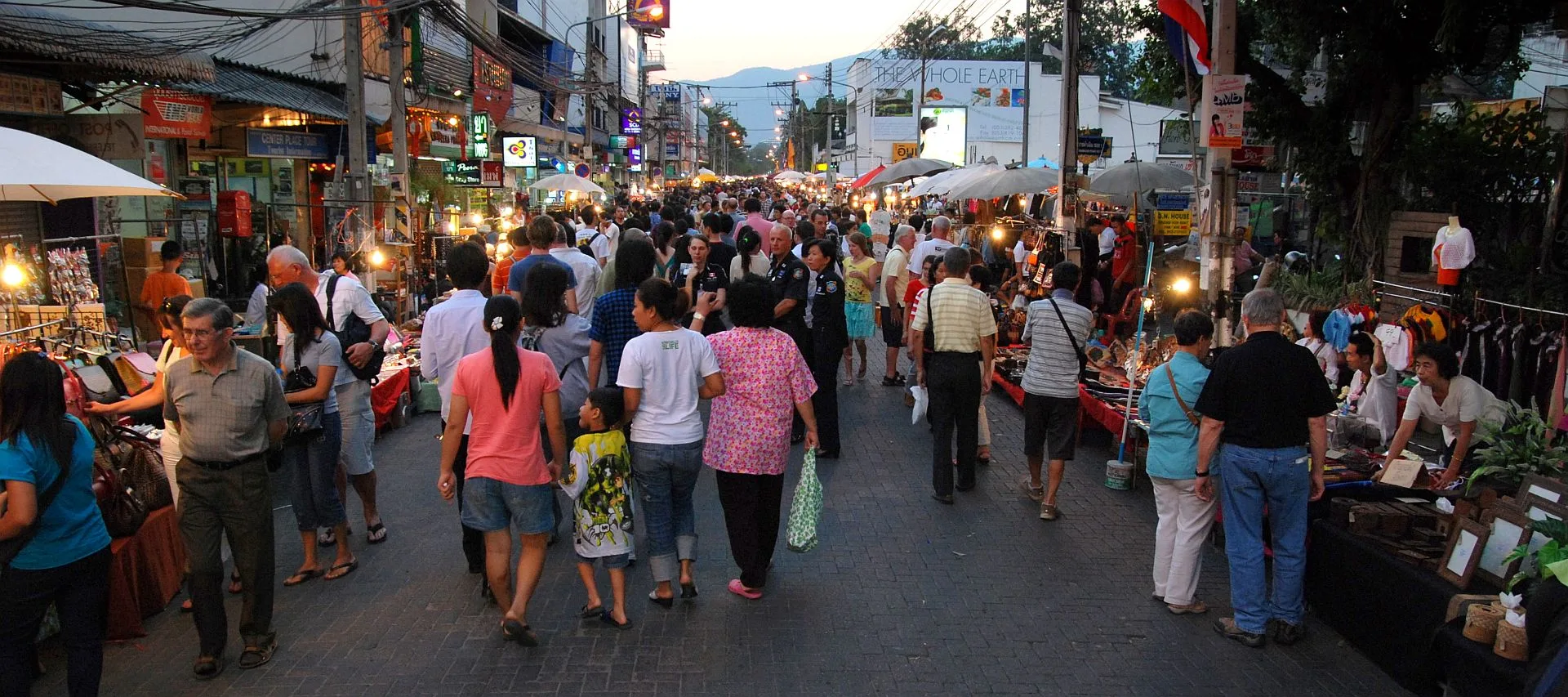
Chiang Mai has remained the benchmark of Asian digital nomadism longer than any other city on this list. The reasons are simple: a comfortable climate compared with the humid south of Thailand, plenty of coworking spaces and cafés with fast internet, a community of foreigners formed over decades and a low cost of living by world standards. A room or small flat in the Old Town or in the Nimman area costs from 200 to 400 dollars a month, a coworking space with full membership from 80 to 150, and food at local markets costs practically nothing by Western standards. The downsides are real too: from February to April the city suffers from the agricultural burning season, when air quality sharply worsens and many digital nomads temporarily leave for the south or the islands. A detailed breakdown of the monthly budget is in the article a month’s budget in Chiang Mai.
Bali: Canggu and Ubud as two different worlds
Bali has long been the showcase of digital nomadism on social media, but behind the pretty picture are two very different ways of life. Canggu is surf culture, endless cafés with avocado toast, noisy roads and constantly rising prices for villa rental that five years ago cost half as much. Ubud is calmer, oriented to yoga and nature, with rice terraces instead of beaches and slightly lower prices for long-term rental. Both locations are so overloaded with digital nomads that local infrastructure barely copes, and competition for good housing with fast internet has grown many times over. A room or studio costs from 300 to 600 dollars a month depending on location and season, coworking from 100 to 200. More in the articles renting a villa for a month and a freelancer’s monthly budget in Bali.
Da Nang and Hoi An: a growing alternative with the sea
The Vietnamese coast of the central part of the country is the fastest-growing digital-nomad centre in the region in recent years. Da Nang combines city infrastructure, a beach within the city limits and noticeably lower prices than in Bali or Chiang Mai: a flat with a sea view costs from 250 to 450 dollars a month. Hoi An nearby gives a more intimate atmosphere of an old town with lanterns and a slow pace of life, but the choice of coworking spaces there is more modest than in Da Nang. Internet speed in both cities is quite sufficient for video calls and remote work, and the distance between the cities is about half an hour by taxi, which allows combining both formats. A detailed breakdown of the budget is in the article a month’s budget in Da Nang and long-term rental in Da Nang.
Phnom Penh: cheaper than its neighbours, but with caveats
Phnom Penh rarely makes the standard lists of cities for digital nomads, and not without reason: the community of foreigners here is smaller and more scattered than in Chiang Mai or Bali, and the choice of coworking spaces is limited to a few venues in the centre. But the cost of living is noticeably lower: a flat in the centre costs from 200 to 350 dollars a month, and food at local markets costs almost nothing. For those who have already settled into the region and are looking for a quiet place for focused work without the noisy digital-nomad scene, Phnom Penh can be an unexpectedly good choice — precisely because there are fewer distractions typical of overloaded community hubs. More in the article a month’s budget in Siem Reap, which is also considered an alternative.
Osaka: Japanese infrastructure without Tokyo prices
Tokyo remains too expensive for most digital nomads on an Asian budget, but Osaka gives similar city infrastructure — metro, konbini on every corner, cafés with sockets — at a noticeably lower cost of living. The visa for remote work in Japan remains limited compared with Thailand and Indonesia: the country has introduced its own visa for digital nomads with fairly strict income requirements and a term of up to six months without extension — check the current conditions before planning a long stay. For a short period of a few months Osaka works well: flat rental from 500 to 800 dollars a month, which is half the cost of comparable housing in Tokyo. More in the article a month’s budget in Osaka.
Coworking or café: what to choose
Full coworking membership costs 80–200 dollars a month depending on the city and gives stable internet, meeting rooms and a business community for networking. A café with sockets is a free alternative provided you order drinks regularly, but the internet there is less stable, and sitting for a long time with one coffee is sometimes uncomfortable for staff and other customers in crowded places. The optimal strategy of many nomads is a combination: a few days a week at a coworking space for important calls and meetings, the rest of the time in a café or at home if the rental allows working in quiet.
Community: where people really meet rather than just work
Formal networking events at coworking spaces exist in almost every large hub, but real acquaintances more often happen at regular gatherings like shared lunches, sports activities (surfing in Bali, cycling in Chiang Mai) or language exchanges. Facebook and Telegram groups for a specific city are the best source of current information on housing, visa changes and local events, often fresher than any guidebook. Join such groups before moving: it is also there that freed-up housing is often sold directly by the previous tenant, bypassing intermediaries and agencies.
Health and insurance: not what you want to think about, but necessary
A long stay abroad requires a different approach to insurance than a short tourist trip: you need a policy covering a long period and, preferably, the possibility of treating chronic conditions, not only emergencies. Private medicine in Thailand and Bali is of quite good quality for foreigners but expensive without insurance; in Cambodia and Vietnam for serious cases many expats choose evacuation to Bangkok, where international-level medicine is more developed. Check that the policy covers your particular activity — some cheap tourist insurance excludes cases related to work, even remote.
Time zones and working with clients in other countries
One practical detail rarely thought of in advance is the time-zone difference with your team or clients. Southeast Asia is 5–7 hours ahead of Europe and 12–15 ahead of the US, which means the working schedule will have to be shifted: many digital nomads start the day late in the morning to catch the overlap with European working hours in the evening, or conversely work early in the morning for calls with American colleagues. Before moving, honestly assess how much your work requires synchronous real-time communication: for fully asynchronous tasks (writing, design, development without daily calls) the time zone hardly matters, while for frequent video calls it can become a serious constraint in choosing a city.
Bank cards and transferring money abroad
Receiving payment from foreign clients and withdrawing money in Asia is a separate headache for many newcomers. International transfers through classic banks often eat a percentage in commission and an unfavourable conversion rate; services like Wise and similar international platforms usually give a better rate and lower commission for transferring money between countries. For everyday spending on the spot it is sensible to have a card with free cash withdrawal abroad — this saves on ATM fees, which in most countries of the region are fixed and add up noticeably with frequent small withdrawals.
The language barrier: what you really need to know
In the large digital-nomad hubs — Chiang Mai, Canggu, Da Nang — staff at cafés, coworking spaces and most services for foreigners speak basic English, and deep knowledge of the local language is not required for everyday life. Nevertheless a few phrases in Thai, Indonesian or Vietnamese greatly ease agreeing on housing prices directly with local landlords, who don’t always work through agencies with English-speaking staff. A translator app with text recognition through the phone camera solves most everyday situations — from reading a menu to filling in official forms.
Five rules for those planning a long move
Visa first, city second. Sort out the legal side of staying before choosing a district to rent in.
Rent housing on the spot rather than online in advance for the whole term. Spend the first week in a hostel or hotel to look at the districts and agree on the price directly with the landlord.
Join local groups before moving. This speeds up the search for housing and understanding of the current situation in the city.
Don’t automatically choose the most hyped city. Phnom Penh or Hoi An may suit better than overloaded Canggu precisely because of less competition for resources.
Check that your insurance covers remote work. Not all policies are the same in this respect.
Fatigue cycles: why it is worth changing location
Many experienced digital nomads warn of the phenomenon of “nomad fatigue”: after several months in one city even the most beautiful place begins to feel like routine, while constantly changing location every few weeks, on the contrary, doesn’t let you settle and find a productive working rhythm. A sensible compromise worked out by the community is to stay in one city for one to three months, enough for comfort and a stable working rhythm but not so long as to start missing variety. When planning a route across several cities on this list, put the moves in the calendar in advance rather than deciding spontaneously at the last moment — this simplifies both visa questions and housing logistics.
FAQ
Which city in Asia is the cheapest for digital nomads? Chiang Mai and Phnom Penh usually turn out to be the most affordable at comparable infrastructure.
Is it legal to work remotely on a tourist visa? Formally almost always not; some countries have introduced separate visas for remote workers — check the conditions before the trip.
Where is the internet better — in Bali or Chiang Mai? Generally comparable in tourist hubs; the speed in a specific villa or flat is worth checking before signing a lease.
Is it worth renting housing for several months at once? It is better to look around on the spot for a week or two first and then agree on long-term rental directly.
Do I need separate insurance for remote work? Yes, check that the policy covers your activity and the length of stay.
Which city should I choose for a short visit of a few months? Osaka or Da Nang — a good balance of infrastructure and cost of living for a medium term.
Visa rules, housing prices and requirements for digital nomads change regularly — check current information before planning a long-term trip.