The floating villages of Tonle Sap: Kampong Phluk and Kampong Khleang, prices for boats and tours, the best season for the flooded forest and how to visit the villages responsibly.
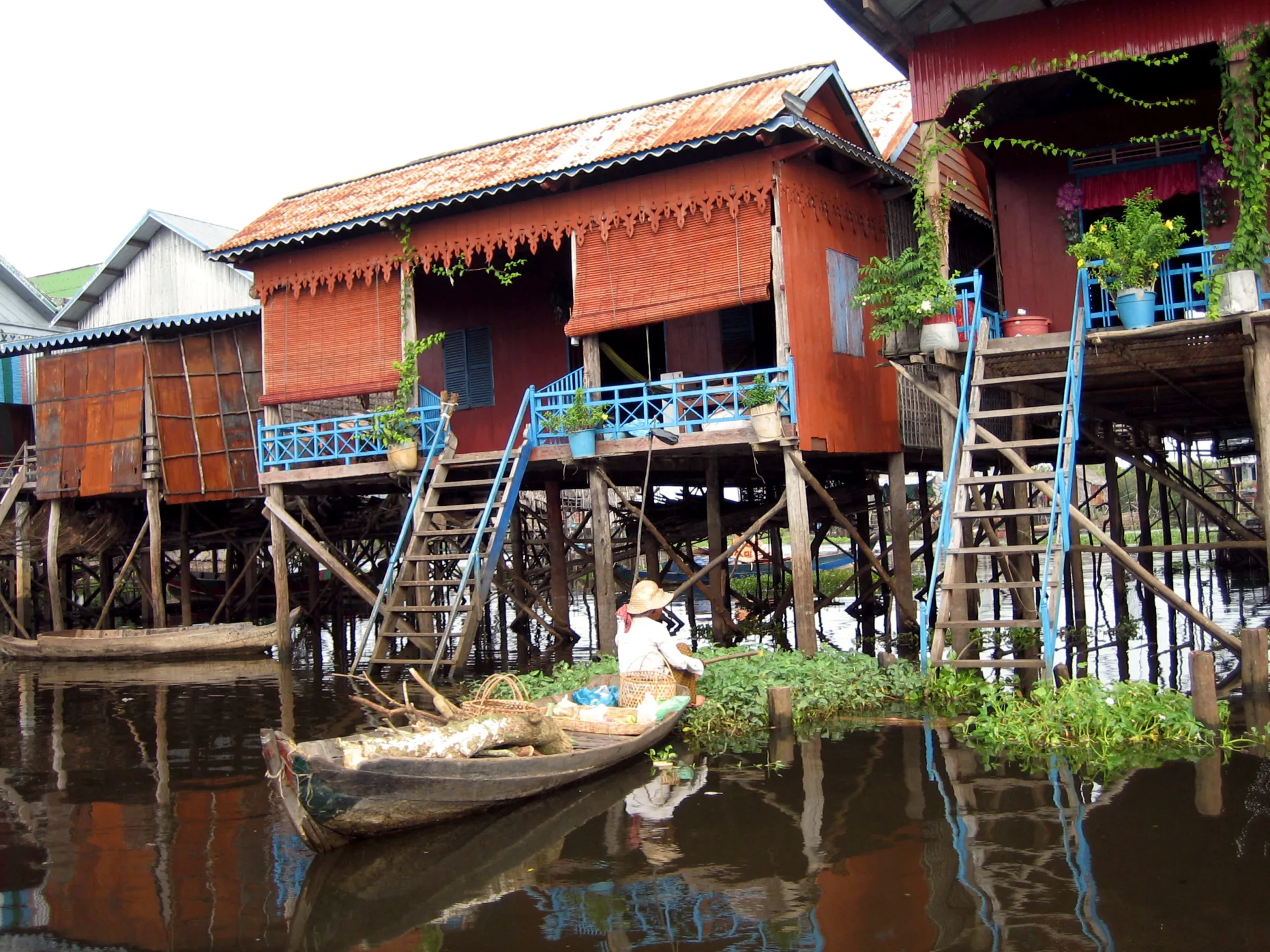
A house stands on stilts as tall as a three-storey building, and beneath it in the dry season is cracked clay on which children and dogs run about. You come back half a year later — and the stilts are hidden under water, the house “floats” in the lake, and people step from the threshold straight into a boat. Tonle Sap is the largest freshwater lake in Southeast Asia, and it lives to its own rhythm: in the rainy season the river’s current reverses direction, the lake spreads for kilometres, and the residents of the surrounding villages adjust to the water.
Kampong Phluk: houses on eight-metre stilts
Kampong Phluk is one of the best-known villages of Tonle Sap. About three thousand people live here, mostly Khmer, but quite a few Vietnamese settlers too. Houses stand on stilts about eight metres high, and in the rainy season, when the lake rises, the stilts disappear under water and the houses seem to float. Life here is not easy: most residents depend on fishing, but the catch shrinks from year to year. The village is about 20–30 kilometres from Siem Reap, the road takes about an hour.
Kampong Khleang: large and authentic
Kampong Khleang lies about fifty kilometres from Siem Reap and is considered the largest and most authentic floating village on the lake. There are fewer tourists here than at Kampong Phluk, and life goes on its usual routine: fishermen mend nets, children return from school in boats, women cook in kitchens above the water. Group tours, as a rule, start from Siem Reap around two in the afternoon and last about 5.5 hours — timed for sunset, the best light.
The water season and what you will see
The picture depends radically on the time of year. From August to November the lake is high: floating houses stand on open water, the stilts are almost hidden under it, and the flooded forest can be explored by canoe or boat. From March to May the water retreats far, the villages stand high on stilts, boats go along narrow channels, and a walk through the mangrove forest is, as a rule, impossible. Both states are interesting, but if you want the classic picture of “houses on the water”, choose the second half of the rainy season.
Prices and how to choose a tour
The price spread is large: for a small group trip they ask from 18 to 69 dollars, more organised tours cost 86–130 dollars. If you go on your own, a boat will cost about 20 dollars per person plus a separate community fee of about 2 dollars; half an hour by canoe through the flooded forest costs roughly 6 dollars per boat. Some authentic tours with local guides and lunch cost about 36 dollars. Compare exactly what is included in the price: transfer, boat, entry, lunch.
How to travel responsibly
The floating villages are not an attraction but homes and workplaces where people live all year round. Choose tours where part of the money stays in the community: with local guides, residents’ boats and small groups. Don’t give money and sweets to children who ask from boats — this reinforces begging and distracts the children from school. Ask permission before photographing people and their homes, and don’t intrude into private space: you may enter a floating house only by invitation.
Practical tips
Take a hat, sunscreen and water: there is almost no shade on the lake, and the sun reflects off the water. Shoes should be light and quick to remove. Cash in dollars or riels will be needed for fees and tips. Plan the trip so as to return before dark: at dusk boats are already returning, and photos at sunset are one of the main pleasures.
FAQ
Which village should I choose? Kampong Phluk is closer to Siem Reap and more convenient, Kampong Khleang is farther but larger and more authentic, with fewer tourists.
When is it best to go? From August to November — the water is high and the flooded forest is accessible; from March to May the water recedes and the villages stand on high stilts.
How much does the trip cost? On your own — about 20 dollars for a boat plus a 2-dollar community fee; organised tours cost from 18 to 130 dollars.
How long does the trip take? Group tours last about 5.5 hours, departing around 14:00.
How should I behave in the village? Ask permission for photos, don’t enter houses without an invitation and don’t give money to children.
Prices, water levels and tour conditions may change — check current information before the trip.