Beng Mealea, Koh Ker and Banteay Srei: Cambodia's temples beyond main Angkor — how to get there, tickets, safety in mined areas, the best seasons and ready-made itineraries.
Everyone knows Angkor Wat. Its five-towered silhouette against the dawn is Cambodia’s calling card and one of the main shots of Asia. But those who have been there once and seen crowds with phones on every step wonder: where are the mysterious temples in the jungle that the postcards promised? The answer is far from the usual route. An hour and a half by car from Siem Reap lies Beng Mealea — an Angkorian temple that has hardly been restored: trees wrap the towers, blocks of stone lie in heaps, and the paths are walked not by thousands of tourists but by dozens. Farther still, deep in the northern forests, is Koh Ker, an abandoned 10th-century capital with a seven-tiered pyramid. And on the way is Banteay Srei, the “citadel of women”, where red sandstone is carved with a jeweller’s delicacy. It is exactly this set that turns a trip from a “tick” into an adventure. The guide covers how to choose a route, how much it costs, how to get there, what to bring and what to pay attention to so as to return with the best impressions of Cambodia.
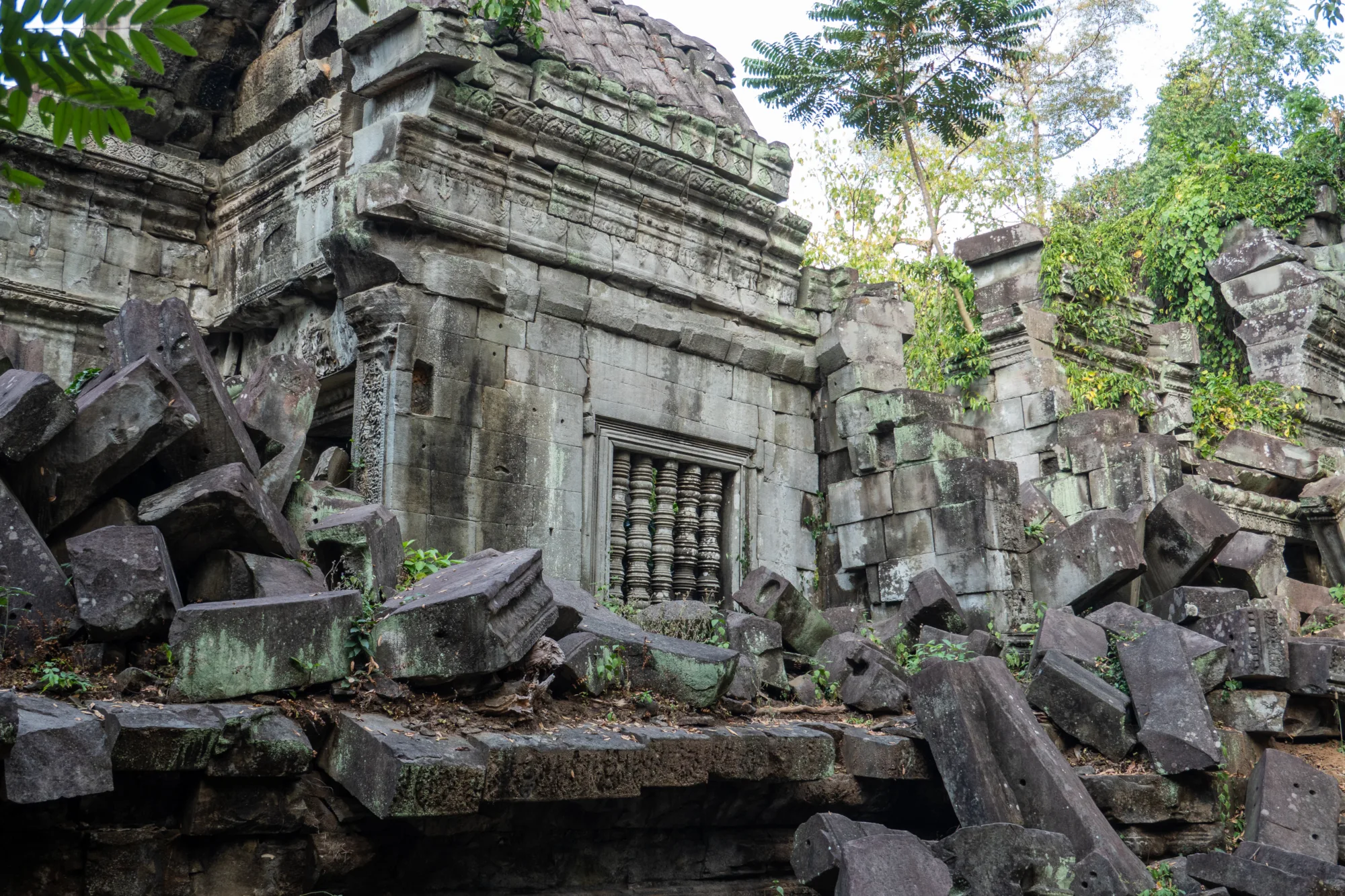
- Beng Mealea: a 12th-century temple about 65 kilometres east of Siem Reap, almost unrestored, partly in the jungle.
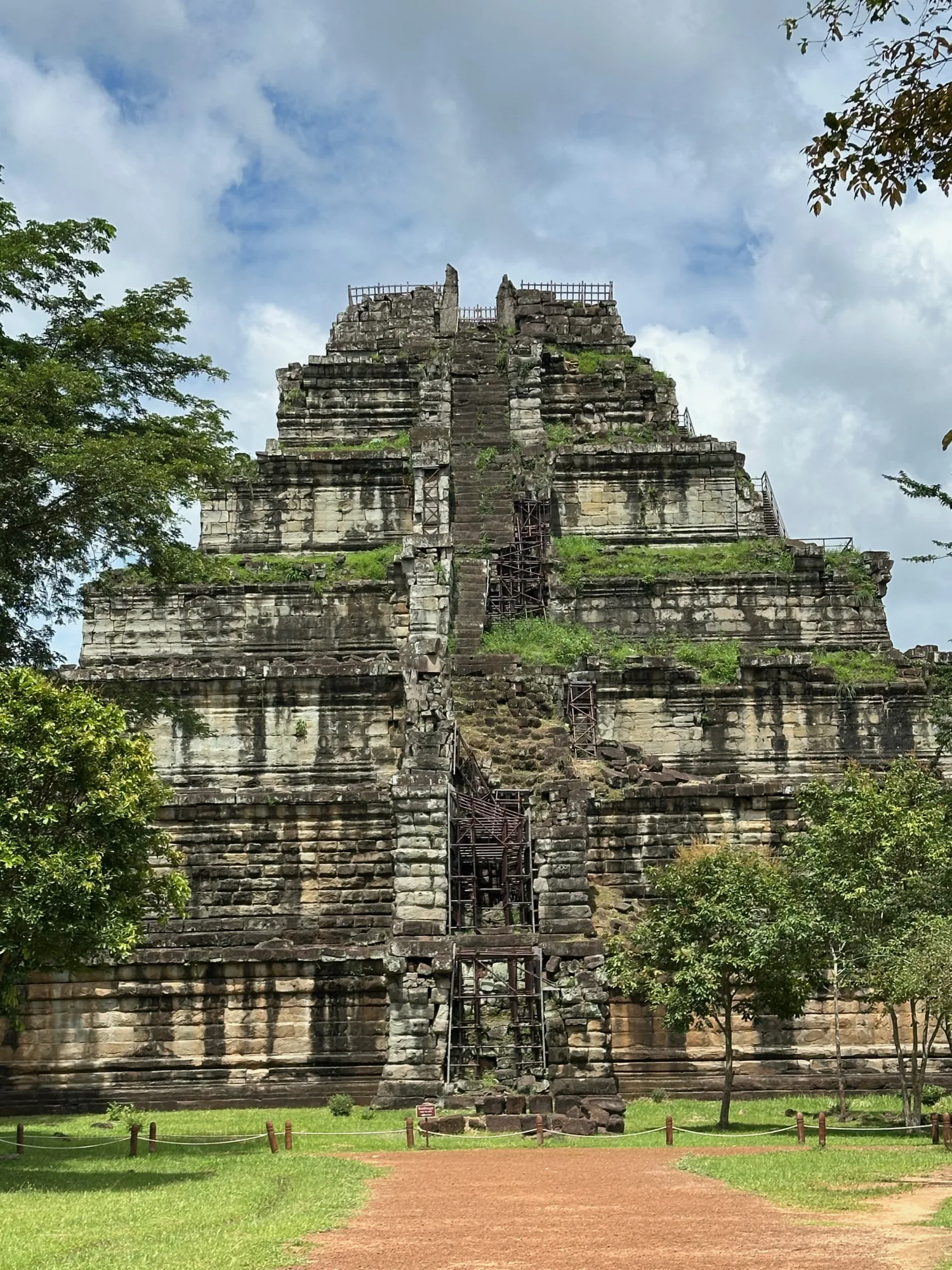
- Koh Ker: a former 10th-century capital, about 120 kilometres north-east of Siem Reap; the main sight is the stepped pyramid of Prasat Thom.
- Banteay Srei: a 10th-century pink-sandstone temple 25–30 kilometres from the centre of Angkor; included in the Angkor ticket.
- Tickets: Beng Mealea and Koh Ker require separate tickets rather than the Angkor pass; check prices and rules.
- Safety: stay only on well-trodden paths — minefields remain in the country.
- Main tip: take a driver for the day, set out early and don’t plan everything for a single day.
Why go farther than the main temples
The Angkor complex is not one temple but a whole city the size of a big metropolis, sprawling over hundreds of square kilometres. The main temples — Angkor Wat, Bayon, Ta Prohm — draw crowds, and justifiably: they are magnificent. But a trip to the distant temples has its own advantages. There are fewer people and it is quieter, and by the stones there is time to think. You see the temples as the first explorers found them: with trees on the towers, fallen blocks and thickets. In addition these places let you understand the Khmer empire differently: its scale, eras and styles. Banteay Srei demonstrates the skill of the carvers, Beng Mealea life in the jungle, and Koh Ker what the seat of power was like before the capital moved to Angkor. We covered the main complex in detail in the article Angkor: tickets and temples — read it before the trip.
Beng Mealea: the temple they forgot to restore
Beng Mealea was built in the 12th century, probably under Suryavarman II — the same ruler under whom Angkor Wat was erected. By plan it repeats the empire’s main temple, but today it looks completely different: part of the galleries have collapsed, the towers are entwined with tree roots and the corridors are strewn with blocks of stone. It is this abandonment that makes it famous. Wooden walkways and paths have been laid for visitors, but much is left as it is, so you will clamber over stones and duck under branches — comfortable shoes with non-slip soles are needed. In the morning it is quiet and cool, birds sing and light passes through the foliage. If you come in the middle of the day, it will be hot, with fewer shadows and more tourists. Local people usually work on the site and for a small fee will lead you through the temple’s nooks and show the best places for photos; agree the price in advance.
Koh Ker: a capital in the forest
In the 10th century, before Angkor became the centre of the empire, the Khmer ruler Jayavarman IV moved the capital to Koh Ker — deep in the forests in the north-east of modern Cambodia. During his short reign dozens of temples were built here. The main sight is Prasat Thom, a seven-tiered stepped pyramid about thirty-six metres high: climbing to the top up a steep staircase, you will see the boundless forest. On the grounds are many smaller temples: Prasat Krahom, Prasat Beng, Prasat Chen and others; many of them are partly ruined and stand among the trees. It is quieter and emptier here than at Beng Mealea: most often you will be almost alone. It is far to get there, so Koh Ker is usually combined with Beng Mealea in one long day or planned with an overnight stay.
Banteay Srei: red stone and the finest carving
Banteay Srei was built in the late 10th century and looks nothing like the other Angkor temples. Small in size, it is made of pink sandstone that yields easily to carving, so the walls are covered with intricate bas-reliefs of flowers, scenes from Hindu epics and figures of dancing deities. The name translates as “citadel of women” — according to legend because of the delicacy and grace of the carving. The temple is dedicated to Shiva, and for the quality of its workmanship it is called a jewel of Khmer art. It lies about twenty-five to thirty kilometres from the centre of the Angkor complex, so it is most often added to the main route as a separate stop. The best time to visit is the morning: light falls softly on the red stone and emphasises the relief.
Tickets and prices
The ticket system at these places differs. Banteay Srei is included in the general Angkor pass, which you buy for one, three or seven days. But Beng Mealea and Koh Ker require separate tickets sold at the entrance; their price is considerably lower than the cost of the Angkor pass. Exact sums change, so check current information with your hotel or driver. Parking fees and the services of local guides are, as a rule, paid separately. Cash US dollars and Cambodian riel are accepted everywhere, while cards are not accepted everywhere, especially in remote places.
Getting there and organising the day
The most convenient option is to hire a driver with a car or tuk-tuk for the whole day. It is about an hour to an hour and a half’s drive from Siem Reap to Beng Mealea, and two to three hours one way to Koh Ker. Many tours combine Koh Ker and Beng Mealea in one very long day, but that is tiring: it is wiser to devote half a day to each temple or stay overnight nearby. You can rent a bike, but roads in remote areas can be difficult and in the rainy season washed out. Set out early, around six or seven in the morning: that way you will beat the heat and return before dark. Discuss the route with the driver in advance so he doesn’t linger at souvenir stalls, and clarify the included stops.
Safety: mines and rules of conduct
Cambodia is a country where, after decades of conflict, unexploded ordnance and mines still remain, and that is no exaggeration. Areas around the main tourist places have been cleared, but outside well-trodden paths you must not take risks. Walk only on marked paths, don’t go into bushes and thickets “for a beautiful shot”, listen to the instructions of guides and the temple keeper. Don’t pick up unfamiliar objects. Take warning signs seriously. Besides this, watch your health: drink water, protect yourself from sun and insects, use repellent, and check your insurance before the trip. For more about safety in the country read our article on safety in Cambodia.
Temple etiquette
Ancient temples are not stage sets but working shrines for many Cambodians. Dress modestly: shoulders and knees covered, especially where services are held. Don’t climb on fragile structures and don’t touch the bas-reliefs: stone that has stood for a thousand years is easily damaged. Don’t leave rubbish and don’t write on the walls. Photograph monks and local people only with permission. Don’t make noise and don’t stage photo shoots in narrow passages. For more about norms of behaviour see the article on etiquette in Cambodia.
When to go
The best time is the dry season, from November to March: the weather is more comfortable and the roads are in their best condition. April and May are hot, and in the rainy season, from June to October, the jungle is especially green and beautiful, but roads to the distant temples can become impassable and stairs slippery. If you go in the rainy season, choose morning hours and bring a raincoat. For the country’s seasons read the article on Cambodia’s seasons, and for the events of the year the overview of Cambodia events in 2027.
What to bring
For a trip to the distant temples a few useful things are needed. Bring comfortable closed shoes with good grip, light long-sleeved clothing, a hat and sunglasses. Take water — more than seems necessary — and a light snack, as well as repellent and sunscreen. A torch will be handy in the dark corridors of the temples, and cash for entrance tickets and small expenses. Wet wipes and a small first-aid kit won’t hurt: civilisation stays far away here. Don’t take anything extra: the backpack should be light, since you will be clambering over stones.
For photographers: how to shoot temples in the jungle
Temples in the forest are a difficult and rewarding subject. The best shots come in the morning and towards evening, when the sun is low and light passes through the foliage. By day shadows are harsh and contrast too high. Use a wide-angle lens to convey the scale of the roots and walls, and a filter to reduce glare. Look for a combination of stone and greenery, beams of light in the corridors and details of carving. Shoot without people if possible: the fewer modern things in the frame, the stronger the feeling of antiquity. And remember safety: don’t climb weak walls for an angle.
How to read the temples: a short cheat sheet
So that the trip doesn’t turn into a series of identical heaps of stone, it is useful to know a few keys. Khmer temples were built as symbolic models of the world: in the centre is Mount Meru, the abode of the gods, around it galleries and moats depicting mountain ranges and the ocean. That is why the central tower is almost always the tallest, and concentric walls run around it. Bas-reliefs tell stories from the Indian epics the Ramayana and the Mahabharata, as well as scenes of court life. Figures of dancing celestial maidens — apsaras — adorn the walls of almost all temples. If a temple is dedicated to Shiva, you will see symbols of the linga and the bull; if to Vishnu, images of Garuda and serpents. You don’t need to remember everything: it is enough to look more attentively and ask the guide what is depicted on a particular wall.
How many days to allow
Many travellers limit themselves to two or three days for Angkor and skip the distant temples, and then regret it. The optimal scheme looks like this: two days for the main temples of Angkor, a day for Banteay Srei and Beng Mealea and one more for Koh Ker if you are ready for the long road. If time is short, choose Beng Mealea: it is closer, and the impression is stronger than from the third “standard” temple in a row. And don’t forget to leave time to rest: heat combined with climbs tires faster than it seems.
With children and parents
A trip to the distant temples suits teenagers and school-age children who are interested in adventure: clambering over stones, searching for hidden corners, stories about the jungle. With toddlers it is better to limit yourself to Banteay Srei and a short visit to Beng Mealea: there are more level stretches and wooden walkways there. For elderly parents steep stairs and uneven paths are inconvenient, so think the route through in advance and don’t count on the climb at Prasat Thom. Bring water and take frequent stops in the shade. Don’t hurry: none of these temples will run away, and the best moments often happen when you are simply sitting in silence and listening to the forest.
Eco-friendly and ethical: how to help the locals
A trip to the distant temples is a chance to support local communities. Hire drivers and guides from nearby villages, buy water and souvenirs from local traders and don’t haggle down to the last coin: a couple of dollars is a small sum for you, but noticeable help for a family. Don’t give money and sweets to children on the road: it encourages begging and distracts them from school. It is better to support proven schools and projects through organisations that are trusted. Take your rubbish with you and don’t leave plastic: there is no waste collection in remote places.
One more tip: take a small notebook or notes on your phone. The names of temples, rulers and dates are easily confused, and in the evening at the hotel it is pleasant to recall what exactly you saw. Many travellers admit that it was the notes and photographs that helped them later tie everything into a single story of the Khmer empire.
Three ready-made itineraries
“Two temples in a day”. Morning — Banteay Srei, then Beng Mealea, return to Siem Reap in the evening. For those with little time.
“Koh Ker with an overnight stay” — 2 days. The first day Beng Mealea and the road north, an overnight stay near Koh Ker, the second day Prasat Thom and other temples, return to Siem Reap.
“The Khmer empire” — 4–5 days. Angkor Wat at dawn, Bayon and Ta Prohm, then Banteay Srei, Beng Mealea and Koh Ker.
Hotels in Siem Reap
For trips to the temples it is convenient to stay in Siem Reap: all routes start from here. Below is a selection of hotels from our database; look at the reviews and the “Hotel health” block, and check whether the hotel offers early breakfasts and help with a driver.
FAQ
Where is Beng Mealea? About 65 kilometres east of Siem Reap, an hour to an hour and a half by car.
Is Beng Mealea included in the Angkor ticket? No, entry is paid separately; Banteay Srei is included.
Is Koh Ker worth going to? Yes, if you want to see an abandoned 10th-century capital almost without tourists; but the road is long.
Are there mines? Minefields remain in the country; walk only on well-trodden paths and listen to your guides.
When is the best time to go? In the dry season, from November to March, early in the morning.
Do I need a guide? Not necessarily, but a local guide will help find the best spots and explain the history.
Ticket prices, opening hours and road conditions may change — check with your hotel and driver.