New rules and fees at Asia's attractions in 2026: the Bali tourist levy, the Angkor photo pass, paid climbing of Mount Fuji, closed lanes in Gion, higher prices in Thailand's national parks and booking in China.
Only three years ago it was enough to arrive and buy a ticket at the entrance. Today in half the countries of Asia you have to pay a fee in advance, register online and present a QR code or pass a face check at the entrance. The region is rolling out tourist fees, limits and booking systems en masse: Bali has tightened checks of the tourist levy at the border and at temples, Angkor has introduced a live photo on the pass, Mount Fuji now requires payment for climbing on all four routes, and Kyoto has closed some alleys of Gion to tourists. None of this will stop your trip, but ignorance of the rules can cost time in a queue, a fine on the spot or a refusal at the entrance. Here is what has changed in each of six countries and what you need to do in advance to avoid an awkward situation.
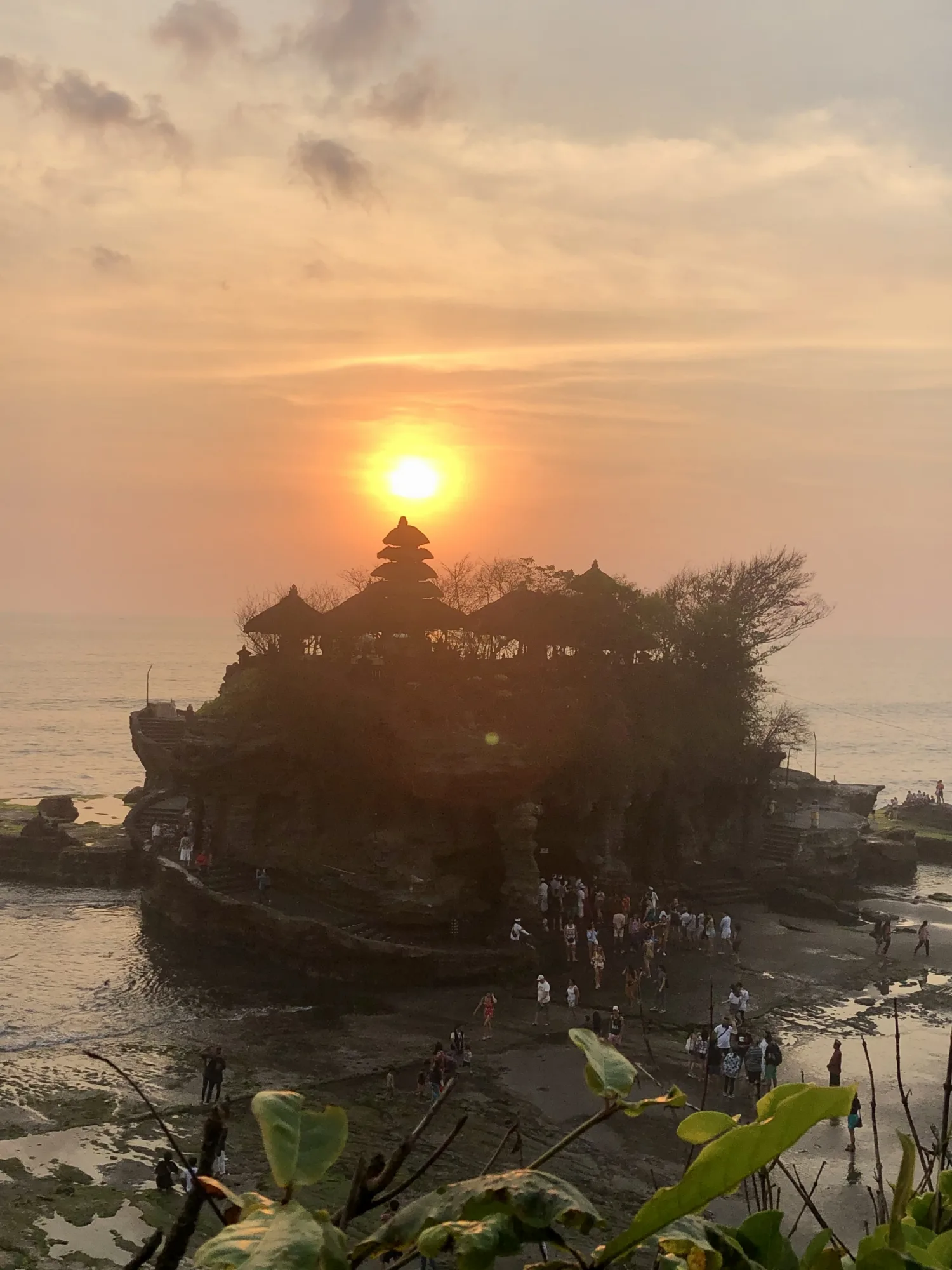
- Bali: the 150,000-rupiah tourist levy is checked at the airport entrance and at the main attractions — Tanah Lot, Uluwatu, Besakih, Tegalalang.
- Cambodia: the Angkor ticket is now printed with a live photo of the guest, and faces are checked at the entrances.
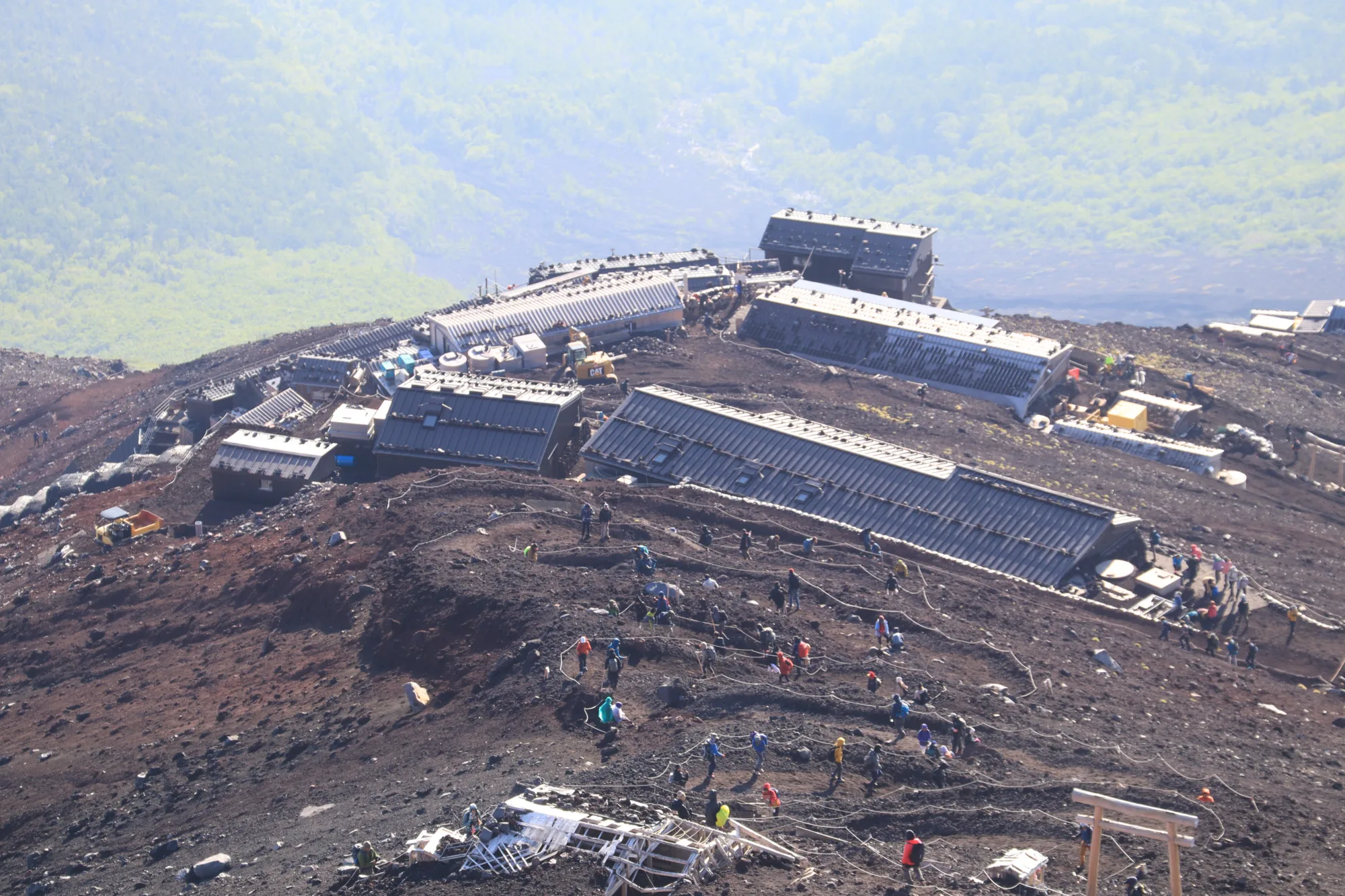
- Japan: climbing Mount Fuji has become paid on all four routes, with mandatory online pre-registration.
- Kyoto: some narrow lanes of the Gion district are closed to tourists without the permission of residents — an on-the-spot fine.
- Thailand: several national parks have raised the entrance fee for foreigners, while the price for Thais is unchanged.
- China: most landmark sites require a ticket booked in advance online under a passport — you can hardly buy at the entrance anywhere.
Why the region is introducing rules right now
The tourist flow to Southeast Asia and part of East Asia has recovered and in many places exceeded pre-pandemic levels, while the infrastructure of temples, parks and mountain trails is not designed for so many people at once. Governments are reacting in three ways: introducing or tightening entry fees, limiting the number of visitors per day through a booking system, and physically closing part of the territory to free access. None of these mechanisms is intended as a barrier for tourists — they all solve a specific problem: overloaded trails, crumbling monuments, and local residents’ discontent with tourist behaviour. Knowing the rules in advance saves time and money and removes the risk of spoiling your day because of an unexpected requirement on the spot.
Bali: a tourist levy that is now actually checked
The tourist levy in Bali — 150,000 rupiah (about 9 dollars) per person — has been in force since February 2024 and has not changed in size since, although the island’s authorities have discussed raising it. Something else has changed: enforcement. By 2026 separate levy-check desks have appeared at Bali airport — if you haven’t paid it online in advance, you will be directed to a cashier to pay on the spot before leaving the terminal. Besides the airport, tourism service staff now carry out selective checks right at popular attractions — Tanah Lot, Uluwatu, Besakih, Tegalalang — and, according to the island’s governor, visitors without proof of payment may be refused entry to the site. At the same time there is still no official fine for non-payment: the tenfold fine promised earlier never became law, and in practice you will simply be asked to pay the levy by QR code on the spot — not the most pleasant situation in the middle of a holiday, but not a disaster either. The most sensible solution is to pay the levy in advance online on the official Love Bali portal and save the QR code on your phone; hotels, tour operators and travel agencies can now also officially collect this payment, receiving a small commission for it.
Cambodia: a live photo on the Angkor entrance ticket
Ticket prices for the Angkor temple archipelago have not changed: 37 dollars for one day, 62 for three days within a week, 72 for seven days within a month — you should buy only on the official website or at the Angkor Enterprise ticket office, no other legal sellers exist. Children under twelve enter free, although staff have the right to ask for a passport to confirm age. The main innovation of 2026 is the strict linking of the pass to identity: at purchase a live photo is taken and printed right on the ticket, and at temple entrances there are now selective checkpoints comparing the face with the photo on the pass. For a tourist this means one practical consequence: you must buy the ticket in person and on the spot (or via the official online system with a photo upload), and passing on or selling your ticket to someone else is now physically impossible. In the first seven months of 2026 Angkor Enterprise recorded more than 431 thousand foreign visitors — a number that explains why stricter control was needed. For more on tickets and routes see our guide Angkor: tickets and temples.
Japan: climbing Mount Fuji and the closed lanes of Gion
For many years Mount Fuji was one of the few major treks in the region without a mandatory fee, and this has changed: from the 2026 season on all four routes — Yoshida, Subashiri, Gotemba and Fujinomiya — a single mandatory fee of 4,000 yen applies, and you must register in advance online on the official site fujisan-climb.jp. On the most popular route, Yoshida, a daily limit of four thousand climbers applies — the other three routes so far have no numerical limit but the same mandatory registration. The reason for the tightening is direct: overloaded trails and cases where unprepared tourists climbed at night without equipment for the sunrise. Details of the routes and preparation are in our guide to climbing Mount Fuji.
In Kyoto similar logic worked differently: tourists were not banned from the Gion district as a whole — the main street, Hanamikoji, is still open to everyone. But the narrow private lanes of the district, where the houses of geisha and apprentice maiko are located, are closed to passage without an invitation from residents: for entering there without permission an on-the-spot fine of about 10 thousand yen (about 60 dollars) is provided. The reason is complaints from local residents about intrusive photography, attempts to touch the geisha’s expensive costumes and narrow streets blocked in pursuit of the perfect shot. The rule is easy to follow: stay on the main street and the lanes open to visitors, and in disputed cases go by the signs forbidding photography.
Separately, from 1 March 2026 Kyoto sharply revised its accommodation tax on hotels — a system of three tiers was replaced by five, tied to the room price per night. Budget rooms (up to 6,000 yen) are still subject to the minimum levy of 200 yen, but at the other end of the scale the changes are much more noticeable: rooms of 20,000–50,000 yen are now taxed at 1,000 yen instead of the previous 500, and for rooms over 100,000 yen a night the tax has risen tenfold — from 1,000 to 10,000 yen per person per night. For the budget of a tourist choosing a mid-range hotel this has almost no effect, but those planning luxury accommodation in the historic centre of Kyoto should budget for this item in advance — for a week in a hotel of this level the levy can add 70,000 yen or more to the bill.
Thailand: national parks raise prices for foreigners only
Several of Thailand’s national parks have raised entrance tickets specifically for foreign tourists, leaving the price for citizens of the country unchanged — a practice familiar across the region. Among the changes are the Hat Noppharat Thara — Mu Ko Phi Phi park in Krabi, where an adult ticket for foreigners now costs 400 baht and a child’s 200, and Khao Yai park in the central part of the country. The difference in price for locals and foreigners has existed in Thailand for a long time and should not surprise, but the specific sums are worth checking before the trip on the official website of the Department of National Parks, since decisions are made for each park separately rather than by a single federal rule.
Vietnam: a crowded Ha Long Bay and weekends in Sapa
Entry to Ha Long Bay still costs from 260 to 310 thousand dong depending on the route, and children up to 1.2 metres tall enter free — no formal changes in the payment system have occurred. But an informal problem is growing: in peak season more than two hundred cruise ships sail around the bay at the same time, and the best-known rock formations become cramped in the literal sense. In the town of Sapa in the north of the country the picture is similar at weekends: the mountain village is filled at once by Chinese tourist groups and domestic travellers from Vietnamese cities. No direct restrictions or booking systems have been introduced yet, but the practical advice is the same as works across the region — plan your visit for weekdays and the first half of the day to avoid the peak crowd.
China: booking almost everywhere, but not without exceptions
Since 2020 most of China’s landmark sights have moved to a system of mandatory advance booking by entry time — the section of the Great Wall at Badaling, the Terracotta Army in Xi’an, the Forbidden City and the National Museum in Beijing, the panda base in Chengdu and hundreds of other 5A-category places require buying a ticket in advance via an app or website, often several days ahead, and a ticket cannot be bought right at the entrance anywhere in the places listed. But in 2026 a reverse movement has also appeared: several parks in Beijing — the Temple of Heaven, the Summer Palace and Yuanmingyuan Park — returned to free sale of tickets at the entrance after several years of mandatory booking, showing that the system is not static and can change in both directions. The practical conclusion is one: for any landmark place in China check the booking rules specifically before the trip, rather than relying on what you remember from a past trip or someone else’s story.
How to prepare in advance: five universal rules
Check the rules of the specific place right before the trip. Regulations in the region change quickly, and information that is half a year old may no longer correspond to reality.
Pay fees and book tickets only on official sites. Intermediaries and resellers charge a commission, and with systems like Cambodia’s photo pass they won’t be able to help you at all.
Save confirmations on your phone with offline access. The Bali tourist-levy QR codes and China bookings should open even without internet in case of poor reception at the entrance.
Allow time for checks. The live photo at Angkor, the levy desks at Bali airport and registration for Fuji take time that did not exist five years ago.
Respect local restrictions without argument. A fine for entering a closed lane in Gion or trying to bypass the registration system on Fuji is not worth the short gain of time you would get.
What this means for trip planning
The main consequence of all these changes is that a trip to Asia requires a little more preparation in advance than five years ago, but does not become harder overall. Previously you could decide at the last moment whether to go to Angkor or Fuji today; now for some of these decisions you need to book a place several days ahead. This is rather good news for those who like to plan ahead, and a small inconvenience for spontaneous travellers — but in any case knowing the rules before departure saves both money and nerves on the spot.
FAQ
Is the Bali tourist levy checked on departure? The main checks are at the airport entrance and selectively at popular attractions; there is no official fine, but without a QR code you will be required to pay on the spot.
Can I pass an Angkor ticket to another person? No, since 2026 the pass is tied to the owner’s live photo and checked by face at temple entrances.
Is registration needed to climb Mount Fuji? Yes, prior online registration and payment of the 4,000-yen fee are mandatory on all four routes.
Are tourists banned from entering Gion? No, the main street Hanamikoji is open; only private lanes without residents’ permission are closed.
Do prices in Thailand’s national parks differ for locals and foreigners? Yes, in a number of parks the price for foreigners has risen while for Thai citizens it remained the same.
Do I need to book all China’s attractions in advance? Most landmark places — yes, but the rules change: some Beijing parks returned to free ticket sales in 2026.
How much has the accommodation tax in Kyoto risen? From 1 March 2026 — for rooms cheaper than 20,000 yen the rise is symbolic, while for luxury rooms of 100,000 yen a night and above the tax has risen tenfold, to 10,000 yen per person per night.
Sources
- Bali Tourist Tax 2026 — Emerhub
- Latest Angkor Ticket Prices 2026 — Hello Angkor
- Mount Fuji Rules in 2026 — Tokyo Cheapo
- Tourist restrictions in Kyoto’s Gion — Japan Today
- Kyoto lodging tax hike 2026 — Nippon.com
- Full list of Thailand’s new national park entry fees — Nation Thailand
- Beijing’s one-stop ticketing platform — CGTN
Rules, prices and booking systems change regularly — before your trip check current information on the official websites of each attraction.