700 Years of Craftsmanship Born From Imperial Needs
The history of Thuỷ Xuân village dates back over 700 years and goes back to the era of the Nguyen clan lords. Initially, local people produced incense exclusively for the needs of the imperial court and ceremonial rituals in Hue – meaning the craft had a courtly status from the very beginning, which distinguishes it from many other traditional Vietnamese village crafts that developed solely for local consumption.
Rainbow Incense Fans as the Village’s Calling Card
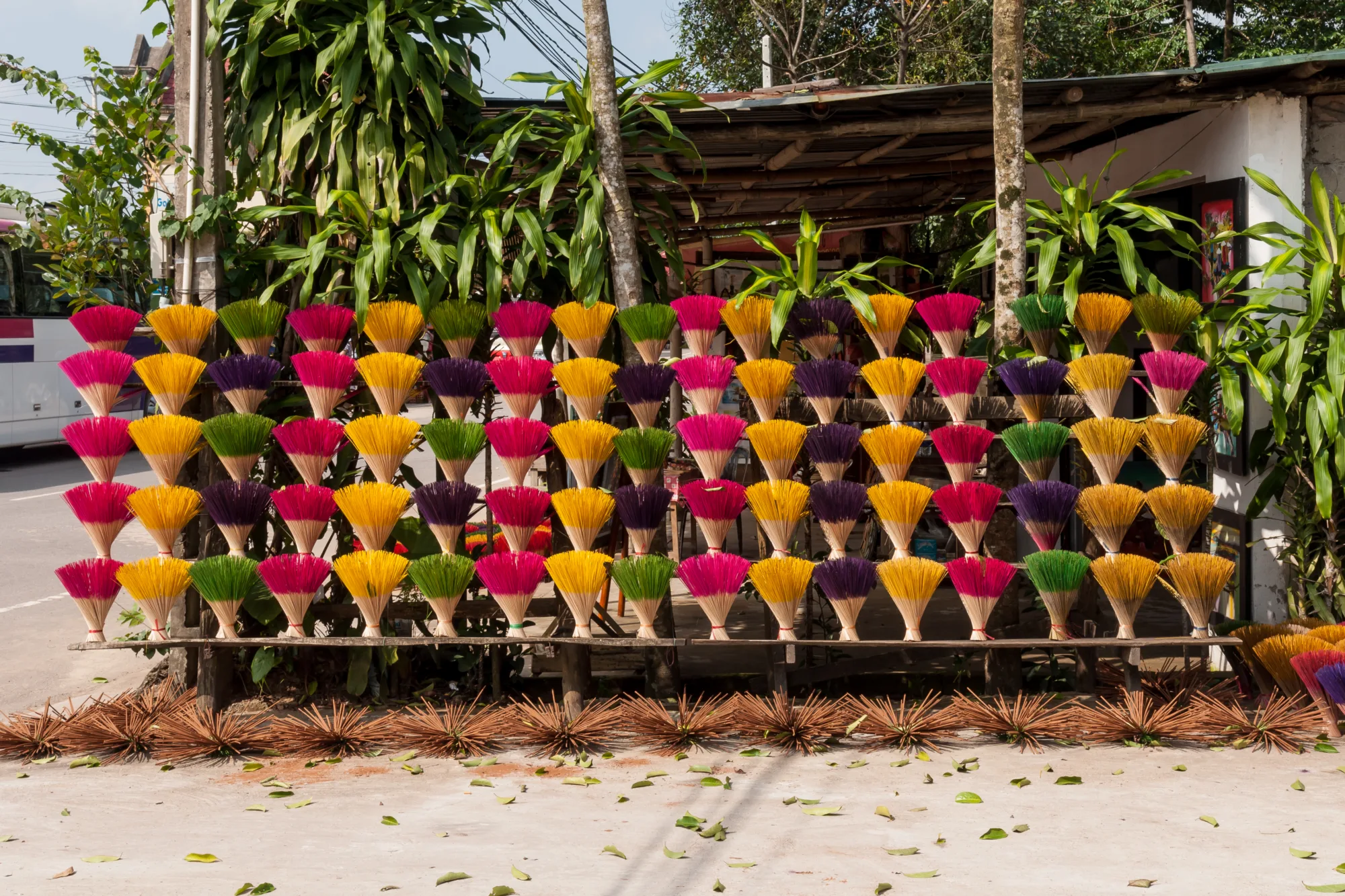
The main visual feature that has made the village a viral topic among young audiences is the way locals display their finished products: bundles of incense sticks are fanned out by color directly on the street, creating the effect of giant rainbow flowers from tightly packed stems. This technique originally served a purely practical purpose – drying the incense in the sun – but over time it has become the village’s main attraction thanks to its photogenic quality.
When to Visit for Vibrant Photos
The optimal period for a visit is from March to August, the dry season when locals mass-produce incense to dry in the sun, creating a dense and saturated color effect along the streets. In rainy months, the amount of product laid out to dry is noticeably less, and therefore the famous “rainbow” effect will not be as impressive – it’s worth considering seasonality when planning a trip specifically for this location.
Free to Enter, But There are Costs
Visiting the village itself doesn’t require an entrance ticket – you can wander among rows of colorful incense sticks and watch them being made completely free of charge. However, you can buy a bundle of incense as a souvenir for around 20,000 dong on site, and traditional Vietnamese dresses (áo dài) are available to rent for photos, costing from 100,000 to 150,000 dong per set – a popular option among visitors wanting a photo in national costume against the backdrop of vibrant incense.
Make Your Own Bundle of Incense
In addition to watching the traditional manufacturing process, visitors are offered the chance to try assembling their own colorful bundle of incense and take it home as a souvenir – a format that adds an element of practical participation to the visit, rather than just passively observing and photographing finished products.
Combining with Tu Duc Tomb
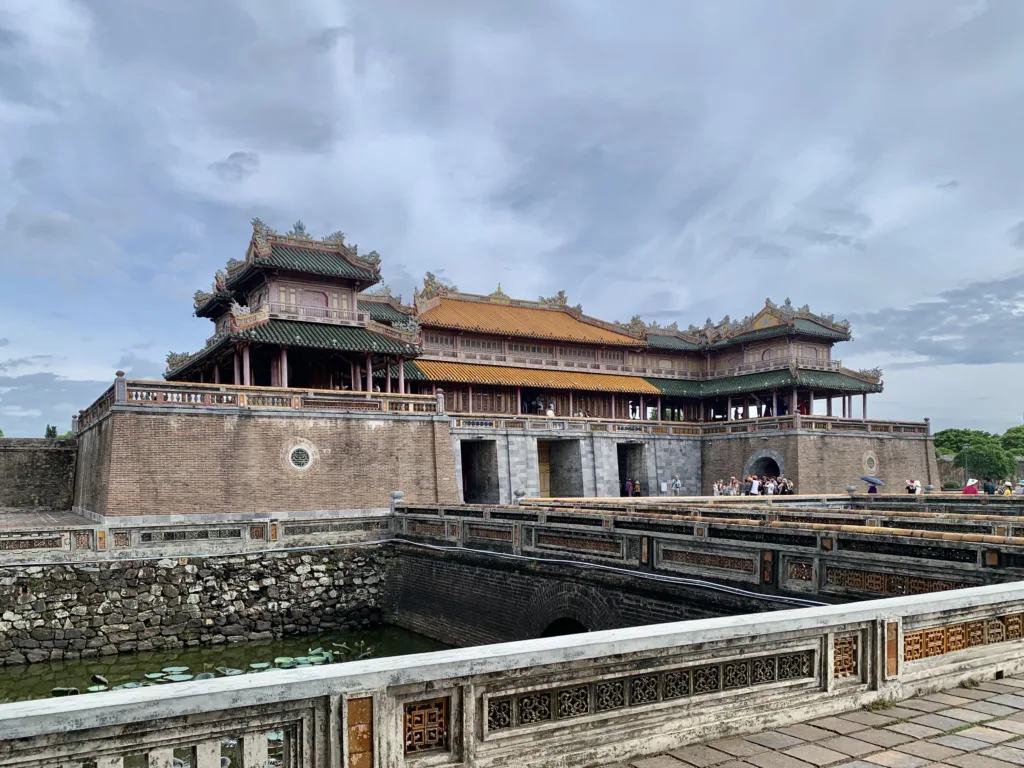
The village is located right on the road leading to Tu Duc Tomb – one of Hue’s most famous imperial mausoleums, known for its well-thought-out landscape design and gardens. It makes sense to combine both places in a single route: first visit the tomb, then stop by the incense village on your way back, without having to make a separate trip to that part of the city.
Practical Checklist
- The craft is over 700 years old, originating with the Nguyen clan lords for the needs of the imperial court.
- Entrance to the village is free; a bundle of incense as a souvenir costs around 20,000 dong.
- Áo dài rental for photos – 100,000–150,000 dong per set.
- Best season for vibrant photos – March to August, the dry period with mass sun-drying.
- Located on the road to Tu Duc Tomb – easy to combine in a single route.
Frequently Asked Questions
How much does it cost to enter Thuy Xuan Incense Village?
Entrance is free; you only pay for souvenirs or áo dài rental for photos.
When’s the best time to visit?
March to August, during the dry season when incense is mass-hung out to dry in the sun, creating maximum color effect.
Can I make my own bundle of incense?
Yes, you can try assembling your own colorful bundle on site and take it with you.
How far is this from Hue’s city center?
The village is located on the way to Emperor Thuy Duc’s tomb – it’s convenient to combine both places in one visit.
What’s Next
Check out the guide to Hang Heo near Nha Trang and sort out Vietnam’s visa rules before you go.
Seasonality and souvenir prices may vary – check the latest information before your visit.