Dunhuang: the Mogao Caves, the Mingsha Dunes and Crescent Lake. Ticket types and prices, booking rules for foreigners, how many days you need and when to go along the Silk Road.
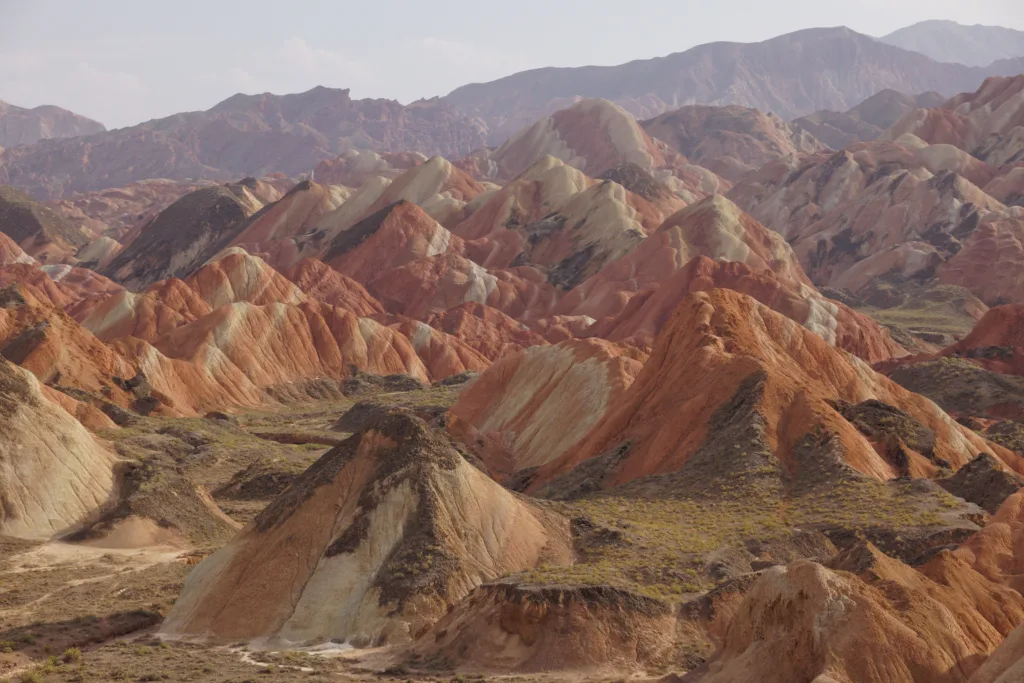
You walk through a desert where there is nothing but sand and sky — and suddenly a nine-storey wooden tower grows out of the rock on a sheer wall, and behind it, in hundreds of caves carved into soft sandstone, a thousand years ago monks and merchants left one of the world’s largest collections of Buddhist painting. Dunhuang is an oasis on the edge of the Gobi Desert in Gansu Province, once a key node of the Silk Road, and today its Mogao Caves and the Mingsha sand dunes receive thousands of travellers who come for the feeling of standing on the edge of the ancient world.
The Mogao Caves: a thousand years of painting
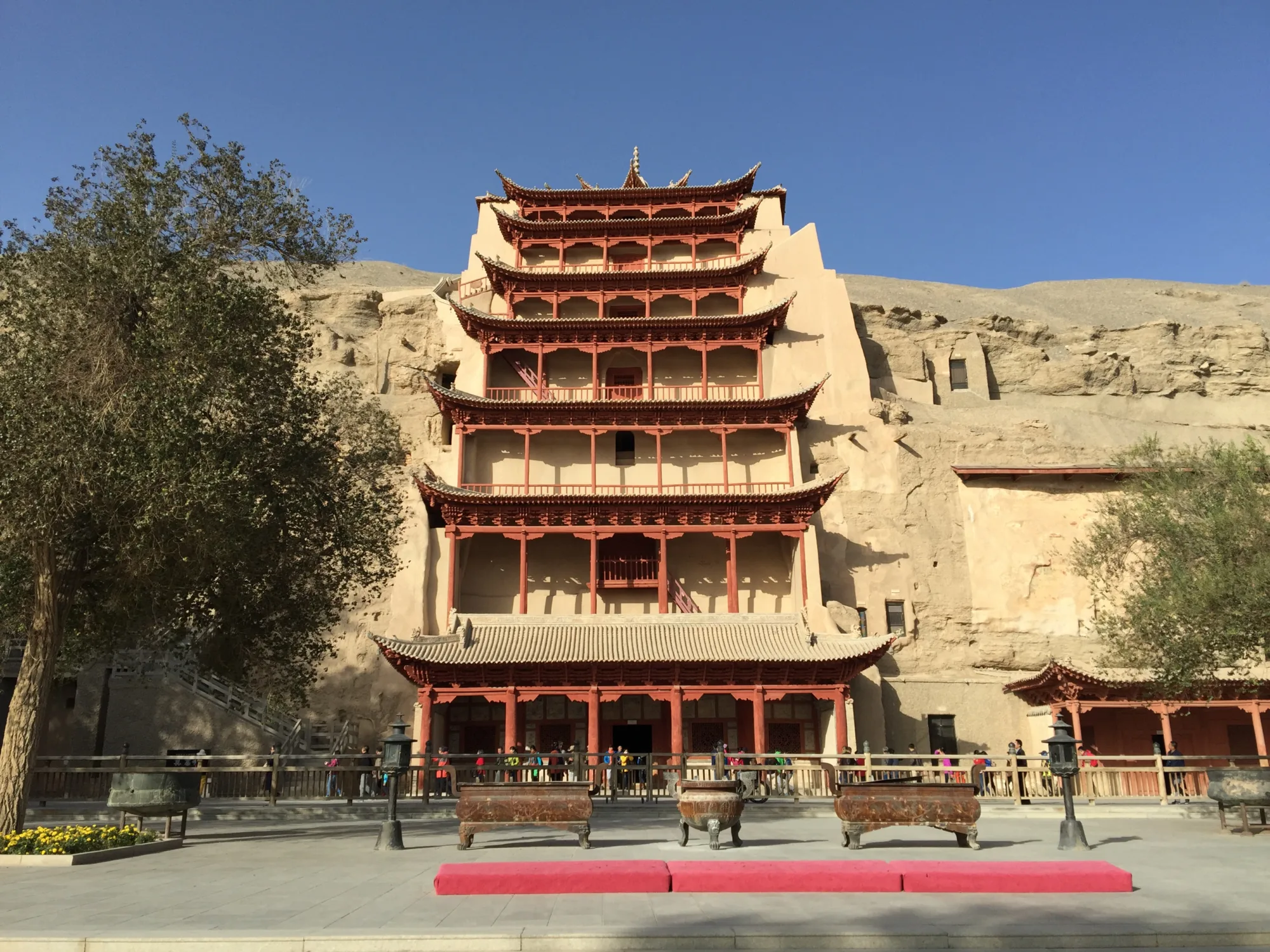
Mogao is also called the “Caves of the Thousand Buddhas”. The complex of about five hundred temple-caves began to be carved in the 4th century AD, when Silk Road caravans passed here, and continued for ten centuries. The walls and ceilings are covered with frescoes and sculptures with a total area of about 37 thousand square metres — one of the world’s largest collections of Buddhist art. The most recognisable detail is the nine-storey Jiucenglou tower, built at Cave 96, which houses a giant statue of the Buddha: it is its photo that appears in most guidebooks.
Tickets to Mogao: what is important to know
The ticket system at Mogao is strict: the number of visitors per day is limited to protect the fragile frescoes. No more than six thousand type A tickets and twelve thousand type B tickets are issued daily. Ticket A (258 yuan) is a two-hour guided tour of eight caves and two IMAX films about the caves. Ticket B (100 yuan) is four caves and a guide in Chinese only. Booking on the official website and in the WeChat mini-programme opens about a month before the visit, but for foreigners with ordinary passports online booking on their own is reportedly unavailable: what remains is to buy a ticket through a reliable agency or at the box office on arrival. The rules change periodically, so check the current procedure in advance.
Mingsha and Crescent Lake
Dunhuang’s second main attraction is the Mingsha sand dunes, the “singing sands”, at the foot of which lies Crescent Lake: a small emerald crescent-shaped body of water that has survived for centuries in the middle of the desert. The ticket costs about 120 yuan and is valid for three days, so you can come both for sunset and for sunrise. A camel ride costs about 100 yuan per camel, not including the entrance ticket, and the climb to the dune crest rewards you with a view of the whole oasis.
How many days you need
The minimum is two full days: one “cultural” for Mogao, the second “desert” for Mingsha and Crescent Lake. With two days you will see the main things, but with a third the desert turns from a series of quick excursions into a calm journey: you can go to the dunes at sunrise, stroll around Dunhuang’s night market and not hurry for your flight.
When to go
The best time is late spring and autumn, when it is warm by day and cool at night. In summer it is very hot in the desert, and in winter it is cold and the wind cuts right through you. In the morning and evening the light on the dunes is especially beautiful, and in the middle of the day the sands heat up and climbing them is hard.
Practical tips
Book a hotel in advance if you come for the Chinese holidays: tickets to Mogao fly off instantly. Take light clothing, a hat, sunglasses and plenty of water. You cannot photograph inside the Mogao caves — flash and even light spoil the frescoes, and the guides strictly follow the rules. Leave an evening for Dunhuang’s night market: they sell noodles with donkey meat, melons and souvenirs there.
FAQ
How much is entry to Mogao? Ticket A is 258 yuan (8 caves and two IMAX films), ticket B is 100 yuan (4 caves, guide in Chinese).
Can foreigners book online? According to tour operators, online booking is mainly open to Chinese citizens and residence permit holders; foreigners are left with agencies or box offices after arrival — check the procedure before the trip.
How much are the Mingsha dunes? About 120 yuan, the ticket is valid for three days; a camel costs roughly 100 yuan on top.
How many days do I need? At least two, better three, so as not to hurry.
Can I take photographs in the caves? No, photography inside the caves is forbidden: light and flash harm the frescoes.
Prices, booking rules and ticket quotas may change — check the current information before your trip.