Is there 7-Eleven in Chinese cities, how the stores differ from the Japanese ones and which hot food and snacks are worth trying.
What the format is and why you can rely on it on a trip
7-Eleven is a konbini, a 24-hour neighborhood convenience store within walking distance, a Japanese model that the company Seven & i Holdings has spread to two dozen countries. The format rests on three things: the store is open 24/7, it always has hot takeaway food and a microwave for heating, and you can find it in almost any large city — near the subway, in residential blocks, in business centers. For a tourist in China it is a ready solution to several problems at once: where to grab a bite at 11 p.m., where to find water and snacks without a trip to the market, where to hide from the heat for five minutes. The menu and payment work almost everywhere by the same algorithm, so once you get used to one city you will feel confident in another too.
Is there 7-Eleven in China and where to look for it
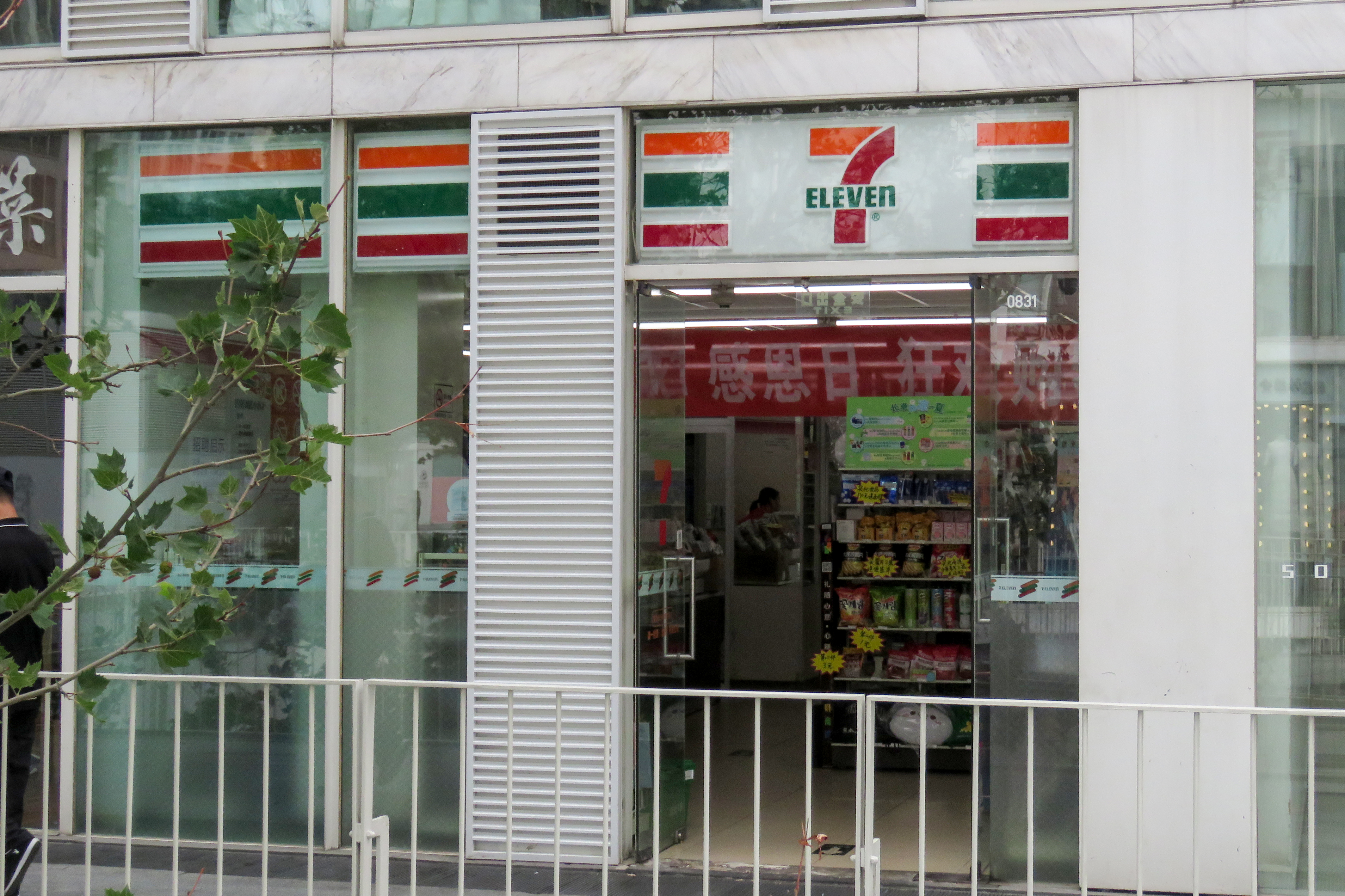
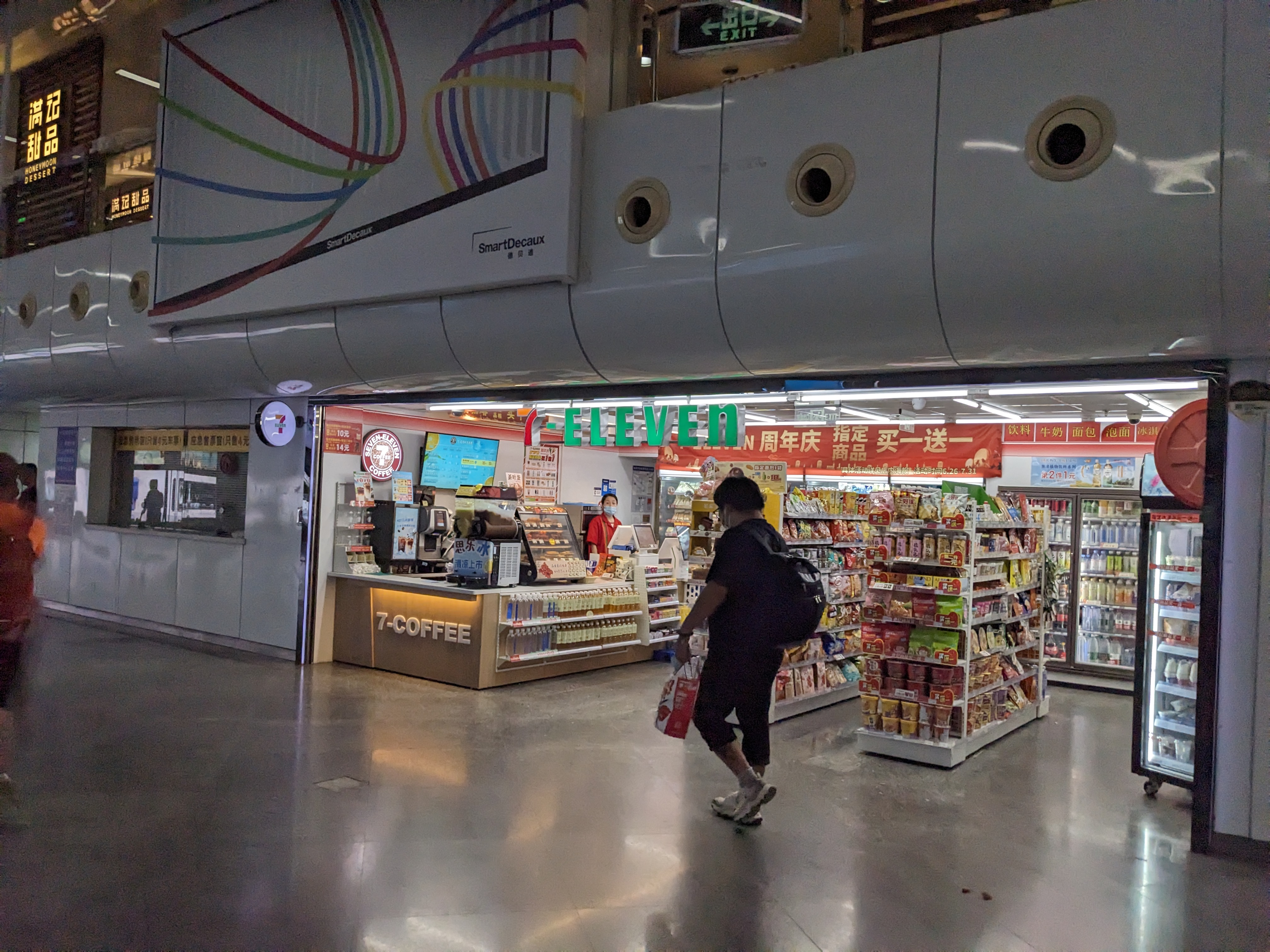
Yes, the chain has been present in mainland China since 1992: the first five stores opened in Shenzhen under a license from Hong Kong’s Dairy Farm (then “Hong Kong Dairy Farm”), and in 1996 the chain reached Guangzhou. Since then the format has spread across the country as a fan of separate regional franchises — in this sense China is arranged differently from Japan or Thailand, where there is a single national operator.
Today the densest network is in Guangdong province (southern China): Guangzhou, Shenzhen, Foshan and another ten or so cities of the province — in total more than 1,800 points there as of the end of 2024, and the stores are run by the joint venture Guangdong Saiyi Convenience (with the participation of Hong Kong’s DFI Retail Group, which also holds 7-Eleven in Hong Kong and Macao). The second most important hub is Beijing and Tianjin, where the chain is developed directly by a subsidiary of Seven & i Holdings (more than 230 stores according to recent years’ data), and from there the relatively young but growing network in Chengdu is also managed. In Shanghai and Zhejiang province 7-Eleven works under a separate franchise of Taiwan’s Uni-President (the same company that holds the largest 7-Eleven network in Taiwan) — here there are noticeably fewer stores than in Guangdong, and they appeared later, from 2009. Plus a separate operator in Qingdao (more than 200 points) and a smaller presence in Chongqing, Xiamen, Fuzhou and a number of other cities.
The practical conclusion for a tourist: in Guangzhou, Shenzhen and Beijing running into a 7-Eleven is a matter of a few minutes’ walk in the central districts. But in cities without their own operator (a significant part of China) the chain simply does not exist — there, look to local and national competitors like Meiyijia or Lawson (more on them below).
How the Chinese 7-Eleven differs from the Japanese
If you have already been to Japan and are counting on the same experience, it is worth adjusting your expectations on two points.
The structure of the chain. In Japan 7-Eleven is more than 20,000 stores of one operator (Seven-Eleven Japan) with a single assortment, a single loyalty program and its own network of 7-Bank ATMs that accept foreign Visa and Mastercard. In China, as described above, the chain is fragmented into independent regional licensees — each with its own logistics, assortment and points/subscription system. A store in Guangzhou and a store in Beijing in fact belong to different companies, and it shows: a different set of dishes, different promotions, a different level of service “polish”.
ATMs and payment by a foreigner. In Japan, 7-Eleven for many tourists is first of all a 7-Bank ATM that reliably withdraws cash from a foreign card. In China there is no analogue of such an ATM network at 7-Eleven: here you should count not on a card but on Alipay or WeChat Pay (how a tourist without a Chinese bank card can connect them is in a separate guide to topping up Alipay and WeChat from Russia) or on cash yuan.
An assortment for local tastes. The backbone of the menu is hot food that is cooked or heated right in the store: “oden” in the Chinese manner (关东煮, guandongzhu — vegetables, tofu, fish balls and seafood in broth, steaming and sold by the piece), wheat buns baozi (包子) with different fillings, tea eggs (茶叶蛋) — hard-boiled and steeped in a tea-and-soy broth, onigiri and sushi rolls, sandwiches and pastries. In Beijing and the north of the country, hot lunch boxes with rice and meat are sold separately — something between Chinese fast food and bento: for example rice with kung pao chicken, noodles with meat in spicy sauce, rice with pork in soy sauce. This is much closer to local street food than to Japanese onigiri with salmon or tamago sandwiches — the chain adapts its hot line to what is eaten in the particular region.
What to buy: food, drinks, prices in yuan
Prices depend strongly on the region and the specific store (remember the separate operators), but based on open data for large cities the guidelines are as follows:
| Item | What it is | Price, ¥ |
|---|---|---|
| Guandongzhu (关东煮), 1 pc. | vegetables/tofu/fish balls in broth, picked by the piece | 1.8–5 |
| Fried snacks (“好炸”) | nuggets, wings, tempura — fried on the spot | 5.5–15.8 |
| Baozi, tea egg | a steamed bun with filling, an egg in tea broth | a few yuan apiece |
| A ready lunch in a box (盒饭/便当) | rice/noodles with meat and vegetables, heated in the microwave | 10–23 (on average 12–17) |
| Onigiri, sushi roll | rice with filling in nori | 5–12 |
| Instant noodles + hot water | your own noodles or the store’s, poured over on the spot | 5–10 per noodles |
| Coffee / milk tea to go | from a machine or made by a barista | 8–15 |
Separately it is worth knowing about the hot-water coolers — in Chinese 24-hour stores (not only 7-Eleven) they are almost always in the area with instant noodles, so a cup of noodles for 5–8 yuan turns into a hot lunch in a couple of minutes, without a kettle or a stove in the hotel. In some large stores, especially in Guangzhou, there is a “mini-canteen” format with an area for eating on the spot — there they also sell a wider set of hot dishes, up to 22–23 yuan per portion.
How to pay and how it all works
Cash yuan are accepted at 7-Eleven everywhere, but in fact the absolute majority of customers pay with a smartphone — Alipay or WeChat Pay, scanning the QR code at the checkout or showing the cashier their code to scan. A Russian bank card does not link directly to these wallets — you need a preliminary way to top up the balance without a Chinese card (covered in the article on currency and payment in China and separately on topping up Alipay and WeChat from Russia). If the wallet is not yet set up, just keep a little cash yuan with you — 7-Eleven checkouts do not turn it down.
The purchase itself is simple: you pick hot items from the display yourself or ask the seller to take them out and heat them, and piece items like guandongzhu you put in a container with tongs and pay by weight/quantity at the checkout. The shelves with drinks, snacks, toothbrushes and power banks are self-service, as in any supermarket. The cashier will usually offer to heat the food in the microwave for free — it is a standard service, not something you have to beg for.
7-Eleven vs FamilyMart vs Lawson in China
7-Eleven is not the only Japanese chain on the Chinese market: FamilyMart and Lawson are represented just as visibly and even outnumber 7-Eleven in the number of stores. Lawson is actively growing across the country and by various counts of recent years holds several thousand points — it is one of the largest foreign players on the market. FamilyMart has historically established itself most strongly in Shanghai (at one time almost half of all the chain’s stores in China were in that city) and continues to expand into second- and third-tier cities in the Yangtze delta. Against this background 7-Eleven looks more modest in the national standings — the chain is in the top 10 convenience retailers of China in the ranking of the China Chain Store & Franchise Association (CCFA), but is noticeably behind both local giants like Meiyijia (tens of thousands of stores) and Lawson and FamilyMart in total coverage of the country.
For a tourist the difference in practice is small: all three chains share the same principle — hot food, hot water, smartphone payment, round-the-clock operation. FamilyMart is separately known for its own bento line (including a premium one, more expensive than usual — around 15–17 yuan and above), and Lawson is historically strong in confectionery and baked goods. If you find yourself next to one of these two rather than a 7-Eleven, go right in, the logic of use is the same.
What tourists and locals say
Foreigners’ reviews of the Chinese 7-Eleven most often come down to one thought: it is not at all the American “gas station store” with hot dogs and slushies but a full line of hot food and ready meals — a blogger who has lived in East Asia for many years describes such a store briefly: it is “nothing whatsoever like a 7/11 in your country. Nothing” (source: halalxplorer.com). The author of another travel blog, who compared convenience stores in different countries, ranked the Beijing 7-Eleven above its counterparts in Cambodia and on a par with Seoul’s — above all because of the quality of the hot food and the grilled meat skewers.
Among the Chinese themselves, the topic of lunch at 7-Eleven periodically becomes a reason for humorous discussions on social media — in the vein of “isn’t it embarrassing for an office worker to have lunch at a konbini”; in the end most agree that it is simply fast, predictable in price and taste and no worse than the standard canteen. For a tourist this is rather a plus: if locals use the store as an everyday lunch spot, it means the food there is not “for show” but an option that is really used.
A practical checklist
- Look for the chain first of all in Guangzhou, Shenzhen, other cities of Guangdong, as well as in Beijing, Tianjin, Chengdu, Shanghai and Qingdao — in other cities it may not exist.
- Set up Alipay or WeChat Pay in advance (or keep cash yuan on you) — a card at a 7-Eleven checkout may not work.
- Hot food can be taken by the portion (guandongzhu, fried snacks) or as a ready box — lunch for one will cost about 15–25 yuan.
- Hot water for instant noodles is usually available in the ready-food area — convenient for a late snack at the hotel or before a train.
- Don’t compare directly with the Japanese 7-Eleven in assortment and don’t look for 7-Bank-level ATMs — they don’t exist here, these are different chains with different infrastructure.
- If there is a FamilyMart or Lawson next to you instead of a 7-Eleven, the logic of use is exactly the same, don’t waste time looking for this particular sign.
Frequently asked questions
Is 7-Eleven in China the same as in Japan?
No. These are different operators in different regions of China, working under a license from the parent company, with their own assortment and without a unified ATM network like Japan’s 7-Bank. The format is similar (round-the-clock, hot food, a microwave), but the set of dishes and the level of service differ from city to city.
Which country’s brand is 7-Eleven?
The chain was founded in 1927 in Dallas, USA, and by registration remains an American company — but since 1991 the controlling stake has belonged to Japan’s Ito-Yokado, and since 2005 7-Eleven has been wholly part of the Japanese holding Seven & i Holdings. So to the question “which country’s brand” there are two correct answers: historically American, and in terms of actual management Japanese.
In which Chinese cities is there definitely a 7-Eleven?
The most stores are in Guangdong province — Guangzhou, Shenzhen, Foshan and a number of other cities of the province — as well as in Beijing, Tianjin, Chengdu, Shanghai and Qingdao. In most other cities of the country there is no chain, and local competitors or Lawson/FamilyMart operate there.
Can I pay at 7-Eleven with a foreign card?
In practice almost everyone pays through Alipay or WeChat Pay, which must be topped up in advance without a Chinese card, or with cash yuan. You should not count on a foreign card being accepted at the checkout.
Does a Chinese 7-Eleven have a toilet and hot water, as in Japan?
Hot water for instant noodles in the ready-food area is common — it is a general practice for 24-hour stores in China, not an exclusive of 7-Eleven. With toilets the situation is less predictable and depends on the specific store and region — unlike in Japan, where it is an almost guaranteed option in any konbini.
What must I try at a Chinese 7-Eleven?
Guandongzhu (关东煮) — vegetables, tofu and fish balls in broth picked by the piece, steamed baozi with filling and tea eggs (茶叶蛋). Among hot dishes — a lunch box with rice and meat in the Chinese style, not the Japanese onigiri, of which there are noticeably fewer in Chinese stores and the choice is more modest.
Conclusion
In China 7-Eleven is not a single nationwide chain but several independent regional operators united by a common brand and a common idea: hot food, hot water and a checkout that works 24 hours. The main difference from the Japanese experience is not in the sign but in the arrangement: a different assortment from city to city, payment by smartphone instead of a card and the absence of a branded ATM network. If you come across a store in Guangzhou, Shenzhen, Beijing, Chengdu, Shanghai or Qingdao, it is a reliable and predictable option for a bite at any time of day; if there is no chain nearby, a FamilyMart or Lawson working on the same logic will replace it without loss.