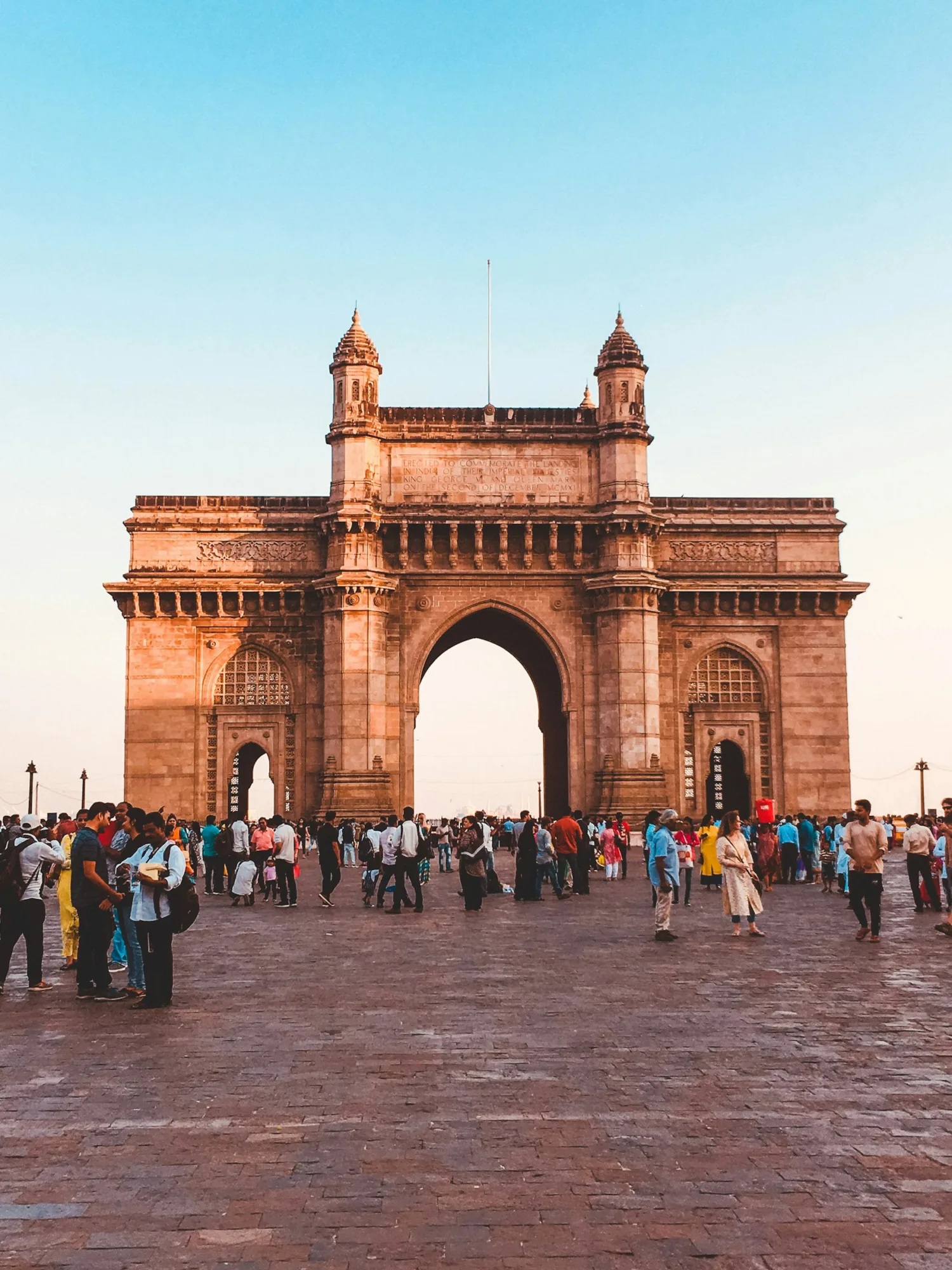
How to choose tours in Mumbai: city tours, Elephanta caves and a Bollywood studio, with honest tips on what to skip.
Mumbai does not try to please you from the first minute. It meets you with a stream of people, honking taxis and the smell of fried food, the sea and petrol all at once, and many think in the first hours: “What am I doing here?” Then you walk out onto the promenade in the evening, see thousands of people sitting on the sea wall watching the water, a vendor holds out hot corn to you, and the city suddenly becomes clear. Mumbai is money and poverty side by side, film studios and slums, old colonial buildings and glass towers. Let us work it out: which tours in Mumbai are truly worth your time, how to combine the city with Elephanta Island and what you can safely skip. We collected offers from the Trip.com catalogue, with duration, language and cancellation terms.
- City sightseeing tours: half a day or a full day (4–8 hours).
- Elephanta Island and its caves, by boat with a guide (4–8 hours).
- A Bollywood film studio with entrance tickets (3–6 hours).
- Private programmes for those who want to go at their own pace.
City tours: how to choose between half a day and a full day
Mumbai is huge, and trying to see all of it in a few hours is pointless. So it is important to understand what you want. A half-day tour gives a general idea: the colonial centre, the promenade, the main buildings. A full day adds districts and stops where you can linger. Options:
- Mumbai: a half-day city tour, 3.9 hours, in English;
- Mumbai: a city and heritage tour with transfer, 4.3 hours;
- Mumbai: a full-day sightseeing tour, 6.5 hours;
- Mumbai in one day: a private tour with a guide, 6.2 hours.
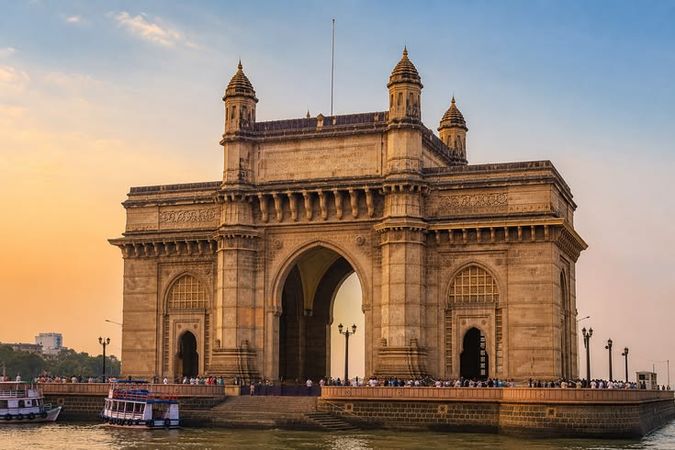 Tour from the article · ExcursionMumbai: half-day city tourCheck dates →Live price · Trip.com
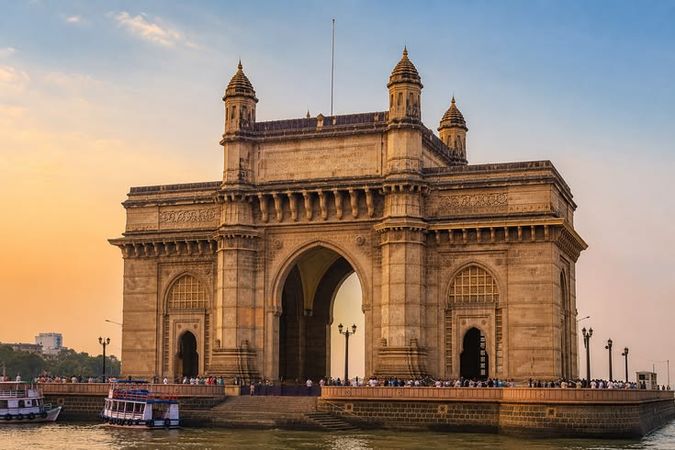 Tour from the article · ExcursionMumbai: city and heritage tour with transferCheck dates →Live price · Trip.com
 Tour from the article · ExcursionMumbai: full-day sightseeing tourCheck dates →Live price · Trip.com
If you are in Mumbai for a day, take half a day and leave the evening for the promenade. If you have two or three days, a full day gives more pleasure: you will not be watching the clock and will have time to stop where it is interesting. Remember that the city has heavy traffic, and distances that look short on the map in fact take a long time.
A private guide: when it is justified
For those who do not like group programmes there is a private tour for a full day or half a day, 4–8 hours (rating 5.0). In this format you agree on the route yourself: you want more colonial buildings, fewer temples, a lunch stop in a place you like. For a first time in India it is a good option: the guide shields you from the bustle, tells you where you can bargain and where you cannot, and helps you not get lost. Write to the organisers in advance about your wishes and check what is included in the price.
Elephanta Island and its caves
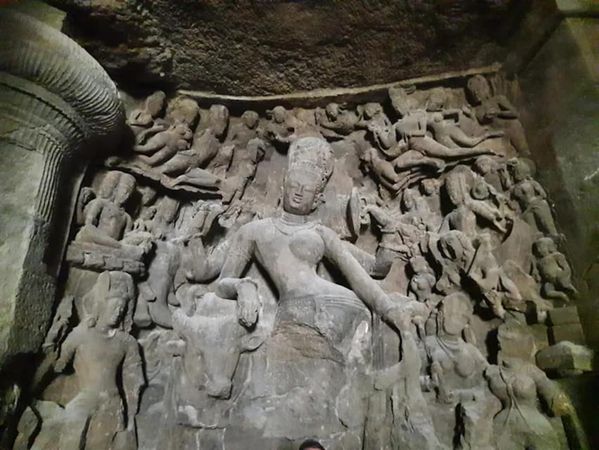
If you choose one trip out of the city, take Elephanta Island. You get there by boat from the centre, and the road over water itself is pleasant after the stuffy shore. On the island are cave temples cut into the rock, with huge figures, and you have to climb to them by stairs. Options:
- Mumbai: Elephanta Island and the caves with a guide, 4–8 hours;
- Elephanta Caves: a half-day tour, 4.5 hours;
- Elephanta Caves with a guide for half a day, 4 hours;
- Elephanta Caves with a cruise for a group, 5 hours.
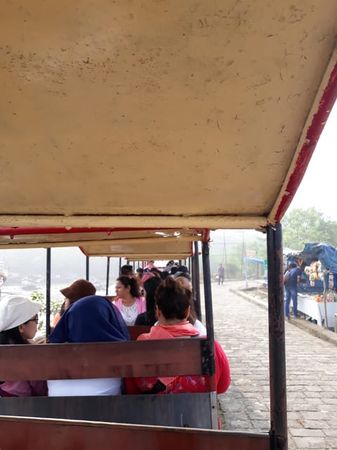 Tour from the article · ExcursionMumbai: Elephanta Island and caves with a guideCheck dates →Live price · Trip.com
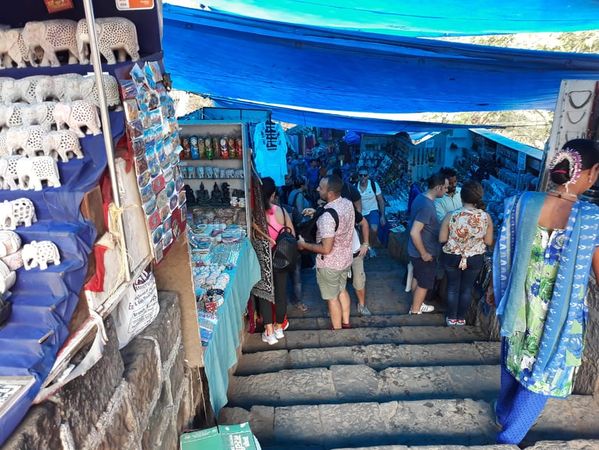 Tour from the article · ExcursionElephanta Caves: half-day tourCheck dates →Live price · Trip.com
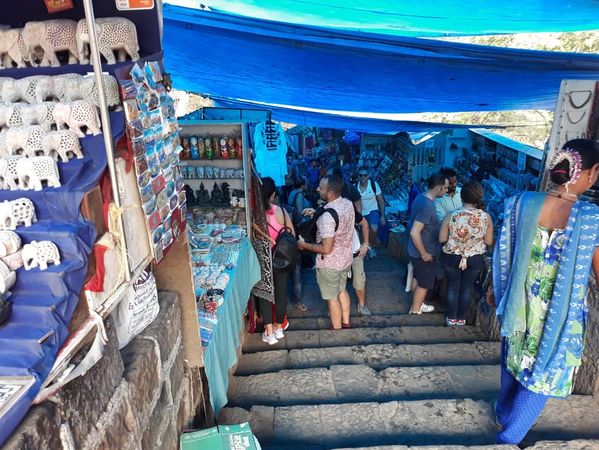 Tour from the article · ExcursionElephanta Caves with a guide, half a dayCheck dates →Live price · Trip.com
The difference is in format and length: from a short half-day trip to a programme with a cruise. A guide is really needed here: without explanations the carved figures remain beautiful stones, and with a story they turn into history. Boats depend on weather and swell, in the rainy season sailings are sometimes cancelled, so read the terms and keep a time reserve.
Bollywood: what you will actually see
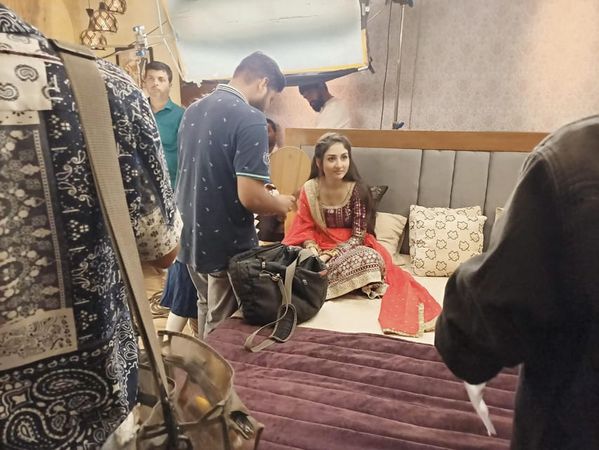
Cinema in Mumbai is a universe of its own, and many come for it. For them there is a tour of a Bollywood film studio with entrance tickets, 3–6 hours. It is no guarantee of meeting stars: more often you will see sets, pavilions and the work of the lot. If you are curious how Indian films are made, it is interesting. If you hope for live shooting with actors, stay calm: shooting schedules change, and the visit depends on what is on that day. Ask in advance what exactly is included.
Morning and evening: when the city is best
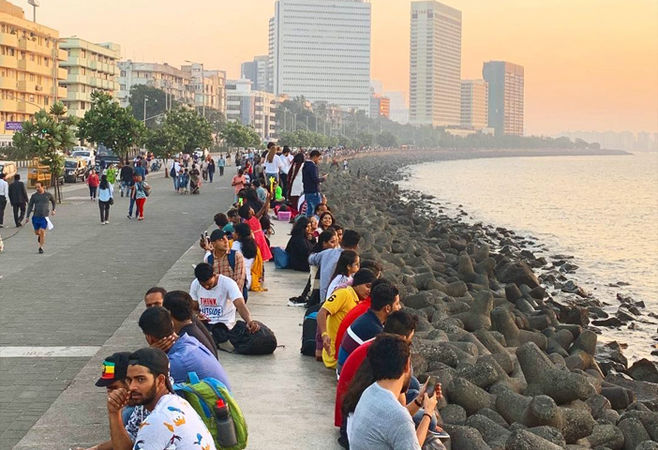
Mumbai in the morning is different: it is not so hot yet, runners are out on the promenade, and boatmen head to sea. In the hot hours it is better to hide in museums and air-conditioned cafes. And in the evening the city comes alive: whole families gather on the promenade, children play, vendors push carts of snacks. Sunset by the water is the free and most memorable event of the day. Do not plan a tour for this hour: just go out and sit.
Food worth trying
Mumbai is famous for street food: pav bhaji, vada pav, fresh juices, sweets. But a traveller’s stomach can be sensitive, and sensible caution does not hurt. Choose places where there are many people and food is cooked in front of you, drink bottled water and avoid ice in drinks if you are not sure of its origin. If you do not eat spicy food, say so in advance: “mild” is understood differently in India. A good option is to start with restaurants and gradually move to street food.
What to wear and bring
Clothes should be light, of breathable fabric, but covering: shoulders and knees are better covered, especially when visiting temples. Comfortable shoes that are easy to take off: you enter shrines without them. Bring sunscreen, a hat, water and wet wipes. Keep small money separate from the main amount. It is better to carry your bag in front: pickpockets in a crowd are not a myth. And stock up on patience: everything in Mumbai takes longer than you plan.
How to behave with respect
In India there are many believers, and temples, mosques and pilgrimage sites are living places, not scenery. Take off your shoes where required, ask permission before photographing people and do not point at shrines with your foot. Do not feed stray animals sweets needlessly and do not give money to children on the street: this supports a system that puts them there. It is better to support organisations you trust. A smile and “namaste” are always appropriate.
With children and with parents
Mumbai is a hard city for children: heat, noise, crowds and contrasts. For little ones it is better to choose short programmes with stops in air-conditioned places. Elephanta Island suits older children: you need to climb steps. For older parents a private tour with a car is more convenient, where you can pause and not walk in the heat. Do not plan more than one big trip a day: tiredness in Mumbai builds up quickly.
Transport and traffic
Distances in Mumbai are deceptive: kilometres at rush hour turn into hours. So it makes sense to choose tours with a transfer, where the organiser is responsible for the road. Taxi apps work, but in rain and at rush hour demand exceeds supply. If you go to the island, allow time for the road to the pier and back: missing the last boat is unpleasant. Leave a margin, especially on your departure day.
Safety and common sense
Mumbai’s tourist areas are used to foreigners, and with a guide it is usually calm. Even so, follow the rules: do not wear valuables openly, keep copies of documents, agree on a price in advance if you do not ride by meter, and do not accept offers from strangers who “know a better place”. Arrange insurance in advance and check current entry requirements. If you feel uneasy, it is better to leave: intuition rarely fails.
What you can skip
Honestly, you do not need to take a sightseeing tour, Elephanta Island and Bollywood one after another in one day: it is a marathon after which you will not remember the city. If you are not interested in cave temples and climbing stairs in the heat, the island can be replaced by a quiet evening by the water. Bollywood is not for everyone: without an interest in cinema it is just scenery. And it is not worth going to the most crowded districts at rush hour for one photo: it is better to spend that time on an unhurried walk.
When to go
The most convenient time is the cool dry season, roughly from November to February: it is warm but tolerable, and there is almost no rain. In summer the rainy season comes: downpours, humidity and sometimes cancelled sailings to the island. Before your trip check whether there are big holidays: on festival days the city fills with people and transport runs differently. We collected holiday dates in the material Holi 2027 in India.
Marine Drive: a free tour
There is a place in Mumbai where you need neither a guide nor a ticket. A wide promenade curves along the bay, and by evening hundreds of people sit on the sea wall: couples, families, students, older men with newspapers. Everyone looks at the water, and nobody is in a hurry. Come an hour before sunset, buy hot corn or tea from a vendor and take a place on the stone. It is here that many first understand that behind the chaos of the day the city has a quiet heart. Bring something warm if you sit by the water for long: the sea wind is cool toward evening.
How to book a tour without fuss
Before booking, read three things: what exactly is included in the price (entrance tickets, boat, lunch), where and when you are picked up and on what terms you can cancel or move the trip. In the rainy season it is useful to choose offers with flexible cancellation. Save the organiser’s contact in your phone and write to them when you are in the city: it is easier if the driver cannot find you in the crowd. For a trip to the island come to the pier early and carry your documents: at some piers they are asked for.
How to spread two days
- Day 1: the city. A half-day sightseeing tour in the morning, rest by day, the promenade in the evening.
- Day 2: the island. A morning boat to Elephanta, the caves with a guide, free time in the evening or Bollywood if you are curious.
Frequently asked questions
How many days do you need for Mumbai?
One day is enough for a basic acquaintance, two to add Elephanta Island.
Do you need a guide in Mumbai?
For a first time, yes: it saves time and helps you not get lost.
When is it best to go to Elephanta Island?
In the morning and in the dry season: less heat and more reliable boats.
Useful links
You do not need to understand Mumbai from day one: it is enough to sit one evening on the promenade and see the city finally exhale. The rest will come later.
Current as of November 2026. Schedules, prices and offer terms change: check them on the tour page and on Trip.com.
Tours and tickets from this article
Live dates, availability and the final price are on Trip.com. These are affiliate links — the price does not change for you.
Tour from the article · ExcursionMumbai: half-day city tourCheck dates →Live price · Trip.comTour from the article · ExcursionMumbai: city and heritage tour with transferCheck dates →Live price · Trip.comTour from the article · ExcursionMumbai: full-day sightseeing tourCheck dates →Live price · Trip.com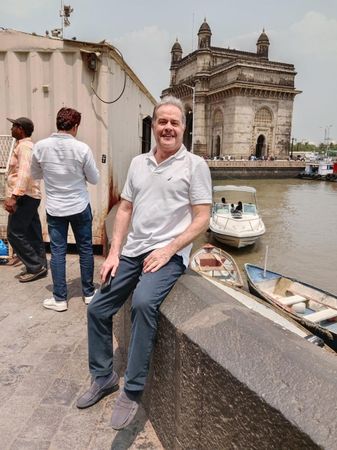 Tour from the article · ExcursionMumbai in one day: a private tour with a guideCheck dates →Live price · Trip.com
 Tour from the article · ExcursionMumbai: private full-day or half-day tourCheck dates →Live price · Trip.comTour from the article · ExcursionMumbai: Elephanta Island and caves with a guideCheck dates →Live price · Trip.com