How to choose tours in Varanasi: a sunrise boat, the aarti ceremony, Sarnath and Rishikesh, with honest tips on respect and what to skip.
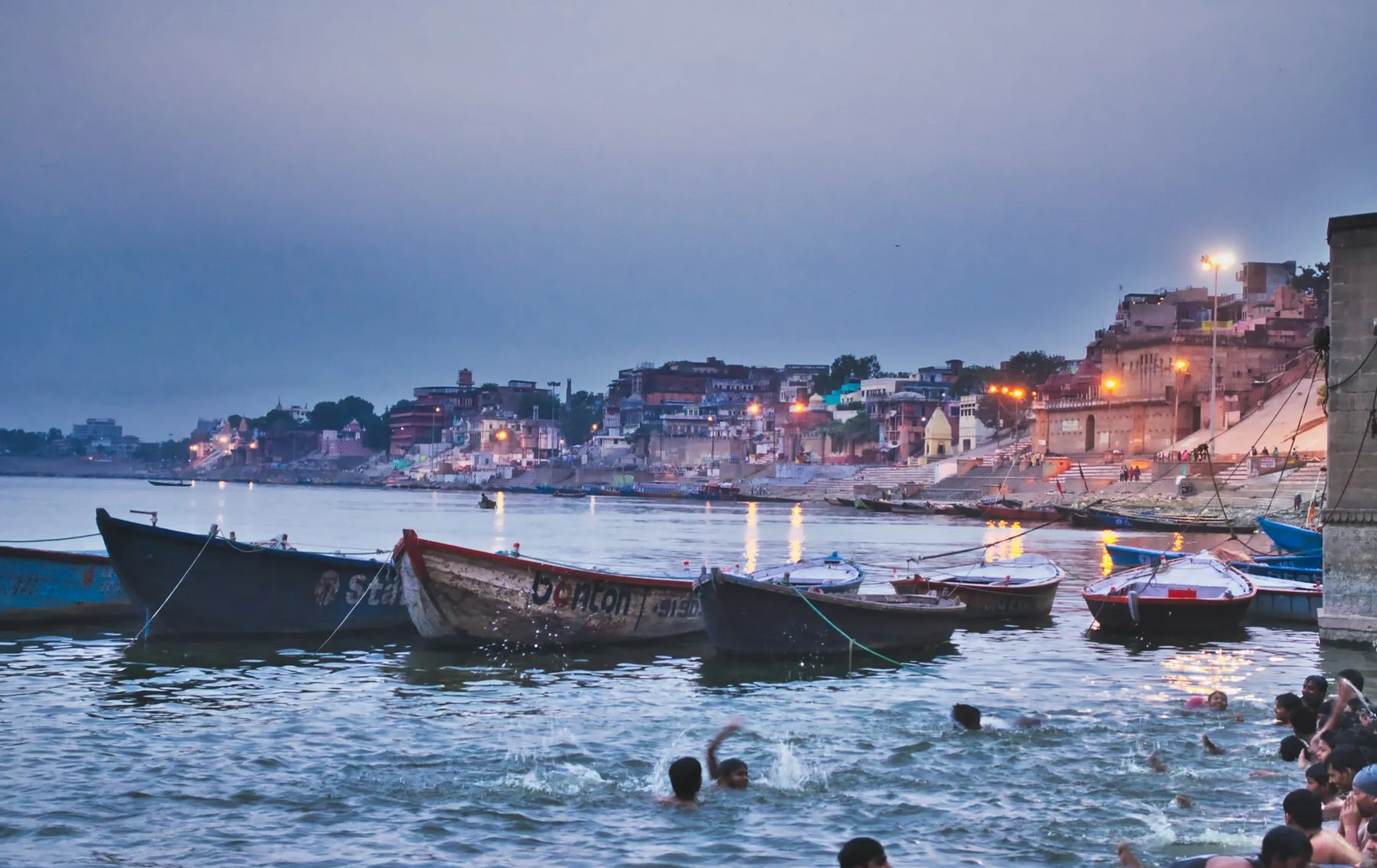
Varanasi cannot be called beautiful in the usual sense of the word. It is narrow lanes where you have to give way to a cow, the smells of incense and smoke, bells, chanting, crowds of pilgrims and water that people wade into up to the waist to wash and pray. But those who come here at dawn and go out on the Ganges by boat often say the same thing: they have never seen anything like it. The city is considered one of the oldest continuously inhabited places on earth, and for millions of people it is the main holy place. It is not entertainment but living faith, and it is worth coming here with respect and an open mind. Let us work it out: which tours in Varanasi are truly worth your time, how best to see the Ganges and what you can safely skip. We collected offers from the Trip.com catalogue, with duration, language and cancellation terms.
- A sunrise boat on the Ganges and the aarti ceremony (1.5–3 hours).
- A sightseeing day: the city, a Ganges cruise, Sarnath (7 hours and longer).
- A photo tour, for those who want to shoot with permission and a guide.
- Nearby: Rishikesh with the Ganga aarti ceremony (3 hours).
Sunrise on the Ganges: the main reason people come
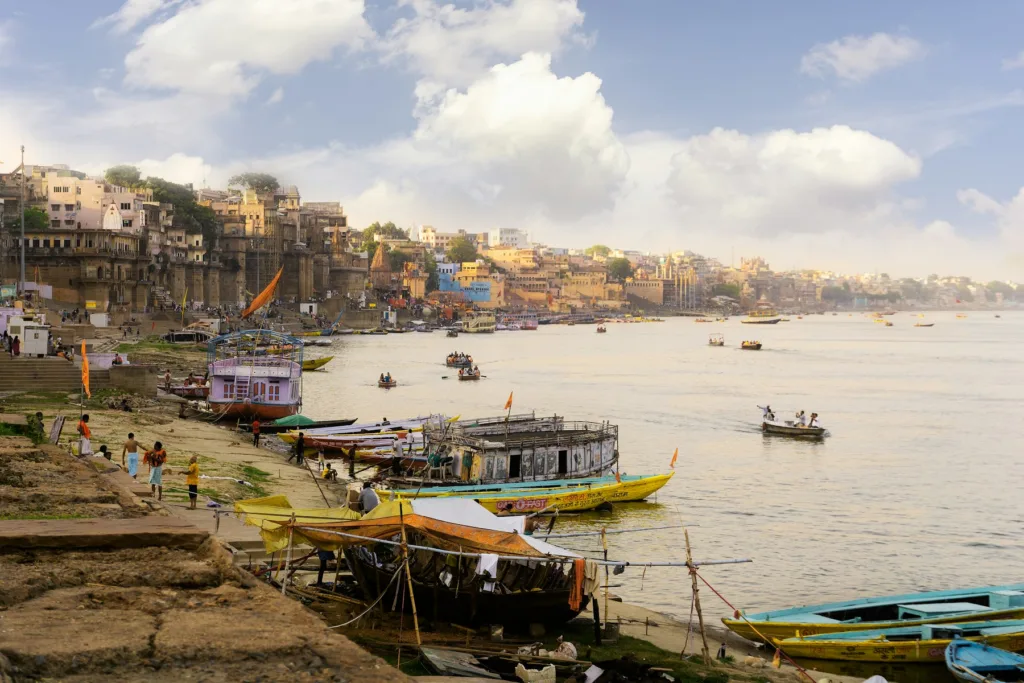
If you choose one tour in Varanasi, take a boat at sunrise. Mist hangs over the water, on the steps of the embankments, the ghats, people perform ablutions, bells ring, someone sings, someone stands silently facing the sun. From a boat you see it all at once, and this view is hard to compare with anything else. Options:
- Varanasi: a sunrise boat and the aarti ceremony, 2–3 hours (rating 5.0);
- Varanasi: a morning boat and a walk, 2.5 hours (5.0);
- Varanasi: a morning Ganges cruise with tea and snacks, 1.5 hours (5.0).
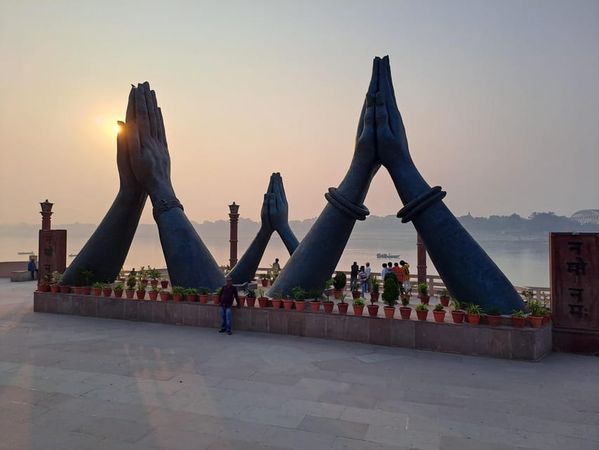 Tour from the article · ExcursionVaranasi: sunrise boat ride and the aarti ceremonyCheck dates →Live price · Trip.com
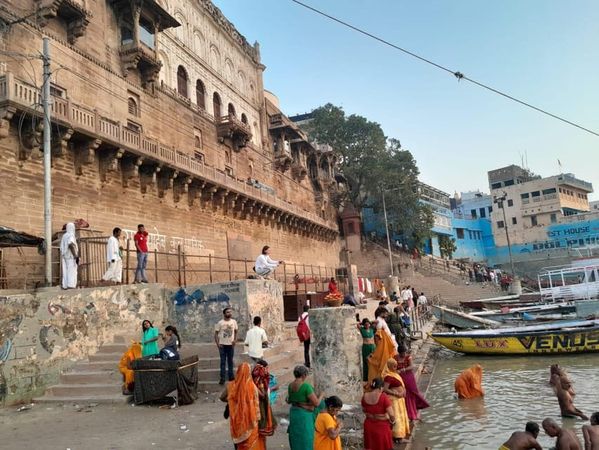 Tour from the article · ExcursionVaranasi: morning boat ride and walking tourCheck dates →Live price · Trip.com
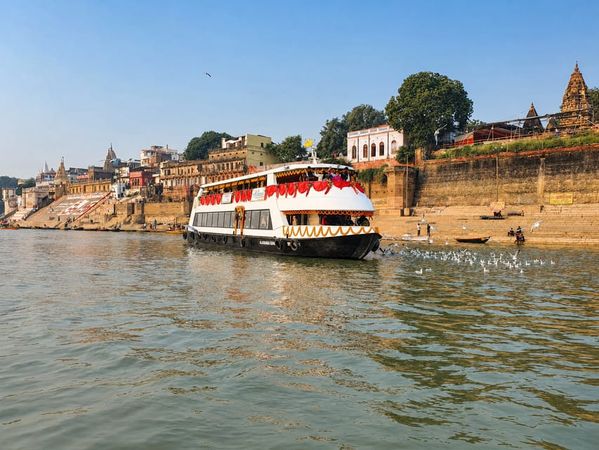 Tour from the article · ExcursionVaranasi: morning Ganges cruise with tea and snacksCheck dates →Live price · Trip.com
The difference is what you get along with the boat: a walk through the lanes, a ceremony or tea with snacks. For a first time it is better to take the option where there is a walk with a guide after the boat: the lanes of the old city are tangled, and without a guide it is easy to get lost. You will have to get up early, sometimes still in the dark, and dress warmly: it is cool on the water in the morning, especially in winter.
The evening aarti ceremony
In the evening a ceremony with fire takes place on the embankments: priests raise lamps in unison, chants and bells sound, smoke rises over the water. It is a spectacle that gathers thousands of people, and it impresses even those far from religion. You can watch from the embankment or from a boat: from the water you see more widely, but from the shore you feel the atmosphere. Come early to take a place and keep your things with you: it is crowded. During the ceremony do not talk loudly or use flash.
A sightseeing day: the city, the Ganges and Sarnath
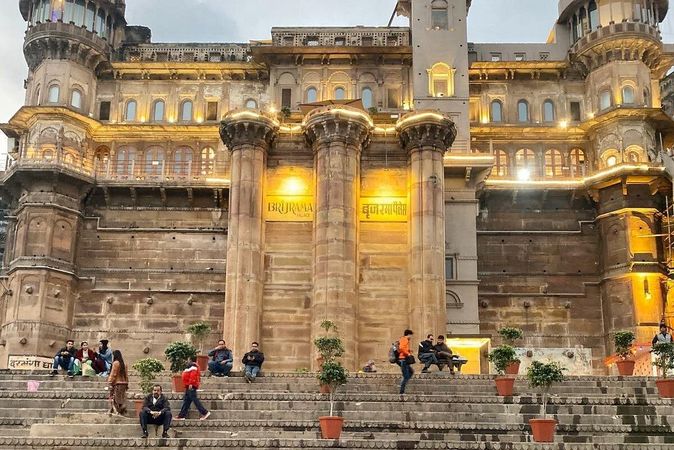
For those who want to see more there is a full-day programme: a sightseeing tour and a Ganges cruise, 7 hours, in English. And Varanasi and Sarnath with a boat ride is a very long programme, up to 21 hours, and is unlikely to suit those who dislike marathons. Sarnath is the place where the Buddha gave his first sermon, and Buddhists from all over the world go there. If this layer matters to you, it is worth giving it time, but do not try to cram everything into one day without breaks.
 Tour from the article · ExcursionVaranasi: sightseeing tour and a Ganges cruiseCheck dates →Live price · Trip.com
 Tour from the article · ExcursionVaranasi and Sarnath with a boat rideCheck dates →Live price · Trip.com
A photo tour: how to shoot with respect
For those who come with a camera there is a photo tour of Varanasi, 3 hours. A good guide knows where and when you may shoot and how to ask permission. It matters: many people on the ghats are praying or performing rites, and careless shooting is felt painfully. This applies especially to places where cremations take place. They must not be photographed under any circumstances: it is a deeply personal and sacred event. If a guide offers to come closer “for a good shot”, refuse.
Rishikesh: if you travel on through northern India
For those heading toward the Himalayas the catalogue has a tour of Rishikesh with the Ganga aarti ceremony, 3 hours. It is the city of yoga, where the Ganges comes out of the mountains and flows faster and clearer than in Varanasi. It is calmer here and there is more green. If you want more about this city, read our material on Rishikesh and the Bajrang glass bridge.
Cremations and respect for the place
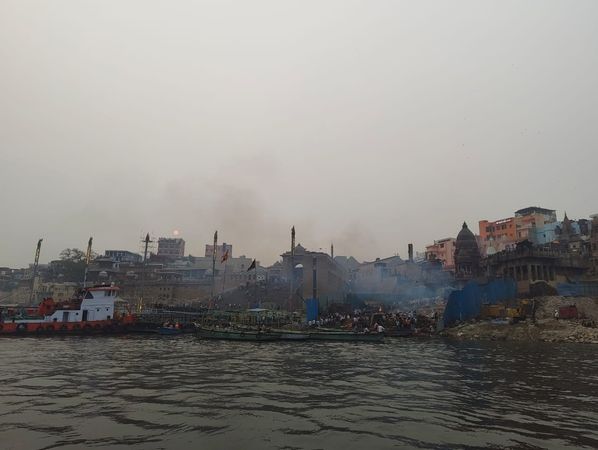
In Varanasi cremations take place on the bank, and it is an open, daily occurrence. For Hindus death here is a path to liberation, and the place is considered especially auspicious. Tourists see smoke and fire from afar, and that is normal. But coming closer, photographing and discussing it aloud is not allowed: the families are in grief and reverence. If a guide tells you about it, listen calmly. Do not joke, do not take selfies, do not point. This part of Varanasi teaches you to accept death as part of life, and many leave with that feeling.
Clothing and practicalities
Dress modestly: shoulders and knees covered, light fabric you can change quickly. For the morning boat bring a warm wrap: it is cool on the water. Shoes should be ones you can take off easily and do not mind getting dirty: the ghats are damp and slippery. Bring wet wipes, hand sanitiser and small money. Keep your bag in front of you. And stock up on patience: everything in Varanasi goes at its own rhythm.
Water and health
The Ganges is sacred for believers, but tourists are better off not swimming in it or drinking its water: it may be unsafe. Drink only bottled water, avoid ice in drinks if you are not sure of its origin and wash your hands. Be careful with street food as well: choose places with plenty of people and fresh cooking. Before the trip it is useful to consult a doctor and arrange insurance with medical cover.
With children and with parents
Varanasi is a strong impression, and not every child is ready for it. Noise, crowds, smoke, poverty and religious rites can frighten little ones. With teenagers it is better to talk in advance about what they will see. For older parents a format with a boat and a short walk is good: the steps on the embankments are high and slippery, and walking is hard. Choose programmes without haste and leave free time for rest.
How to get there and where to stay
You can reach Varanasi by plane or by train from Delhi and other cities. Before your trip look at the current entry conditions: we described the procedure in the material the e-visa to India for Russians. It is more convenient to stay near the embankments, but then you will have to put up with noise: the bells begin very early. Look for suitable options in the section India hotels, and before booking check how to get from the hotel to the pier.
Morning: how not to miss the boat
Boats leave before sunrise, and being late deprives the whole thing of meaning. The day before, confirm the time and meeting place, save the organiser’s contact and set an alarm with a margin. Take water and something warm with you. It is better to go through the dark lanes to the river with a guide: the streets are tangled, and in the morning they are filled with pilgrims, cows and scooters. If you are staying far from the ghats, arrange a transfer in advance.
The lanes of the old city: how not to get lost
Behind the embankments a labyrinth begins: passages as wide as a shoulder, shops with sweets and silk, small temples built right into the walls and unexpected courtyards with trees. It is easy to lose your bearings here within five minutes, and phone maps get confused in the tight buildings. That is why a walking tour is better combined with a guide who knows where to turn toward the water. On the way you will smell fried dough, sandalwood and flower garlands, hear scooter bells and conversations in several languages. Do not be afraid to give way to cows: they are in their place here and not aggressive. It is better to go out early, before the lanes fill with people.
What to bring home and how not to overpay
Varanasi is famous for silk fabrics woven in nearby workshops, and also for incense, sandalwood sticks and small copper items. Compare prices in several shops and do not accept the first price: bargaining is customary here and goes calmly, with a smile. Be careful with offers to “see a workshop through an acquaintance”: they often lead to shops where the guide gets a commission. If you want real silk, ask how to tell it from synthetic and buy from those you trust. Small souvenirs such as incense and postcards are better taken at markets, not on the embankment, where prices are higher.
If it is hard: how to give yourself a breather
Varanasi sometimes overloads: noise, smells, poverty and strong feelings that you cannot always name. It is normal. If you feel tired, do not force yourself to “finish the programme”: go into a quiet cafe, drink some tea and sit. Tell the guide you want to shorten the route and go back to the hotel. The city is not going anywhere, and the next day you will see it with different eyes.
What you can skip
Honestly, you do not need to take a sunrise boat and a photo tour at the same morning hour, nor Sarnath on the same day: tiredness from impressions and heat builds up quickly. If a crowd is hard for you, the evening ceremony can be watched from the water, where it is freer. If conversations about religion and rites are not to your taste, choose short formats without walking through the lanes. And it is not worth buying “blessings” and flower offerings from boatmen without need: behind them often stands a wish to get money.
When to go
The best time is winter, roughly from November to February: it is cool, clear and pleasant to walk. But in the mornings dense fogs hang over the river and visibility is lower. From April to June it is hot, and tours are better planned for early morning. In the rainy season the water level rises and some steps go under water, so boats run differently. We collected holiday dates in the material festivals and holidays of India 2027.
How to spread two days
- Day 1: the Ganges. A boat at sunrise, breakfast, rest, the aarti ceremony in the evening.
- Day 2: the city and surroundings. A walk through the lanes or Sarnath, a free evening.
Frequently asked questions
How many days do you need for Varanasi?
Two days are enough to see the sunrise, the ceremony and one calm day.
Can cremations be photographed?
No: it is a sacred rite, and shooting there is seen as disrespect.
What to choose if time is short?
A morning boat with a walk through the lanes.
Useful links
Varanasi does not need to be “managed”: it is enough to meet one sunrise on the water and silently watch the city begin its day. The rest will stay with you by itself.
Current as of November 2026. Schedules, prices and offer terms change: check them on the tour page and on Trip.com.
Tours and tickets from this article
Live dates, availability and the final price are on Trip.com. These are affiliate links — the price does not change for you.
Tour from the article · ExcursionVaranasi: sunrise boat ride and the aarti ceremonyCheck dates →Live price · Trip.comTour from the article · ExcursionVaranasi: morning boat ride and walking tourCheck dates →Live price · Trip.comTour from the article · ExcursionVaranasi: morning Ganges cruise with tea and snacksCheck dates →Live price · Trip.comTour from the article · ExcursionVaranasi: sightseeing tour and a Ganges cruiseCheck dates →Live price · Trip.comTour from the article · ExcursionVaranasi and Sarnath with a boat rideCheck dates →Live price · Trip.com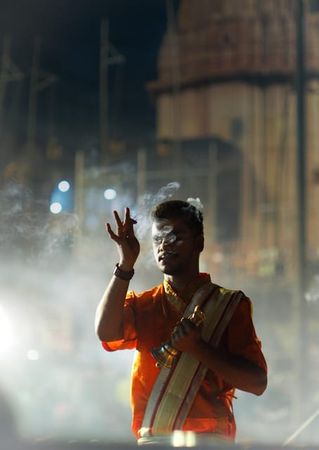 Tour from the article · ExcursionVaranasi photo tourCheck dates →Live price · Trip.com