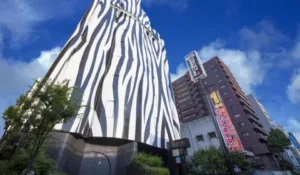
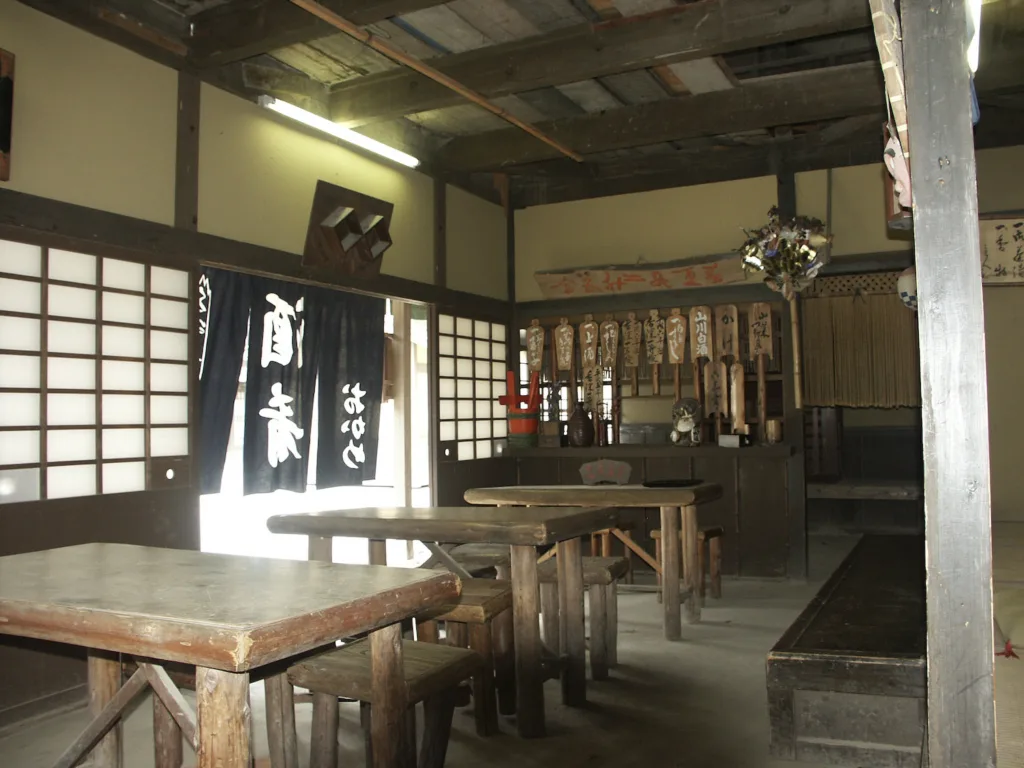
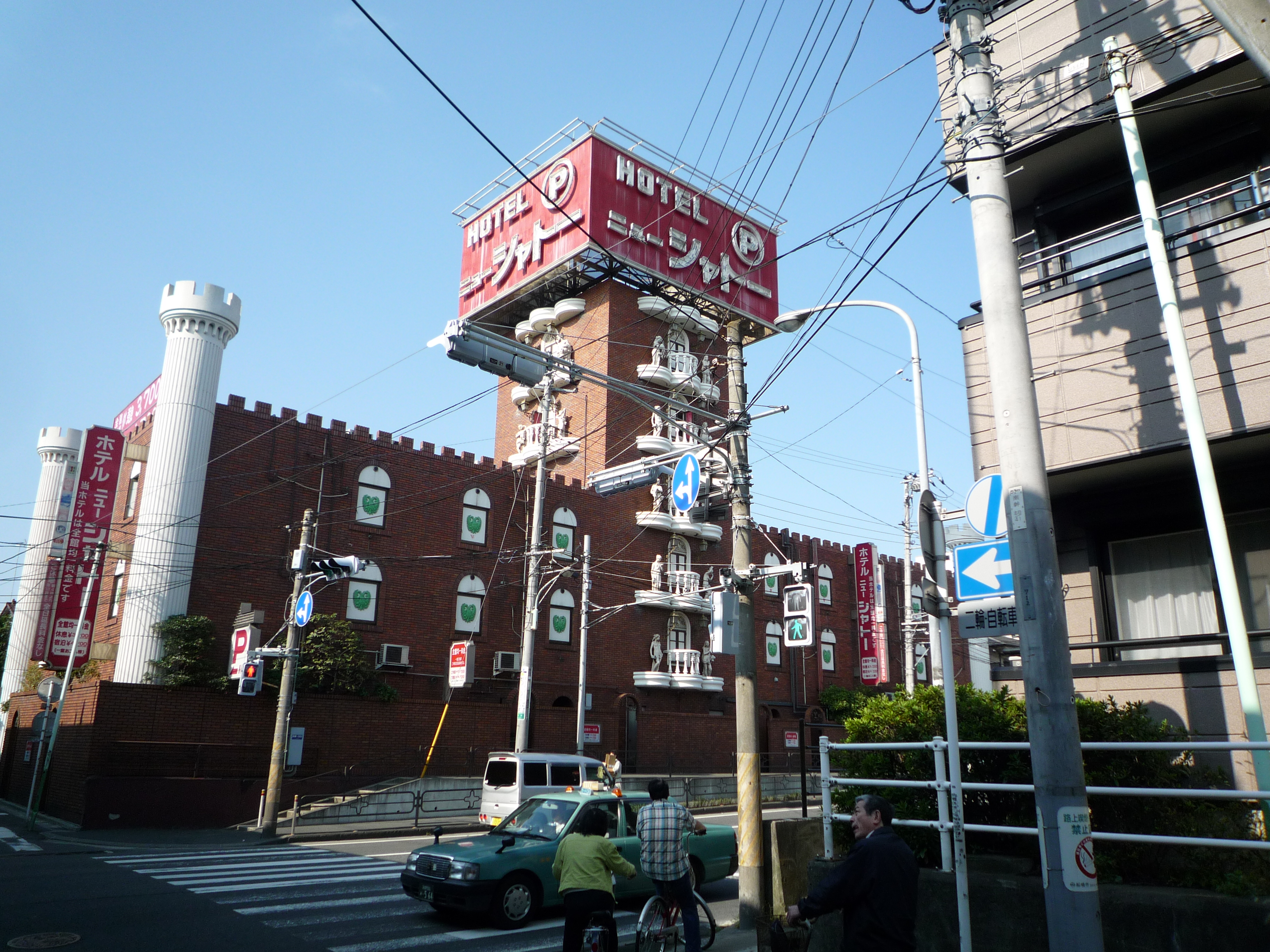
Love hotels outside Tokyo: the zebra façade of Hotel Beni East and the elegant Lotus Umeda in Osaka, the large themed complex Moshimoshi Pierrot in Kyoto.
Last time we looked at how the love hotel phenomenon works in Tokyo — using the example of the Meguro Emperor castle and its heirs. But the capital does not hold a monopoly on the genre: Osaka has its own, far bolder and flashier visual culture, and Kyoto has large chain complexes where 50 rooms come with their own spa zone and karaoke. The geography of this form of hospitality in Japan is noticeably wider than a single city.
Osaka: the capital of the genre’s visual audacity
If Tokyo’s love hotels over half a century gradually moved toward restrained designer taste, Osaka — historically a more familiar, noisy and open city — kept its reputation as the capital of the format’s visual eccentricity. Hotel Beni East in the Yodogawa area is one of the most vivid examples: the whole building, from the façade to the inner corridors, is done in contrasting zebra print, and the rooms are complemented by a balcony jacuzzi, massage chairs, a sauna and even cosplay costume rental — a rare detail that turns a visit into a full themed experience rather than just a place to sleep.
A contrasting example from the same city is Hotel Lotus Umeda in the Umeda business district, literally five minutes from the station of the same name. Here the bet is made not on a flashy façade but on restrained elegance inside: private jacuzzis, adjustable lighting, carefully considered play of light and shadow in the interior — a case where a love hotel in atmosphere is closer to a boutique hotel for a romantic weekend than to the classic “attraction” of the genre.
Kyoto: scale and themed complexes
Kyoto, a city with a completely different tourist profile — temples, tea ceremonies, preserved historic districts — seems at first glance an unexpected place for love hotel culture. Nevertheless it is here that Moshimoshi Pierrot NEO Kyoto operates in the Fushimi area — one of the largest complexes of this kind in the Kansai region, with fifty themed rooms, its own car park for fifty cars and a set of entertainment inside the room itself — from karaoke to private open-air jacuzzis. According to reviews of recent years the hotel consistently gets high ratings (around 8.4 out of 10) precisely for the quality of its finishing and the thoughtfulness of details, and not only for the format as such.
How the regions differ from one another
If you compare the three Japanese regions by the spirit of their love hotel architecture, the difference reads fairly clearly. Tokyo, where the format originated in its modern form, leans toward historical monuments of the genre (the Meguro Emperor castle) and, in parallel, toward a new wave of designer reinterpretations (Design Hotel Iroha). Osaka holds the reputation of the boldest and, in a good way, craziest scene — people come here precisely for the visual attraction of the façade and the room. Kyoto compensates for the city’s more conservative tourist image with large complexes that emphasise entertainment inside the room itself rather than the look of the building.
How to book
All three hotels in this selection, like the Tokyo three from the previous article, can be found on ordinary booking sites like Booking.com — you don’t have to figure out the terminal on the spot or speak Japanese to book a room in advance. Check with the specific hotel for the current “rest”/”stay” rates and the rule about leaving the room by the end of the paid time — these details are still individual to each venue regardless of the city.
FAQ
Is it true that love hotels are more noticeable in Osaka than in Tokyo? By the general feeling of travellers and local bloggers — yes: the Dotonbori area and adjacent districts are known for a particularly dense concentration of bright, flashy façades, whereas in Tokyo a noticeable part of the venues has long since evolved toward a more restrained design.
Is it worth staying in a love hotel in Kyoto if the main purpose of the trip is temples and a cultural programme? The format is quite compatible with a classic tourist route — it is simply an alternative place to sleep, often affordable and with an interesting room design; the location of Moshimoshi Pierrot specifically in the Fushimi area is convenient if you plan to visit the nearby Fushimi Inari shrine.
Do I need to know Japanese in advance to book these hotels? No — all three are available for booking in English through familiar international sites, without having to figure out terminals or Japanese room-selection panels on the spot.
Prices and conditions of stay may change — check the current information with the specific hotel before booking.