50 Years of History and a Radical Shift in Audience
Toei Uzumasa is a film studio and theme park in Kyoto where historical dramas set during the Edo period have been filmed for decades—marked its 50th anniversary with a major rethinking of the entire concept. According to CEO Hiroyasu Kamata, the park now intentionally targets “trendy young women aged 20–30,” rather than families with children, as it did before. This is a fundamental shift: instead of children’s rides and staged shows for a broad audience, the park is building around itself a full-fledged immersive experience that requires an engaged adult viewer willing to spend several hours here, not just quickly looking at the sets.
“Get Lost in Edo-Era Kyoto”—The New Concept
The first phase of the reboot took place on March 28, 2026, and full completion of the renovation is scheduled for 2028: a pleasure quarter (yūkaku) area will open in 2027, a traditional theater in 2028, and after 2028, the opening of a bathhouse complex is being considered. A central element of the new format is live drama unfolding throughout the recreated Edo-era streetscape. The spring production “Hanayome Dotyu: Sakura no En” (“The Bride’s Procession: Cherry Blossom Festival”) turns visitors into residents of the city, observing the events unfolding around them, including fencing scenes between historical figures—the Shinsengumi militia and samurai bandits.
Daytime and Evening Programs: Rated 18+
The park operates on a “double harvest” model—with separate daytime and evening programs. During the day, in the “samurai training hall,” you can take a sword handling lesson or try traditional fortune telling. The evening program has an R-18 rating and includes reenactments of torture exhibits and traditional Edo period gambling games (“han-tyo bakuto”)—a format clearly aimed at a mature audience seeking an atmospheric, sometimes dark experience immersing them in a historical era, rather than safe family entertainment.
Ten Street Food Stalls on a Recreated Street
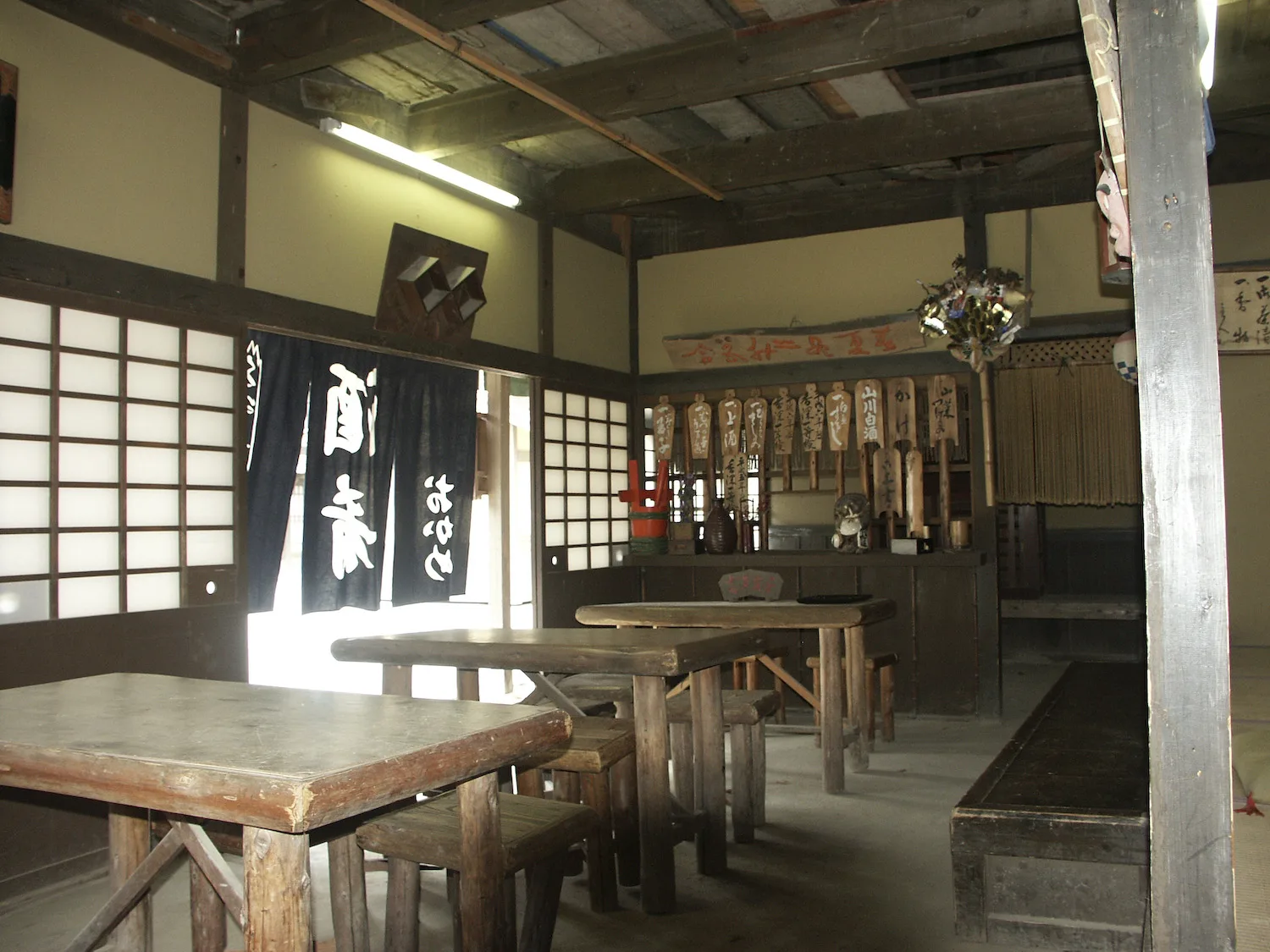
The park’s culinary section is built around ten food stalls along a historic street—from establishments serving eel and tuna to ramen bars and shops selling traditional wagashi sweets. The grab-and-go street food format fits into the overall concept of strolling through the Edo period—visitors don’t sit at one table for their entire visit, but move between stalls, collecting dinner or snacks along the way between different park activities, similar to the format of authentic Japanese festival processions (matsuri).
Cultural Workshops: Tea Ceremony, Ikebana, Noh
In addition to theatrical performances, you can sign up for workshops in ikebana, tea ceremony, noh theater and traditional music—each costing around 2700 yen. This adds a full educational element to the park’s entertainment component, something unavailable in classic theme parks focused solely on rides and photo opportunities.
Tickets and Opening Hours
Until spring 2027, transitional prices are in effect: daytime (10:00–21:00) — 2800 yen for adults and 1600 yen for children; evening ticket (17:00–21:00) — 2000 yen for adults and 1300 yen for children. The park is closed on Tuesdays, except for March, April, November and public holidays when it operates without interruption.
Why This Has Become a Notable Topic Among Young Audiences
The shift in audience from family-oriented to adult, interactive dramas instead of passive observation, and the 18+ evening program—this is rare positioning for Japanese theme parks, which are usually geared towards either children or mass tourists. Such a format fits into Kyoto’s broader tourism strategy—to distribute visitor flow beyond peak daytime hours and offer deeper cultural engagement rather than superficial sightseeing in one go.
Practical Checklist
- The first phase of the renovation opened on March 28, 2026, with full completion expected by 2028.
- The concept is “get lost in Edo-era Kyoto,” an immersive drama across the entire area.
- Ten street food stalls line the recreated historic street.
- Evening R-18 program featuring reenactments of torture displays and Edo-era gambling.
- Workshops on tea ceremony, ikebana (flower arranging), and Noh theater – approximately 2700 yen each.
- Full-day ticket is 2800 yen for adults, evening ticket is 2000 yen; closed Tuesdays (except March, April, November, and holidays).
Frequently Asked Questions
When did the renovated Toei Uzumasa open?
The first phase of the renovation took place on March 28, 2026, with full completion of the project expected by 2028.
Is the park now suitable for children?
The park is now primarily geared towards an adult audience aged 20–30, and the evening program has an R-18 rating.
How much does a ticket cost?
Full day – 2800 yen for adults, evening ticket (5:00 PM–9:00 PM) – 2000 yen.
What’s new about the park’s gastronomy?
Ten street food stalls line the historic street — from eel and tuna to ramen and wagashi.
What’s Next
Check out the guide to the Nara Prison Museum and get familiar with the JR Pass and getting around Kansai before your trip.
Show schedules and ticket prices are subject to change as renovations continue – check the official website before visiting.