Kabukicho in Shinjuku: what host and kyaba clubs are, why the "urikake" debt system became a problem for the Japanese authorities and how to protect yourself from scams in the district of neon signs.
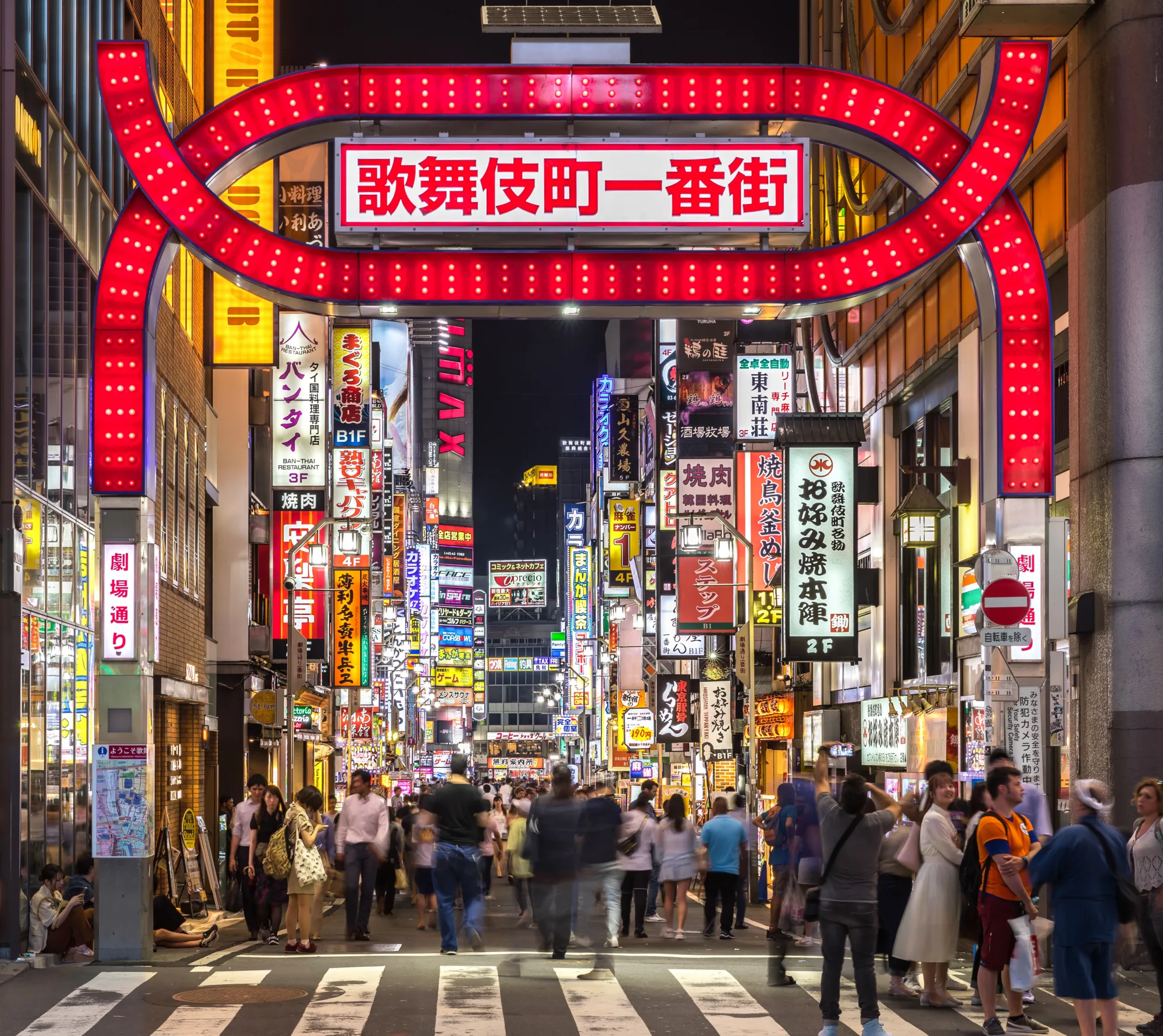
A red gate with characters, behind which a labyrinth of thousands of glowing signs begins — Kabukicho in Shinjuku has been nicknamed “the town that never sleeps”, and this is literally so: the district works around the clock, and the density of bars, restaurants, karaoke places, game halls and clubs per square metre here is higher than in any other Tokyo district. It was here, back in the 1970s, that the specifically Japanese culture of host clubs and kyaba clubs originated — establishments where customers are sold not just drinks but hours of conversation and the attention of attractive staff. This is an interesting and in many ways unique part of Japanese nightlife culture, but it is precisely this that has in recent years become the subject of serious complaints from the authorities — and it is worth knowing about before, not after, a visit.
What host and kyaba clubs are
A host club is an establishment where male hosts in elegant suits entertain female clients with conversation, games, champagne and special attention, and the client pays for the hours of their company and for drinks that are “recorded” against a specific host as his personal sales. Kyaba clubs (kyabakura) work on a mirror-image scheme — female hostesses entertain male clients in a similar format. The first host club in Tokyo opened as far back as 1966, and the phenomenon itself originated precisely in Kabukicho in the early 1970s — since then both formats have become a noticeable, though fairly niche, part of Japanese evening culture, especially popular among local young people.
The debt system worth knowing about
The main problem for which host clubs regularly make the news in recent years is a system called “urikake”: the host suggests the client open a tab on credit, promising to settle later, and such a tab can stay open for weeks, growing to huge sums on bottles of expensive alcohol costing thousands of dollars. According to investigations, a significant share of the women detained by the Kabukicho police on suspicion of prostitution admitted that they went out onto the street precisely to pay off debts accumulated in host clubs. The Japanese authorities have strengthened control in recent years: several clubs have been closed for violations, including exploitation of the deferred-payment system, and members of parliament openly call what is happening a form of romance fraud designed around clients’ emotional attachment to a particular host.
Ordinary tourist scams: “bottakuri”
Besides the specific problem of host clubs, Kabukicho, like any large entertainment district, has classic trap bars — “bottakuri”, which lure with cheap entry or a charming tout on the street and at the end of the evening present a bill many times larger than expected. The real physical risk in the district is minimal — Tokyo consistently ranks among the safest megacities in the world, and this applies to Kabukicho too — but financial losses from such establishments regularly happen precisely to tourists who haven’t figured out the situation.
How to protect yourself
The main practical rule is simple: never go into an establishment on a street tout’s invitation and always clarify the full cost of entry, drinks and any additional charges before an order is made. Establishments with an openly displayed price list and good reviews online are far safer than a spontaneous choice at random. If you are curious to try the host or kyaba club format as a cultural experience, it is wiser to choose establishments oriented to tourists and working on a fixed, prepaid rate for a specific time rather than opening a long-term tab or agreeing to extend the evening “on credit” — it is exactly this that distinguishes a harmless one-time acquaintance with the format from a real financial trap. The main police patrols are concentrated on the district’s main streets like Kabukicho Ichibangai, which makes them noticeably calmer than the alleys off to the side.
Is it worth a tourist going there at all
As a district for a stroll and an introduction to one of the most visually vivid sides of Tokyo’s night — definitely yes: the neon signs and the atmosphere of the district alone are worth an evening walk, and you can do it entirely free, just walking the streets. Going inside specific establishments should be selective and conscious, remembering the difference between an ordinary bar with a transparent price tag and formats built on emotional attachment and deferred payment. Healthy scepticism toward overly friendly touts and a clear understanding of the bill before paying it work in Kabukicho no worse than in any other entertainment district in the world.
FAQ
Is Kabukicho physically safe? Yes, street crime and violence are rare there, and the police actively patrol the district’s main streets — Tokyo as a whole remains one of the safest large cities in the world.
What is the main risk for tourists? Financial — inflated bills at trap bars and, in the case of host clubs, a system of selling drinks on credit that can lead to unexpectedly large sums.
Should women avoid host clubs? A one-time visit at a fixed, prepaid rate at an establishment oriented to tourists is usually harmless; problems arise precisely with the open-debt system and regular visits — it is worth knowing this in advance.
Can I just walk around the district without risk? Yes, a walk along Kabukicho’s main streets is completely safe and free — risks arise precisely when going into specific establishments on touts’ invitations.
How can I tell a normal bar from a trap? By an openly displayed price list, reviews online and staff’s willingness to name the full cost directly before ordering — if any of these is missing, it is wiser to walk past.
The situation with the regulation of host clubs and the list of operating establishments may change — this material is informational.