Cherry blossoms in Japan in 2027: how the blossom season works, forecasts, the best places in Tokyo, Kyoto, Osaka, Yoshino and Hirosaki, hanami etiquette and when to book accommodation.
There are events for which a country prepares as for a public holiday, even though they are not written in any calendar. In Japan that is the cherry blossom. Every spring television shows “blossom maps” with a pink wave creeping from south to north; office workers claim the best spots under the trees from the morning so that in the evening the whole team can drink and dine under the flowering branches; and tourists from all over the world fly in for ten days and try to guess the single week when the petals have opened but not yet fallen. Blossom is unpredictable — and that is its charm. In 2027 there will be one more reason to come: on 19 March the international horticultural exhibition GREEN×EXPO opens in Yokohama. In this guide: how the sakura season works, when and where to see the blossom in 2027, how the cities differ, how to work with the forecasts and how not to spend your trip in queues and crowds.
- General rhythm: the blossom moves from south to north — from the end of March in Tokyo and Kyoto to the end of April – early May in northern Honshu and Hokkaido.
- Forecasts: the first are published by private weather companies in January–February and refined through the season; the exact dates for 2027 are not yet known.
- The main window: from “start of blossom” to “full bloom” takes about a week, and from full bloom to the petals falling another week or so.
- Crowds: weekends and evenings at famous spots are the busiest; weekday mornings are the best time.
- Accommodation: book six to twelve months ahead, preferably with free cancellation.
- 2027 bonus: the GREEN×EXPO exhibition in Yokohama — from 19 March to 26 September.
How the season works: terms you need to know
Japan stretches from the south-west to the north-east for almost three thousand kilometres, so cherry trees do not bloom all at once. The wave begins in the south of the country — on Kyushu and Shikoku — and within a month and a half to two months reaches Hokkaido. In each region meteorologists watch “benchmark trees” and announce two important events. The first is “kaika”, the start of blossom: the day when the first few flowers open on the benchmark tree. The second is “mankai”, full bloom: when about eighty percent of the flowers have opened. It is “mankai” that is the best time to travel: the tree is covered with a pink-and-white cloud. Full bloom usually comes a week to a week and a half after “kaika”, and a week later the petals begin to fall — this is called “hana-fubuki”, a “blossom snowstorm”, and for many it is the most beautiful sight of the season.
The practical conclusion: the window of ideal days in a single city is very short, about a week on average. If you arrive for ten days and build your route from south to north (for example Osaka — Kyoto — Tokyo — Hirosaki), you can “chase” the blossom, using the difference in dates between regions. This is the best strategy for those who want to be sure of seeing the blossom.
Forecasts: how to use them
The official cherry blossom forecast in Japan is compiled by private companies — among the best known are Japan Meteorological Corporation and Weathernews. The first forecasts usually come out in January or February and are then updated several times until the end of March. The closer to the date, the more accurate. There are no exact dates for 2027 yet, so plan the trip with a margin: choose free cancellation, leave flexible days in the itinerary and pick cities between which it is easy to travel by train. It is important to understand that the blossom is affected by the weather of winter and spring: a warm spring speeds it up, a cold one slows it down, and heavy rain and wind can “wash away” the petals in a single night. In recent years the blossom in Tokyo has often started earlier than a few decades ago — rely on the fresh forecast rather than on figures from past years.
An approximate calendar for planning (real dates shift by a week or more in either direction): in Tokyo and Kyoto the main days fall around the end of March – early April, in Hiroshima and Osaka in the same period, in Nagano and Kanazawa a little later, in early to mid-April, in Hirosaki and northern Tohoku at the end of April, and in Sapporo on Hokkaido at the end of April – early May. This is a tendency, not a guarantee.
Tokyo: the main places and how not to lose them in the crowd
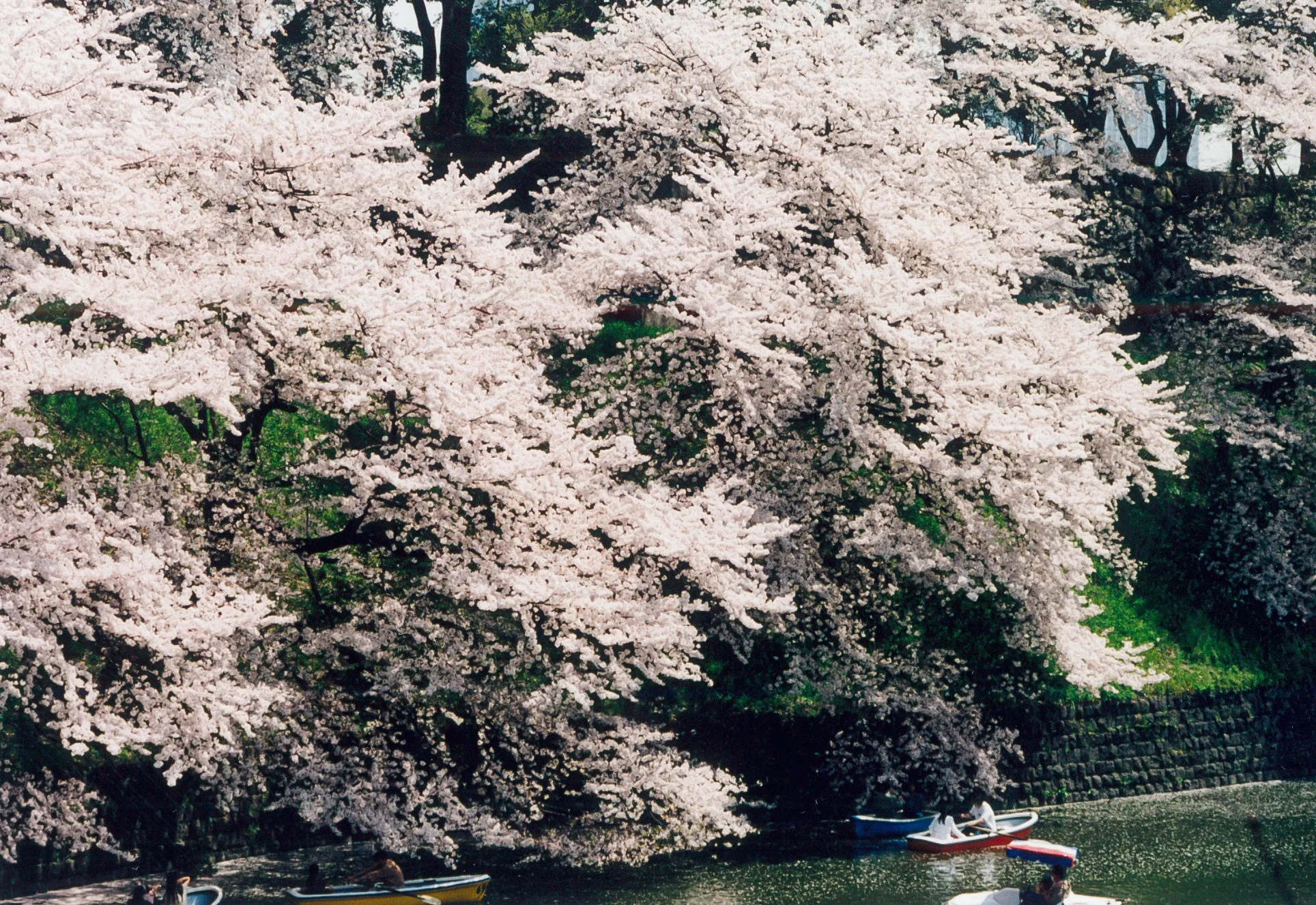
Tokyo loves cherry blossom so much that it is watched along rivers, in palace moats and in parks, and sometimes simply on side streets. The best-known locations are the Chidorigafuchi moat near the Imperial Palace, where branches hang over the water and rental boats float on it; the Meguro River, along which lanterns are lit in the evening; Ueno Park with its long avenue and street snacks; and the Shinjuku Gyoen garden, where an entrance fee is charged but there are fewer crowds and the landscape is calmer. If you want something quiet, look for small parks in residential neighbourhoods: a blossoming street with two or three trees and a bench is often remembered more strongly than a famous park with a queue.
The main rule of Tokyo: come early. A weekday, eight in the morning — and you are almost alone. In the evening queues form at the Meguro River and the Chidorigafuchi moat, and at weekends police and volunteers regulate the flows of people. Don’t count on doing ten places in a day: two or three calm routes are better than five hurried ones. Tokyo combines easily with a trip to Yokohama — read about the big exhibition in our guide to GREEN×EXPO 2027.
Kyoto: a classic that never gets old
If you want to see cherry blossom against a backdrop of ancient temples and wooden houses, Kyoto is the place. Here the blossom is part of city life: festivals, tea ceremonies and walks along canals are tied to it. The traditional places are the Philosopher’s Path along the canal, Maruyama Park with its big weeping cherry, the Arashiyama district with its bamboo and river, Daigo-ji Temple with its historic trees and Gion with its evening illumination. Kyoto in spring is the busiest time of year, so the most famous spots have queues: look at the blossom early in the morning, and in the daytime head to less obvious places — quiet temples on the outskirts and gardens outside the centre. For the city’s most recognisable temple route see the article on Fushimi Inari, and for the neighbouring city the guide to Nara and the deer park. For Kyoto’s summer festival see Gion Matsuri 2027.
Osaka, Nara, Himeji, Yoshino: Kansai without the rush
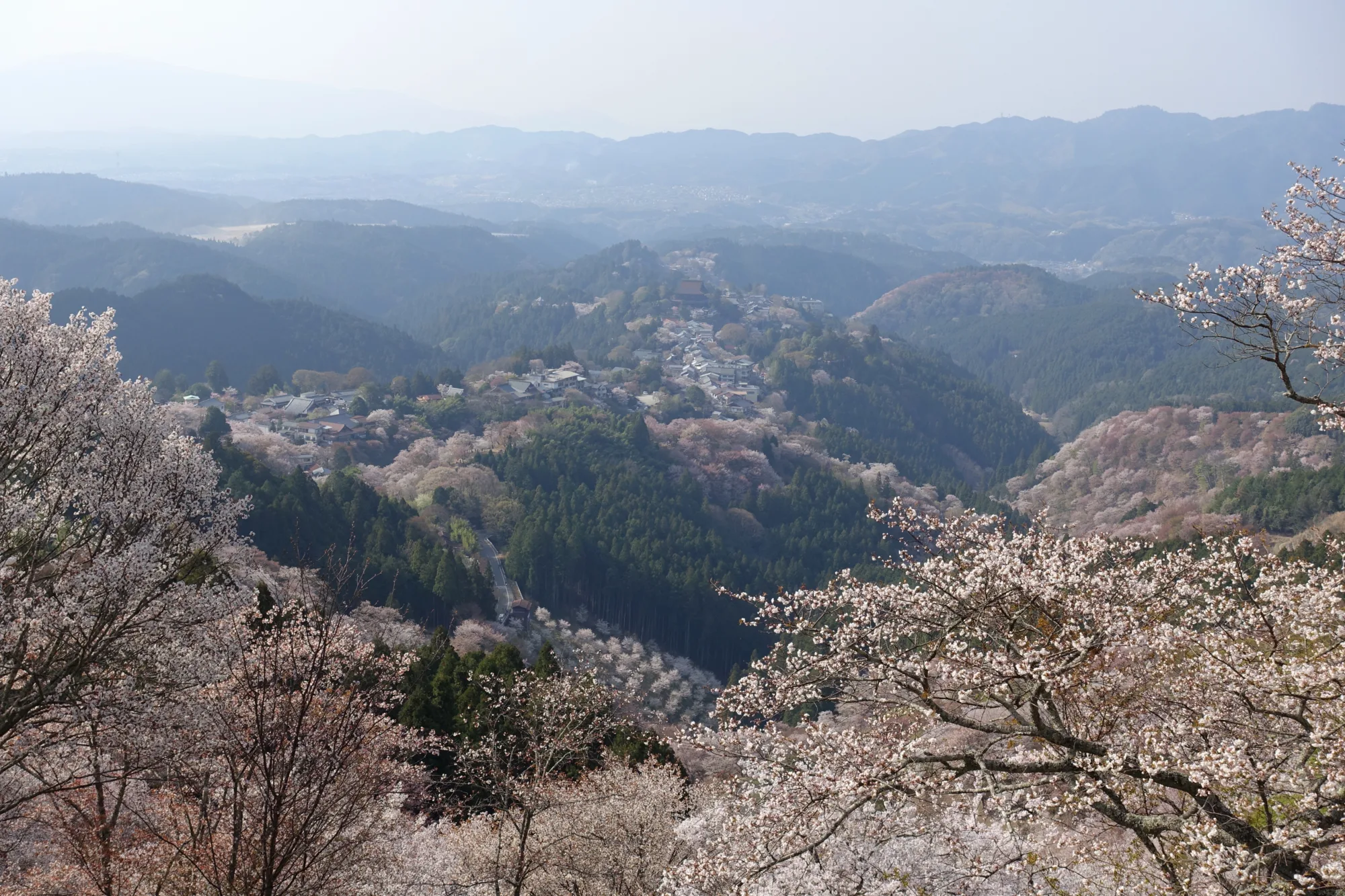
The Kansai region is an ideal base for a “sakura” week: from Osaka to Kyoto, Nara and Himeji you can get there by train in an hour to an hour and a half. Osaka Castle is surrounded by an extensive park with blossoming trees, and it is illuminated in the evening. Himeji Castle — the snow-white “White Heron” — looks especially striking against flowering trees. Nara with its deer in the park is an unusual combination: the animals roam among the blossoming branches. And if you are ready for a separate trip, head to Yoshino — a mountain south of Nara, where about thirty thousand trees grow on the slopes, divided into the lower, middle, upper and inner groves. The blossom here goes “from the bottom up” and stretches over several weeks, so you can almost always see at least some of the groves. The climb on foot up the slope is a pleasant walk, but at peak blossom the roads and buses are overcrowded, so set out early.
The north: Hirosaki and Hokkaido for those who are late
If the blossom in Tokyo and Kyoto is already over and you have arrived in April, head north. In Hirosaki, in the north of Honshu, a large collection of cherry trees grows around the castle, and the blossom usually falls in the second half of April; in the evening the moat and trees are lit, and pink carpets of fallen petals lie on the water. In Sapporo on Hokkaido the trees bloom at the end of April – early May, and some parks delight with flowers until mid-May. For Sapporo’s winter side read our article on the Snow Festival. The north is an excellent option if you don’t want crowds and are ready for cool weather.
Hanami: how to look at flowers properly
“Hanami” is not just “looking at flowers”, it is a whole tradition. Japanese people sit under the trees on plastic or fabric mats, set out food and drinks, take off their shoes and spend a whole evening under a blossoming cherry. Spots are claimed in advance — sometimes from the morning, and often a junior employee of a company guards an empty mat for hours. For tourists it is enough to know the basic rules. Use designated areas and don’t walk onto flower beds. Don’t shake the branches or pick flowers. Take your rubbish with you: there are few bins in Japan, and it is customary to clean up after yourself. Don’t make noise after a certain hour, especially near residential buildings. Don’t step on tree roots: they are fragile and already suffer from the crowds. And remember that many places allow alcohol but forbid fires and barbecues. Try the traditional seasonal sweets — mochi wrapped in a cherry leaf, pink dango and cherry-flavoured ice cream: in April they are sold everywhere in shops and markets.
How not to spoil your photos
Blossoming cherry is a tricky subject: the flowers are light, the sky is often whitish, and there are many people around. Shoot in the morning or evening, when the light is soft and the crowds smaller. Look for contrast — a dark trunk, water, a red pavilion, a wooden bridge. Out-of-focus branches in the foreground create the feeling of a “cloud”. In cloudy weather overexpose by one stop, otherwise the flowers will turn grey. And another thing — after rain, when petals lie on the water or on the pavement, the best shots of the season come out. Don’t forget respect: don’t block the path and don’t step onto people’s mats in search of an angle.
Weather and clothing
Spring in Japan is deceptive. By day it can be warm and sunny, while in the evening and morning it is cool, especially by the water and in the north. Dress in layers: a light jacket or cardigan, a scarf, comfortable closed shoes. Bring a folding umbrella: spring rain is not rare, and blossom in the rain looks special, although it does not last long. For evening walks by the river a thin jacket will come in handy, and for sitting under the trees a mat or sheet: the nearest shop at the station usually sells them right for the season. If you are allergic to pollen, remember that in spring Japan’s cedar blooms too, and many tourists feel it: bring your usual medicines.
Not only sakura: what blooms before and after
If you came too early or too late, don’t despair: a lot blooms in Japan. In February–March plum trees (ume) shine in gardens, their fragrance and colours no less beautiful. In April, when the cherries finish, azaleas and tulips begin, and in May wisteria cascades in lilac clusters in parks and temples. In summer lilies and hydrangeas adorn gardens, and in autumn red maples replace the pink petals. Many Japanese say that each season has its own “hanami”, and it is worth looking at more than just sakura. In 2027 the exhibition in Yokohama, where ten million flowers will succeed one another all season, will be added to this list.
Sakura with children and with parents
Hanami suits families if you prepare. Come on weekdays or early in the morning, bring water and a snack, a folding seat and light toys. Children quickly tire of crowds, so plan short walks with stops. For elderly parents choose parks with even paths and benches and don’t try to see everything in a day. Check the location of toilets in advance: in the most popular places queues form for them. And don’t forget to leave time to rest at the hotel: the season is long, and strength is not infinite.
How much the trip costs and when to book
The sakura season is one of the most expensive in Japan. Flights, hotels and train tickets get pricier, and the best options are snapped up six months ahead or earlier. A few tricks help to save. Stay not in the centre but near transfer stations: in Osaka, for example, from there it is easy to reach Kyoto and Nara. Use trains instead of expensive domestic flights. Book accommodation with free cancellation and catch discounts. Various passes are sold within the country, but before buying work out whether one will pay off on your particular route: for a short trip around two or three cities ordinary tickets are often cheaper.
Three ready-made itineraries
“Classic” — 8–10 days. Tokyo (parks and rivers) — Kyoto (temples and canals) — Nara — Osaka. It fits well at the end of March – early April.
“Chasing the blossom” — 10–14 days. Start in the south or in Kansai, then travel north: Osaka — Kyoto — Tokyo — Hirosaki. That way you will see the blossom several times if the weather turns unfavourable.
“Sakura and Expo” — 7–9 days. Tokyo, a day for the exhibition in Yokohama, then Kyoto and Nara. An option for those who want to see Japan in spring bloom in different formats.
Hotels for the sakura season
During the blossom season hotels fill up quickly and prices rise. Below is a selection from our database: look at the reviews and the “Hotel health” block, and check cancellation terms and distance to the station. In Tokyo and Kyoto it makes sense to choose accommodation near the subway so as not to lose time on the road at peak hours.
FAQ
When do cherry trees bloom in 2027? The exact dates will be known from the forecasts in January–February 2027; as a guide, the end of March – early April in Tokyo and Kyoto and the end of April – early May in the north.
How long does the blossom last? About a week from the start to full bloom, and another week or so until the petals fall; overall the window in one city is two weeks.
Where is the best place to see sakura? In Tokyo — the Chidorigafuchi moat, Meguro and Ueno Park; in Kyoto — the Philosopher’s Path and Maruyama; in Kansai — Osaka, Himeji and Yoshino; in the north — Hirosaki.
How can I avoid the crowds? Come on weekdays early in the morning and choose less well-known places.
When should I book accommodation? Six to twelve months ahead, with free cancellation.
Can I see sakura in April? Yes, in northern Honshu and on Hokkaido the blossom falls at the end of April – early May.
Blossom dates and park visiting rules depend on the weather and on decisions of local authorities — check fresh forecasts and official announcements.