Onsen etiquette in Japan: how to wash before bathing, what to do with the towel, the water temperature, whether tattoos are allowed and how not to break the unwritten rules of a Japanese hot bath.
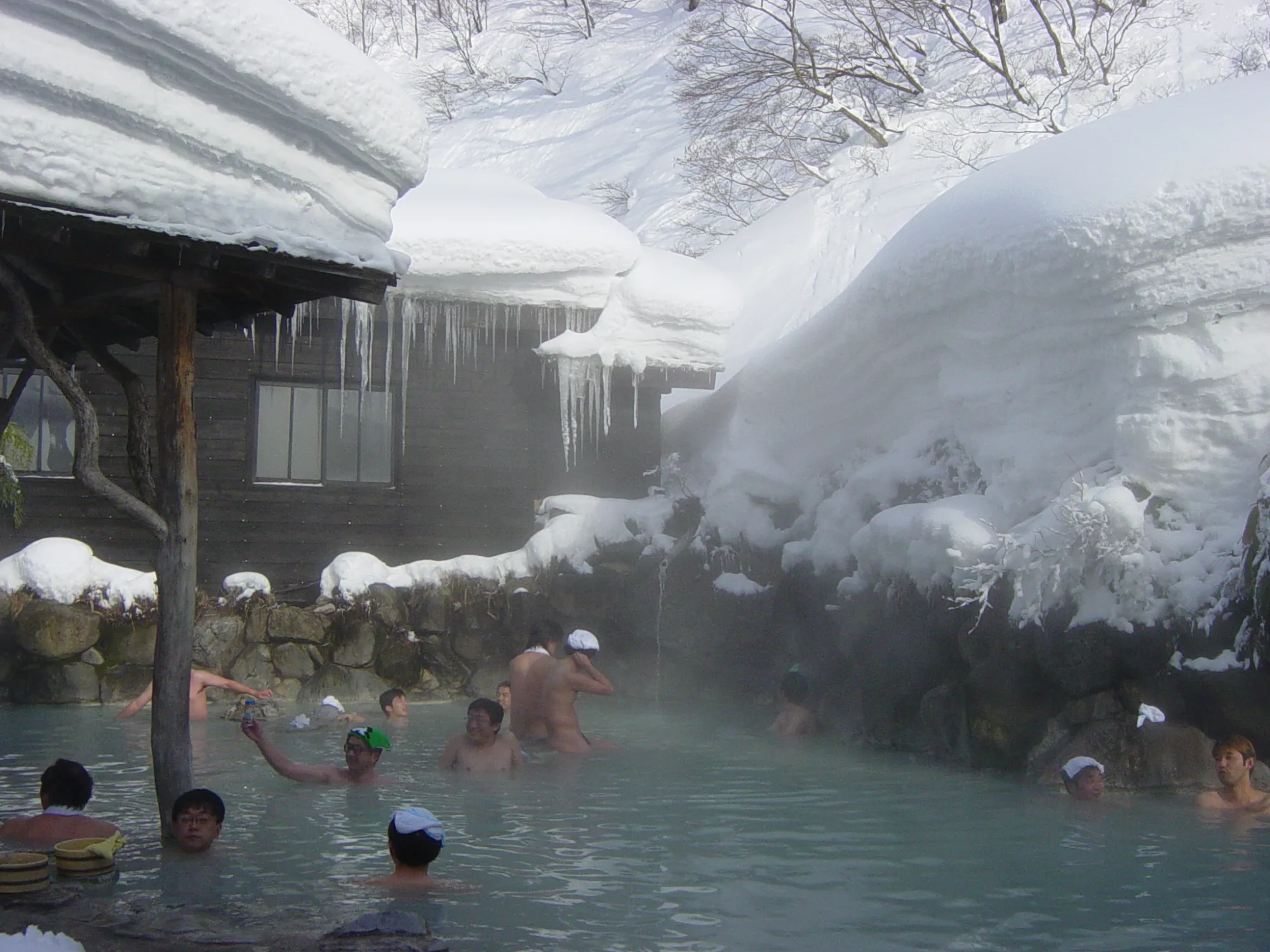
The frosty air nips your cheeks, frost settles on your eyelashes, and you sit up to your neck in hot water under falling snow and never want to get out. An onsen — a Japanese hot spring — is one of the few things in Japan worth travelling for even for those indifferent to temples and cuisine. But this pleasure has its own rules, and breaking any of them can draw sincerely shocked looks from your fellow bathers — and it is better to know them before the first bath, not during it.
First — wash
This is rule number one, and it must not be broken. Before getting into the bath, you sit on a low stool in the washing area (araiba), with a shower and soap, and thoroughly wash your whole body and hair, rinsing off every trace of soap. The clean spring water is shared, and soap, shampoo or dirt in it is perceived as an insult to the other bathers. Don’t rush: washing takes several minutes, and no Japanese person will consider it excessive.
You bathe without clothes
For many foreigners this is the hardest part. Onsen are usually separated by gender, and swimsuits are not allowed in them: you must enter completely undressed, with a small towel in your hand. There is nothing scandalous in this — everyone does it, including grandmothers and schoolchildren, and staring in a communal bath is considered indecent and practised by no one. Mixed baths (konyoku) are a rarity today, and there, as a rule, special cover-ups or separate hours are provided for women.
The towel and hair
The small towel is your only accessory in the bath. You can put it on the edge of the bath, fold it and place it on your head or keep it nearby on a rock, but you must never dip it in the water. Before going out to the changing room, thoroughly dry your body with this towel — then the changing room floor stays dry. Long hair needs to be tied up so it doesn’t get into the water: you can take a hair tie at reception or bring your own.
Water temperature and time
Japanese onsen are often very hot — 40–44°C, and for the unaccustomed this is hard. Enter slowly, let your body get used to it and get out before you begin to feel dizzy. For beginners 10–15 minutes per visit is enough, and then it is better to rest in the cool, drink water and, if you wish, go in again. Don’t bathe right after alcohol and don’t stay in hot water if you feel weak: water draws out fluid, and dehydration in the bath comes faster than it seems.
Tattoos
Historically in Japan tattoos are associated with the yakuza, and many traditional springs still do not admit them. The rules depend not on the law but on each establishment: roughly half of hot springs refuse visitors with visible tattoos, the other half either accept them or allow a small tattoo to be covered with a skin-coloured plaster. The most reliable option is private “kashikiri” baths, which are rented for 30–60 minutes for a family or couple: they are by definition open to everyone. Check the rules in advance with the hotel or on the spring’s website.
Behaviour in the bath
In the bathing area you may not use a phone or camera, talk loudly or splash. The water is a territory of silence: people come here to relax, and a noisy group annoys most of all. Don’t wash clothes in the bath, don’t dive and don’t swim. After bathing, dry off, drink water or cold milk — a classic in Japanese baths — and let your body cool before getting dressed.
FAQ
Can I go to an onsen with a tattoo? It depends on the specific place: roughly half of the springs don’t admit visible tattoos, but there are establishments where they are allowed, and private baths open to everyone.
Do I need to undress completely? Yes, swimsuits are not allowed in ordinary onsen; your only item of clothing will be the small towel.
What is the water temperature? Usually 40–44°C — beginners will be fine with 10–15 minutes at a time.
Can I bring my phone? No, photo and video recording in the bathing area is forbidden.
What should I do with the towel? Keep it on your head or next to the bath, but never put it in the water.
The rules of specific onsen may differ — check the conditions in advance with the hotel or on the spring’s website.