Gion Matsuri 2027 in Kyoto: yoiyama evenings on 14–16 and 21–23 July, float processions on 17 and 24 July, where to watch, how to cope with the heat and where to stay.
July. Kyoto melts in heat and humidity, and that is exactly when the city puts on its finest clothes. In the evening the narrow streets of Muromachi and Shijo fill with the warm glow of paper lanterns, yukata rustle over the pavement, a flute and the dull beat of drums drift out of open wooden houses, and at the crossroads tall, many-storeyed wooden towers on wheels rise up, hung with silk and carpets. This is Gion Matsuri — Kyoto’s main festival and one of the most famous in Japan. It runs all through July, but the climax falls on two dates: 17 and 24 July 2027, when giant yamaboko floats are pulled through the city and, at the corners, hundreds of people swing multi-ton towers around on the spot. If you want to see Japan not glossy but alive — with sweat, rhythm and centuries-old customs — Gion in July is worth any heat. Let’s look at how the festival works, which days to pick, where to watch and how not to burn out in the crowd.
- Dates: 1–31 July 2027.
- Yoiyama evenings: 14–16 July and 21–23 July — streets in the centre are closed to cars and the floats glow with lanterns.
- Main float processions: 17 July (Saki Matsuri) and 24 July (Ato Matsuri).
- Where: central Kyoto, around Shijo, Kawaramachi, Oike and Muromachi streets; Yasaka Shrine.
- Weather: hot and humid; bring water, a hat and light clothing.
- Main tip: book hotels six months ahead or earlier, and arrive at the very start of the processions to claim a spot.
A festival more than a thousand years old
The history of Gion Matsuri begins in 869. An epidemic swept through the capital, and in hope of salvation the residents held a ritual to appease the gods at Yasaka Shrine: they set up some sixty halberds — one for each Japanese province — and prayed for deliverance from the disease. Over time the rite grew: townspeople began to decorate the halberds, then to build floats, and merchant districts competed in splendour. Today the festival is on UNESCO’s list of intangible cultural heritage, and its core is the procession of yamaboko floats. The festival is still built around a prayer for health and for the city’s protection from misfortune, and you can feel it: behind the carnival brightness stands a serious ritual.
Yamaboko: towers assembled without nails
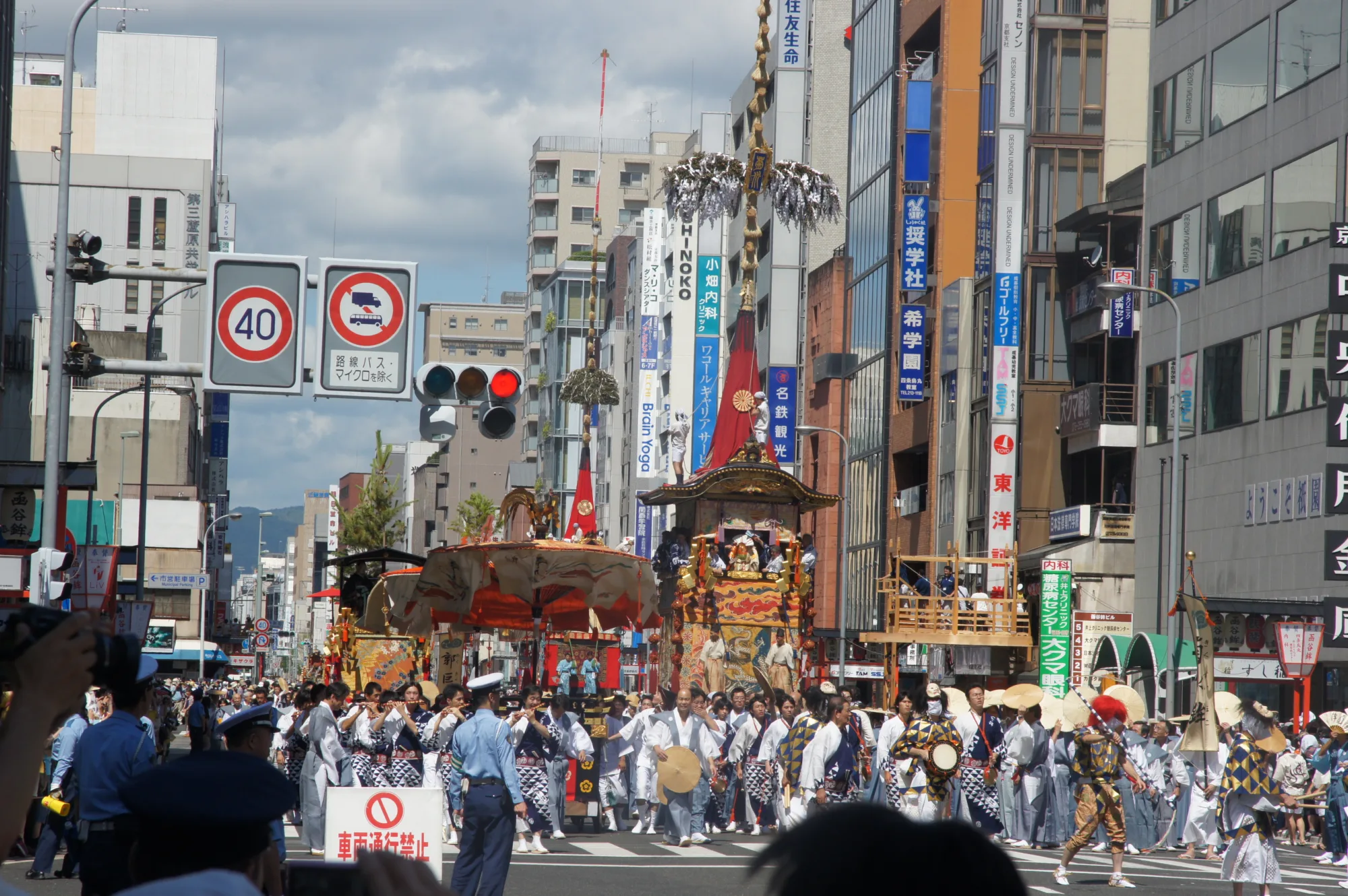
The floats come in two types. “Hoko” are the largest: tall towers on huge wooden wheels, with a halberd or spear at the top. “Yama” are smaller and are carried on litters. In all, thirty-four floats take part, and each belongs to its own neighbourhood, which keeps it from generation to generation. The most famous feature of the hoko is that they are assembled without a single nail. The wooden parts are lashed together with ropes in a special way — the technique is called “nawagarami” — and the floats are taken apart after the festival. Each float is decorated with antique carpets and tapestries: some were brought centuries ago from China, Persia and Europe, and the value of the decoration is sometimes comparable to museum exhibits.
The floats are accompanied by music: the gion-bayashi orchestra plays flutes, drums and gongs, and the sound never stops while a float stands or moves. Every float has its own rhythm, and listening to it up close is a pleasure in its own right. On one of the hoko — the Naginata-hoko — sits a living child, the chigo, an acolyte chosen in advance: in the old days he was believed to represent a deity. During the procession it is he who, by custom, cuts the sacred rope that opens the way for the floats.
The calendar of the month: what happens and when
Early in the month. In the first days of July the rituals begin: participating neighbourhoods gather in shrines, ceremonies are held, and a lottery early in the month determines the order of the floats in the main procession.
Building the floats. In the first half of July residents assemble the floats right in the streets. Watching it is free and very absorbing: you can see ancient technology at work.
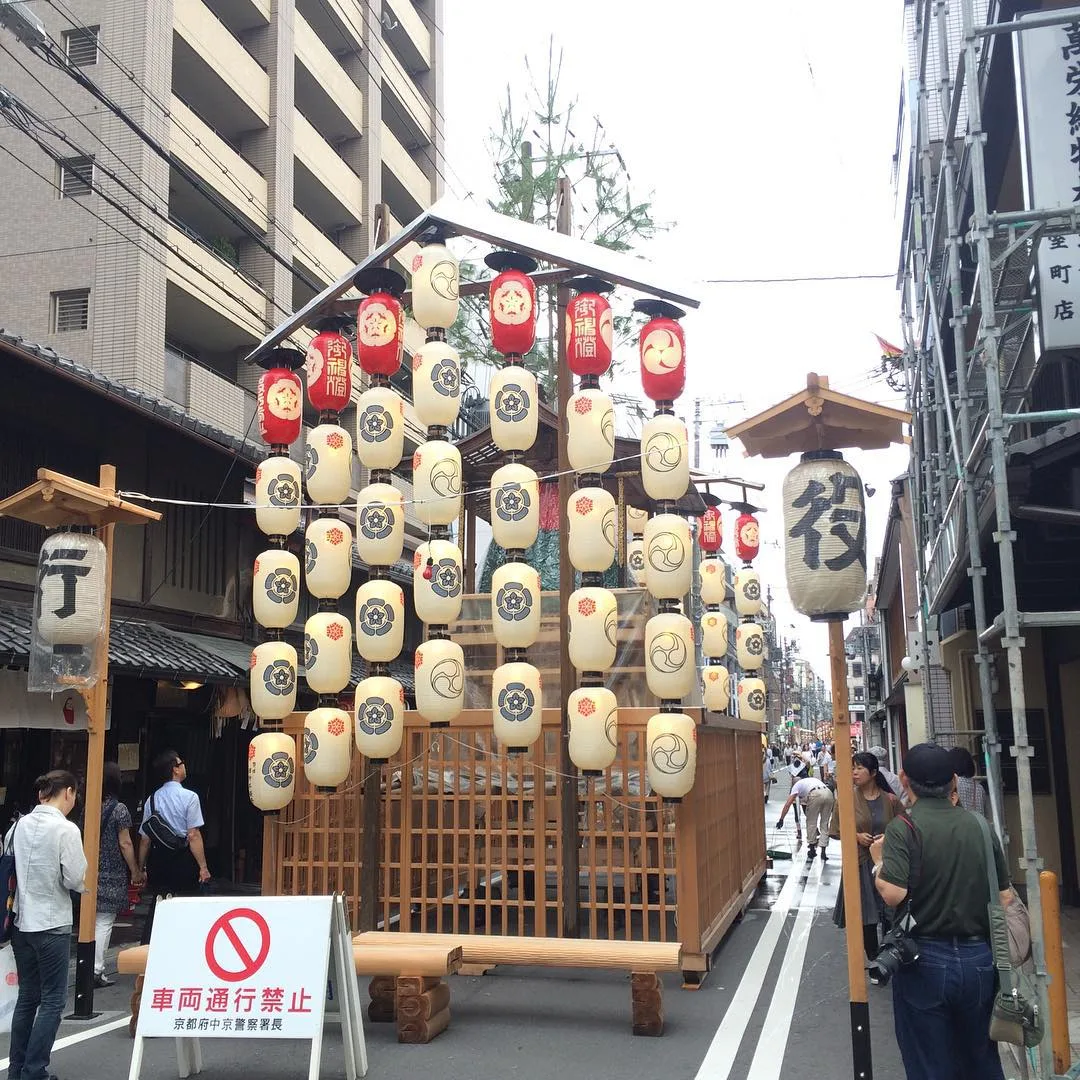
Yoiyama evenings — 14–16 July and 21–23 July. These are the evenings before the processions. Traffic in the centre is stopped, the streets fill with pedestrians, and the floats are lit with paper lanterns. Food, charms and sweets are on sale, music plays, and the owners of houses in the Muromachi district put out family heirlooms — folding screens, textiles, works of art. Strolling along these streets in the evening is the best introduction to the festival.
17 July — Saki Matsuri. The first main procession: the large floats set out along the route in the morning and move through the central streets until about noon. The most striking sight is the turn at the crossroads.
24 July — Ato Matsuri. The second procession: different floats, a slightly more intimate atmosphere and often smaller crowds. A festive procession in costume takes place together with it. That same evening Yasaka Shrine brings back the portable shrines, closing the great cycle.
End of July. The rites continue, and on 31 July the concluding ceremony is held at Eki-jinja Shrine, and the month ends.
Tsuji-mawashi: the main moment of the procession
If you want to see just one thing at Gion, wait for a float to turn at a crossroads. A float on wooden wheels cannot steer itself. So wet bamboo strips are laid under the wheels, and dozens of people with thick ropes pull the hulk in the right direction; the leader on the float gives commands with fans, and the crowd cheers the team on in chorus. A few minutes later the tower swings around on the spot. When the float slowly slides over the bamboo and changes direction in jerks, the spectators hold their breath and then burst into applause. The best places for this spectacle are the crossroads on the route: Shijo-Kawaramachi and Kawaramachi-Oike. Come early, and if you want a guaranteed spot, look for paid grandstands — they are sold in advance.
Where to watch and how to claim a spot
At the main crossroads places are taken from early morning, so set out early: people begin to gather long before the procession starts. You can watch for free from the pavements along the route, but be prepared to stand in the sun for several hours. Paid grandstand seats are sold in advance — they give shade or at least a chair and a guaranteed view; check exact prices and how to buy with official sources and the organisers. A good alternative is to watch the procession not at the busiest crossroads but on side stretches, where there are fewer people and it is easier to leave if needed. And remember: the route is closed to traffic, and you can cross it only where permitted — plan your walking routes in advance.
Heat and health: how not to suffer
July in Kyoto is hot and humid, and spending several hours in a row outside can lead to heatstroke. Drink water regularly, carry cooling wipes, wear a hat or a sun umbrella and light, breathable clothing. In the morning dress so that it is easy to take off a layer; take breaks in the shade or in an air-conditioned café. Be sure to eat: Japanese festivals are rich in street food, but in the heat it is important not to skip proper meals. If you feel dizzy, weak or nauseous, get somewhere cool at once, drink water with electrolytes and, if necessary, turn to volunteers or medics on site.
What to wear: yukata and courtesy
Many visitors wear a yukata — a light summer kimono that can be rented in Kyoto — to the yoiyama evenings. It makes the stroll more atmospheric and the photos brighter. But remember: a yukata takes getting used to, and in the heat and crowds it can be uncomfortable, so decide in advance. Shoes should be comfortable, since you will walk a lot. Don’t forget etiquette: don’t climb onto the floats or touch the decoration, don’t get in the participants’ way, and take photos respectfully without blocking the passage. If you are offered a charm — the chimaki sold on the floats — accept it with thanks: they are believed to protect the home from misfortune. Something similar is discussed in our article on onsen etiquette: the general point of Japanese politeness is attentiveness to others.
Festival food
Kyoto is famous for its cuisine, and during Gion special seasonal dishes are prepared in the streets and restaurants. In the evening walk along the stalls: fried yakisoba noodles, skewers, takoyaki, grilled corn and green-tea ice cream. In summer Kyoto loves eel — by old tradition it is eaten for strength in the heat. Also try cold somen noodles and traditional Japanese sweets made with agar, which are very refreshing. Restaurants are full on these days, so book a table in advance or eat on the go.
What a procession day looks like hour by hour
To avoid getting lost in the schedule, picture the procession day as a sequence of stages. Early in the morning, before it begins, the streets along the route are already filling with spectators: some are claiming spots, others are having breakfast in nearby cafés. Closer to nine the floats line up in order and set off with ritual ceremonies. At first comes the calm part: the orchestras play, the floats glide slowly down the street, and spectators admire the decoration. Then come the turns at the crossroads — the most spectacular moments, when the crowd freezes and then bursts into applause. By noon the procession is over, the floats stop, and the participants get a well-deserved rest. After that festively dressed Kyoto residents stroll the city for several more hours, and the cafés hum with conversation. Plan your day so that by lunchtime you are in the shade or somewhere cool: the hottest time begins right after the procession.
If it rains
July in Japan is the tail end of the rainy season, and the weather can change. Organisers rarely cancel the procession because of ordinary rain: the floats are covered, participants put on raincoats, and the show goes on. Bring a light raincoat or a folding umbrella — though umbrellas get in the way of those around you in a dense crowd, so a raincoat is more convenient. Choose shoes with non-slip soles and protect your phone from moisture. If the weather turns really bad, check official resources or ask at your hotel: they will tell you how the programme is changing.
A mini glossary of the festival
A few words will help you find your way around the programme. “Matsuri” — a festival. “Yoiyama” — the evenings before the procession. “Yamaboko” — the general name for the floats. “Hoko” — the large floats on wheels, “yama” — the smaller floats. “Saki Matsuri” — the first half, “Ato Matsuri” — the second. “Gion-bayashi” — the floats’ music. “Chigo” — the child acolyte. “Chimaki” — a charm made of bamboo leaves. These words often appear on signs and in programmes, and knowing what they mean makes the trip easier to follow.
Budget and planning
You can watch the festival for free, so the main costs are the flight and accommodation. In July hotel prices in Kyoto rise, especially around 14–17 and 21–24 July, and it is better to compare options in Kyoto and Osaka in advance. Paid grandstand seats, yukata rental, food and souvenirs are extra costs; their size depends on your choices, so rely on current prices when booking. Plan the trip so as to leave slack in the schedule: on procession days transport is overloaded, and any unexpected delay can cost you the best spot.
Where to stay and how to get there
Hotels in Kyoto for Gion are snapped up six months ahead or earlier, and prices on those days rise several times over. The best choice is the areas near a subway station on the Karasuma and Tozai lines: from there you can walk to the route. The neighbourhoods around Kawaramachi and Gion are also good: the atmosphere is special, but prices are higher too. If you cannot find accommodation in Kyoto, consider Osaka: it is about half an hour from Kyoto by express train, and there are more hotels there. On procession days the centre is closed to cars, so don’t plan on taxis — walk and use the subway and buses. For more on the neighbouring city and the festival calendar, see our overview of Japan events in 2027.
How to round out the trip
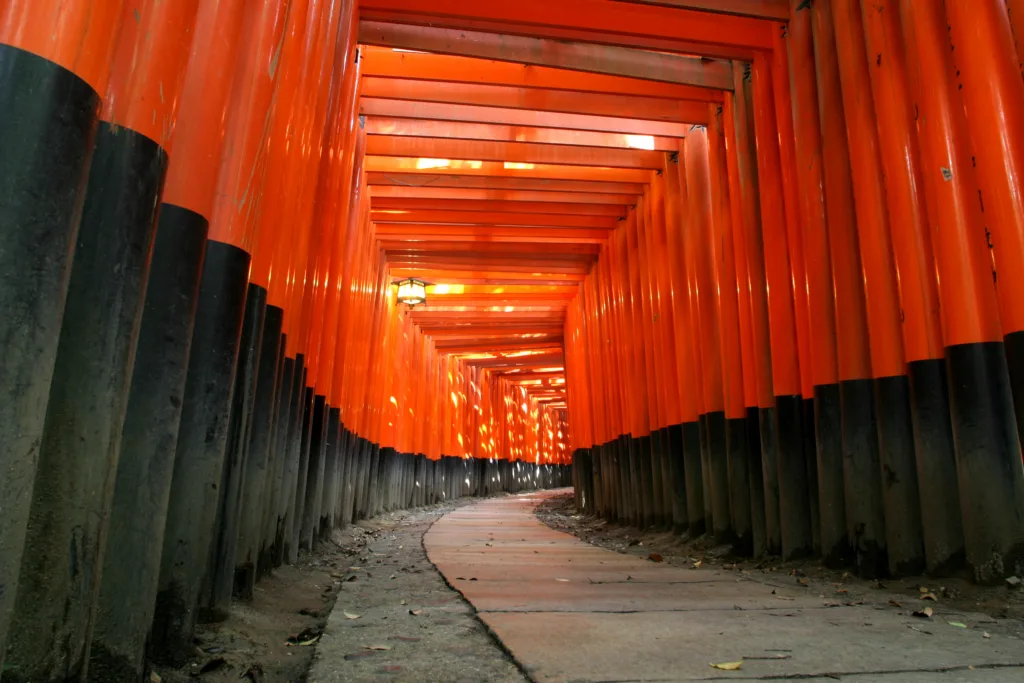
In the morning before the heat, visit Fushimi Inari with its thousand red gates, and on a free day take a trip to Nara and feed the deer in the park — details in the article about Nara and Todai-ji Temple. And if you want to combine Kyoto with a big city, add Osaka: in July it has its own Tenjin festival, whose river processions are held at the end of the month. For those coming for a couple of days, two yoiyama evenings and one morning procession are enough: that is the most eventful minimum, and the rest of the time is better spent on an unhurried stroll.
Gion with children
The yoiyama evenings suit families too: streets are closed to cars, there are lights, music and treats all around, and the dark hours save you from the heat. Come early, before the densest crowds, hold children by the hand and agree on a meeting place in case you get separated. Morning processions are tiring for little ones: standing for hours in the sun is hard, so bring water, hats and folding stools if allowed on site, and at the first signs of fatigue go to rest in a cool café.
Three ready-made itineraries
“Yoiyama evening” — 3–4 days. Fly into Osaka or Kyoto, two evenings on the streets of the centre, a morning at Fushimi Inari, one day in Nara.
“Both processions” — 8–9 days. Saki Matsuri on 17 July, then Nara, Osaka and Himeji, Ato Matsuri on 24 July and a final evening in Kyoto.
“Kyoto without the crowds” — 5–6 days. Arrive in the second week of July: watch the floats being built, stroll the neighbourhoods and the yoiyama evenings of 14–16 July, and rest in the cool on procession day.
FAQ
When is Gion Matsuri in 2027? From 1 to 31 July; the main processions are on 17 and 24 July, the yoiyama evenings on 14–16 and 21–23 July.
Which procession should I choose? Saki Matsuri on 17 July is larger and more crowded, Ato Matsuri on 24 July is calmer; if you are going once, pick the 17th.
Do I need a ticket? You can watch from the street for free; paid grandstand seats are sold in advance.
What is yoiyama? The evenings before the processions, when the streets are closed to cars and the floats are lit with lanterns.
What should I wear? Light, breathable clothing, a hat, comfortable shoes; a yukata is optional.
When should I book accommodation? Six months ahead or earlier; as a last resort look for options in Osaka.
Check exact dates, procession times and rules with official sources — the schedule may change.