Inside, ocean view, balcony or suite? How to choose a cruise cabin by route, length and travel style, where on the ship to book, and which mistakes to avoid.
A cruise cabin is a strange purchase. You pay a considerable sum for a room you will hardly be in: in the morning you are at breakfast, during the day in port or by the pool, in the evening at a show, and you come back to the cabin to sleep and change. Yet the category choice raises the most doubts: should you take a balcony when an inside cabin is cheaper? Will it be noisy? Will the lower deck make you seasick? On the pages of our Asian cruises each cruise lists cabin types — usually an inside cabin without a window, ocean view, balcony and suite. Below is how to choose between them based on route, length, family make-up and your own character.
- A cruise of 2–4 nights with a lot of time out of the cabin — an inside or ocean-view cabin is enough.
- A cruise of 5–9 nights with sea days or scenic calls — consider a balcony.
- If you get seasick, take a cabin amidships on a low or middle deck.
- Do not choose a cabin under a deck with a pool, disco, theatre or restaurant: it can be noisy overhead.
- The exact list of categories and prices for your dates is on each cruise page.
Four main categories
The same set appears on all cruises in our selection. Only details and prices differ.
Inside cabin: no window
The cheapest category. There is no window, so it is dark until you turn on the light. That is not necessarily a minus: many like the “cave” for sleeping, especially when adjusting to time zones. It suits you if you are on a short cruise, spend most of the time on decks and in restaurants and do not want to pay for a view. It does not suit people who dislike enclosed spaces or like waking in daylight. On some ships inside cabins have a screen that shows a view from the side of the ship, but it depends on the vessel, so check the cruise page.
Ocean-view cabin with a window or porthole
The window faces the sea, there is light, but you cannot step outside. A good compromise on price, especially if you are an early bird and like looking at the horizon over coffee. Note that in some cabins the view is partly blocked by lifeboats — this is called “obstructed view” and is usually noted in the category description.
Balcony cabin
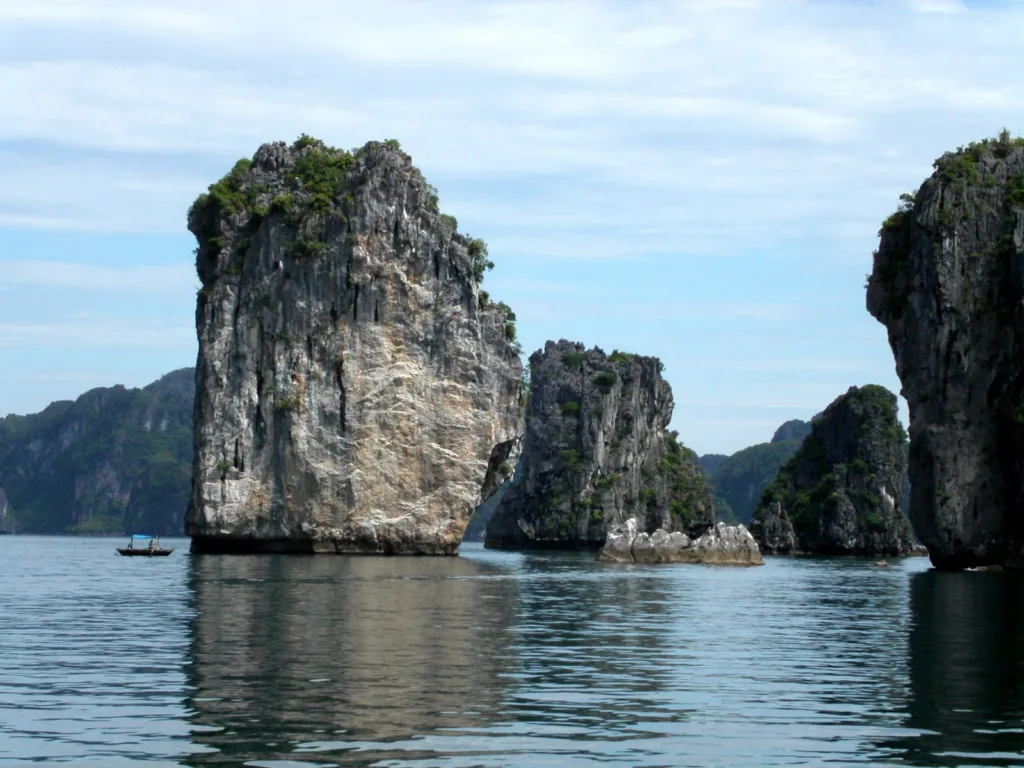
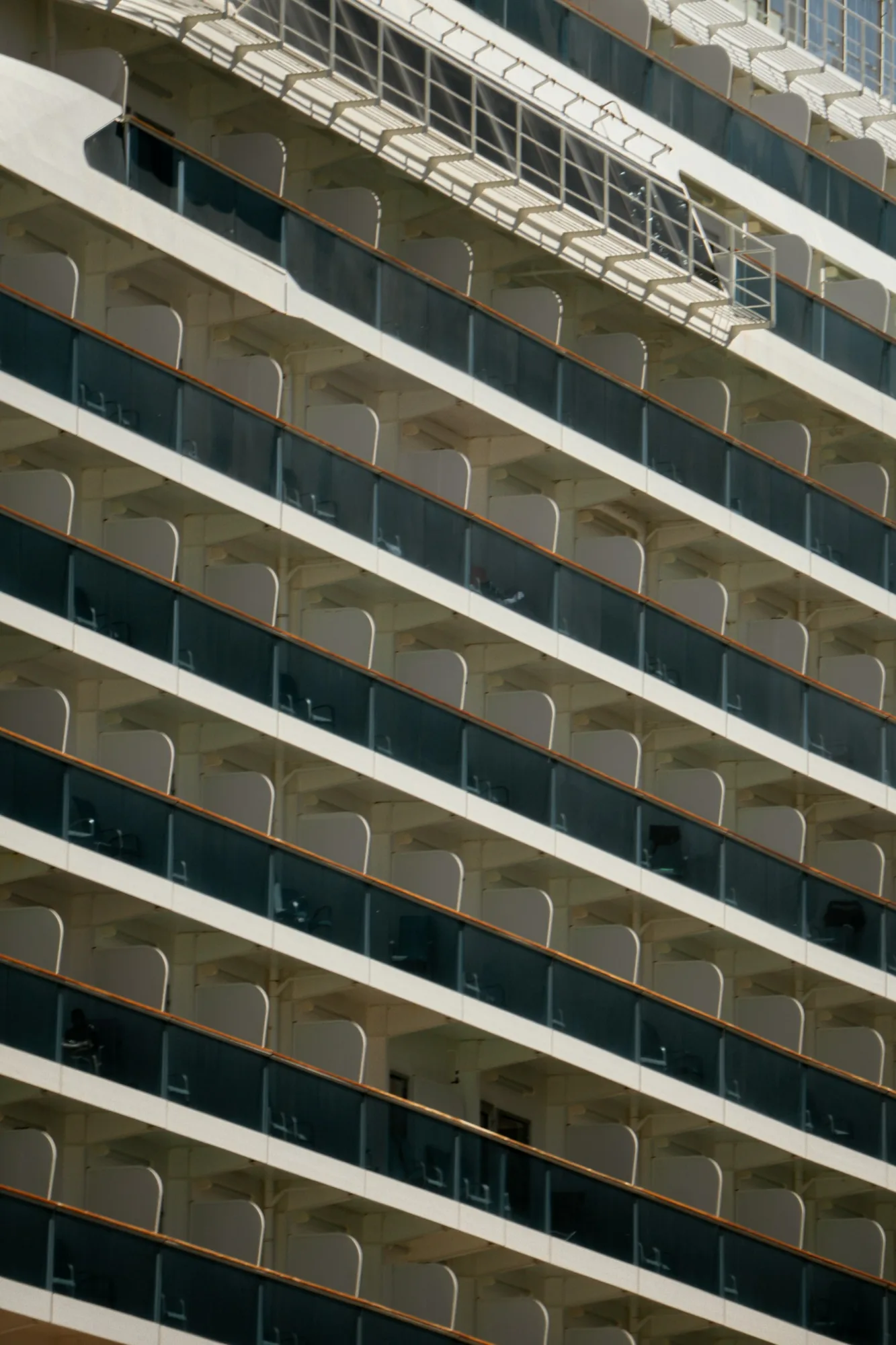
Access to a private balcony where you can sit, drink tea and watch the ship enter port. On cruises with beautiful calls — Ha Long, the Ryukyu islands, fjords — a balcony pays off best. It is worth more on longer routes and on smaller ships, where you look at the shore more often than at other ships. With small children a balcony needs safety attention, and in hot months it can be too hot for long sitting.
Suite
More room, a separate sleeping and living area, sometimes special privileges: priority boarding, a separate restaurant, a butler. The privileges depend on the line and ship and are listed in the description. For a couple on 3–4 nights a suite is usually excessive; for a family with children or a group that needs more space it may be more convenient than two separate cabins.
Where on the ship the cabin is: more important than it seems
The same category on different decks and in different parts of the ship gives different experiences. Here is what to check on the deck plan, usually available when choosing a cabin.
Motion
A ship moves least in the middle and on low decks, closer to the waterline. The bow, stern and upper decks feel motion more. If you travel in a season when waves are possible (typhoons in East Asia from August to October) or you get seasick, choose the middle of the ship on the second to fifth deck from the bottom.
Noise
The most common complaints are about a cabin under a deck with a pool, bar, theatre or disco, next to lifts and technical rooms, and above a restaurant or at the very stern, where you can hear the engines. A good rule: look at what is on the deck above and below your cabin. Ideally these are also cabin decks.
Proximity to lifts and restaurants
A short path to the lift and the dining room is a plus for families with children and for people with limited mobility. But cabins right next to the lifts hear the noise of doors and conversation in the corridor. The best compromise is a few doors from the lift.
Port and starboard
If the route follows a coast and you choose a balcony cabin, see which side the ship will face the shore. This information is sometimes in the cruise description but more often needs to be checked with the line. In Ha Long, for example, the view of the rocks matters more than the side: the ship turns anyway. For most short Asian cruises this is not critical.
How many people in the cabin
The basic capacity of a cabin is two people, but many categories have extra beds or sofa beds for a third and fourth guest. This suits families but makes the cabin tighter. Keep in mind:
- the price for a third and fourth guest is usually lower than for the first two, but depends on the line and date;
- children have separate rules and age limits;
- some lines charge a supplement for single occupancy — if you travel alone, check the conditions in advance;
- for a group of four, two adjoining cabins are sometimes better than one with four beds, but it depends on prices.
Choosing by type of traveller
A couple on a weekend
A short cruise of 2–4 nights — for example from Keelung or Shanghai. An inside or ocean-view cabin will do: you will hardly be in the cabin. If you want romance, take a balcony, but only if the cruise passes beautiful coasts. Examples of short cruises are on the page Short cruises in Asia of 1–4 nights.
A family with children
Inside cabins save budget, but children sometimes find it hard to sleep in the dark; an ocean-view cabin is a compromise. If you have children under three, take a cabin near the lift to make it easier to wheel a stroller. For large families look at connecting cabins if the line has that option. More in our article on Disney Adventure from Singapore.
A view lover
If you are travelling for the ports and beautiful approaches rather than entertainment, a balcony is justified: on small ships such as the Japanese Mitsui ships the shore is visible almost all the time. On mega-ships such as Spectrum of the Seas (169,379 tonnes, up to 5,622 guests) you will still spend much time on decks.
Someone prone to seasickness
Choose the middle of the ship on low decks and, where possible, the biggest ships: they sway less. On cruises longer than three or four nights this is especially important. Consult a doctor about motion sickness remedies in advance.
A solo traveller
Some ships offer cabins for one, but not all. Usually when one guest occupies a double cabin the price is higher than per person with two guests. Check the conditions on the cruise page.
How cabins differ on ships in our selection
We do not describe the interior of every category on every ship — it is easy to check on the cruise page. But the class of ship matters. Here are a few guidelines for ships in the selection:
- Adora Flora City and Adora Magic City — large ships for over five thousand guests; examples: Adora Flora City, Hong Kong – Naha and Adora Magic City, Shanghai – Naha.
- MSC Bellissima — 171,598 tonnes and up to 5,655 guests: Keelung – Miyakojima – Naha.
- Star Navigator and Star Voyager — smaller ships (75–77 thousand tonnes, up to 1,854–1,940 guests); examples: Star Navigator, 4 days and Star Voyager, 6 days.
- Mitsui Ocean Fuji and Sakura — ships for 458 guests, where there are few cabins and the shore is closer.
 6 days / 5 nightsCruise on this routeHong Kong – Naha (Okinawa) – Hong Kong cruise, 6 days on Adora Flora CityHong Kong → Naha (Okinawa)Pick a date and cabin →Available cabins · Trip.com
 6 days / 5 nightsCruise on this routeShanghai – Naha (Okinawa) – Shanghai cruise, 6 days on Adora Magic CityShanghai → Naha (Okinawa)Pick a date and cabin →Available cabins · Trip.com
 6 days / 5 nightsCruise on this routeKeelung (Taiwan) – Miyakojima – Naha (Okinawa) – Ishigaki – Keelung (Taiwan) cruise, 6 days on MSC BellissimaKeelung (Taiwan) → Miyakojima → Naha (Okinawa) → IshigakiPick a date and cabin →Available cabins · Trip.com
When comparing lines, see the pages Royal Caribbean in Asia and Adora Cruises and MSC Cruises.
Season and route also affect the choice
The same balcony gives different impressions in different months. In summer in Southeast Asia a balcony is hot and humid, and you will step out in the morning and evening rather than midday; in winter in Japan and northern China it is cool, and the view can be assessed in a few minutes. In typhoon season, from August to October, open balconies are sometimes closed because of wind. So, choosing a category, consider not only the route but the month of travel: in the hot season a window or an inside cabin with good air conditioning is often more practical, and in a season of beautiful views a balcony pays for itself. We covered weather by month in the article When to go to Japan.
Typical mistakes
- Taking the cabin at the lowest price without looking at location. A cheap inside cabin above a disco is poor saving.
- Paying for a balcony on a short cruise without beautiful calls. If you are out of the cabin 90% of the time, spend the money on an excursion.
- Ignoring an obstructed view. A “window” cabin behind a lifeboat can be almost like an inside one, only more expensive.
- Not looking at what is included in the price. Tips, drinks, internet and paid restaurants are often charged separately.
- Not reading cancellation terms. They differ between fares; read them before paying.
How to book on our site
On each cruise page we show the route, ports, number of nights and cabin types, and the booking button takes you to Trip.com, where you can compare dates and categories and see current prices. We do not give amounts in the text: cruise prices depend on date, and an out-of-date figure only misleads. Selections by direction are collected on the page Cruises in Asia.
Frequently asked questions
Is a balcony worth it on a 3-night cruise?
If you will be out of the cabin most of the time, usually not. The exception is a cruise with a beautiful port approach that you want to watch from the balcony.
Where does the ship sway least?
In the middle of the ship on low decks. On big ships motion is less noticeable than on small ones.
Can I change cabins on board?
Sometimes, if there are free cabins, but it depends on the line and cruise; do not count on it in advance.
Is insurance needed?
It is recommended, especially with trip cancellation and medical costs; check the policy conditions for your case.
Useful links
- All cruises in Asia
- Short cruises of 1–4 nights
- Royal Caribbean in Asia
- Adora Cruises and MSC Cruises
- Cruises from Singapore
Current as of November 2026. Cabin categories, conditions and prices change: check them on the cruise page.
Pick your sailing date
Cruises from this article: Trip.com shows the nearest departures, available cabins and the final price. These are affiliate links — the price does not change for you.
 6 days / 5 nightsCruise on this routeHong Kong – Naha (Okinawa) – Hong Kong cruise, 6 days on Spectrum of the SeasHong Kong → Naha (Okinawa)Pick a date and cabin →Available cabins · Trip.com6 days / 5 nightsCruise on this routeHong Kong – Naha (Okinawa) – Hong Kong cruise, 6 days on Adora Flora CityHong Kong → Naha (Okinawa)Pick a date and cabin →Available cabins · Trip.com6 days / 5 nightsCruise on this routeShanghai – Naha (Okinawa) – Shanghai cruise, 6 days on Adora Magic CityShanghai → Naha (Okinawa)Pick a date and cabin →Available cabins · Trip.com6 days / 5 nightsCruise on this routeKeelung (Taiwan) – Miyakojima – Naha (Okinawa) – Ishigaki – Keelung (Taiwan) cruise, 6 days on MSC BellissimaKeelung (Taiwan) → Miyakojima → Naha (Okinawa) → IshigakiPick a date and cabin →Available cabins · Trip.com
 4 days / 3 nightsCruise on this routeKeelung (Taiwan) – Naha (Okinawa) – Keelung (Taiwan) cruise, 4 days on Star NavigatorKeelung (Taiwan) → Naha (Okinawa)Pick a date and cabin →Available cabins · Trip.com
 6 days / 5 nightsCruise on this routeSingapore – Phuket – Krabi – Singapore cruise, 6 days on Star VoyagerSingapore → Phuket → KrabiPick a date and cabin →Available cabins · Trip.com