Dong, millions in your wallet and Russian cards that don't work. What currency to bring to Vietnam, where to exchange, how not to mix up the banknotes and how much food costs.
Vietnam is one of the cheapest countries in Asia: a bowl of pho costs about as much as a cup of coffee at home. But your wallet here is stuffed with millions, the banknotes look alike, and a Russian card does not work. So the question “what currency to bring to Vietnam” is settled on two levels at once: what to bring from home and what to exchange it for on the spot. The short answer: cash dollars first, then dong. The rest, from exchange points to banknote traps, we will go through in detail. Which cards work is covered in the article about cards in Vietnam, and how to pay in different situations in the piece about payment methods.
- Local currency: the Vietnamese dong (VND). Everyday payments are made in it.
- What to bring from Russia: US dollars in cash. Don’t bring rubles: there are few exchange points and the rate is poor.
- Where to exchange: jewelry shops in Hanoi and Ho Chi Minh City, exchange points and banks; at the airport only the minimum for a taxi.
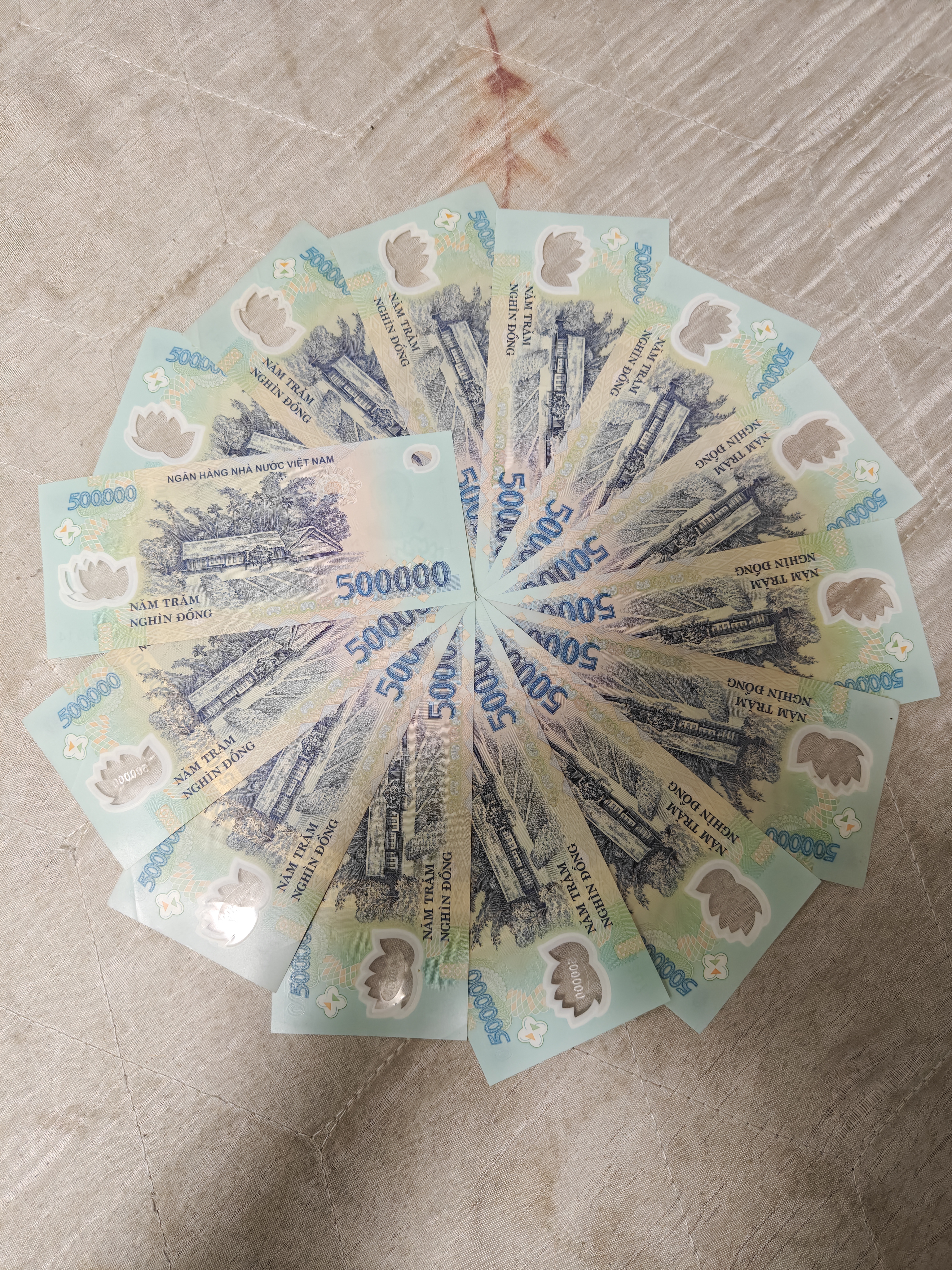
- The main trap: the 20,000 and 500,000 dong notes are similar in color, so count the zeros.
- Cards: Russian Visa and Mastercard do not work, Mir and UnionPay only partly; details in a separate article.
Current as of October 2026. We do not fix the dong rate, so check it for the day of your trip.
What currency is used in Vietnam: get used to millions of dong
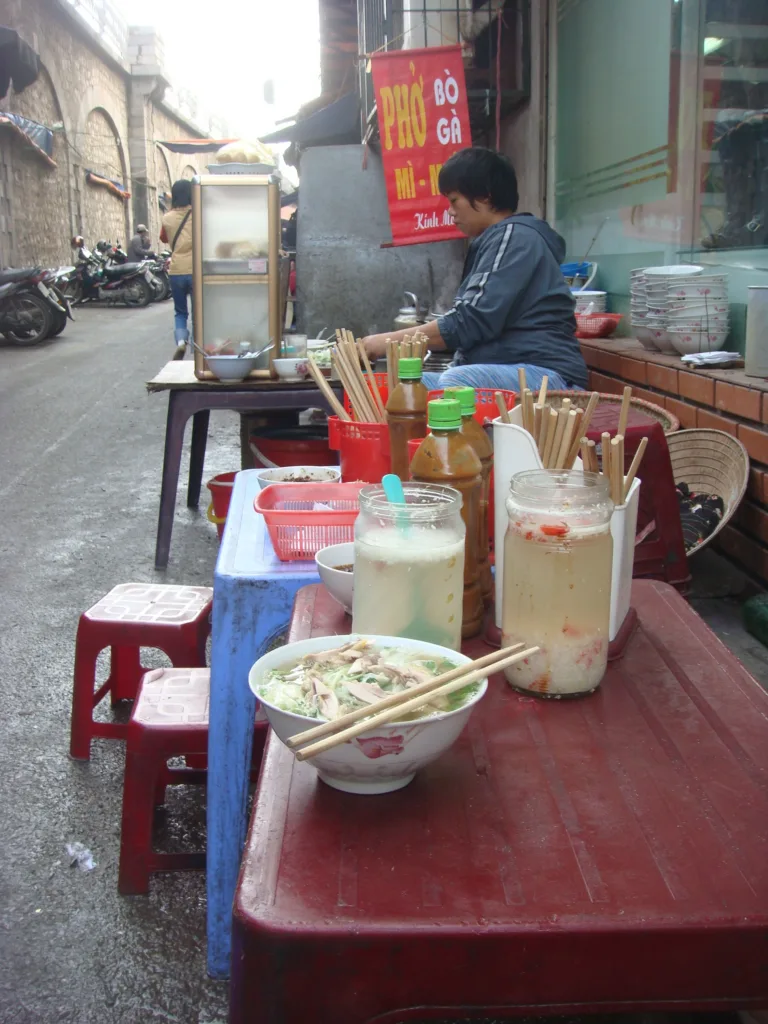
The Vietnamese dong (VND) is a currency with a lot of zeros. Lunch for two can cost three hundred thousand, dinner at a good restaurant a million. Psychologically it is confusing: it is easy to hand over a banknote of the wrong denomination. There is a simple guideline: a bowl of pho or a banh mi on the street costs around 1–2 dollars in equivalent, and a lunch at a mid-range café 3–6 dollars per person. These figures are approximate and depend on the city and the season.
Two banknote traps
- Similar denominations. The 20,000 and 500,000 dong notes are both bluish. Tourists mix them up, and so do (sometimes very conveniently for themselves) sellers. Count the zeros rather than looking at the color.
- Polymer banknotes stick to each other, so recount your change.
Lifehack: keep large notes in one compartment of your wallet and small ones in another. That makes it easier not to overpay in a hurry.
What currency to bring to Vietnam: dollars, euros or rubles
| What to bring | Accepted for exchange? | Comment |
|---|---|---|
| US dollars | Yes, everywhere | The best option; notes should be new and without tears; large denominations are exchanged at a better rate than small ones |
| Euros | Yes | The rate is slightly worse than for the dollar |
| Rubles | Almost never | There are few exchange points and the rate is poor |
| Dong from home | Rarely | It is hard to buy dong in Russia, so plan to exchange on the spot |
The scheme for a Russian traveler: turn rubles into dollars at home, and on the spot exchange the dollars into dong in portions. There is no need to carry millions of dong on you: take enough for a few days, then exchange more.
Where to exchange money in Vietnam
- Jewelry shops. In Vietnam this is a traditional and legal exchange channel. The rate is often better than at a bank. Look for places with a gold display and a rate board; in Hanoi and Ho Chi Minh City, outlets such as Vang Bac in tourist districts are popular.
- Banks. The rate is slightly worse, but you get a receipt and peace of mind. Suitable for large sums.
- The airport. The rate is usually worse than the market rate, and the difference is noticeable. Exchange the minimum for a taxi and a SIM card.
- “Hand-to-hand exchange”. Don’t — it is one of the main shortchanging schemes.
Before exchanging, check the rate on xe.com or in a search engine: a gap of 1–2% from the market rate is considered normal. For the road from Hanoi airport, where you often run into exchange and taxis right away, read the article Noi Bai to central Hanoi.
How much cash to bring
There is no single figure: it depends on the length of the trip, the city, your travel style and whether you have a card. The guideline depends on the city and style of travel: estimate expenses by category — food, transport, excursions, small purchases — and add a reserve. If you have no foreign card, the whole budget will have to be brought in dollars and split between different places. If you do have a card, you need less cash, but a reserve for small expenses is still essential. A detailed breakdown by expense category is in the piece Vietnam trip budget, and the cost of a month in one place in the calculation for Da Nang.
Cards and QR codes: what you can use instead of cash
Russian Visa and Mastercard do not work. Mir is accepted by the ATMs of Vietnam-Russia Bank, about 20 across the whole country, for withdrawals only. UnionPay from Rosselkhozbank and ATB works partly. We give a detailed table in the article which cards work in Vietnam. Since November 2025 you can pay in rubles by QR code through the Sber and VTB apps, and since January 2026 through “Moy MTS”, but this works in tourist areas, not in markets; the scenarios are covered in the article how to pay in Vietnam.
How much food costs and where they may try to shortchange you
Food is what gastro tourists come here for, and it is the smallest expense item. Domestic flights and accommodation will cost more. More on what to order in the piece about food in Vietnam. Typical places where they try to shortchange you:
- Taxis. Use apps with a fixed price: that removes both the haggling and the “broken meter”. Details in the article about transport and about Grab.
- Change in the wrong denomination. The classic with 20,000 and 500,000 — check right away.
- A “free” fitting, photo or coconut cutting. Ask the price before, not after.
- Exchange “at the best rate” from a person on the street. Not worth it.
This does not mean people cheat in Vietnam. Bargaining and attentiveness are part of everyday culture, as described in the piece about the mentality in Vietnam.
What to do with leftover dong before your flight
Taking dong out and exchanging them back at home is not worthwhile: they are almost not accepted in Russia. Plan so that only small sums are left on the last day. The rest can be spent at the airport on water, souvenirs and food, or kept for a taxi to the airport. If you have dollars left, bring them back — they will be useful on your next trip. Don’t leave the exchange to the last hour: departure zones may have no exchange points or the rate will be noticeably worse.
How to keep your money on the trip
Split your cash between different places: part in the hotel (a safe or a reliable lock), part in your bag, and a small sum in your pocket for everyday expenses. Don’t carry the whole amount with you: petty theft on the streets and in transport does happen, and there are details in the piece about safety in Vietnam. Keep 500,000 dong notes apart from small change so that you don’t mix them up when paying. If you stay in one place for more than a week, exchange money in portions: that way you risk less in the event of any loss and adjust to the rate.
Frequently asked questions
What is the currency in Vietnam?
The Vietnamese dong (VND). In tourist places you can sometimes pay in dollars, but at an unfavorable rate.
What currency to bring to Vietnam in 2026?
US dollars in cash, new and undamaged. Euros are exchanged at a slightly worse rate, and rubles are not worth bringing.
Can I pay in dollars in Vietnam?
Sometimes they will accept them in tourist places, but at an unfavorable rate. It is better to exchange dollars for dong.
How much cash should I bring to Vietnam?
If you don’t have a foreign card, the whole trip budget in dollars, with a reserve. Exchange in portions so you don’t carry millions of dong around.
Where to exchange money in Vietnam?
In the jewelry shops of Hanoi and Ho Chi Minh City, in banks and at exchange points. Not at the airport, where the rate is noticeably worse.
Does Rosselkhozbank’s UnionPay work in Vietnam?
Partly: ATMs and large outlets. Test the card on the first day and don’t make it your only plan.
Is tipping needed in Vietnam?
Not required. Rounding up the bill or leaving the change is polite and sufficient.
Do I need a visa for Vietnam?
A visa-free regime of up to 45 days applies to Russians; details and the current entry rules are in the article on the visa.
What’s next
The budget is clear, so build your route: Vietnam on your own, when to go north and when south, whether you need a visa, airfares. Internet for QR codes and cards: eSIM for Vietnam. For comparison, read about the currency in Bali.
Sources
Prices are approximate and depend on the exchange rate and the season. Check bank terms and how cards work with the issuer.