Two small Japanese ships with up to 458 guests each: itineraries from Yokohama, Naha and Hakata, the ports they reach that big ships cannot, and who this style of cruising suits.
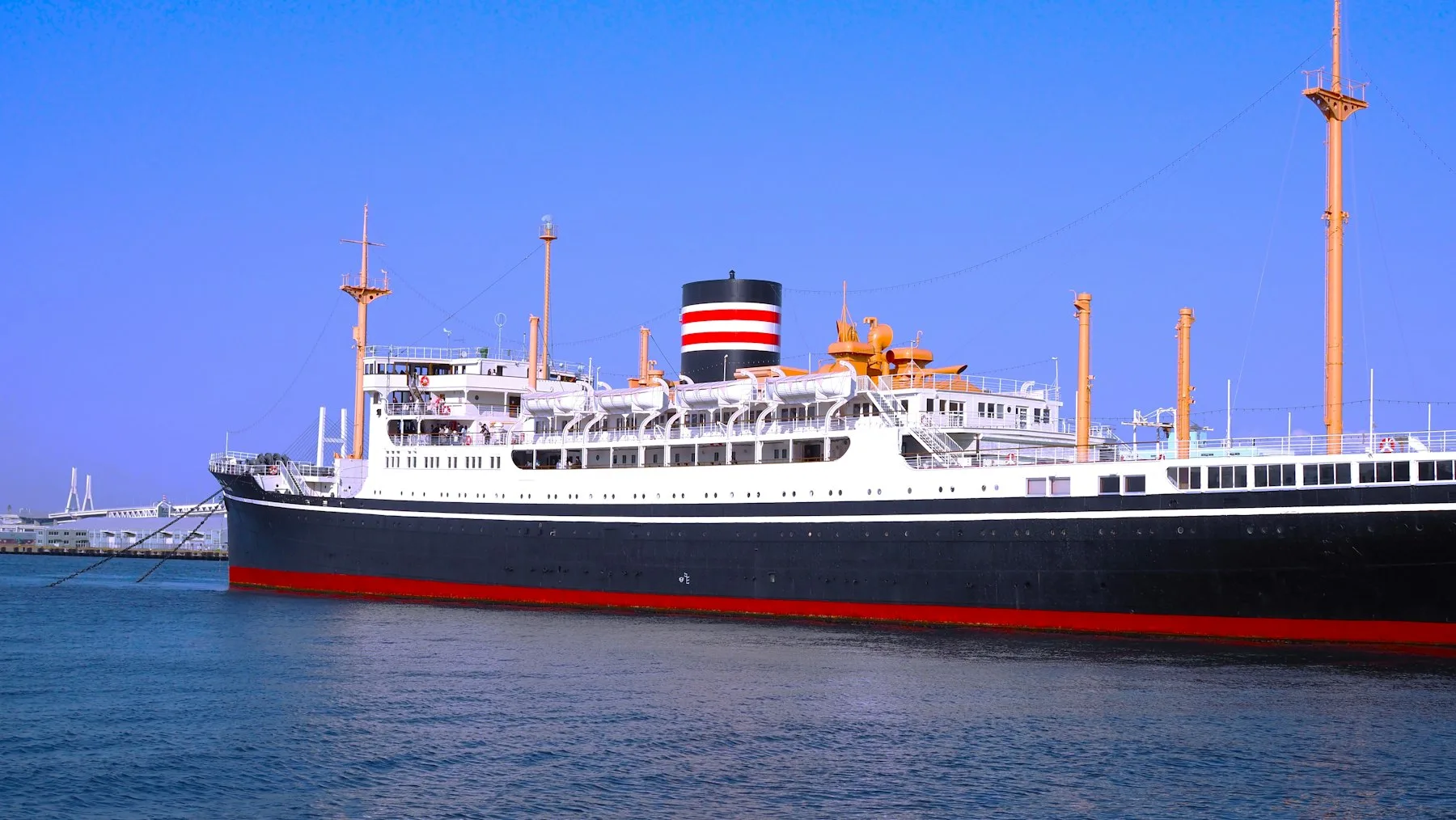
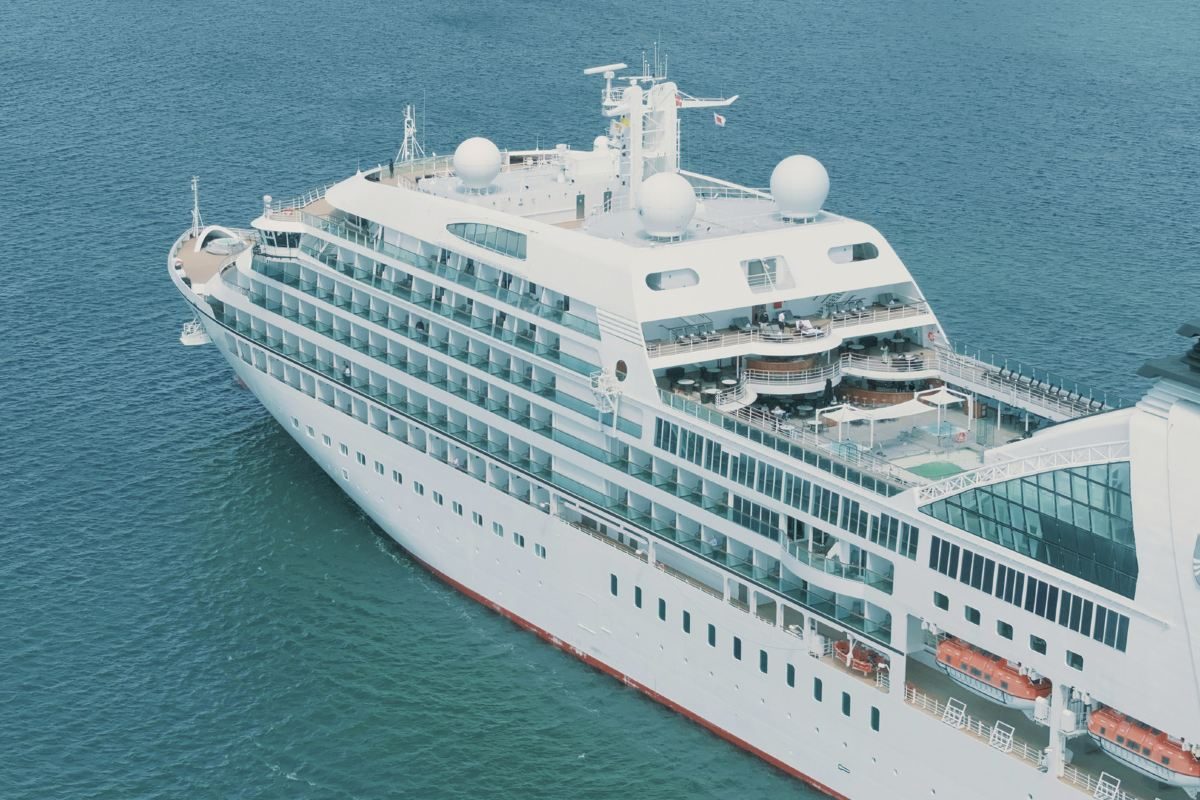
Most cruises in our Asian selection are floating cities for five or six thousand guests: water parks, slides, theatres, casinos. Mitsui Ocean Cruises is on a completely different scale: two small Japanese ships, Mitsui Ocean Fuji and Mitsui Ocean Sakura, each carrying up to 458 guests. For comparison, Spectrum of the Seas takes up to 5,622, twelve times more. The difference shows in everything from breakfast queues to the ports you can enter. If you want to see Japan from the water without crowds, this format is worth considering. Below: how these cruises work, which ports they visit and who they suit.
- Two ships of about 32,000 tonnes with up to 458 guests: Mitsui Ocean Fuji and Mitsui Ocean Sakura.
- Our selection has 19 cruises from 1–2 nights (Yokohama – Nagoya, Kobe – Kobe) to 8 nights (Yokohama – Japan – South Korea).
- A small ship calls at ports closed to giants: Toba, Shingu, Zamami, Sakaiminato, Hamada.
- These are “Japan” cruises, not “entertainment on board”: the ports and the sea come first.
- Ports, dates and cabin categories are always on the page of the specific cruise.
How a small ship differs from a mega-ship
Picture two ships at neighbouring piers. One is as tall as a 16-storey building, with a water park on the top deck and five thousand guests. The other is a quarter of the tonnage and half the height, with guests you could count in the dining rooms. On the first you get lost in the corridors; on the second by day two you know many faces. Neither is better — they are different products.
What usually distinguishes small ships from mega-ships:
- Ports. A small ship can moor at small piers in towns where a mega-ship has no room. On Mitsui itineraries these are Toba, Shingu, Zamami, Awaji, Sakaiminato, Hamada and other small ports.
- Speed of boarding and going ashore. With 458 guests landing is faster: no hour-long queues at the gangway.
- Atmosphere. Less noise and fewer “attractions”, more time in the lounges, on deck and in the restaurant. Good for those travelling for the route.
- Fewer entertainments. Do not expect a water park or slides; check the list of services on board on the cruise page.
For comparison, look at what mega-ship itineraries look like on the pages Royal Caribbean in Asia and Adora Cruises and MSC Cruises.
Cruises from Yokohama: Tokyo without hotels
Yokohama is the main port of Tokyo Bay, and you can reach central Tokyo from it by train. Itineraries departing from there are convenient if you fly into Tokyo and do not want to change hotels.
Very short: 1–2 nights
The shortest in the selection is Mitsui Ocean Sakura, 2 days, Yokohama – Nagoya, just one night on board. A little longer are the 3-day loop Yokohama – Yokohama and Yokohama – Toba – Yokohama. Toba is a town on the Shima peninsula near the Ise shrine, one of the country’s main Shinto complexes, and pearl farms: in one day ashore you can choose either the shrine, a farm or a quiet walk by the water.
 2 days / 1 nightsCruise on this routeYokohama – Nagoya cruise, 2 days on Mitsui Ocean SakuraYokohama → NagoyaPick a date and cabin →Available cabins · Trip.com
 3 days / 2 nightsCruise on this routeYokohama – Yokohama cruise, 3 days on Mitsui Ocean SakuraYokohamaPick a date and cabin →Available cabins · Trip.com
 3 days / 2 nightsCruise on this routeYokohama – Toba – Yokohama cruise, 3 days on Mitsui Ocean SakuraYokohama → TobaPick a date and cabin →Available cabins · Trip.com
4–5 days: Kansai and the Pacific coast
The cruise Yokohama – Fukuyama – Shingu – Yokohama connects two ports that mega-ships rarely visit. Fukuyama in the Hiroshima region is known for the old harbour town of Tomonoura, said to have inspired Miyazaki’s “Ponyo”; Shingu is the gateway to the Kumano shrines. There is also Kobe – Shimizu – Yokohama: Shimizu is famous for its view of Mount Fuji from the coast and the pine grove of Miho no Matsubara.
 5 days / 4 nightsCruise on this routeYokohama – Fukuyama – Shingu – Yokohama cruise, 5 days on Mitsui Ocean SakuraYokohama → Fukuyama → ShinguPick a date and cabin →Available cabins · Trip.com
 4 days / 3 nightsCruise on this routeKobe – Shimizu – Yokohama cruise, 4 days on Mitsui Ocean SakuraKobe → Shimizu → YokohamaPick a date and cabin →Available cabins · Trip.com
North: Tomakomai and Sendai
For those who want to reach Hokkaido without a plane, there is the 7-day cruise Yokohama – Tomakomai – Sendai – Oarai – Yokohama. Tomakomai is a port in southern Hokkaido near Sapporo and New Chitose; Sendai is the capital of the Tohoku region, a city near Matsushima Bay, one of the classic “three views of Japan”.
Cruises from Naha: the Ryukyu islands
If you are already on Okinawa or plan to start there, Mitsui Ocean Sakura has a series of short 4-day cruises: Naha – Zamami – Miyakojima, Naha – Motobu – Zamami, Naha – Kumejima – Iriomote and Naha – Ishigaki – Keelung. Zamami belongs to the Kerama group; the water there is especially clear, so it is one of the best-known snorkelling areas on Okinawa. Iriomote is an island half covered by mangroves and jungle. For one trip this is the best way to see remote islands without flights between them.
 4 days / 3 nightsCruise on this routeNaha (Okinawa) – Zamami Village – Miyakojima – Naha (Okinawa) cruise, 4 days on Mitsui Ocean SakuraNaha (Okinawa) → Zamami Village → MiyakojimaPick a date and cabin →Available cabins · Trip.com
 4 days / 3 nightsCruise on this routeNaha (Okinawa) – Motobu – Zamami Village – Naha (Okinawa) cruise, 4 days on Mitsui Ocean SakuraNaha (Okinawa) → Motobu → Zamami VillagePick a date and cabin →Available cabins · Trip.com
If you are choosing between this cruise and a bigger ship from China, read our article on Naha port in one day: it explains what you can fit into the call and how to pick an itinerary.
From Naha to the mainland
There are also “repositioning” versions where you disembark in a different city: Naha – Amami – Shimizu – Yokohama and Nagoya – Amami – Motobu – Naha. Amami-Oshima is subtropics with mangrove forests and rare endemic animals, listed as a World Heritage site together with northern Okinawa and Iriomote island.
Cruises from Hakata: Kyushu and Korea
Mitsui Ocean Fuji works in western Japan. Cruises depart from Hakata, the port of Fukuoka, and call at neighbouring Japanese and South Korean ports.
- Hakata – Busan – Sakaiminato – Hakata: 4 days. Sakaiminato is the gateway to Tottori prefecture and to Mizuki Shigeru Road, a street with figures of characters from the manga artist’s works.
- Hakata – Hamada – Busan: for those who want to see small ports on the Sea of Japan coast.
- Hakata – Hiroshima prefecture – Matsuyama – Busan: Matsuyama is a city with a castle and the famous Dogo Onsen hot springs.
- Hakata – Yeosu – Kobe – Yokohama: a repositioning cruise via Yeosu in Korea, site of the 2012 World Expo.
- Yokohama – Japan – South Korea – Yokohama, 9 days: the longest cruise of this line in our selection.
If Korea interests you particularly, see our page Cruises from Shanghai to South Korea — it has itineraries on mega-ships.
How to spend a day in a small port
In big ports such as Yokohama or Kobe it is simple: there are trains and metro, and you can reach the centre on your own. In small ones — Toba, Shingu, Sakaiminato, Hamada — transport runs less often and distances between sights are greater. A few rules that save nerves.
- Choose one goal in advance. If the call is six to eight hours, trying to do everything is foolish: take a shrine, a farm or an old quarter, but not all at once.
- Check local train and bus timetables. In small towns the last return bus can leave before you need to be back. If in doubt, arrange a taxi back for a set time.
- Ask on board about shuttles and excursions. For small ports lines sometimes run a bus to the centre; conditions are in the daily programme.
- Japanese yen in cash. In small towns cards are not accepted everywhere, and ATMs can be far from the pier.
- Keep a time reserve. The ship does not wait for latecomers, and the next port can be hundreds of kilometres away.
These limits are what make small-ship cruises special: you see places that tour groups do not visit, but you pay for it with unhurried preparation.
Who Mitsui cruises suit
These cruises are not for everyone. Here is how to tell whether this is your format.
A good fit if…
- you want to see Japan from the sea and the ports matter more than entertainment on board;
- you want a small ship without crowds and queues;
- you are flying into Tokyo, Nagoya, Kobe or Fukuoka and want to spend two to four days on a “sea route” without hotels or trains;
- you like small towns and remote islands.
Choose a mega-ship instead if…
- you want a water park, slides, shows and a casino;
- you are travelling with teenagers who need on-board attractions;
- you want to start from Shanghai or Hong Kong and save on the flight.
What to consider before buying
First, language. On Japanese ships programmes and announcements may be primarily in Japanese; check which services are available in English or Chinese on the cruise page. Second, documents: entry rules for Japan and South Korea depend on citizenship — check them on official sites before buying. Third, price: cost depends on date and cabin category and is shown on the cruise page. We deliberately give no figures so as not to mislead. Fourth, weather: typhoons from August to October can change the port order even for Japanese lines; more on seasons in our article When to go to Japan.
Cabins and booking
As on all ships, the choice is mainly between inside cabins without a window, cabins with a window, balcony cabins and suites; the exact set depends on the cruise and is shown on the cruise page. On a small ship a balcony is worth more than on a mega-ship: you look at the coast and islands more often than at other ships. On a short 2–3 day cruise there is no need to overpay for a category. For 7–9 day cruises look at more comfortable options. Booking is on Trip.com via the button on the cruise page: you can compare dates and categories and read the cancellation terms before paying.
Frequently asked questions
How many guests are on Mitsui Ocean Cruises ships?
Up to 458 on each of the two ships — Mitsui Ocean Fuji and Mitsui Ocean Sakura.
Can I board in Tokyo?
Cruises start in Yokohama, a port 30–40 minutes by train from central Tokyo.
What is the shortest cruise?
The 2-day (1 night) Yokohama – Nagoya cruise on Mitsui Ocean Sakura.
Do they call in Korea?
Yes, Mitsui Ocean Fuji sails to Busan and Yeosu; details are on the cruise pages above.
Is there a water park?
No, these are small ships; see the list of services on board on the cruise page.
Useful links
- All cruises in Asia
- Cruises departing from Japan
- Short cruises of 1–4 nights
- Naha port in one day
- Hotels in Tokyo
Current as of November 2026. Itineraries, schedules and cruise conditions change: check them on the cruise page and on the carrier’s official site.
Pick your sailing date
Cruises from this article: Trip.com shows the nearest departures, available cabins and the final price. These are affiliate links — the price does not change for you.
2 days / 1 nightsCruise on this routeYokohama – Nagoya cruise, 2 days on Mitsui Ocean SakuraYokohama → NagoyaPick a date and cabin →Available cabins · Trip.com3 days / 2 nightsCruise on this routeYokohama – Yokohama cruise, 3 days on Mitsui Ocean SakuraYokohamaPick a date and cabin →Available cabins · Trip.com 4 days / 3 nightsCruise on this routeHakata (Fukuoka) – Busan – Sakaiminato – Hakata (Fukuoka) cruise, 4 days on Mitsui Ocean FujiHakata (Fukuoka) → Busan → SakaiminatoPick a date and cabin →Available cabins · Trip.com
 4 days / 3 nightsCruise on this routeHakata (Fukuoka) – Hamada – Busan – Hakata (Fukuoka) cruise, 4 days on Mitsui Ocean FujiHakata (Fukuoka) → Hamada → BusanPick a date and cabin →Available cabins · Trip.com