How safe is it to travel alone in Asia: an honest country-by-country breakdown — from the calmest Japan to Bali with its scooters and Cambodia, where choosing the area matters.
There is a special moment at the departure airport, familiar to anyone who has ever flown alone: you stand at the check-in desk, your ticket one-way in thought — the way back no longer matters — and two feelings live inside you at once. The first is a quiet, sticky fear: what if something goes wrong and there is no one beside you. The second is the excitement that overrides the fear: for the first time in a long while the route belongs entirely to you. Asia is one of the most rewarding continents for living through exactly this feeling, but the six countries of our guide answer the question “isn’t it scary to go alone” very differently.
Japan: a country where being alone is the norm, not a cause for suspicion
Japan ranks 10th in the Global Peace Index 2026 — one of the highest results in the world, not to mention Asia. But it is not only about statistics: Japanese culture is generally calm about a person traveling, dining or walking alone — there is even a separate cultural norm for it, “ohitori-sama”, respect for personal space and privacy. Public transport polished to automatism, a minimal level of street crime and the almost complete absence of aggressive, intrusive attention make Japan perhaps the “safest for the nerves” start of a solo trip around Asia.
Basic precautions are still needed: watch your belongings in crowded places like stations and tourist districts, keep an eye on your drink in the bars of Roppongi and Shibuya (cases of something being added to a glass are rare but not zero), and if you meet someone new through an app — meet in a crowded place, as anywhere in the world.
Thailand and Vietnam: a comfortable entry into solo travel
Both countries have been receiving solo tourists on an industrial scale for decades — the infrastructure for it is already built: hostels with common areas where it is easy to meet fellow travelers, guides used to foreigners, clear logistics between cities. That is exactly why Thailand and Vietnam are most often recommended to those who have never traveled alone and are afraid to take the first step.
Practical nuances are still worth knowing in advance. In Thailand women must not touch Buddhist monks, hand things to them directly or be photographed leaning on a Buddha statue — this is not just “improper” but a matter of real cultural respect. The standard set of caution: don’t get into a taxi offered by a stranger on the street (use Grab or Bolt), politely but firmly decline spontaneous “free” excursions from chance acquaintances — almost always behind them is a commission scheme with a jewelry store or an overpriced tour. In Vietnam the main risk is not violence but petty theft and road traffic: crossing a busy street in Hanoi or Ho Chi Minh City without a local’s habit of the “flowing” stream of bikes is at first physically frightening, but it is a matter of technique (walk slowly and predictably, don’t stop halfway), not of danger as such.
Bali: safe by the numbers, treacherous in the details
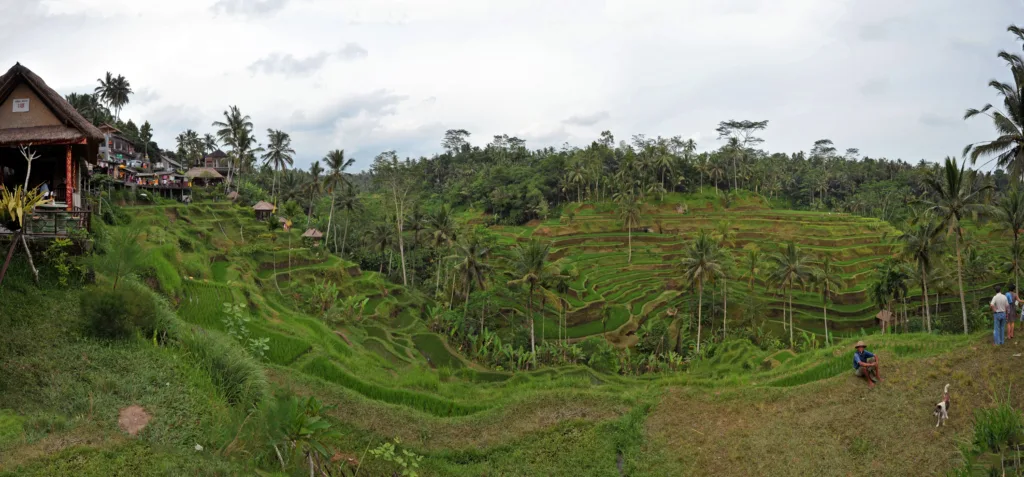
Bali is statistically one of the safest destinations for solo women in Southeast Asia — and at the same time the island where you most often hear everyday, not criminal, stories about a ruined trip. The main source of injuries in Bali is not crime but scooters: if you are not confident on two wheels, don’t learn here, where traffic is chaotic and the roads don’t forgive mistakes — take a driver or use Grab/Gojek, which is fortunately cheap and fast (usually 15,000–50,000 IDR for a trip around town). Among criminal risks are bag thefts from a moving scooter in the quiet lanes of Canggu or Uluwatu in the evening, and stories of drinks being “spiked” in bars — the sum of the advice is the same as everywhere: don’t leave a glass unattended, return in company rather than alone along a dark rice-field path in Ubud.
A separate topic is land and “profitable” schemes: offers to rent a villa directly from an “unregistered broker” or to invest in a land deal in yet another fashionable “green zone” almost never end well. Book accommodation through proven platforms, and treat personal “exclusive” offers in direct messages as a red flag by default.
China: not scary, but preparation is needed
In terms of everyday crime, China is one of the calmest countries in our selection, and random violence against tourists is extremely rare. The main difficulty of a solo trip here is not safety but the language and infrastructure barrier: English outside large hotels and tourist zones is limited, and some familiar apps and services (including some maps and messengers) work differently or are unavailable without a VPN. For a solo traveler this means a bit more preparation in advance — offline translators installed, offline maps downloaded, local payment apps set up — but does not mean elevated danger as such.
Cambodia: charming, but it demands switched-on attention
Cambodia is the least wealthy country in our selection, and this is directly linked to the level of petty street crime in tourist centers like Siem Reap and Phnom Penh: bag-snatching from a scooter, pickpocketing in the crowd at Angkor Wat at dawn. This is no reason to give up the trip — most such incidents are easily prevented by carrying the bag across the body rather than on one shoulder and not taking out valuables unnecessarily on a busy street. Separately, it is worth choosing the area and the specific guesthouse for the night more carefully — unlike in Thailand or Japan, here the difference in safety between a “tourist” and a “non-tourist” street in the same city is more noticeable.
Universal rules that work in any of the six countries
- Choose accommodation by reviews from solo travelers specifically, not by the hotel’s overall rating — pay attention to mentions of the area, street lighting in the evening and a 24/7 reception.
- Share your location with someone at home — a simple habit that costs nothing and removes a good half of the anxiety, both yours and your loved ones’.
- Meet people in crowded places if you arrange to meet someone through an app or social media — this applies to any country in the world, not only Asia.
- Keep copies of documents separate from the originals — a photo in the cloud plus a paper copy in another compartment of your bag.
- Don’t be afraid to eat alone in a café or restaurant — in Asia, unlike many Western countries, this is not considered strange at all: tables for one are almost everywhere, and the staff will not look askance.
- Use hostels and coworking spaces as an entry point to company if you don’t want to travel alone along the whole route but to join fellow travelers from time to time — in Chiang Mai, Ubud, Hoi An and Osaka this culture is especially well developed.
Being alone is not the same as isolation
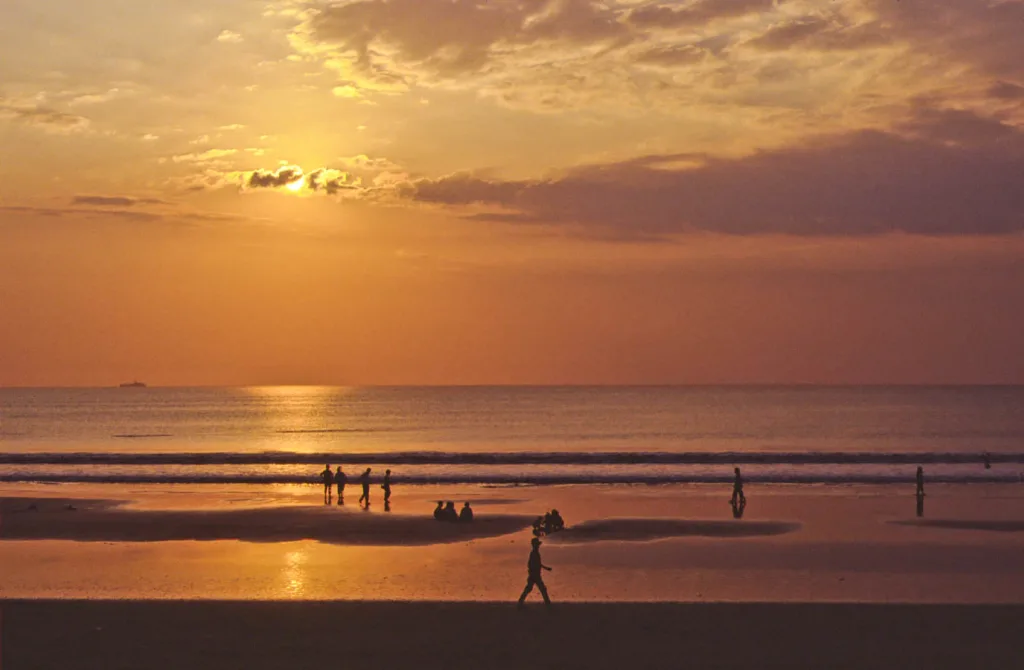
A separate, no less important topic, which for some reason is written about less often in safety guides, is not physical danger but simple human loneliness in the third week of a trip, when the beautiful sunsets have become familiar and there is no one to share the impression with in the evening. This is also easier in Asia than it seems: a network of hostels with shared kitchens and board games in the common area (look at the reviews on Booking or Hostelworld specifically under “atmosphere” and “meeting people”) will almost certainly bring you together with other travelers on the very first evening. In Chiang Mai, Kanchanaburi, Hoi An, Ubud and Osaka a whole culture of coworking and co-living spaces for digital nomads has grown in recent years — people come there to work at a laptop and leave with a group for dinner. Apps like Bumble BFF, local expat Telegram chats by city or simply “solo travelers in Asia” groups solve the same task for those who prefer to get acquainted in advance rather than rely on chance in a hostel.
And one more honest piece of advice that is rarely heard in glossy travel blogs: allow yourself one “quiet” day a week without a packed program — just a café, a book, no guilt about “not sightseeing”. It is the lack of such pauses, not physical danger in itself, that most often turns a solo trip into a source of burnout rather than freedom.
FAQ
Which of the six countries is the safest for a solo trip? By the sum of statistics and everyday comfort — Japan: a high place in the world peace ranking, a low level of street crime and a culture that is calm about those who travel alone.
Should I be afraid of Cambodia if it is my first solo trip? There is no need to be afraid, but you should be more attentive than in Japan or Thailand: choose your area of stay carefully, carry your bag across the body and don’t take out valuables in a crowd — with these simple habits Cambodia is entirely manageable even for a beginner.
Is it true that there are many thefts and scooter scams in Bali? Yes, this is the most frequent category of problems in Bali specifically — not violence but everyday troubles: petty theft, scooter accidents and stories of inflated “fines” for scratches on a rented bike. Attention to the details of the rental contract and sober riding remove most of the risks.
Does a woman need to dress in a special way in Asia when traveling alone? In temples and religious places you almost everywhere need to cover your shoulders and knees — this applies to everyone, not only women. Outside temples the dress code is usually no stricter than in any other tourist region of the world — go by the local clothing around you as a hint.
How quickly does it stop being scary to travel alone? For most people it passes on the second or third day of the trip, when the first small but real success appears — getting somewhere on your own, bargaining at a market, finding the way without anyone’s help. After that the fear usually gives way to excitement, not the other way around.
The safety situation may change — before your trip, check the current recommendations and bulletins for the specific country.