Nyepi 2027 in Bali (8 March): ogoh-ogoh parades on 7 March, Melasti, the rules of the Day of Silence, the closed airport and where to spend the holiday — a practical guide for tourists.
Imagine an island with four million inhabitants where everything is switched off for a day: music, lights, engines, planes. The streets are empty as on another planet, the beaches are silent, and in the sky there are only stars, which are usually not visible because of the city glow. This is Nyepi — the Balinese New Year, the Day of Silence. In 2027 it falls on 8 March, and the evening before, on 7 March, the island stages the opposite of silence: parades of ogoh-ogoh monsters, the crash of gongs, torches and shouting. The contrast is the very essence of the holiday. First, evil spirits are “driven away” with noise, then comes a day of complete silence, so that the spirits, deciding that the island is empty, leave and do not return. This guide covers how all the days of the holiday work, what a tourist must not do, where it is best to spend Nyepi and how to prepare so that these twenty-four hours become not an inconvenience but the best memory of the trip.
- Date: 8 March 2027 — the Day of Silence; on the evening of 7 March — the ogoh-ogoh parades.
- Melasti: purification processions to the sea and rivers a few days before Nyepi.
- Rules: a day without fire and light, without work, without leaving the hotel or home grounds, without entertainment.
- Transport: the island’s international airport, as a rule, neither receives nor sends flights on this day.
- The next day: the island returns to life, and “Ngembak Geni” begins — a time of visits and forgiveness.
- Main tip: don’t plan a departure or arrival for 8 March or the nearest hours, stock up on food and water and choose a hotel that organises a “quiet” day itself.
What Nyepi is and why the island falls silent
Nyepi is the New Year by the Balinese Saka calendar, which counts time differently from the Gregorian one. Its main ideas are purification, silence and introspection. Hindu Balinese believe that on this day the island must be left empty, so that evil spirits that arrived the day before find neither light nor noise and decide that nobody is here. That is why for twenty-four hours almost everything that betrays the presence of people is forbidden. Balinese do not just observe the ban — many perceive it as a rare chance to catch their breath and be with themselves and their family. For a guest this is a unique story: nowhere else in the world is silence applied to a whole island as a law that is voluntarily obeyed.
The holiday calendar: how the days go
Melasti: purification by the water
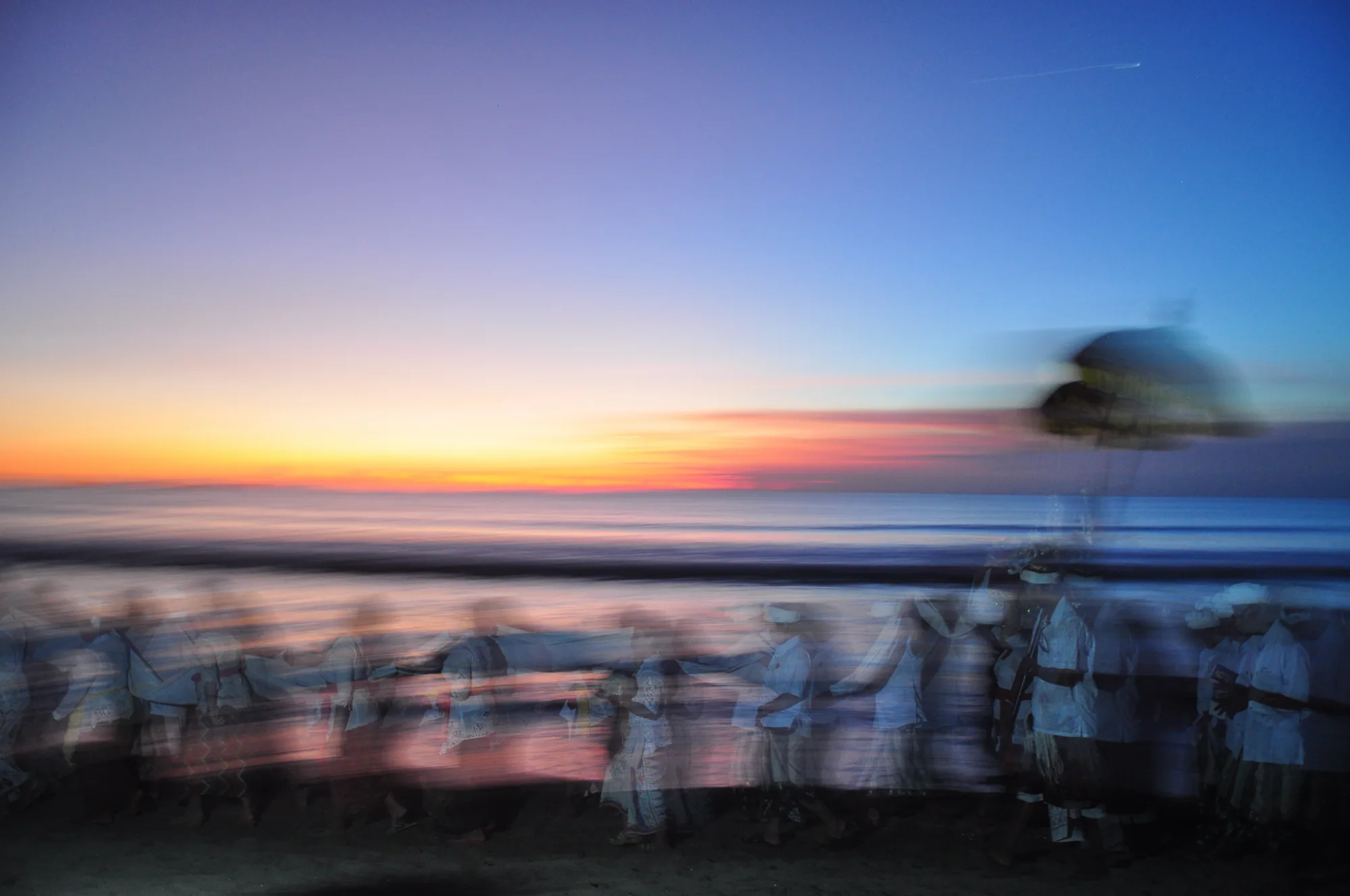
A few days before Nyepi, Melasti — purification ceremonies — takes place across the island. Residents in festive clothes carry the temples’ sacred objects to the sea, lakes and rivers: masks, symbols of deities, umbrellas and offerings. Long processions in white and gold, accompanied by a gamelan, are one of the most beautiful sights in Bali. Guests may watch, but must behave respectfully: don’t block the way, don’t step into the frame, dress modestly, keep your distance and listen to the instructions of local wardens. Photography is permitted where it does not disturb the ritual, while flash and drones are undesirable.
Tawur Kesanga and Ngrupuk: the evening of monsters
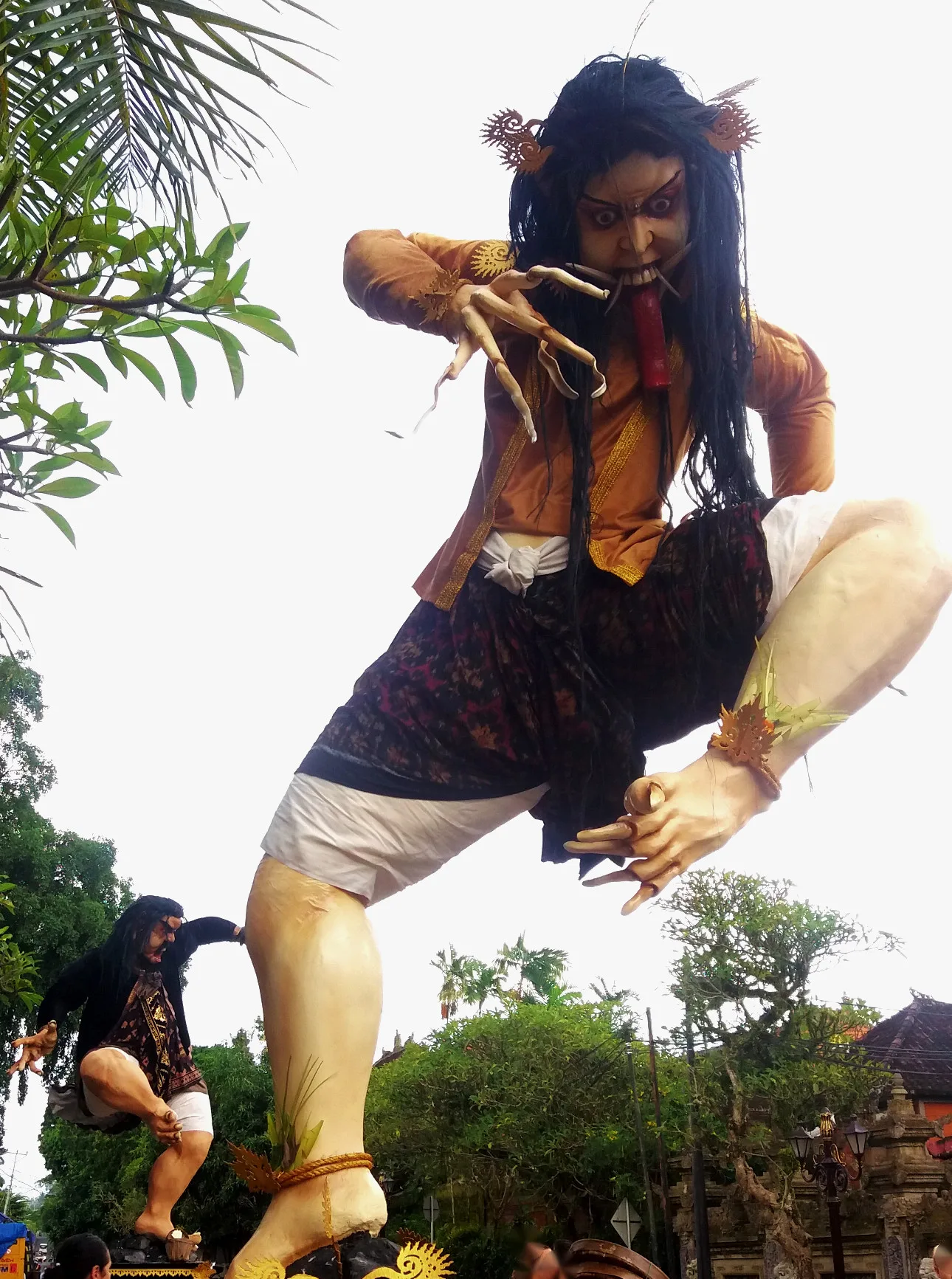
On the eve of Nyepi, the Tawur Kesanga rites take place in temples and at crossroads — offerings to the spirits to appease them. And in the evening begins the spectacle people come for from all over the world: the ogoh-ogoh parade, the famous Ngrupuk. Ogoh-ogoh are giant figures of demonic creatures that masters from village associations (sekaha) build for months out of bamboo and paper. They can be frightening and funny: with fangs, bulging eyes, manes, tongues of flame. Young people carry them on their shoulders, spin them at crossroads — it is believed that this confuses the spirits — while gongs and drums crash alongside. In the finale the figures are often burned or carried to certain places, symbolically driving out evil. Parades take place in different towns and villages; those in Ubud, Denpasar and Kuta are especially famous, but each community has its own style. The exact time and route in 2027 are usually published by the organisers closer to the date, so ask your hotel and check local resources.
Nyepi: a day of silence
The Day of Silence itself begins at dawn and lasts about twenty-four hours. Four prohibitions apply, known as Catur Brata Penyepian: do not light fire or light, do not work, do not leave your dwelling and do not seek entertainment. For tourists this means: stay in the hotel or villa, don’t go out to the beach or the street, behave quietly, don’t switch on bright lighting, don’t use loud music and avoid unnecessary strolling around the grounds. Order is monitored by pecalang — local guardians of order in traditional dress. Shops, restaurants and markets are closed, traffic is stopped, and only emergency services may be on duty on the roads. The international airport is, as a rule, closed on this day, and internet providers in recent years have switched off mobile internet; check the current rules with your hotel.
Ngembak Geni: the return to life
On the next day the island gradually comes alive. Balinese visit relatives and neighbours, ask for forgiveness and share treats; this is a time of reconciliation and the beginning of a new cycle. Shops and cafés open, transport resumes, and the airport returns to its usual mode. Some rites, especially in villages, still continue, so don’t count on a full return of the usual bustle in the first hours.
How a tourist can spend Nyepi
There are two fundamentally different approaches. The first is to accept the rules and turn the day into a retreat. Hotels, as a rule, organise a “quiet” mode themselves: they serve pre-prepared food, switch off noisy amenities and ask guests to stay on the premises. You read, sleep, swim in the pool without noise, and in the evening look at the sky: without light pollution many more stars are visible over Bali than usual. The second approach is to use the day for something meaningful: yoga, meditation, a diary, conversations. Many travellers say that this day becomes the most memorable on the whole island. The main thing is not to try to get around the rules: going out on the street, playing music or flying a drone is not only disrespectful but may end in a conversation with a local patrol.
Where to spend Nyepi
Ubud: culture and ogoh-ogoh
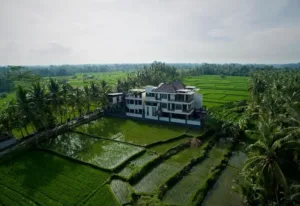
Ubud is the centre of Balinese tradition, and the parade here is especially picturesque: the streets are filled with figures and orchestras, and spectators gather along the main roads. On the day of Nyepi in Ubud you will find yourself surrounded by rice terraces and tropical greenery — the silence here is especially deep. More about local customs in our article on etiquette in Bali, and the beauty of the terraces in the guide to the Tegallalang and Jatiluwih rice terraces.
Sanur: calm and family
Sanur on the east coast is a quiet resort area where Nyepi passes without fuss; it suits families with children and those who want a relaxed format. In the evening you can watch an ogoh-ogoh parade in the area, and on the next day return to normal life.
Lovina and the north: dolphins and silence
In the north of the island, where there are fewer tourists, Nyepi feels especially genuine: small villages, coastal temples and evening processions without crowds.
Nusa Dua, Canggu, Uluwatu: comfort and a sea breeze
The resort areas offer the most comfortable format: hotels with large grounds, pools and prepared food. If you just want to relax on Nyepi rather than look for adventure, choose a hotel with a closed compound and a good spa. About a trip to the neighbouring island, read the article on Nusa Penida, and for the calendar of the year’s other events, see the overview of events in Bali in 2027.
In practice: how to prepare
Tickets. Don’t buy a departure or arrival for 8 March. The airport is closed, and flights are either cancelled or rescheduled. Plan your arrival with a margin a day or two before the holiday and your departure for the day after Nyepi or later. Check your airline’s schedule: clarifications are usually published before the holiday.
Food and water. Buy water, fruit and light snacks the day before if your accommodation does not have full board. On Nyepi itself everything is closed, and even delivery doesn’t work.
Connectivity and entertainment. Download books, films and podcasts in advance; mobile internet may be switched off. Warn your loved ones that you will go offline for a day.
Light. On windows facing the street, draw thick curtains and minimise lighting. Candles and open fire may not be used outdoors.
Health. If you need medication or have a chronic condition, stock up on everything in advance. In an emergency contact the hotel administration — pecalang and medics are allowed through, but you should not go out on your own.
Money. Take a little cash in advance: ATMs and card payments may not work on the closure days.
What to do in the silence: ideas for the day
For many guests the hardest thing is not the silence itself but the question of what to do with twenty-four hours without a phone, streets and cafés. Start with the morning: a calm breakfast, tea on the terrace, an unhurried walk around the hotel grounds. In the middle of the day, books that have long lain unread work well, as do handwritten letters to loved ones, a travel diary or simply a daytime nap. If the hotel has a pool, swim quietly and don’t play music. During the day you can try meditation or gentle yoga: many hotels print short instructions for guests in advance. In the evening, when the lights go out, step out onto the balcony or by the pool and look at the sky. There is almost no artificial lighting on the island on this day, so the Milky Way and the constellations are visible with unusual clarity, especially away from the towns. These are the hours travellers most often remember years later.
Nyepi with children and in a group
With children the day of silence goes more easily if you prepare in advance. Take board games, pencils, colouring books, books, light construction sets and films downloaded onto a tablet. Agree on the rules: speak quietly, don’t run around the grounds and don’t make noise by the pool. Explain the meaning of the holiday in simple words — that the island is resting and the spirits leave when they see the silence. Children like the idea of “the night when everything is switched off”; many take part willingly if you turn it into an adventure with torches inside the room. For groups of friends, board games and conversation work well: the phone is useless on this day anyway.
What not to do
A list of short “don’ts” will help you avoid an awkward situation. Don’t leave the hotel grounds even “for a minute” — local guardians of order watch closely. Don’t fly drones, play loud music or light fires outdoors. Don’t invite guests or throw noisy parties. Don’t try to order delivery: it doesn’t work. Don’t plan important meetings and trips for this day. And of course, don’t treat the prohibitions as a formality: for Balinese, Nyepi is a sacred time, and respect for it is the best way to thank the island’s hosts for their hospitality.
How to behave at the ogoh-ogoh parade
The parade is a noisy and dense crowd, so keep your belongings with you and don’t bring anything unnecessary. Arrive early to take a place along the road, and stay at a distance from the procession: the people carrying the figures spin them and move abruptly, and the ogoh-ogoh themselves are heavy and tall. Don’t try to touch the figures, don’t step out onto the road for a selfie and don’t get in the participants’ way. Dress modestly, bring water and sturdy shoes. Be patient: parades often start later than the announced time, and the procession itself moves slowly, with long stops.
When to come and how to build the trip
Nyepi in early March falls at the end of the rainy season in Bali, so downpours are possible, but they are usually short. The general idea of the trip is to combine the holiday with ordinary relaxation. One option: arrive five or six days before Nyepi, see Melasti and the preparations for the festivities, spend Ngrupuk and Nyepi in one place, and after Ngembak Geni head to the beach or the neighbouring islands. Another option is to skip the festive days and come a week after Nyepi: the island has already returned to its usual rhythm, but the atmosphere of renewal can still be felt.
Routes
“Ubud — Holiday and Culture” — 7–9 days. A base in Ubud: temples, rice terraces, the ogoh-ogoh parade, a day of silence, then a trip to the sea.
“Silence and the Ocean” — 6–8 days. Sanur or Nusa Dua: a hotel with a pool, minimal transfers, the parade and Nyepi in comfortable conditions.
“Holiday and Adventure” — 10–12 days. Ubud until Nyepi, then Nusa Penida and Uluwatu afterwards.
How to choose a hotel for Nyepi
Choosing accommodation is the main decision before the holiday, since that is where you will spend the day. Look for a hotel with its own grounds, garden or pool where you can walk without leaving the gates. Find out in advance what meals are provided for the day of silence: breakfast, lunch and dinner, whether they are prepared in advance and whether they are served to the room. Ask whether there is a programme for guests — yoga, workshops, quiet evening ceremonies. Make sure that if necessary they will help you contact a doctor. Finally, check the reviews: they often describe how the hotel handled the previous Nyepi, and this is the best source of information.
Hotels for Nyepi
During the holiday hotels are full, and the best options are booked months ahead. Below is a selection from our database: look at the reviews and the “Hotel health” block, and ask how the hotel organises the day of silence: meals, pool hours, the programme for guests.
FAQ
When is Nyepi in 2027? 8 March 2027; the ogoh-ogoh parades are on the evening of 7 March.
Can I leave the hotel? No: for twenty-four hours you must stay on the grounds of the hotel or accommodation.
Does the airport work? As a rule, no: the island’s international airport is closed for the day; check your airline’s schedule.
Will there be internet? In recent years mobile internet in Bali has often been switched off; ask the hotel what to expect in 2027.
Can tourists watch the ogoh-ogoh parade? Yes, it is an open spectacle; behave respectfully and keep your distance from the procession.
What should I do on the Day of Silence? Rest, read, meditate, swim quietly in the hotel pool and look at the stars.
Can I film and publish videos of Nyepi on social media? It is extremely risky, especially with critical or ironic content — in 2026 a tourist received a year in prison for exactly such a post. Postpone posts until the holiday is over.
Dates and rules may be updated: follow the official announcements of the Bali authorities and your hotel’s information.