The Gates of Heaven in Bali: a guide to Pura Lempuyang temple — the secret of the "reflection", the photo queue, getting there, etiquette, Tirta Gangga, Taman Ujung and routes around East Bali.
You have surely seen this shot: two stone halves of a giant gate, between them the sharp cone of Mount Agung, and in the foreground, in a perfect reflection, a person in white. The picture looks as if it was taken on the mirror surface of a lake, but there is no lake here. The Gates of Heaven are the main photograph of East Bali and perhaps the most impressive trick in modern tourism. The place is real, sacred and incredibly beautiful; the trick with the reflection is real too, but different from what many people think. You come here expecting one thing and get another: hours of queueing, hundreds of people, temple rules and — if you are lucky — a quiet morning view of the volcano for which it was worth getting up at four. In this guide: how Pura Lempuyang temple is laid out, how to get there, how long you will wait, what you can actually photograph, what to see nearby and why East Bali beats the south.
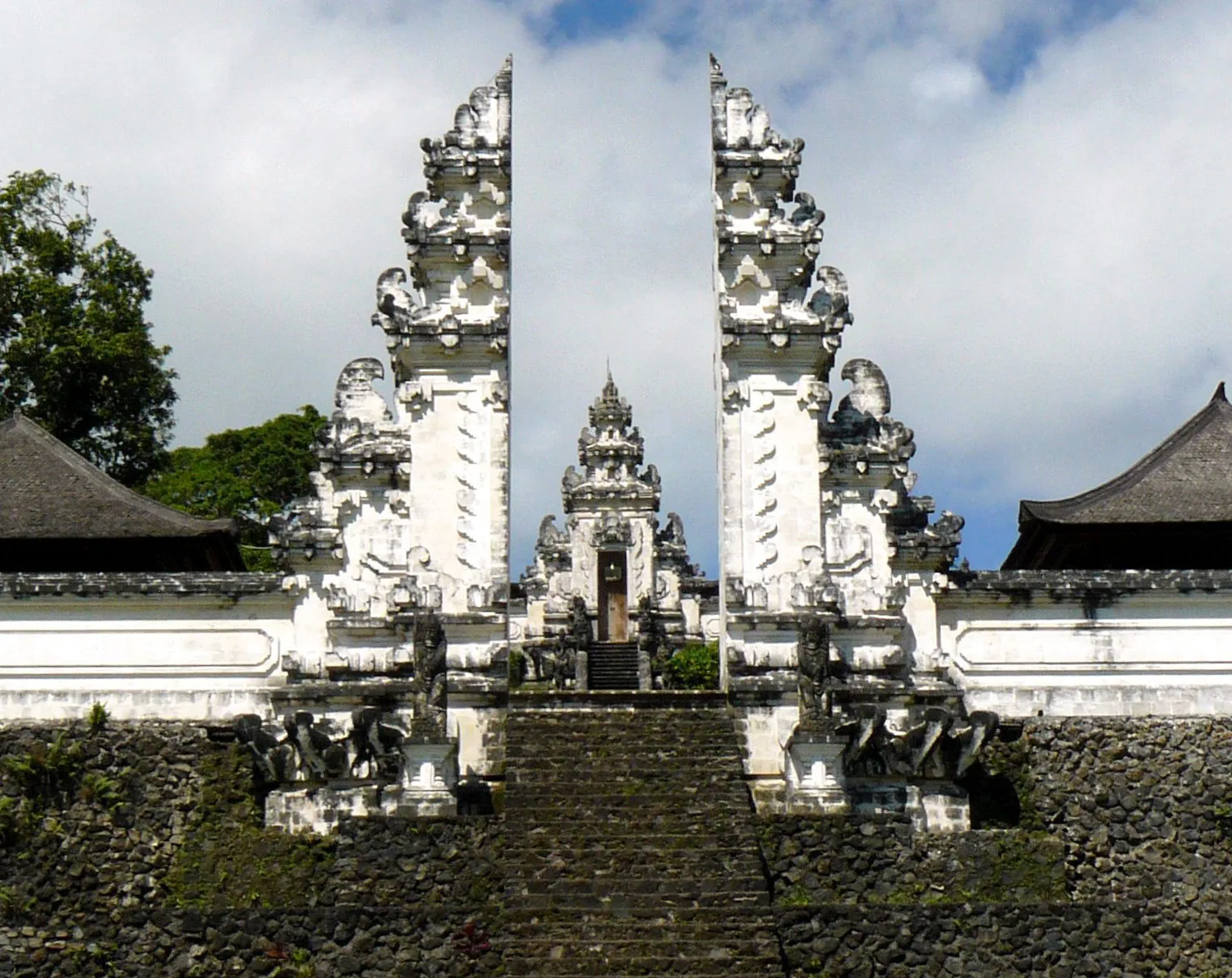
- What it is: the split gate “candi bentar” at the entrance to Pura Lempuyang Luhur temple in Karangasem regency; behind it is Mount Agung.
- Getting there: from Ubud or Sanur about two to three hours by car; it is better to leave in the dark.
- The main difficulty: the photo queue at the gate, which in season takes several hours.
- Rules: covered clothing, a sarong (usually provided), respect for services; opening hours, prices and entry procedure change — check.
- Nearby: the Tirta Gangga water palace, Taman Ujung palace, diving in Tulamben and Amed.
- Main tip: hire a driver for the day, leave before dawn and set aside half a day for the temple.
What Lempuyang is and why the gate is famous
Pura Lempuyang Luhur is one of the oldest and most revered temples in Bali. It is one of the six main “pillars” of Balinese Hinduism (the so-called Sad Kahyangan) and stands on the slope of Mount Lempuyang, about 1,175 metres high, in Karangasem regency in the east of the island. The complex consists of several temples at different levels: the topmost is reached by a long stone staircase of about 1,700 steps, which pilgrims climb for hours. The lower temple, where the famous “Gates of Heaven” are located, is only the beginning of the path.
The gate itself is a “candi bentar”, a split gate in traditional Balinese style symbolising the entrance to sacred space. The view through the gate — of Mount Agung, the island’s sacred mountain over three thousand metres high — made the temple famous. For a long time mostly pilgrims came here, and the tourist boom began when photographs spread across social networks. Today Lempuyang receives thousands of visitors a day, and its main theme is the queue.
The secret of the “reflection”
The perfect reflection on water that you see on postcards is in fact not created by water. Local photographers are on duty at the gate: they use a mirror surface — for example reflective film or a mirror element in front of the phone lens — to create a “mirror lake” under your feet. The photographer takes the shot on the guest’s phone, and staff regulate the order of the queue. The result is beautiful, but it is a staged picture: the real surface under the gate is an ordinary stone platform. It is important to know this in advance so as not to wait for a lake that does not exist and not be disappointed. At the same time the view of the volcano without filters is also impressive — especially on a clear morning, when Agung is not hidden by clouds.
The queue: how long to wait and how to shorten it
Lempuyang is a place where waiting has become part of the experience. In high season and at weekends the queue for a shot at the gate can take several hours, and the system of numbering and passing phones is regulated by local staff. To shorten the wait, follow simple rules. Arrive for the opening or even earlier: the earlier you come, the shorter the queue. Choose a weekday and, if possible, the dry season — May to September. Don’t count on a quick pass at midday: by then the queue reaches its maximum, and clouds often cover the volcano. Bring water, a hat and patience: you will have to stand in the open air. Entry rules and prices, opening hours and the queue scheme change from season to season, so before the trip check fresh information with your hotel or driver.
If the queue seems excessive, remember why you came. Many travellers, tired of waiting, give up the “mirror” shot and simply photograph the gate and the volcano without queueing — that view is no less beautiful. And above all look at the temple itself: pilgrims performing rituals, offerings of flowers and rice, the smell of incense.
Getting there
The temple is about two to three hours’ drive from Ubud and Sanur and three to four hours from southern Bali. The most convenient way is to hire a driver for the whole day: such a trip usually includes several stops and the return. A motorbike in East Bali is an option for the experienced, but the roads are narrow and the climb to the temple is steep; remember the rules and insurance. Many drivers offer a “sunrise” route: departure around three or four in the morning to reach the temple for the opening. Because of the large flow, in recent years parking and transport for visitors operate on the approach to the temple: check the exact procedure on site. If you want to combine the trip with an overnight stay in the east, stay in Amed, Candidasa or Tirta Gangga: that will shorten the road and let you see the temple early in the morning.
Etiquette: what to remember
Lempuyang is a working temple, not an attraction. Dress modestly: shoulders and knees covered, and at the entrance a sarong and sash are usually provided. Don’t touch offerings, don’t climb onto sacred structures and don’t enter closed areas. By tradition women are not allowed to enter temples during menstruation. Don’t make noise and don’t stage photo shoots in a holy place that interfere with those praying. Respect the queue and follow the instructions of staff. For more on norms of behaviour on the island see our article on etiquette in Bali.
What to see nearby
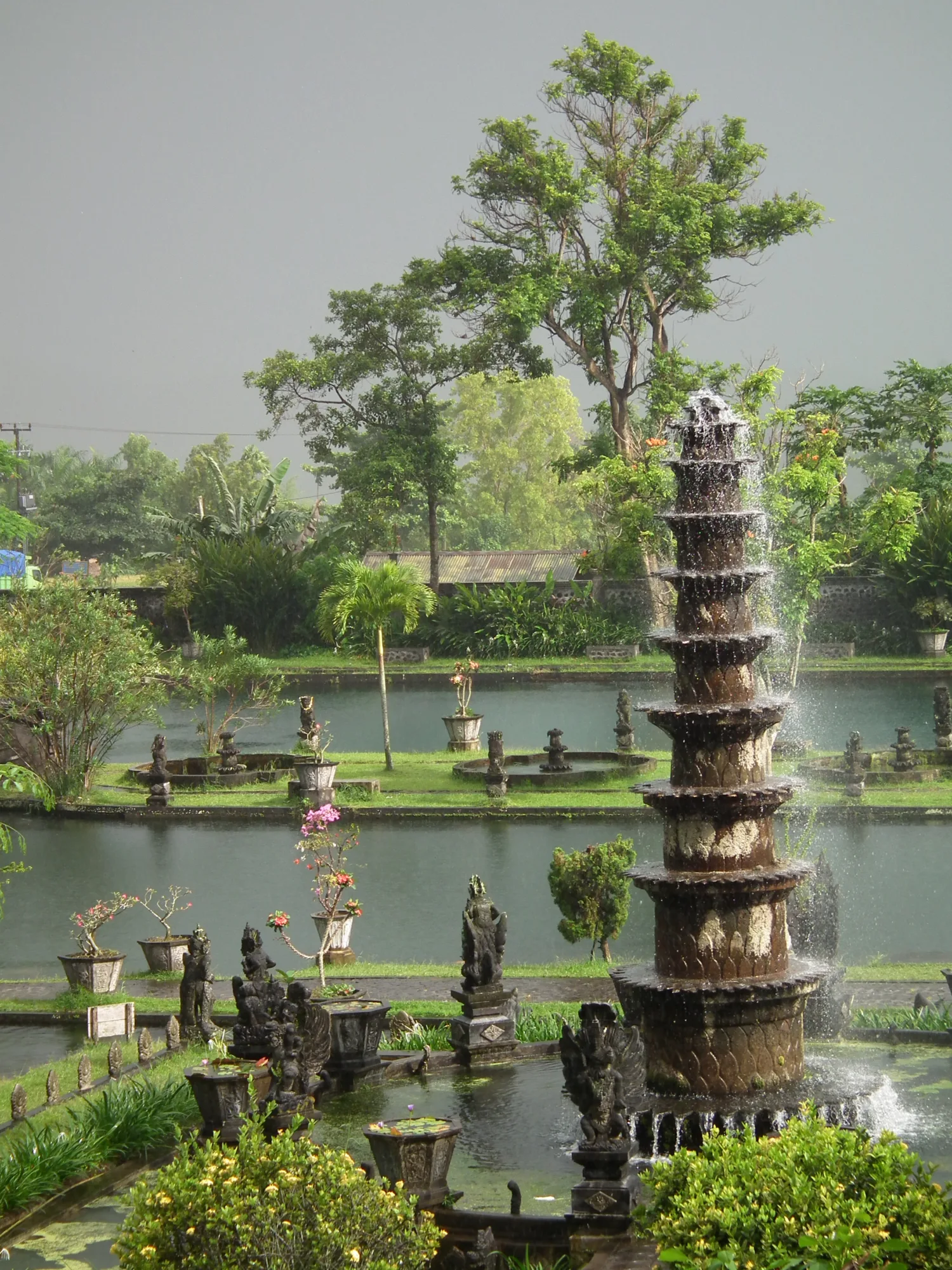
Tirta Gangga. A water palace built in the mid-20th century by the last raja of Karangasem: ponds, fountains, statues and paths of stone slabs on which you can walk right across the water. The place is beautiful in the morning, when there are fewer tourists, and in the evening, when soft light falls on the ponds. Nearby are rice terraces where you can go for a short walk.
Taman Ujung. Another water palace of the raja of Karangasem, built in the early 20th century and damaged by an eruption of Agung and an earthquake; today it is a large park with ponds and pavilions, and from it there is a view of the ocean. It is noticeably quieter here than at Tirta Gangga.
Tulamben and Amed. The north-eastern coast is for those who love diving and snorkelling. In Tulamben the wreck of an American ship from the Second World War lies in the shallows, and in Amed there are quiet black-sand beaches and reefs right off the shore. You can spend a separate day here after Lempuyang.
Other points on the island. If you combine the east with the centre, see our guide to the rice terraces of Bali, and for a morning volcano the climb of Batur. The calendar of festivals that may coincide with your trip is in the overview of Bali events in 2027.
When to go: season, weather and the volcano
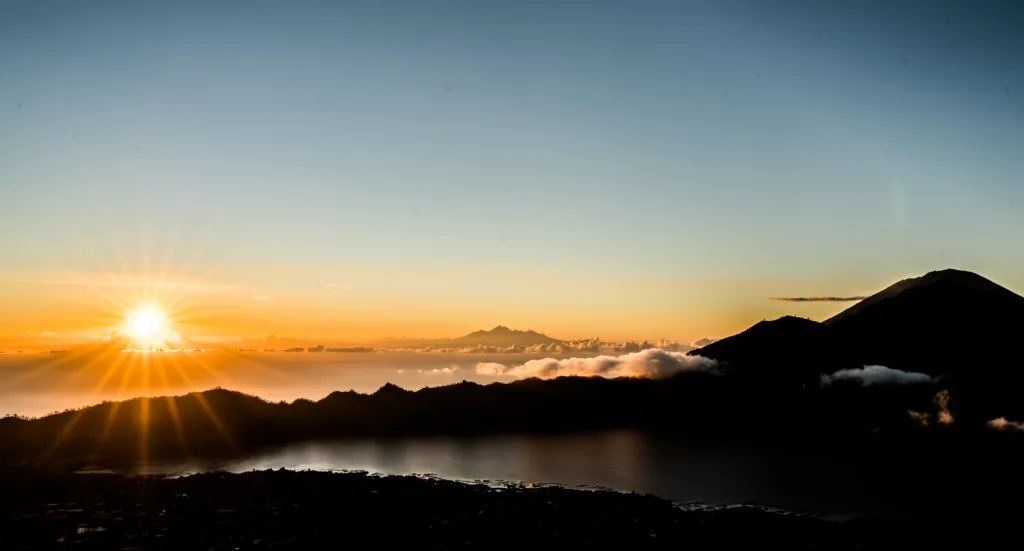
The best time for Lempuyang is the dry season, roughly May to September: mornings are more often clear and the volcano is visible in full. In the rainy season, from November to March, the slopes are often hidden by clouds and the road can be slippery. But even in the dry season the volcano hides behind clouds no less often than it is open, especially closer to midday, so don’t be upset if you fail to see the whole cone: the temple itself and the atmosphere of the place are worth it. On a clear morning it is worth showing up at the gate as early as possible, before the clouds rise.
East Bali instead of the south
Many travellers limit themselves to the south — Ubud, Canggu and Uluwatu — and miss the east. Yet East Bali is Balinese life without the crush: villages with carved temples, rice terraces, black beaches, salt fields and fishing boats, and in the evenings quiet. It is cheaper, calmer and closer to the real life of the island. If you have three or four days, devote them to the east: one night in Candidasa, one in Amed or Tirta Gangga and one day for Lempuyang. And for those short of time, a one-day trip with a driver and stops at Tirta Gangga and Taman Ujung will do.
A day in the east, hour by hour
So that the trip doesn’t turn into a marathon, plan the day in advance. Around three or four in the morning — departure from Ubud, Sanur or Canggu: the road in the dark is empty, and the driver manages to get through stretches where traffic jams appear later. By six or seven in the morning you are at the foot of the temple; at this time the air is cool and haze lies on the slopes. The first hours are the best for the view of the volcano and the shortest for the queue. By nine or ten you are done with the gate and, if you have the strength, climb the stairs to the upper temples or go for breakfast at a café in the nearby village. In the afternoon go to Tirta Gangga: in the heat it is pleasant to walk across the ponds and little bridges, and the water and shade refresh. By lunch you can stop at Taman Ujung and then return home or stay overnight on the coast. This schedule gives the maximum of impressions and the minimum of waiting.
What to bring
For a trip to Lempuyang a few important things will come in handy. Bring covering clothes you don’t mind about: light trousers or a knee-length skirt and a T-shirt with sleeves; it is good if they dry quickly. Shoes should be comfortable, without heels: the stairs and stone paths can be slippery. Bring water, a light snack, a hat and sunscreen — the queue stands in the open air. A raincoat or umbrella is useful: weather in the mountains changes quickly. Don’t forget cash: entry, donations, parking and small expenses are often paid in cash rather than by card. And charge your phone: the queue is long, and you need it both for photos and for navigation.
For photographers: how to get a better shot than “everyone’s”
If the queue for the “mirror” shot does not inspire you, try other angles. The gate looks good in a frame without people, when light lies softly on the stone and the volcano is visible in the opening. Use a wide-angle lens to capture the stairs and the gate together, and a telephoto to “bring in” Agung and compress the space. Details are interesting: carving on the stone, flower offerings, ritual umbrellas. Photograph pilgrims only with permission and don’t interfere with their prayer. And remember: the most memorable shot sometimes comes not at the gate but on the stairs above, when there are no people on the slope.
With children and with parents
The trip to Lempuyang is tiring: an early start, a long road, a queue in the sun. With small children it is better to choose a trip with an overnight stay in the east and come to the temple at dawn rather than in the middle of the day. For elderly parents think about comfortable transport and don’t plan the climb of the whole staircase — the lower part of the temple and the views are enough. Bring water and a snack and don’t hesitate to take breaks in the shade. And above all agree in advance that the “mirror” photo is not obligatory: a calm walk around the temple and palaces will be remembered just as well.
Is it ethical to go: on the load on the temple
Mass tourism has strongly affected the life of the temple. For local people it is a sacred place, and crowds with phones sometimes disturb the rituals. Today the administration and communities regulate the flow and introduce rules to reduce the load. You can help by simple behaviour: come in restrained clothing, observe the queue, don’t make noise, don’t leave rubbish and don’t try to enter closed areas. If you have a choice, come on weekdays and at a less busy time. That way you reduce the pressure on the temple and get calmer impressions. And if a ceremony is going on at the temple — simply step aside and wait: for believers it is more important than any shot.
Three ready-made itineraries
“Sunrise at the Gates” — 1 day. Departure around three or four in the morning, the temple for the opening, then Tirta Gangga and Taman Ujung, return in the evening.
“The east without hurry” — 3 days. The first day Candidasa and Padangbai, the second Lempuyang and Tirta Gangga, the third Amed or Tulamben for diving and snorkelling.
“Temples and volcanoes” — 5 days. Ubud, Batur at sunrise, the eastern palaces, Lempuyang and back with a stop in Kintamani.
Where to stay in the east
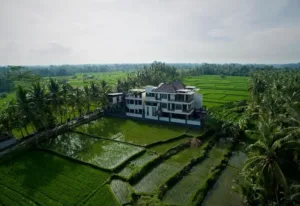
Below is a selection of hotels from our database in Bali. For a trip to Lempuyang it is better to choose accommodation closer to the east — in Candidasa, Amed or on the approach to Karangasem: that way you shorten the road and in the morning reach the temple ahead of the queue. Look at the reviews and the “Hotel health” block, and check whether there is an early breakfast and a transfer.
FAQ
What are the Gates of Heaven? The split gate of Pura Lempuyang Luhur temple in Karangasem regency in East Bali, behind which opens a view of Mount Agung.
Is the reflection in the photo real? No: the “mirror” effect is created with a mirror surface used by local photographers; there is no water under the gate.
How long is the wait? In season and at weekends the photo queue can take several hours; come for the opening.
Do I have to pay? As a rule, entry is paid or by donation; prices and procedure change, so check before the trip.
How should I dress? Shoulders and knees covered; a sarong is usually provided at the entrance.
When is the best time to go? From May to September, early in the morning on a weekday.
Opening hours, prices and the queue procedure may change — check current information with your hotel or local guides.