Bali's rice terraces: Tegallalang near Ubud and the UNESCO site Jatiluwih. Entry prices, the best time, what subak is and how to choose between the popular and the quiet option.
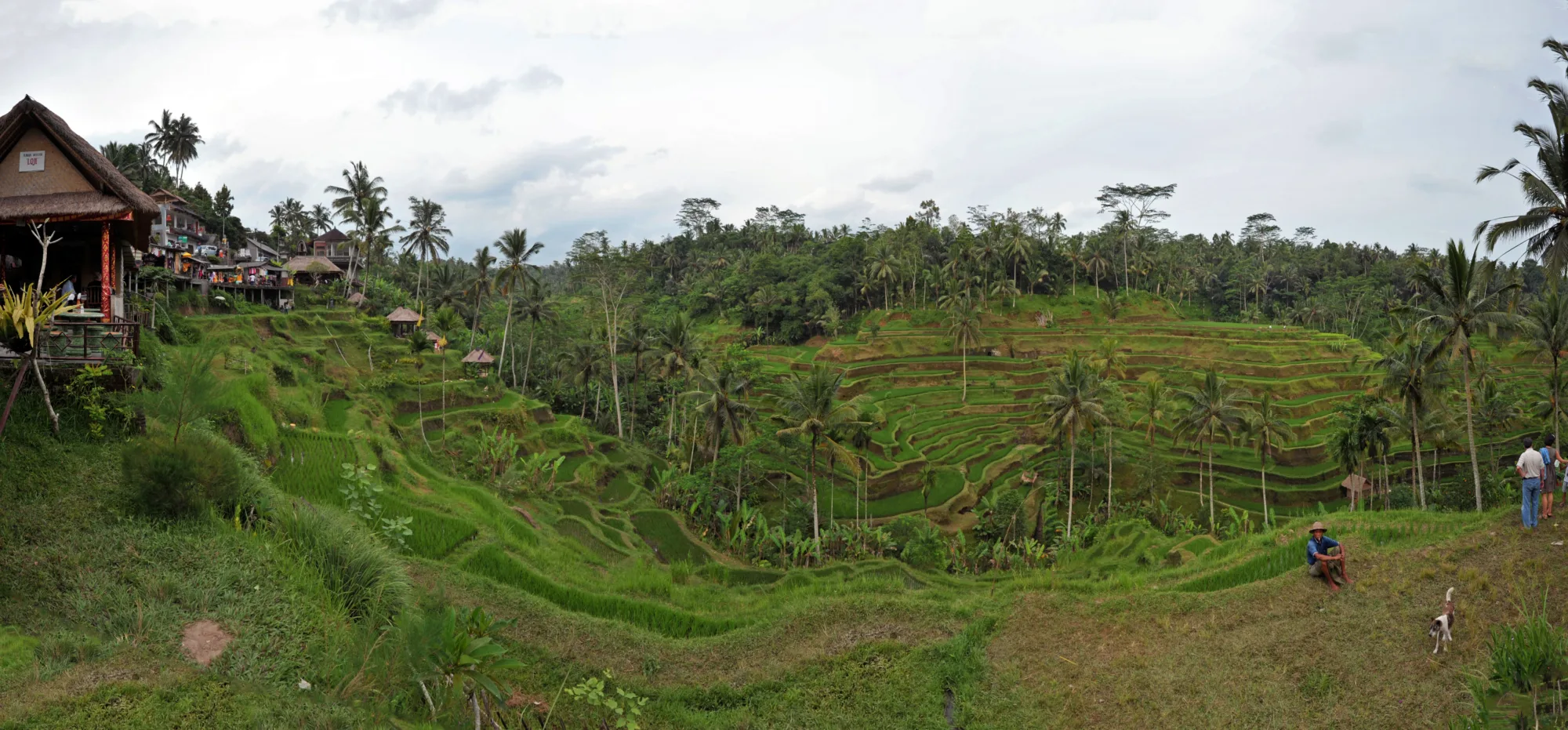
A slope cut into green steps like a giant staircase for giants, palms above every ledge, a woman in a conical hat transplanting seedlings knee-deep in water, and in the distance the bluish silhouette of a volcano. Bali’s rice terraces are the island’s calling card no less than its beaches and temples, but behind this landscape there is far more than a pretty picture: a thousand-year system of shared water management that still feeds the island and has received UNESCO status.
Tegallalang: the most popular
Tegallalang is roughly ten kilometres north of Ubud, and the road takes about twenty minutes. These are Bali’s most famous terraces, which almost everyone has seen — on postcards and social media. Entry officially costs 15 thousand rupiah (about a dollar), but farmers often charge an extra 5–10 thousand for passage onto particular footpaths or for photos at viewpoints. The main entertainments are a walk along narrow paths between the tiers, cafés on the edge of the slope and the famous jungle swings over the precipice, on which hundreds of tourists a day swing for a shot.
When to come
The best time at Tegallalang is early morning, before nine, or after four in the afternoon. At these hours it is cooler, there are fewer people, and the soft low light emphasises the green and the shadows on the steps. In the middle of the day it is hot and crowded here, and queues for the swings stretch for a long time. Because of its proximity to Ubud people often stop by here at dawn on the way to breakfast and then return to town for coffee.
Jatiluwih: terraces appreciated by UNESCO
Jatiluwih is hidden in the mountains of central Bali, roughly a 90-minute drive north-west of Ubud or Canggu. In 2012 the local subak landscape — a traditional irrigation system — was inscribed on the UNESCO World Heritage list as a living cultural system that has been working without a break for many centuries. Entry costs about 40–50 thousand rupiah per adult. Unlike at Tegallalang, there are no queues for swings and no pushy souvenir vendors: this is a long calm walk through a huge green amphitheatre where instead of a photo against a backdrop of terraces you simply walk through them.
What subak is
The beauty of the terraces is a side effect of a complex social technology. Subak is a cooperative of farmers who decide together when and how much water to release to each plot, and do so on a schedule tied to the religious calendar and the water temples. At its core lies the philosophy of “Tri Hita Karana” — the harmony of humans with the gods, people and nature. That is why the terraces did not turn into chaos of quarrels over water and have survived so long.
When to go: the colour of rice
The colour of the terraces depends on the stage of growing: green fields are young rice, golden ones are the harvest time. It is usually still beautiful all year round, but the brightest green pictures are right after planting, and golden ones before harvesting. The dry season, April to October, is more comfortable for walks; in the rainy season the terraces are lusher, but the paths are slippery, and a thunderstorm can spoil the plan.
Practical tips
Take small cash: small sums are asked for passage on some footpaths and for toilets. Shoes should be closed, with a non-slip sole: steps and clay can be wet. Sunscreen and a hat are a must, bring water with you. Don’t step onto other people’s beds and don’t pick plants — these are fields where people work. If you want a photo on the swings, come at opening and agree on the price on the spot in advance.
FAQ
How much is entry to Tegallalang? Officially 15 thousand rupiah; farmers sometimes charge another 5–10 thousand for particular paths and viewpoints.
Which is better — Tegallalang or Jatiluwih? Tegallalang is closer and more famous but crowded; Jatiluwih is farther but with the real spirit of the terraces and UNESCO status.
When is it best to come? To Tegallalang — before 9 a.m. or after 16:00; to Jatiluwih any time of day is fine.
How long is the drive to Jatiluwih? About 90 minutes from Ubud or Canggu.
What is subak? Bali’s traditional system of shared water management, which has been on the UNESCO list since 2012.
Prices, opening hours and visiting conditions may change — check current information before the trip.