The best waterfalls of Bali: Sekumpul, Tegenungan, Tibumana, Kanto Lampo, Tukad Cepung, Git Git and Banyumala — how to choose, when to go, safety, ethics and day itineraries.
Bali is not only beaches and rice terraces. Drive a little away from the coast to the north or into the interior of the island, and instead of palms and surfers you will meet jungle, wet staircases leading down to dark water and the roar of water falling from cliffs several tens of metres high. The island has several dozen waterfalls, and some of them are considered among the most beautiful in Asia. Some are fifteen minutes’ drive from Ubud and have become a favourite stage for photographers, others are hidden in the northern jungle and require an hour or two on foot through the forest. Some are comparatively easy, others are reached by steep stairs and slippery paths, and sometimes across a river. In this guide: the most beautiful waterfalls of Bali, how to choose the right ones, how to combine them into routes, when to go, what to bring and what you need to know about safety and ethics to remember the trip well.
- Near Ubud: Tegenungan, Tibumana, Kanto Lampo, Tukad Cepung; a short drive, but crowded.
- In the north: Sekumpul, Git Git, Banyumala — more beautiful and farther; you need half a day and good shoes.
- Season: in the dry period (roughly April to October) paths are safer and clearer; in the rainy season there is more water, but a higher risk of slippery paths and flash floods.
- Main tip: arrive early in the morning, bring non-slip shoes and don’t swim when the water is high.
- Prices and rules: entrance fees, mandatory guides and hours change; check with your driver and on the spot.
How Bali’s waterfalls work
The island of Bali is volcanic, so it is cut by gorges and river valleys. The rainfall brought by the monsoons runs down from the mountain slopes and forms dozens of waterfalls of different height and character. There are wide “veil” cascades, narrow streams falling into dark grottoes, and cascades between which you can swim. Many waterfalls lie on village land: entry is paid, and part of the money goes to the community. At the entrance there is usually a car park, food stalls and a staircase down to the water. The farther from tourist centres, the fewer people and less infrastructure, but the more adventure. Besides beauty, waterfalls have spiritual significance: locals come here with offerings, and some waterfalls are considered sacred, so don’t make noise and don’t leave rubbish.
Waterfalls near Ubud
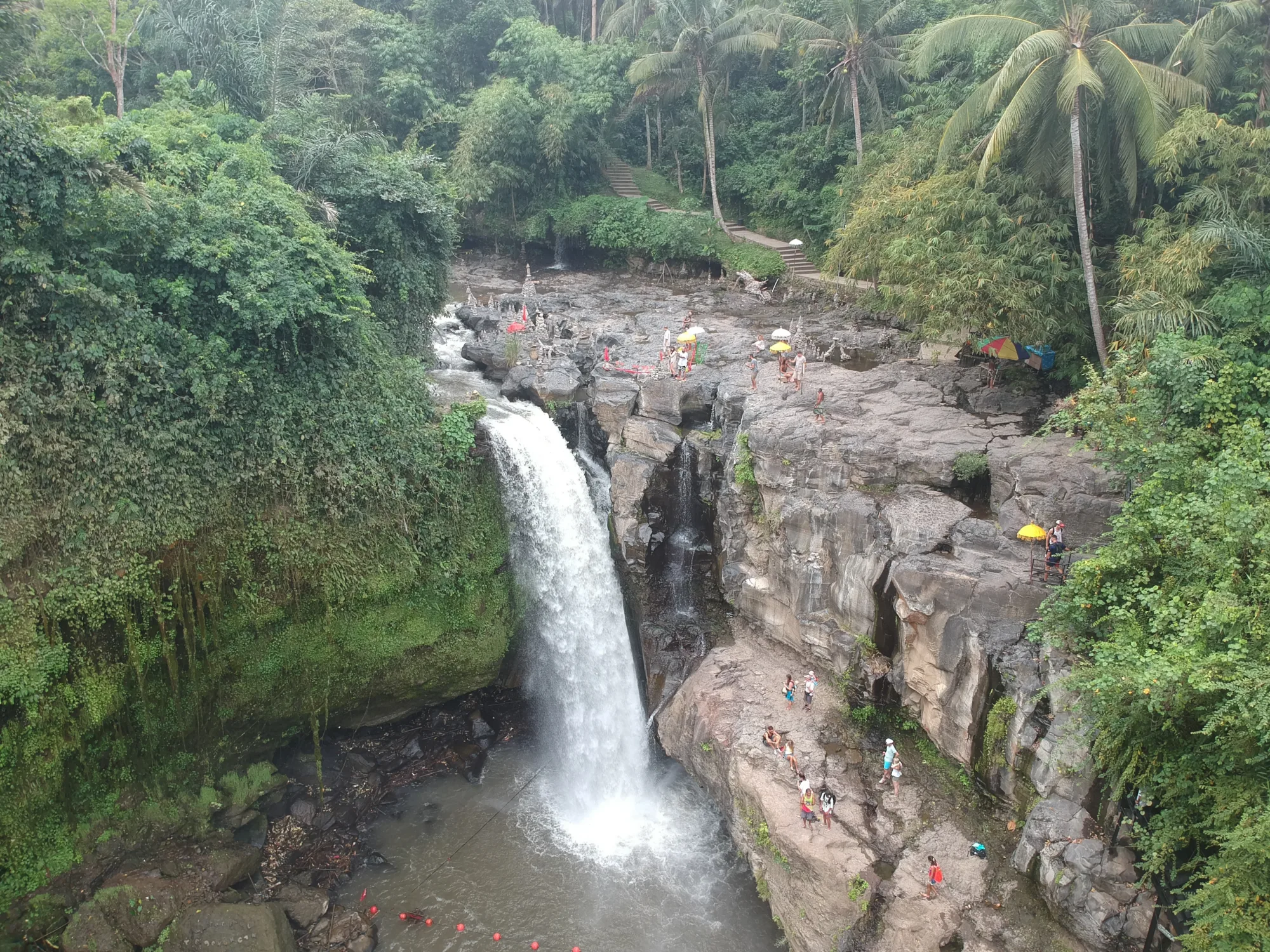
Tegenungan. The most accessible waterfall: it is about twenty minutes’ drive from the centre of Ubud. Water falls from a height of about fifteen metres into a wide pool where you can swim. The place is popular and crowded: by day there is a crowd, and in the morning it is noticeably calmer. There are viewing platforms and cafés. The staircase down is quite long and the stones are slippery, so non-slip shoes are needed.
Tibumana. A small but beautiful waterfall in greenery; there is lots of vegetation around and downstream you can find small pools. It is calmer here than at Tegenungan.
Kanto Lampo. A cascade in the jungle that has become a photogenic spot for shoots. Water falls over stepped rocks, and all around is thicket. In popular hours you have to queue for a photo.
Tukad Cepung. A waterfall hidden in a cave-like gorge through an opening in whose roof beams of light penetrate: the famous “rays” in the morning hours. To get inside you have to wade through water in the gorge. The best time is the morning, when the rays enter, but there are more queues too.
North Bali: waterfalls worth a long journey
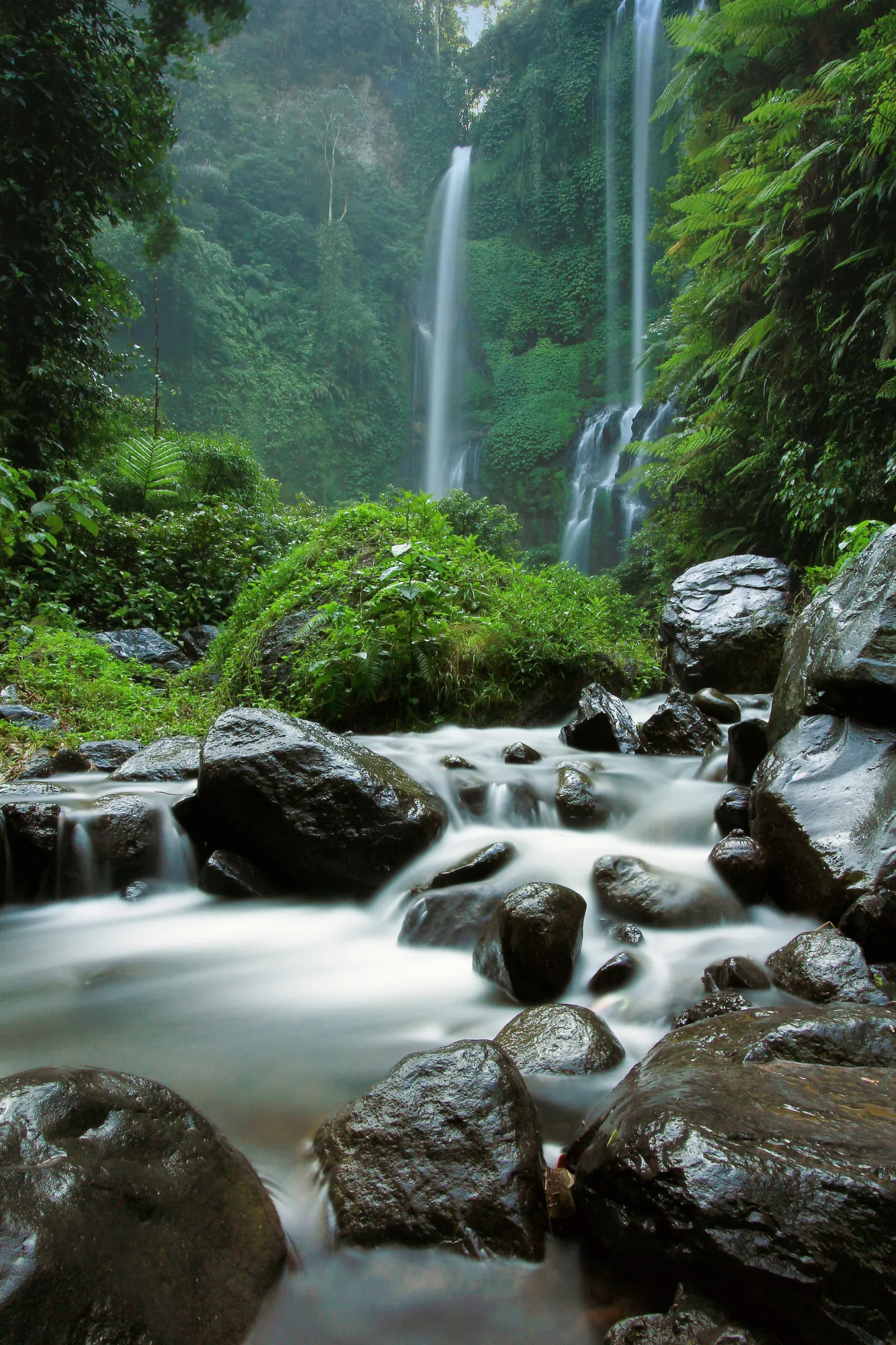
Sekumpul. Considered one of the most beautiful waterfalls in Bali and in all of Indonesia. It is not a single waterfall but a complex of several streams falling from high cliffs into a dark pool amid the jungle. To get there you have to walk along a forest trail and descend several hundred steps, then walk along the river. The way takes an hour to an hour and a half one way; the climb back is harder. A local guide is often required, and entry and services are paid separately. The best season is the dry one, when paths are less slippery. Sekumpul is a whole half-day adventure, not a quick stop.
Git Git. One of the most accessible northern waterfalls, located near the road: from the car park a short path with benches leads on. Water falls from a height of about forty metres. It is easier to reach here and there are many tourists, but it is beautiful and there is a chance to swim.
Banyumala. A twin waterfall in the forest where water falls into a clean, transparent pool. It is quieter and calmer here than at Git Git, and you can swim in peace.
Leke Leke and others. In the north and centre of the island there are dozens of small waterfalls known only to locals. If you want discoveries, ask the owner of your guesthouse or your driver for advice, but check safety and don’t enter dangerous places.
How to choose: how many waterfalls and in what order
The main mistake is to try to visit five or six waterfalls in a day. Between them you have to drive along narrow roads, and at each waterfall you spend time on the stairs, queues and photos. It is wiser to choose two or three places that are not far from each other and leave time to rest. For a day near Ubud, Tegenungan and Tibumana will do, to which you can add Kanto Lampo or Tukad Cepung. For the north, pick Sekumpul as the single main point or combine Git Git and Banyumala. Start early: by ten in the morning the popular waterfalls are already crowded. And don’t forget to leave a time reserve for the road: traffic in Bali is unpredictable.
When to go: dry and wet seasons
The dry season, roughly April to October, is the best time for most trips: paths are drier, the water calmer, and the chance of sudden downpours lower. In the rainy season, from November to March, waterfalls look more impressive: there is more water and the jungle is brighter. But the risks are higher too: paths are slippery, the water is muddy and fast, and after heavy rain flash floods occur. On such days swimming is dangerous, and some paths are closed. Always check the forecast and consult locals: if it is raining in the mountains, the water level can rise suddenly even when it is clear where you are. For the island’s seasons read our article on the seasons in Bali, and for the calendar of festivals see the overview of Bali events in 2027.
A day of waterfalls, hour by hour
To make the day go smoothly, plan it in advance. Set out early, around seven or eight in the morning: the roads are still free and there are few people at the waterfalls. You will reach the first waterfall at opening time and have time to descend, swim and take photos without a queue. By noon, when the heat and crowds reach their peak, move to the second waterfall or take a lunch break in a village: have lunch at a local warung, try fresh fruit and coffee. After lunch take a third waterfall if you have strength left, or head to the rice terraces we described in the guide to Tegalalang and Jatiluwih. Return to the hotel by evening, before the traffic jams begin, and leave time to rest: after stairs and wet paths your legs hum.
Coffee, fruit and food on the way
Trips to waterfalls are a great reason to try Balinese food. Along the road there are many cafés with a view of the jungle and rice fields serving fresh fruit juices, local coffee, fried rice and noodles. If you are interested in unusual coffee, read our article on kopi luwak — it covers what you should know before buying. In the villages near waterfalls coconuts and fruit are often sold; choose stalls with high turnover and drink only bottled water. Don’t forget to try Balinese sweets made of glutinous rice and coconut: they are sold at markets and in small shops.
Sekumpul: how it is organised
The hike to Sekumpul requires preparation. Entry usually goes through one of the surrounding villages, where the ticket offices and car parks are; from here a trail with a staircase and a river crossing begins. Guides are often assigned at the entrance, and they help with the route and offer a hand on slippery sections. The trail takes about an hour one way, and in rain may take even longer. Be sure to wear shoes you don’t mind getting wet and light clothing. For swimming choose places where the water is calm and don’t approach close to the streams. Return before dark and don’t descend into the gorge alone. Such a hike is one of the main adventures in Bali, and a reserve of strength matters more than speed here.
How much the trip costs
The main expenses for waterfalls are transport, entrance tickets, parking and food. The most convenient option is to hire a driver for the day: he knows the roads, will suggest the best hours and will wait for you at the car park. The price depends on distance and agreement, so check it in advance and clarify what is included. Entrance tickets are usually inexpensive and are often paid separately at each waterfall. Guides on difficult trails charge a fee for the service. Don’t forget to leave a small tip for local helpers and the driver if they helped you well. Exact sums change, so rely on current data and keep cash for minor expenses.
Safety: what you need to know
Waterfalls are beautiful but dangerous. A few tips will help you avoid trouble. Wear shoes with a good tread: smooth soles on wet rocks are a direct route to injury. Don’t swim when the water is high, muddy or fast, alone, or close to the falling stream: stones and branches can fall from above. Don’t jump from cliffs or climb wet ledges for a shot — injuries at waterfalls happen regularly. Keep your belongings in a waterproof case and don’t leave them unattended. For a trail with a big staircase take your health and the weather into account. If in doubt, hire a guide: he knows the trails and knows when it is safe to go. Insurance covering active leisure is not superfluous here.
Ethics and etiquette
For Balinese people waterfalls are not just sights but sacred places. Near many there are small shrines, and the water is used in purification rites. Dress modestly, don’t make noise, don’t leave rubbish and don’t touch offerings. If a ceremony is held at a waterfall, step aside and don’t interfere. Don’t get into the water if you have been told swimming is not allowed. Remember that many places are maintained by villages and the entrance fee is their income: don’t haggle at the entrance and don’t try to bypass the ticket office. For more about rules of conduct read our article on etiquette in Bali.
What to bring
Bring non-slip shoes — sneakers with a ridged sole or trekking sandals. Bring a swimsuit, a quick-drying towel and a change of clothes. A raincoat, repellent and sunscreen are useful. Water, a light snack and a small bag with a waterproof case for your phone. Cash — for entrance tickets, parking and small purchases. A small first-aid kit with plasters and antiseptic, and medicine for motion sickness if winding roads make you ill. Don’t bring valuables that would be scary to lose: on wet trails it is easy to drop a phone or camera.
For photographers: how to shoot waterfalls
Waterfalls love a long exposure: it turns water into a silky stream. For this you need a tripod or a steady support and a neutral density filter that lets you slow the shutter in bright light. In the morning and at sunset the light is softer and contrast lower. Don’t overdo it: too long an exposure makes the water “milky” and loses texture. Shoot from different angles, including narrow details: drops on leaves, moss on rocks. Protect your gear from spray: lens wipes are a must. In popular places there may be a queue for the “perfect” photo; be polite and don’t take up the spot for long.
Waterfalls with children and parents
Not all waterfalls suit families. Tegenungan, Git Git and Tibumana are more accessible: the path is short and the infrastructure developed. Sekumpul, Kanto Lampo and Tukad Cepung require physical fitness, walking in water and on stairs. With small children choose simple routes and hold them by the hand near the water. For elderly parents think through the descent and climb: stairs can be steep and wet. Bring water and light snacks, take frequent stops, and limit swimming to shallows and only calm water.
Three ready-made itineraries
“Ubud in a day”. In the morning Tukad Cepung or Kanto Lampo, then Tegenungan and Tibumana, in the evening dinner in Ubud and rest.
“The north”. An early start to Sekumpul, lunch in a village, then Git Git or Banyumala; in the evening an overnight stay in the north or a return.
“Waterfalls and temples” — 2 days. The first day Ubud and the nearest waterfalls, the second Lempuyang and East Bali: read about it in the article on the Gates of Heaven. For a morning volcano the climb of Batur will do.
Where to stay
For waterfalls near Ubud it is convenient to live in Ubud itself: from here it is close to both Tegenungan and Tibumana and to the rice terraces. For the north choose Munduk, Lovina or the surroundings of Singaraja, where there are fewer tourists and more quiet. Below is a selection of hotels from our database; look at the reviews and the “Hotel health” block, and check whether the hotel helps with a driver and an early breakfast.
FAQ
Which waterfall is the most beautiful? Sekumpul in the north is considered one of the most beautiful, but it is far to get to and physical fitness is needed.
Which waterfalls are best for a first time? Tegenungan and Tibumana near Ubud, and Git Git in the north.
When is the best time to go? In the dry season, roughly April to October, early in the morning.
Can I swim? Yes, if the water is calm and it is allowed; with high water and after rain swimming is dangerous.
Do I need a guide? For Sekumpul and other difficult trails — desirable; for simple waterfalls not mandatory.
How many waterfalls should I see in a day? Two or three; more means fatigue and time lost on the road.
Ticket prices, entry rules and the condition of trails may change — check current information with your driver and on the spot.