Typhoon season, weather by region and month, how cruise itineraries change and what to do if a port is cancelled.
The most unpleasant thing that can happen to a cruise is not bad weather itself but a changed itinerary. You bought the cruise for Nagasaki, and at the last moment the ship goes to another port; or for a beach on Ishigaki, and on that day the wind does not allow docking. In East Asia this is not rare: typhoon season comes every year, and lines work with it rather than against it. In this article we explain when it is safer to sail in the region, how weather affects itineraries from Shanghai, Hong Kong, Keelung, Singapore and Yokohama, and what to do if a port is cancelled. All examples come from our selection of Asian cruises, and specific dates and conditions are on the cruise page.
- Japan, Korea, Taiwan and Okinawa: the most reliable time is April–June and October–November; typhoons are most frequent from August to October, rains in June–July.
- Singapore, Malaysia, Thailand: you can sail almost all year, but in the west (Phuket, Langkawi) the sea is rougher from May to October.
- Vietnam (Hue, Nha Trang): storms are more frequent in autumn and early winter.
- A port can be replaced or skipped: this is normal practice, and your rights are described in the line’s terms and on the cruise page.
What typhoon season is and how it affects a cruise
Typhoons are tropical cyclones of the north-western Pacific. Formally the season lasts from June to November, but the peak is August–October. At that time powerful cyclones can pass over the East China Sea, Japan, Taiwan and Korea, and ships sailing from Shanghai, Hong Kong and Keelung find themselves in their path most often. How it looks in practice:
- The port order changes. If there is strong wind in the north, the ship goes to a more sheltered port and your favourite remains for next time.
- A port may be skipped. The line replaces it with a day at sea or another call.
- Time in port is shortened. The ship arrives later or leaves earlier to avoid bad weather.
- A cruise is sometimes cancelled or postponed. This is rare, but you need to be ready for it.
This is not the line’s mistake but a normal part of seafaring: the captain is responsible for safety, and the schedule is a guideline, not a promise. To avoid disappointment, read the cruise terms before paying: they describe when the itinerary may be changed and what you get in return.
Japan, Korea and Taiwan: a seasonal calendar
| Months | What to expect |
|---|---|
| December–February | Cool, cold in the north; milder on Okinawa and Taiwan. The sea can be rough because of winter winds, but there are no typhoons. Fewer tourists. |
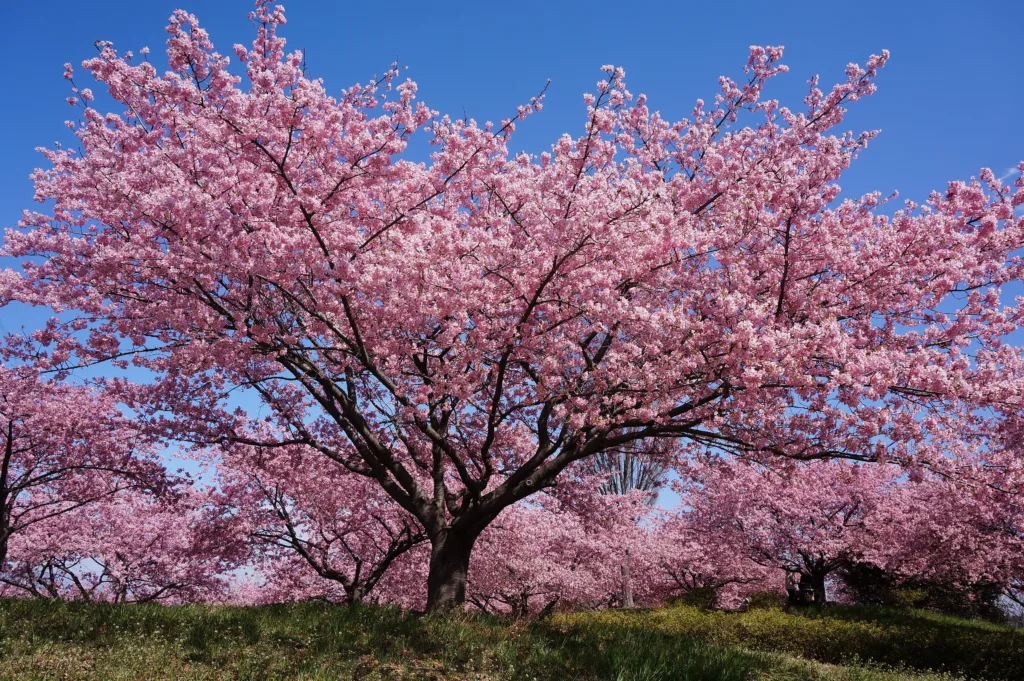
| March–May | Warm spring, cherry blossom (earlier on Okinawa, later in the north). One of the best periods for cruises. |
| June–July | Rainy season: humid and overcast, the sea is usually calm, but visibility is worse. Cheaper than in high summer. |
| August–October | Hot and humid, typhoon peak. Itineraries change more often, ports may be skipped. |
| November | Comfortable, red maples on the mainland; typhoons are rare. One of the most reliable months. |
For a detailed month-by-month look at Japan see the article When to go to Japan. If you need Okinawa and the Ryukyu islands, look at our article on Naha port; for Korea and Kyushu read about Korea and Kyushu ports.
Southeast Asia: Singapore, Malaysia, Thailand
Typhoons almost never reach here, but the region has its own features. On cruises from Singapore along the Strait of Malacca and to Phuket the sea is rarely rough in winter months, but sudden short thunderstorms and gusty wind occur all year. On the west coast — Phuket, Langkawi, Krabi — the south-west monsoon blows from May to October: waves are higher, the sea less clear, and some islands unavailable. For comparison: a cruise from Singapore to Penang and Melaka is the most stable option throughout the year; cruises with Phuket are better chosen from November to April. In mid-year haze from forest fires in neighbouring countries is also possible and sometimes worsens visibility.
Examples of cruises suitable for different seasons: Star Voyager, 3 days, Singapore – Melaka, Navigator of the Seas, 4 days — Penang and Star Voyager, 6 days — Phuket and Krabi. More about itineraries in our material on cruises to Malaysia.
 3 days / 2 nightsCruise on this routeSingapore – Melaka – Singapore cruise, 3 days on Star VoyagerSingapore → MelakaPick a date and cabin →Available cabins · Trip.com
 4 days / 3 nightsCruise on this routeSingapore – Penang – Singapore cruise, 4 days on Navigator of the SeasSingapore → PenangPick a date and cabin →Available cabins · Trip.com
 6 days / 5 nightsCruise on this routeSingapore – Phuket – Krabi – Singapore cruise, 6 days on Star VoyagerSingapore → Phuket → KrabiPick a date and cabin →Available cabins · Trip.com
Vietnam: Hue and Nha Trang
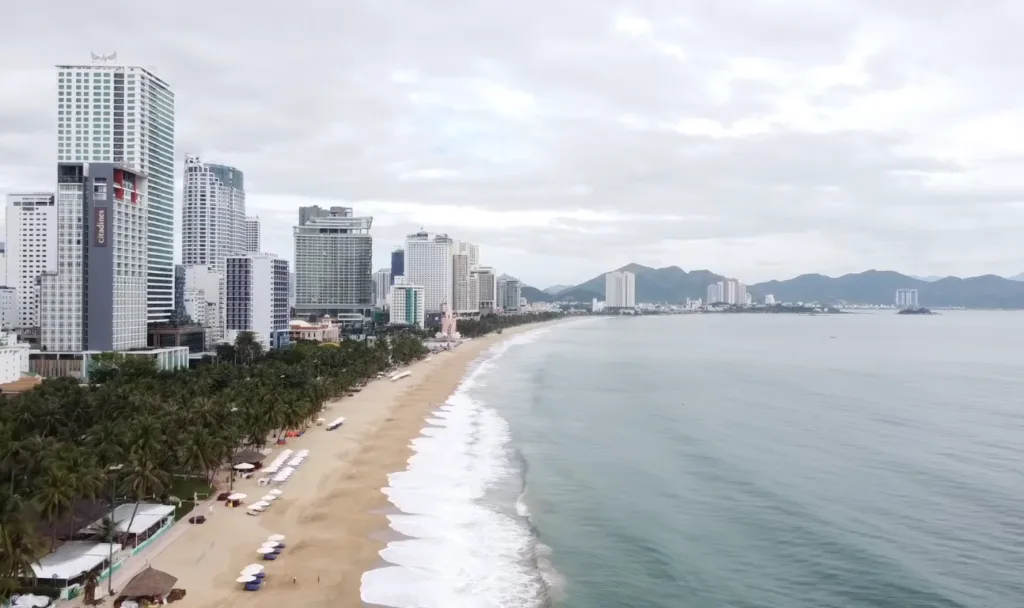
Central Vietnam is one of the rainiest parts of the region: in autumn and early winter downpours and storms come here and the sea is rough. Ships from Hong Kong and Singapore calling at Hue, Nha Trang and Ho Chi Minh City more often change the port order at that time. If you want to see Vietnam from the ship, aim for the drier months — spring and early summer. Example: Spectrum of the Seas, 5 days, Hong Kong – Hue; more about the direction on the page Cruises from Hong Kong to Vietnam.
Holidays and school breaks: when it is crowded and expensive
Weather is not the only seasonal factor. For cruises from China and to Japan, holiday periods matter enormously. Chinese New Year (January–February) and the “golden week” at the start of October are when Chinese families massively go on cruises, and tickets for such cruises are sold out in advance; prices rise and ships fill to capacity. In Japan similar periods are the end of December and start of January, golden week in late April and early May and the August Obon holiday. At those times piers are crowded, and in popular ports such as Naha and Fukuoka there are queues ashore. If you want a calm cruise, choose dates outside these windows: in the shoulder season and on weekdays prices are lower and ships emptier. If the trip is tied to holidays, book in advance and choose a cruise with several ports.
How to read the line’s messages before the cruise
A few days before departure the line usually sends notices clarifying the schedule and boarding time; in storm season they come more often. What to pay attention to:
- Boarding time. It can shift because of the ship’s late arrival; do not book return flights for disembarkation day with a reserve of less than half a day.
- Change of port order. If ports have swapped, review excursions and tickets bought in advance.
- Document recommendations. Sometimes requirements for specific ports are added; check them against your passport and visas.
- Support contacts. Save the phone number and the line’s app in advance: on sailing day connection may be unstable.
If your cruise was booked via Trip.com, the order details and support contacts are in the confirmation email and your account. Go there the day before sailing and check whether any updates have arrived.
How to choose dates to reduce risk
- Choose “reliable” months. For Japan and Korea, April–June and November; for Southeast Asia, winter months for the west and all year for Melaka and Penang.
- Take short cruises in typhoon season. The fewer the ports, the less chance that an itinerary change spoils the trip.
- Prefer cruises with several ports. If one port is cancelled, another remains.
- Watch forecasts a week before departure. If a cyclone is on the way, the line’s messages arrive in advance.
- Plan with a reserve. Do not take a flight on the day of return and do not schedule important meetings for the next morning.
What to do if a port is cancelled
First open the cruise terms: they say what is grounds for changing the itinerary and what compensation the line offers. Usually it is not paid for weather-related changes, but they may offer on-board credit or an excursion. Your insurance matters too: make sure the policy includes cancellation, interruption and delays. If you ordered an excursion through the line, when a port is cancelled its cost is usually refunded; for independent tickets and transfers ashore this does not work, so do not buy expensive non-refundable tickets in advance. And last: on the day of change do not argue with the crew — decisions are made by the captain, and on board there is usually a guest services desk where everything will be explained.
With children and parents: what to consider by season
If you travel with small children or elderly parents, choose the season even more carefully. Hot and humid summer months are hard to bear ashore: replace long transfers between sights with a short day in one district. In the rainy season in port it is useful to have a backup plan indoors — a museum, a mall, a market. In storm months choose a large ship and a cabin in the middle part, and buy motion sickness medicine in advance. In cool months, November to March, Okinawa and Taiwan are comfortable for adults and children alike, but do not forget a warm cardigan for evenings on deck: at sea in the wind it can be noticeably cooler than ashore.
Cabin and season
In storm season the choice of cabin also matters: the closer to the middle of the ship and the lower the deck, the weaker the motion. We covered this in more detail in the article Which cabin to choose on a cruise. If you get seasick, it is better to choose a large ship such as Spectrum of the Seas: on such ships motion is felt less than on small ones.
Frequently asked questions
In which months are typhoons most frequent?
From August to October; the season formally lasts from June to November.
Will the money be refunded if a port is cancelled for weather?
Usually not: a route change for weather reasons is considered normal. Terms are described on the cruise page.
When is it best to cruise to Japan?
In spring and in November: comfortable weather and few storms.
Is there a safe time for Phuket?
From November to April the sea is usually calmer than in the middle of the year.
Useful links
- All cruises in Asia
- Short cruises of 1–4 nights
- Cruises from Shanghai to Japan
- Cruises from Singapore to Phuket
To sum up: typhoons are not a reason to give up a cruise but a reason to choose dates and an itinerary with a reserve. Look at the terms, take insurance and do not tie the trip to a single port.
Current as of November 2026. Weather and cruise conditions change: check forecasts and terms on the cruise page and on the carrier’s official site.
Pick your sailing date
Cruises from this article: Trip.com shows the nearest departures, available cabins and the final price. These are affiliate links — the price does not change for you.
3 days / 2 nightsCruise on this routeSingapore – Melaka – Singapore cruise, 3 days on Star VoyagerSingapore → MelakaPick a date and cabin →Available cabins · Trip.com4 days / 3 nightsCruise on this routeSingapore – Penang – Singapore cruise, 4 days on Navigator of the SeasSingapore → PenangPick a date and cabin →Available cabins · Trip.com6 days / 5 nightsCruise on this routeSingapore – Phuket – Krabi – Singapore cruise, 6 days on Star VoyagerSingapore → Phuket → KrabiPick a date and cabin →Available cabins · Trip.com 5 days / 4 nightsCruise on this routeHong Kong – Hue – Hong Kong cruise, 5 days on Spectrum of the SeasHong Kong → HuePick a date and cabin →Available cabins · Trip.com