Tamarind Village in Chiang Mai’s old city is named after the tamarind tree growing on its grounds – a 200-year-old specimen that forms the compositional heart of the Lanna-style architecture.
The hotel in Chiang Mai’s Old City is named after a 200-year-old tamarind tree that still grows in its courtyard – not a decorative addition to the grounds, but a literal semantic and compositional center of the entire project. Tamarind Village was built around this tree, not the other way around.
The Tree Around Which the Hotel Was Built
The 200+ year old tamarind tree that gave the hotel its name is not a decorative element of the grounds, but a literal compositional center of the entire project: courtyards, buildings and public spaces are designed around it, rather than the tamarind being planted as an ornament to an already finished building. Guests report that standing under this tree after breakfast is an experience in itself, not just a passing detail of landscape design.
Lanna Architecture and the Art of Mountain Peoples
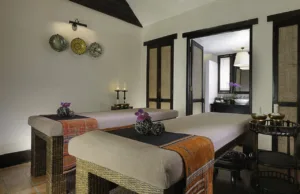
The hotel’s architectural concept draws on traditional northern Thai Lanna style with elements of the art of the mountain peoples of northern Thailand – every interior detail, according to the creators of the hotel, is inspired by this tradition, which gives the grounds a sense of genuine rootedness in the local cultural context, rather than abstract “Asian exoticism.”
Forty-Five Rooms Around Flower-Filled Courtyards
45 rooms and suites are located around a series of flower-filled inner courtyards – a layout solution typical of the best examples of Lanna boutique architecture in Chiang Mai, creating a feeling of a small village within the hotel, rather than a single hotel building.
In the Center of the Old City, Near Tha Phae Gate
The location proved to be just as important an element of the hotel’s appeal as its architecture: Chiang Mai’s Old City with Tha Phae Gate, the Monument of the Three Kings, and temples Wat Phra Singh and Wat Chedi Luang are within walking distance, while the famous Sunday Walking Street market runs directly in front of the hotel entrance every week.
What Guests Say
Guests in reviews describe the grounds as a “very eco-friendly, peaceful, and photogenic place,” noting its convenient location near Tha Phae Gate, restaurants, and spas, with the Sunday market literally across from the entrance. One guest especially noted the Lanna style and confessed that after breakfast they would head straight to the large tree in the courtyard. There is also honest criticism: some guests mention insects on the grounds (mosquitoes, ants, geckos) as a natural price for the green surroundings, while one review directly called the living conditions in a specific room disappointing – from old finishes to insufficient cleaning – which is worth keeping in mind alongside the prevailing positive impressions.
What’s Next
To choose a neighborhood in Chiang Mai, you’ll need a guide “Chiang Mai: Old City or Nimmanhaemin – Where to Stay”.
Prices, service inclusions, and details of the hotel’s programs may change – check for up-to-date information before booking.