A Building Designed Like a Potter’s Wheel
The Bat Trang Ceramic Museum is located at 28 Bat Trang Street, Ziyam District, approximately 15 km from Hanoi’s center – a distance convenient for a half-day trip without an overnight stay. The architectural concept of the building revolves around the image of a traditional potter’s wheel: seven adjoining funnel-shaped towers of varying heights and forms, clad in fiber cement of a characteristic brown hue, symbolizing clay and soil of the Red River Delta. It is precisely this unusual multi-tiered silhouette, unlike anything among typical Vietnamese museum architecture, that has made the building one of the most recognizable photo spots for young audiences in Hanoi.
Five Floors – Five Different Experiences
The route through the museum is structured vertically, and each level offers a fundamentally different experience. The first floor (ground) is dedicated to interactive workshops: here you can independently mold a ceramic item using traditional techniques, often in an authentic costume provided on-site. The second floor is decorated with giant spiral structures – the most popular photo backdrop throughout the building. The third floor features a permanent exhibition of nearly a thousand ceramic artifacts: from ancient ceramics to the history of the craft and memorable works by recognized masters; here you can also drop off recycled items and browse souvenir shops. The fourth floor houses a modern art center with works by contemporary ceramic sculptors.
Restaurant, Coffee Shop and Tea House on the Upper Floors
On the fifth floor is Tinh Hoa restaurant, serving traditional countryside dishes and imperial banquet cuisine, with a separate coffee shop nearby. Even higher up is Huong Sa Art House teahouse, decorated with floral arrangements and light installations, offering panoramic views of the village of Bat Trang below – a logical final stop on your journey after exploring the exhibits and workshops on the lower levels.
Tickets and Opening Hours
The museum is open Monday to Friday from 8:00 AM to 5:30 PM, and weekends from 8:00 AM to 6:00 PM. An entrance ticket for access to the first, second, and fourth floors costs 50,000 VND per person. Participation in a pottery-making workshop on the ground floor is charged separately – 70,000 VND for adults (taller than 1.3 meters) and 50,000 VND for children shorter than this height.
Combining with Bat Trang Village
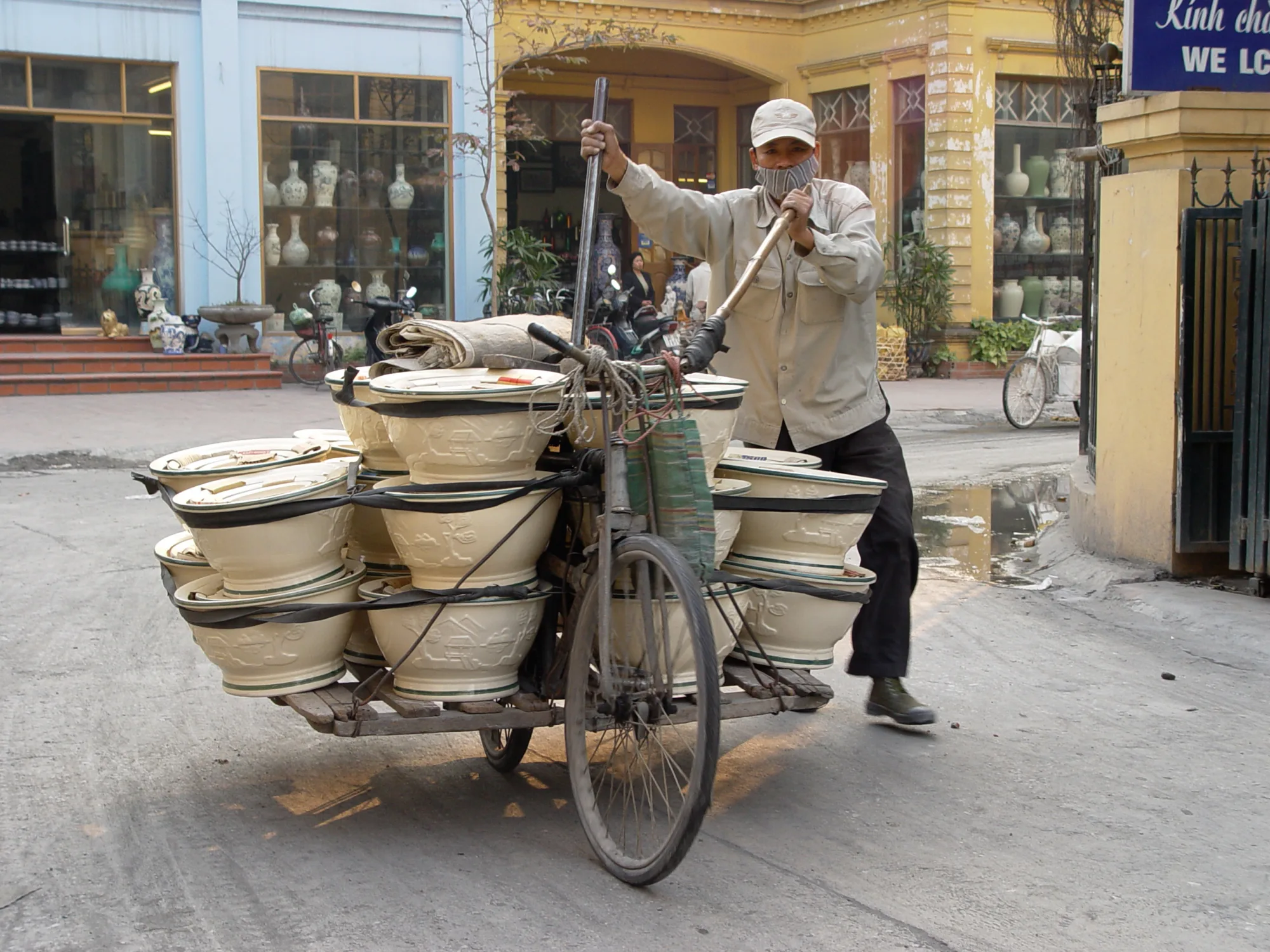
The museum is located directly within the historic pottery village of Bat Trang, which has been practicing ceramic craftsmanship for centuries – so it makes sense not to limit yourself to just the museum building, but to continue exploring the village itself: the market selling ceramic products, local artisans’ workshops, and narrow streets with old architecture. This format transforms a visit into a full half-day trip rather than simply visiting one isolated attraction.
Why It Became a Social Media Hit
The combination of an architectural form atypical for Vietnam, the spiral interiors on the second floor, and the concluding panorama from above – that’s the combination which generates a steady stream of content in local social media without any special promotion. Unlike many “Instagrammable” spots built around one specific location for photos, the museum offers an entire route with several different photogenic scenes on different floors, keeping visitors engaged throughout their visit rather than just for five minutes at one object.
Practical Checklist
- Address — 28 Bat Trang Street, Ziam District, about 15 km from Hanoi’s center.
- Building — seven spiral towers made of fiber cement in the shape of a potter’s wheel.
- Ticket — 50,000 VND (access to floors 1, 2 and 4), pottery making – an additional 50,000–70,000 VND.
- Opening hours — 8:00 AM–5:30 PM on weekdays, 8:00 AM–6:00 PM on weekends.
- On the upper floors — Tinh Hoa restaurant, a coffee shop and a teahouse with a panorama of the village.
- Easily combined with a stroll around the pottery village of Bat Trang itself.
Frequently Asked Questions
How much does it cost to enter the Bat Trang Ceramic Museum?
The basic ticket is 50,000 dong and gives access to floors 1, 2, and 4. Pottery classes are paid for separately.
How far is the museum from Hanoi’s city center?
About 15 km — convenient for a half-day trip without an overnight stay.
Can you make your own ceramic item?
Yes, interactive workshops with traditional pottery techniques operate on the ground floor.
What’s on the top floor?
The Huong Sa Art House teahouse with floral arrangements, light installations, and a panoramic view of the village.
What’s next
Check out the guide to the Cat Linh metro station as a photoshoot spot and sort out Vietnam’s visa rules before your trip.
Ticket prices and opening hours may need to be checked — verify the latest information before visiting.