Comparing Vietnam's amusement parks: the VinWonders chain on Phu Quoc and in Nha Trang, Sun World with the Golden Bridge at Ba Na Hills and the Fansipan cable car, Ho Chi Minh City's older parks — what to choose for your route.
In Vietnam amusement parks are built not around a mouse or a wizard but around record-setting cable cars — the country is home to the official Guinness record holder among sea cable cars, and its main competitor is laid at an altitude sufficient to lift passengers to the country’s highest point. The whole industry has been divided between two conglomerates — Vingroup with the VinWonders chain and Sun Group with the Sun World chain — and practically every popular tourist destination in the country, from Phu Quoc to Sapa, has already acquired its own large park of one of these two companies. Working out which chain’s park to add to your route is helped not only by the entertainment format but also by simple geography: it is almost always more logical to choose a venue that already stands on the way between stops you have planned than to make a separate detour for a particular park.
VinWonders Phu Quoc: the country’s largest park with 12 themed zones
VinWonders Phu Quoc is Vietnam’s largest theme park, part of the extensive Vinpearl complex in the south of the island, which also includes a water park, an aquarium, a safari park, a beach and the chain’s own hotels. The grounds are divided into 12 themed zones — from classic rides and slides to separate zones devoted to the cultures of different countries of the world, which makes the park more of a multi-day destination than a venue for a few hours.
You can reach Hon Thom Nature Park — the southern part of the complex, where its own water park is also located — by the Hon Thom cable car, which officially holds the Guinness record as the world’s longest three-cable cable car over the sea: almost 8 kilometres (7,899.9 metres) over the waters of the An Thoi archipelago, with six pylons, the tallest of which reaches 174 metres. The line was built by Sun Group and designed by Austria’s Doppelmayr — a journey that takes about half an hour by boat is cut to 15 minutes by the cable car, which also opens a panoramic view of the turquoise water and the archipelago’s fishing boats.
Tickets to VinWonders Phu Quoc cost about 950,000 dong for adults and 710,000 dong for children and seniors according to the latest available data — the price should be checked directly before the trip, since the chain periodically revises its rates.
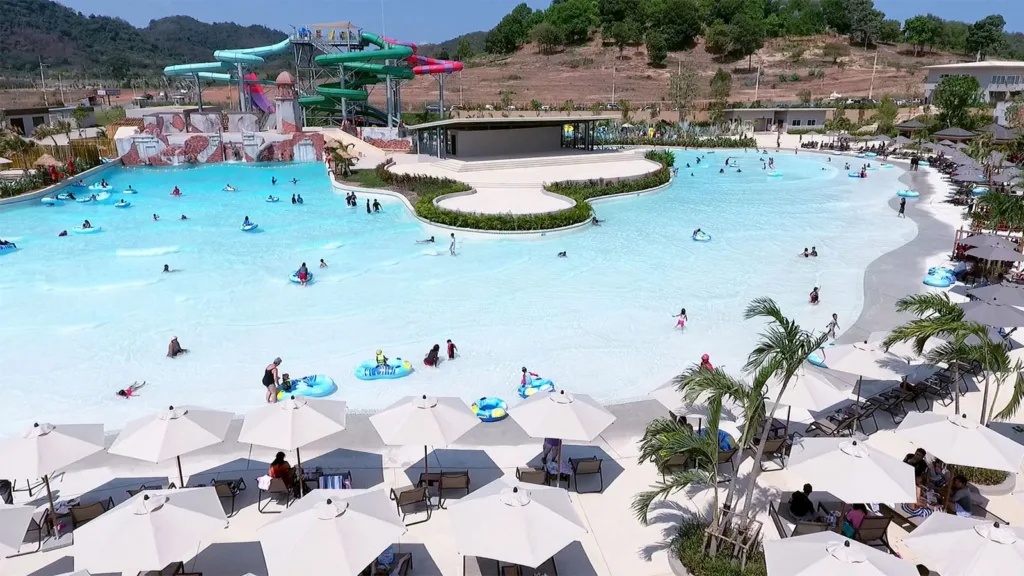
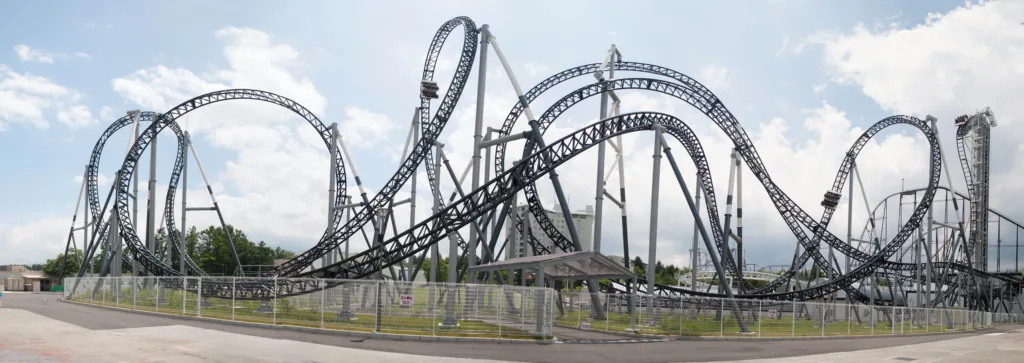
In the park itself there are classic coasters and rides for different ages, a separate children’s zone with gentler carousels, water attractions and an evening show with musical fountains and pyrotechnics — a format designed to keep guests on the grounds from morning to late evening, not just for a few hours of riding. The neighbouring VinWonders Water Park is considered one of the country’s largest and logically combines with a visit to the theme park itself during one trip to the island, while the safari park located there adds one more full day of programme for families planning to stay on Phu Quoc longer than a day or two.
VinWonders Nha Trang: the cable car that used to be a record holder
VinWonders Nha Trang is located on Hon Tre Island in the southern part of Nha Trang Bay and is reached by its own Vinpearl Cable Car — until recently considered the world’s longest sea cable car at 3,320 metres, until in 2018 this record was beaten by none other than the Hon Thom cable car on Phu Quoc, which turned out to be almost 2.5 times longer.
A ticket only for the cable car to Vinpearl Harbour, one way and back, costs about 200,000 dong per person, but when you buy a ticket to the VinWonders park itself or stay in the Vinpearl chain’s hotels, the cable car ride is provided free. A full park ticket for adults costs about 1,050,000 dong, for children and seniors about 800,000 dong, and tickets after 16:00 cost noticeably less — from 550,000 to 700,000 dong, which is convenient for those who plan just a few evening hours in the park rather than a full day.
Hon Tre Island itself, besides the amusement park, includes a water park, a fantastic four-dimensional cinema zone and an underwater aquarium — a combination that historically made Nha Trang one of the first large resorts in the country to build tourist infrastructure around such a complex, before the format spread to other Vietnamese cities. For families staying in Nha Trang itself, the island becomes a logical day trip without the need for long flights.
Other VinWonders destinations
Besides Phu Quoc and Nha Trang, the VinWonders chain is present in other regions of the country, including a park near Hoi An on the central coast, thematically linked to the local culture and history of the region rather than to a universal set of rides, and a park in the new development area Vinhomes Ocean Park near Hanoi, oriented more to residents of the capital and one-day family outings than to tourists who come specially for it. The chain’s overall logic is to open a large park in every tourist cluster where Vinpearl hotels already operate, which makes practically any resort trip along Vietnam’s coast a potential reason to drop into a park of the same chain.
For travellers combining several regions of the country in one trip, this means that revisiting a park of the same chain is not that rare: the set of rides and the overall concept are similar between different cities, although each location adds its own details tied to local geography, such as canals or caves.
Sun World Ba Na Hills: the Golden Bridge in a giant’s hands
Sun World Ba Na Hills near Da Nang is the most recognisable object of the Vietnamese tourist industry in recent years thanks to the Golden Bridge (Cầu Vàng): a pedestrian bridge that seems to be held up by two giant stone hands — an image that spread around the world before many even learned where Da Nang itself is. Besides the bridge, a whole French village has been recreated on the mountain — Europe-styled architecture, a cable car and an amusement park inside artificial caves.
The Ba Na Hills cable car, when it opened in 2013, was officially considered the world’s longest non-stop single-cable cable car — 5,801 metres — and holds several Guinness records at once. Tickets in 2026 cost about 750,000 dong for adults and 600,000 dong for children between 1.0 and 1.4 metres tall according to some data, whereas according to other sources a full entrance ticket with the cable car and access to the Golden Bridge costs 900,000 dong — the discrepancy should be checked on the official Sun World website before the trip. Separate, reduced local rates apply for residents of Da Nang.
Inside the complex itself, besides the Golden Bridge and the French village, there operate the Fantasy Park amusement park with rides inside artificial caves in the mountain, a Fansipan-style cable car with viewing platforms and a European-style flower garden — a combination that makes Ba Na Hills equally interesting both to families with children who come for the rides and to travellers for whom photographs and views matter most. You can reach the foot of the mountain by taxi or organised transfer from Da Nang in about 45 minutes to 1 hour depending on traffic.
Sun World Fansipan Legend: the cable car to the roof of Indochina
Sun World Fansipan Legend in Sapa lifts guests to the summit of Fansipan — the highest point not only of Vietnam but of the whole Indochinese peninsula, which is why the mountain is informally called the “roof of Indochina”. The cable car here also holds a double Guinness record: the world’s longest three-cable system of this type with a vertical rise of 1,410 metres — a colossal difference in height for one continuous ride.
Tickets start from about 790,000 dong for an adult. For most travellers the optimal option is the combined ticket for 1,320,000 dong, including the cable car, the monorail and the funicular right up to the summit — this spares you the climb up a staircase of 600 steps in both directions that you would otherwise have to climb yourself after leaving the cable car.
At the very top of Fansipan guests are met by a complex of Buddhist temples and statues built in the traditional Vietnamese style — a detail that turns the trip not only into engineering entertainment for the sake of a record-setting cable car but also into a kind of pilgrimage to one of the symbolic spiritual places of the north of the country. The cable car station is in Sapa itself, within walking distance of the town centre, which makes the trip a convenient half- or one-day outing without the need for a separate transfer.
Dam Sen and Suoi Tien: Ho Chi Minh City’s older parks from before the era of VinWonders and Sun World
In Ho Chi Minh City, the country’s largest city, there are two parks that appeared long before VinWonders and Sun World came to dominate the industry. Dam Sen Park opened in 1983 on drained marshland on the outskirts of the then city — today it is 50 hectares of gardens, lakes, rides and a separate water park in District 11. Tickets remain noticeably cheaper than at the large chain parks: entry to the dry part of the park costs from 100,000 to 160,000 dong, and a full unlimited ride ticket from 220,000 to 300,000 dong; entry to the water part is about 180,000–220,000 dong depending on age.
Suoi Tien Theme Park, opened in 1995, occupies more than 200 hectares and combines traditional Vietnamese cultural and religious motifs — the whole park is themed around Buddhism — with modern rides and water slides. The ticket system is built on several packages: from the basic sightseeing one (“Sightseeing”) to an extended one with access to all rides (“Challenge”), costing from 175,000 to 340,000 dong, and with the addition of the Tien Dong Beach zone — from 255,000 to 450,000 dong.
Both parks are located within the city and accessible without long flights or hours-long transfers, unlike most VinWonders and Sun World venues — a convenient option for those whose trip base is Ho Chi Minh City itself rather than the resort coast or the mountainous north, and for travellers with a more limited entertainment budget.
How to choose: VinWonders or Sun World
The fundamental difference between the two chains is in the product itself. VinWonders is closer to the classic theme park format: coasters, rides, zones for children of different ages, a water park and a safari in one place — the choice for a family that wants to spend a whole day on rides. Sun World bets not so much on mechanical rides as on the scale of the spectacle itself — architecture, the engineering records of cable cars, views from a height — which is more interesting to travellers for whom the impression and photographs matter more than the adrenaline of specific coasters.
The geographic logic also differs: VinWonders concentrates in beach resort destinations — Phu Quoc, Nha Trang, Hoi An — whereas Sun World’s key venues are often located in mountainous locations or ones remote from the sea — Ba Na Hills near Da Nang, Fansipan in Sapa. This makes the choice largely geographic: if the trip is built around a beach holiday, VinWonders is more logical; if the route includes Sapa or the mountainous part of the country, Sun World Fansipan Legend becomes an almost obligatory item of the programme.
For families with small children VinWonders is preferable — gentle rides, a water park, a zoo — whereas Sun World venues like Fansipan with its height and pressure change or a prolonged stay on a cable car are more comfortable for older children and adults. For a couple or a group without children both formats remain interesting precisely as a spectacle and a reason for photographs, not only as family entertainment — in this sense Vietnam differs noticeably from the neighbouring countries, where parks are almost exclusively oriented to a children’s audience.
By budget the two large chains are comparable with each other — tickets fall in a range equivalent to 30–50 dollars per adult depending on the specific park and package — whereas the older city parks of Ho Chi Minh City like Dam Sen or Suoi Tien cost many times less, which is worth taking into account if the trip is budget-limited or includes several park days in a row.
Another practical criterion for choosing is how fundamental the speed of the experience is for the trip. VinWonders and the old city parks imply the classic “whole day on the grounds” format, whereas many Sun World venues can be seen in a few hours — go up on the cable car, see the main sight like the Golden Bridge or the summit of Fansipan, come back down — which fits conveniently even into a dense route with limited time for a specific region.
Season and weather
The coast of southern and central Vietnam, where the main VinWonders parks are located, is comfortable to visit practically year-round, except for the typhoon season on the central coast — roughly September to November — when strong wind can temporarily suspend the operation of cable cars and open-air rides. For Sun World Fansipan Legend in mountainous Sapa a different logic applies: the winter months (December–February) at the top of the mountain are noticeably colder than below in the valley, sometimes with frost and rare snow — dress warmer than the weather at the foot suggests.
The high tourist season within Vietnam itself falls on the period of the Vietnamese New Year (Tet, end of January — February by the lunar calendar) and on the summer holidays of local schoolchildren — in these periods both VinWonders and the Sun World parks are noticeably more crowded, and cable car tickets should be booked in advance rather than counting on the box office on the spot. For southern resorts like Phu Quoc and Nha Trang the dry season from November to April is considered optimal, whereas for Da Nang and Sapa in the north and centre of the country the weather windows differ — check the seasonal forecast separately for each region if your route covers several parts of the country.
Tickets and practical tips
Tickets to the parks of both chains are often cheaper when bought through the official VinWonders or Sun World websites in advance than on the spot — both companies periodically offer promo codes and seasonal discounts that are not always available at the box offices at the entrance, as well as through aggregators like Klook, where comparing the price with the official website before buying is a simple way to save without losing access to the same rides. Combined tickets that bundle entry to the park with a stay at hotels of the same chain (especially relevant for Vinpearl on Phu Quoc and in Nha Trang) are often better value than buying separate tickets if the trip generally involves a multi-day stay at the resort.
On Sun World’s cable cars it is worth factoring in the weather separately: strong wind or a thunderstorm may lead to a temporary suspension of the line for safety reasons, especially at great heights like Fansipan — if the trip falls in changeable weather, it is sensible to have a spare day in the route.
Visa and logistics between regions
Russians do not need a visa to travel to Vietnam for up to 45 days — more than enough to combine visits to parks in several regions of the country in one trip. Logistics between the main park clusters (Phu Quoc in the south, Nha Trang in the south-east, Da Nang and Sapa in the north and centre) requires domestic flights — the distances between these regions are too great for ground transport within a short trip, and there is no direct rail connection between most of them.
For those planning to visit both VinWonders and Sun World venues in one trip, it is sensible to build the route around the main flights in advance rather than trying to add a park “on the way” — most of them are off to the side of the typical tourist routes between cities and need a separate day in the programme. The country’s domestic airlines offer frequent direct flights between all the key airports (Ho Chi Minh City, Hanoi, Da Nang, Nha Trang, Phu Quoc), so the logistics between regions, although it requires a separate flight budget, rarely becomes a real obstacle to a combined route.
Food and practical details on site
Inside the large parks of both chains there are their own restaurants and food courts with a mix of Vietnamese and international cuisine, although prices here are noticeably higher than the national average — typical for tourist venues of this scale. On Sun World’s cable cars, especially on Fansipan, it is worth dressing in layers: the temperature difference between the foot of the mountain and the summit can reach ten degrees or more, and what is comfortable below may turn out to be too light clothing at the top. At VinWonders’ beach venues, on the contrary, remember sunscreen and hats — most of the grounds are open, and the tropical sun at the height of the day feels noticeably stronger than the cloud cover suggests.
Payment at most parks is accepted both by card and in cash in dong, and at the entrance an electronic wristband or card system linked to a deposit often operates — convenient for settlements inside the park, but remember to take back any unspent balance on exit or clarify the refund conditions in advance. The Grab mobile app remains a convenient way to get to the park entrance from the nearest city or hotel almost everywhere in Vietnam, except for the most remote mountain locations like the foot of Fansipan, where the choice of taxis is noticeably more limited.
Frequently asked questions
Which cable car in Vietnam is officially the longest in the world? The Hon Thom cable car on Phu Quoc — almost 8 kilometres over the sea, the Guinness record among three-cable sea cable cars, built by Sun Group and designed by Austria’s Doppelmayr.
What is the difference between VinWonders and Sun World? VinWonders is closer to a classic amusement park with coasters and zones for children, Sun World emphasises large-scale architectural and natural impressions like the Golden Bridge and the cable car to Fansipan.
Do I need to dress warmer for a trip to Fansipan? Yes, especially in winter (December–February) — it is noticeably colder at the top of the mountain than in the Sapa valley at the foot, and frost sometimes occurs.
Can I get to VinWonders Phu Quoc without buying a full park ticket? Yes, the cable car to Vinpearl Harbour can be bought separately — but full access to all the park’s zones requires a separate entrance ticket.
Is it worth booking cable car tickets in advance? In high season and during the Vietnamese New Year — yes, especially for popular routes like Ba Na Hills and Fansipan, where queues can be considerable.
Do the cable cars work in bad weather? Not always — strong wind or a thunderstorm can lead to a temporary suspension, especially at great heights; it is worth building a spare day into the route in case of bad weather.
Do I need a visa for Vietnam for a trip that includes amusement parks? No, Russian citizens have visa-free entry for up to 45 days — enough to visit several regions and parks in one trip.
Are there cheap alternatives to VinWonders and Sun World? Yes, in Ho Chi Minh City the older and noticeably more budget Dam Sen (since 1983) and Suoi Tien (since 1995) parks operate, although in scale and modernity of rides they are inferior to the large chain parks.
Can I visit parks in several regions in one trip around Vietnam? Yes, but allow for domestic flights between the clusters — Phu Quoc, Nha Trang, Da Nang and Sapa are far from each other, and ground transport between most of them is impractical within a short trip.
What should I wear warmer for the Fansipan cable car? Layered clothing — the temperature difference between the foot of the mountain in Sapa and the summit can reach ten degrees or more, especially in winter.
How do Ho Chi Minh City’s old parks differ from VinWonders and Sun World? Above all in scale and modernity of rides — Dam Sen and Suoi Tien are noticeably more modest and cheaper, but remain a working option for those whose trip base is Ho Chi Minh City itself, without going out to the resort coast or the mountains.
See also: Ha Long Bay: how to get there, the season in Vietnam, Phu Quoc: the Vietnamese island with direct flights.