Vietnam 2027: the main events of the year — Tet on February 6, the Perfume Pagoda, Hung Kings' Day on April 16, the Hue Festival, Da Nang's fireworks, the Nha Trang Sea Festival and Tet Trung Thu. Dates, customs, routes and tips.
Early Saturday morning, February 6, 2027. Hanoi has not yet woken up, but the streets already smell of burned incense and tangerine peel, and on the motorbikes that on an ordinary day rush like a river there are branches of pink peach blossom taller than a person and kumquats in tubs swaying on the racks. In a few hours all of Vietnam will fall still: markets and shops will close, the streets will empty, and in every home families will gather at the table to welcome the Year of the Goat. Tet is the country’s main holiday, and it cannot be understood by simply driving past: you have to live at least one day of it from the inside. But Vietnam in 2027 is not only Tet. The calendar also holds the pilgrimage to the Perfume Pagoda in a cave among the mountains, the day of remembrance of the Hung Kings, Da Nang’s boat fireworks, the sea festival in Nha Trang, the palace ceremonies of Hue and an autumn of paper lanterns in Hoi An. We go through it all in order.
- February 6 — Tet (the lunar New Year, the Year of the Goat); official days off — February 3–11.
- January — March — the festival season at the Perfume Pagoda near Hanoi.
- April 16 — the main day of the Hung Kings festival in Phu Tho (a national day off).
- April — May — the Hue Festival (exact dates to be announced later).
- Approximately June 3–9 — the Sea Festival in Nha Trang (held every two years).
- Late May — July — the international fireworks festival in Da Nang (in 2026 it ran May 30 — July 11; the 2027 program has not yet been announced).
- September 15 — Tet Trung Thu, the Mid-Autumn Festival.
- Every 14th night of the lunar month — lantern nights in Hoi An.
How to read this calendar
Vietnamese holidays follow the lunar calendar, which means their dates in the Gregorian calendar “drift” every year. Some of the 2027 schedules — the Hue Festival, the Da Nang fireworks program, the details of the Nha Trang festival — will be announced by the organizers closer to the season, so in this article they are marked as approximate. The main rule for a traveler: for lunar holidays allow a “window” and flexible tickets, and for Tet there is a special logic altogether, described below.
Tet 2027: the week when Vietnam falls still — and comes alive
Tet Nguyen Dan — the lunar New Year — in 2027 falls on Saturday, February 6 (mung mot, the first day of the year). The official holiday lasts February 3–11, although many businesses close earlier and open later, and the three most sacred days — February 6, 7 and 8 — the whole country spends with family. For the Vietnamese it is what New Year, Christmas and a birthday are for us, taken together: to return home, remember ancestors, make up with those who offended you and start the year with a clean slate.
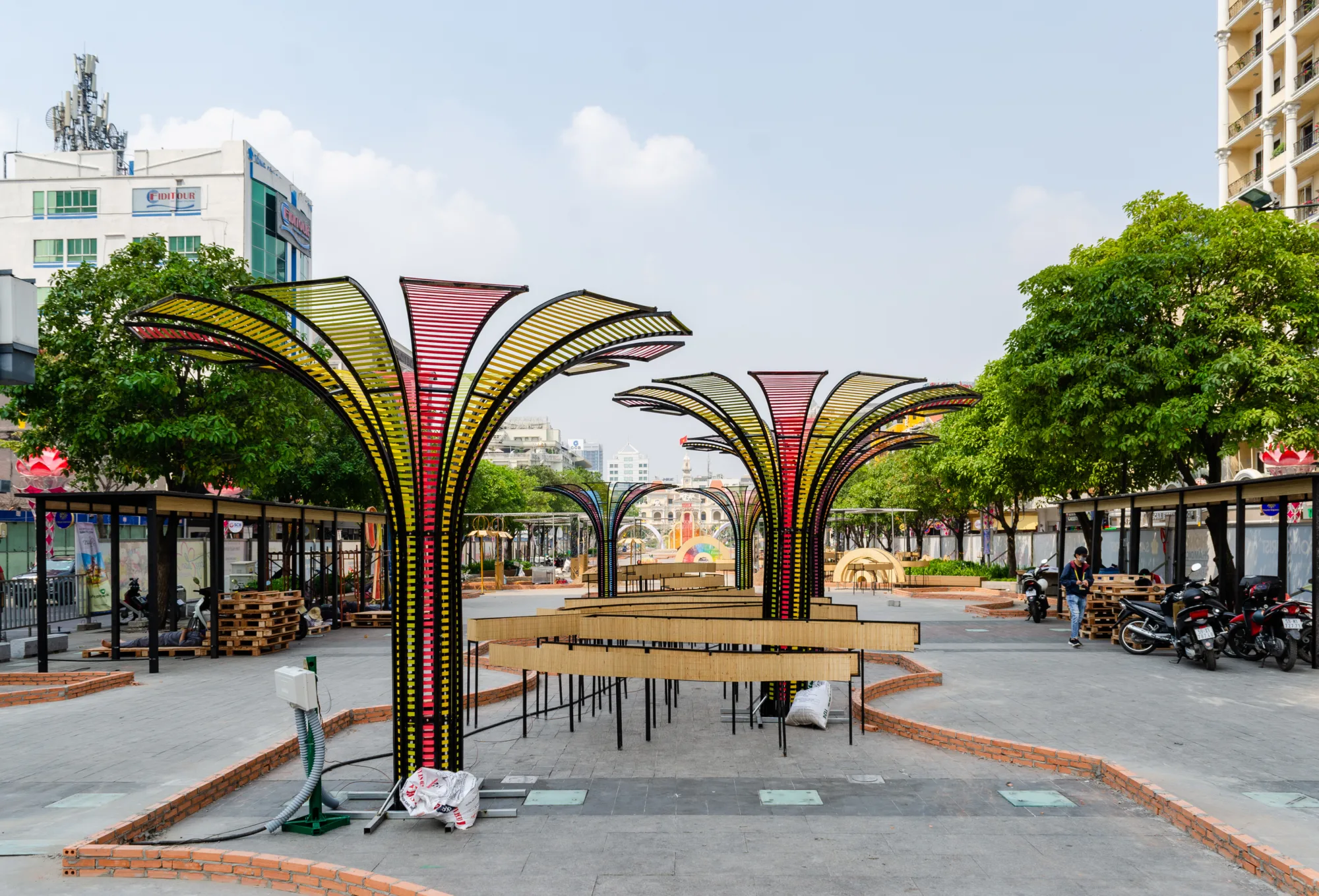
Preparation begins weeks ahead. The streets are piled with flowers: in the north the main symbol of Tet is the blooming peach (dao), whose pink branches symbolize novelty and luck and stand in almost every Hanoi home; in the south it is the yellow apricot (hoa mai). You can’t do without tangerine trees and kumquats either: they “bring” wealth. Hanoi’s capital market Hang Luoc opens only once a year — for the week before Tet — and along Hang Ma and at the flower markets of Quang Ba, Ngoc Ha and Nhat Tan night markets run where people haggle until dawn. In Ho Chi Minh City the main event is the flower street Nguyen Hue: for twenty years it has been turned into a giant installation of flowers and light, and in 2026 the organizers assembled more than a hundred thousand flower baskets — a record scale. In the Mekong Delta there are still floating flower markets where boats carry flowers for Tet right across the water.
Tet itself is rituals, each with a meaning. The first guest to cross the threshold in the new year determines the fate of the house — this custom is called “xong dat”, so hosts choose a person with a “light hand” in advance. Children and elderly parents are given red envelopes with money — “li xi” — and the sum is symbolic, what matters is the gesture. People “open the pen” by writing the first lines of the new year, and “open the shops” by starting to trade on a lucky day. The table groans with dishes: in the north the obligatory ones are the square cakes banh chung of sticky rice, pork and beans, in the south the cylindrical banh tet. And, of course, the family ancestral altar: in front of it fruit, flowers and incense are placed to invite departed relatives to the table.
How to travel at Tet. For a traveler it is both the most beautiful and the most difficult time. Many restaurants, shops and services are closed for the first three to five days, transport is packed: Vietnamese return to their home villages, and tickets for buses, trains and domestic flights are snapped up months ahead; hotel prices in tourist cities rise. But on the holiday days you will see Vietnam without the working bustle: the streets empty, and temples and flower markets fill up. Practical tips: buy tickets and accommodation as early as possible, keep cash in reserve (cards are not accepted everywhere), and for the first days of Tet plan not a “shopping trip” but a walk around temples, hiking routes and family celebrations to which you may be invited — if you are invited to visit, declining is improper.
January — March: the Perfume Pagoda, a pilgrimage by boat
A few weeks after Tet hundreds of thousands of Vietnamese set off on a pilgrimage that begins on a boat. The Perfume Pagoda (Chua Huong) is about forty kilometers from the center of Hanoi, in the Huong Son commune: from the Duc pier you are taken by boat along the Yen stream past rice fields and limestone mountains, and the stream itself runs about three kilometers between two mountains. Then comes a steep climb to the cave where the shrine is located. The festival lasts from January to March, but the peak falls at the start of the year — people come here to ask for health and luck for the new year. Come early: by noon there are queues at the pier, and the boatmen don’t like to wait.
April 16: Hung Kings’ Day, the most “Vietnamese” holiday
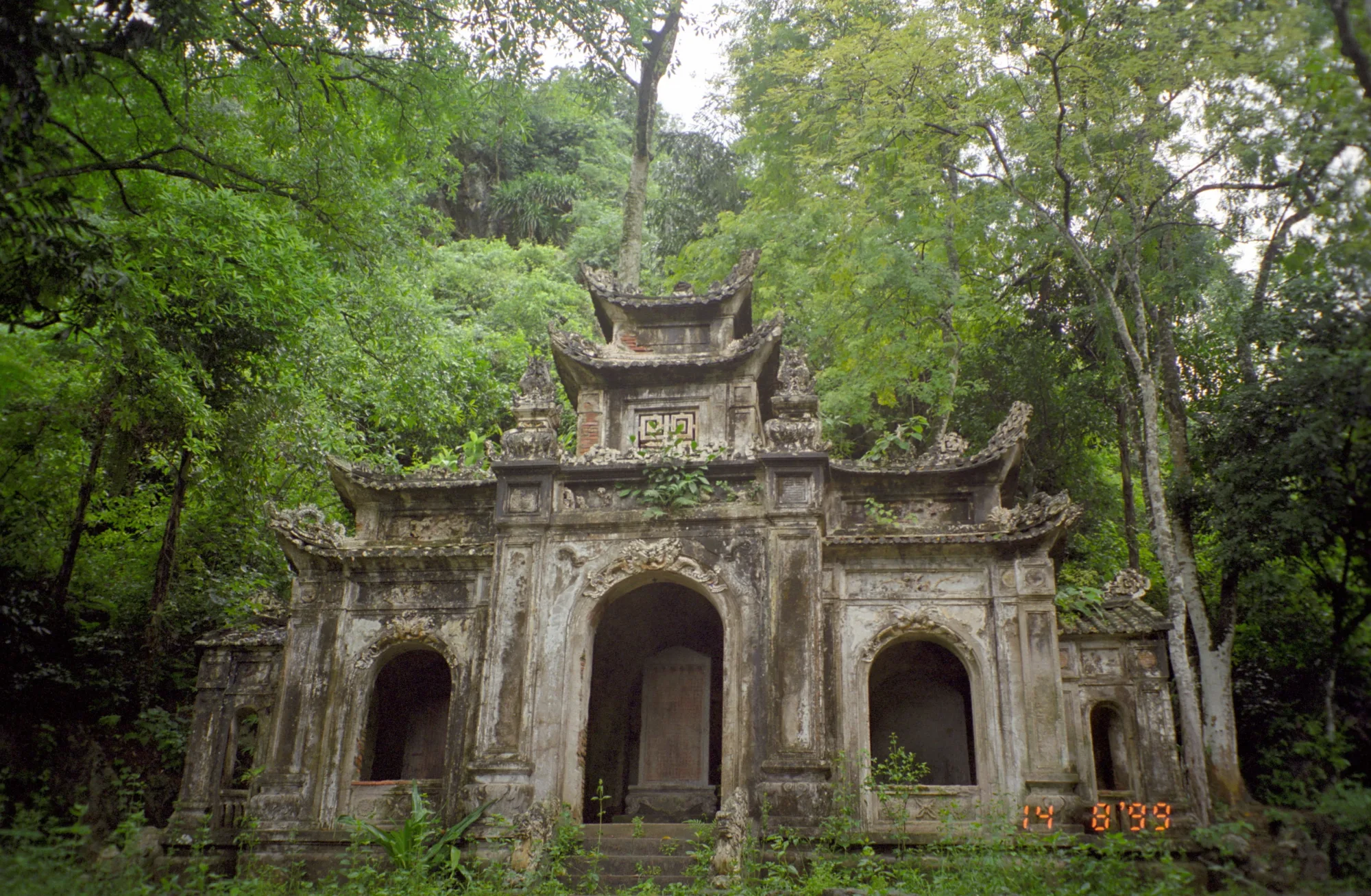
There is a saying known to every Vietnamese: however far a person goes, they must remember the day of remembrance of the Ancestors — the tenth day of the third lunar month. In 2027 the main day of the Hung Kings festival falls on April 16, and it has been a national day off since 2007. The festival takes place at the Hung Temple complex on Nghia Linh mountain in Phu Tho province, northwest of Hanoi, and lasts about a week. Millions of people come to honor the legendary founders of the Vietnamese nation: residents of the surrounding villages in magnificent costumes carry drums and gongs on palanquins to the main temple, bronze drums and “xoan” songs sound, and square and sticky rice cakes are brought. The festival is on UNESCO’s list of intangible cultural heritage. If you want to see not the tourist Vietnam but the living one — this is the place.
April — May: the Hue Festival, palace music on the bank of the Perfume River
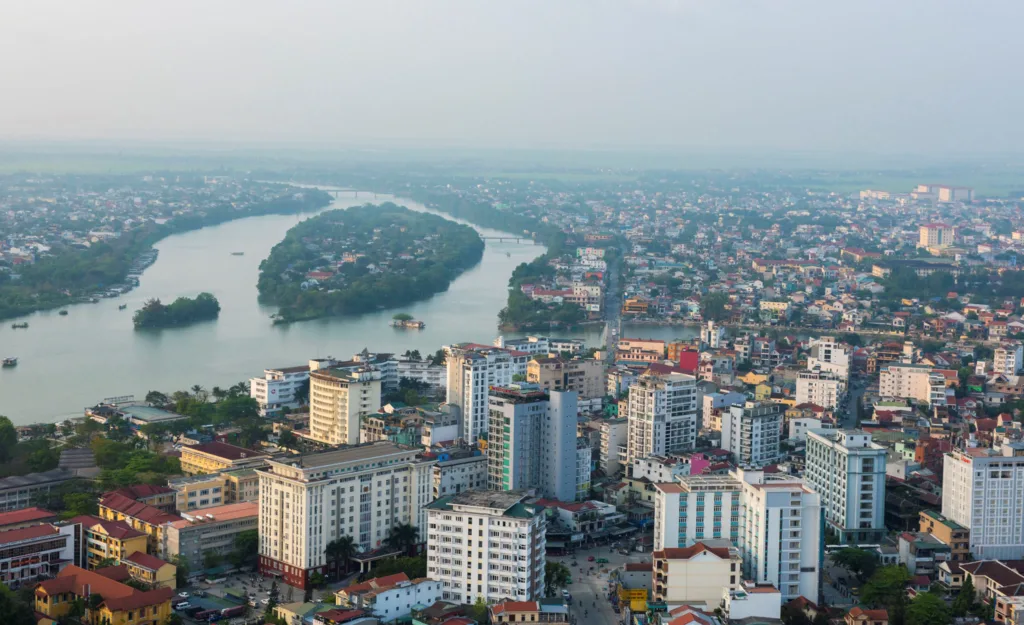
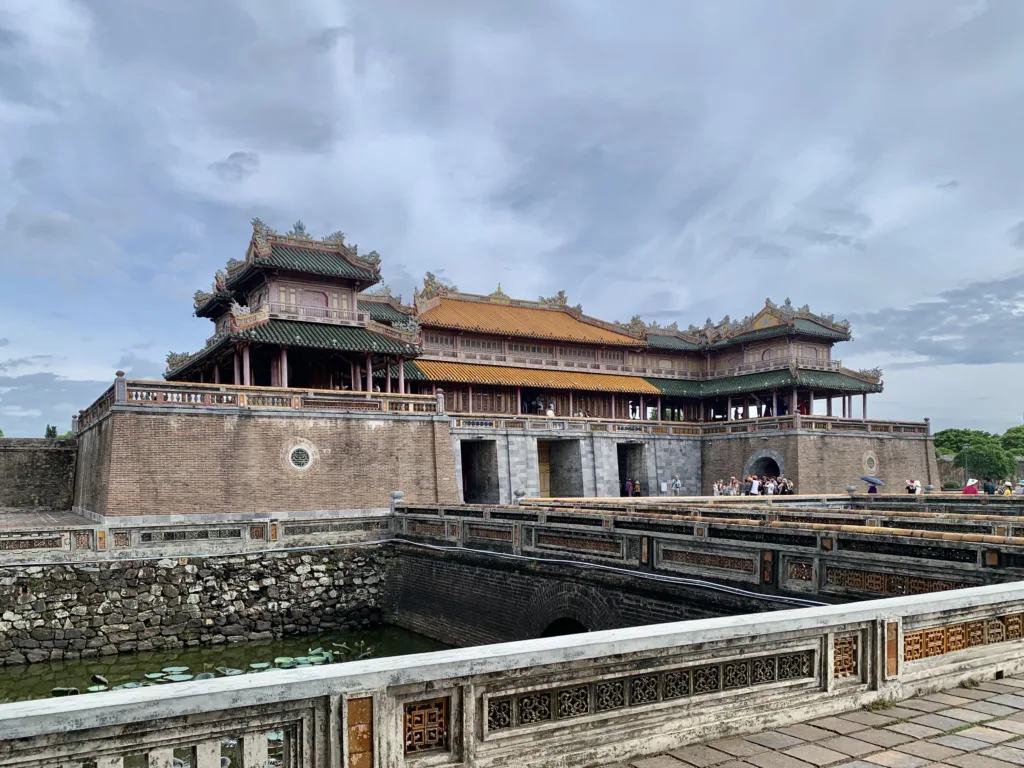
Hue is the former imperial capital of Vietnam, and once a year the city turns into a theater stage: palace ceremonies are recreated in the streets and on the grounds of the Imperial Citadel, court music sounds, and colorful processions and dances take place. The festival usually takes place in spring, in April or May, when it is not yet hot in Hue, but the exact dates for 2027 have not been announced. Allow at least two days for Hue: one for the festival, the second for the emperors’ tombs and an evening cruise on the Huong River. If you are going to Hue, also look at the guide to Hoi An nearby: these two cities are conveniently combined in one route.
June: the sea in Nha Trang and the sky in Da Nang
The Sea Festival in Nha Trang is held every two years and in 2027, according to preliminary data, falls on roughly June 3–9: concerts on the beach, parades, street shows and lots of street food on the embankment. It is a classic resort festival — light, noisy, without a complex religious program — ideal for those who come to Vietnam for the sea.
In summer Da Nang belongs to the sky. The international fireworks festival is one of the country’s brightest events: in 2026 it ran from May 30 to July 11, and in 2027 the schedule has not yet been announced, but the format will most likely be repeated. On the Han River embankment teams from different countries — in 2026 these were Italy, France, Germany, Japan, Australia, China, Portugal and Macao, plus two Vietnamese teams — compete in shows, and on Saturdays and Sundays thousands of people come out to watch the sky. Five qualifying evenings and a final — and the embankment with its illuminated bridges turns into a huge stage. Dragon boat races are also held nearby. A practical tip: places on the embankment are taken two to three hours ahead, and hotels with a river view are booked months ahead.
September: Tet Trung Thu and the city of lanterns
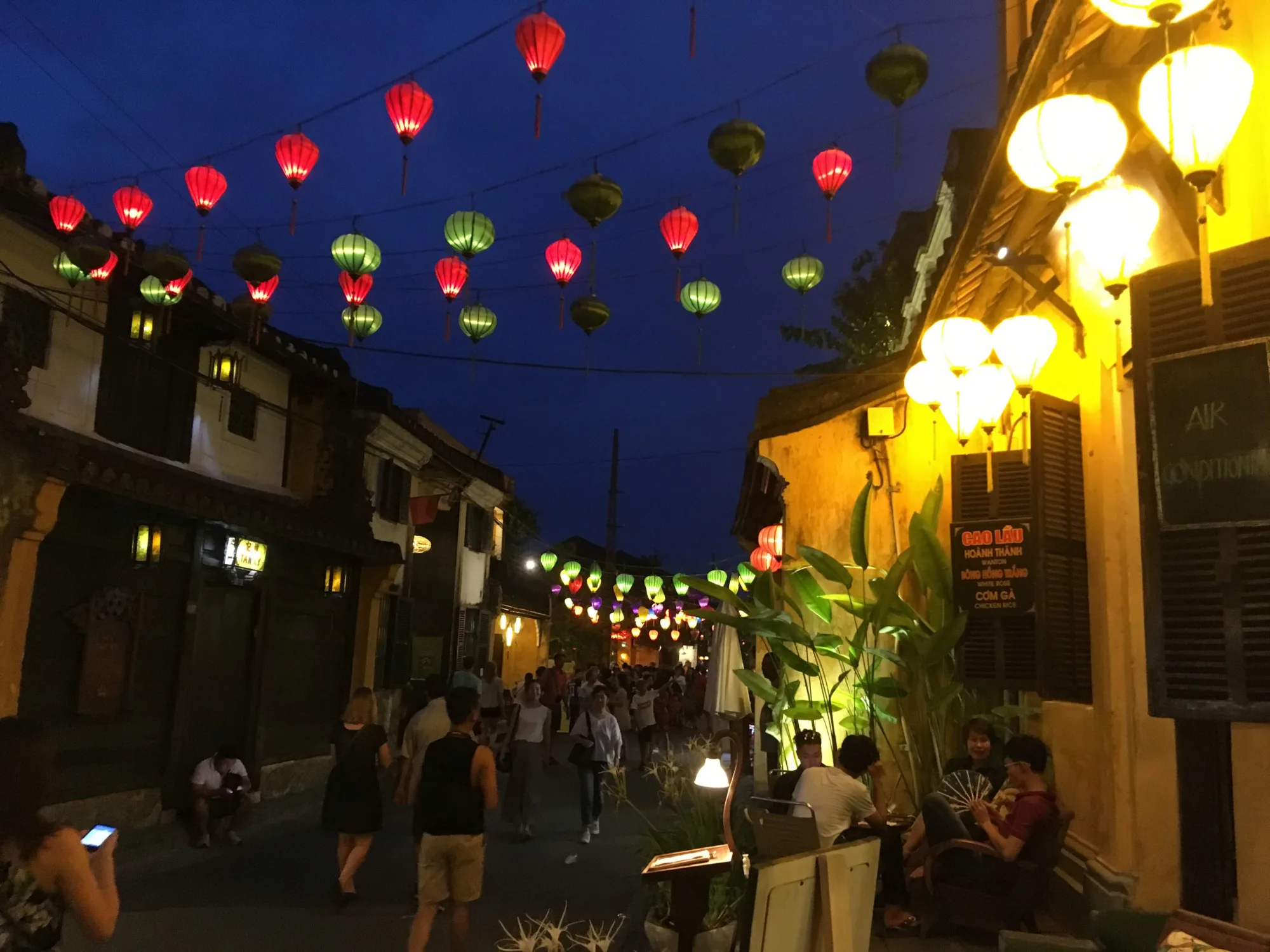
The Mid-Autumn Festival — Tet Trung Thu — falls on September 15, 2027. It is a children’s festival: at the full moon of the eighth lunar month children go out into the streets with paper lanterns in the shape of stars and fish, a lion dance goes through the streets, and “banh trung thu” mooncakes with a filling of lotus seeds and salted egg yolk appear on the tables. The festival is felt best in Hoi An, where even otherwise on every fourteenth night of the lunar month the city lights lanterns and sets candles floating down the river, and in Hanoi on Hang Ma Street, where lanterns are sold. How to spend a lantern night in Hoi An, where to buy a ticket and where to photograph the bridge from, we wrote about in detail in our guide to the lantern festival in Hoi An.
What to try: the taste of Vietnamese holidays
Every holiday in Vietnam has its own taste, and you can travel by the calendar almost as if by a menu. At Tet in the north comes banh chung — a dense square cake of sticky rice, pork fat and beans, wrapped in leaves and boiled for ten to twelve hours; in the south its cylindrical sibling is called banh tet. It is served with pickles, braised pork with eggs, bitter melon soup and “mut” — candied fruit and roots that guests are treated to along with tea. Sweets on the table are an obligatory detail: over a cup of tea with mut and sunflower seeds the lion’s share of festive conversation takes place.
The Mid-Autumn Festival is the time of “banh trung thu” mooncakes: round or square, with a filling of lotus seeds, green beans, coconut and salted egg yolk, which colleagues, neighbors and relatives give each other. In summer, at the fireworks in Da Nang and at the sea festival in Nha Trang, the main food is street food: grilled seafood, banh xeo pancakes, fresh oysters and fresh coconut. Tasting is best done unhurriedly: in Vietnam it is believed that the best guide is a local passer-by who will tell you where the tastiest broth is being cooked today.
If you are invited to visit during Tet — accept the invitation: it is a great honor. Bring a small gift (a box of fruit or sweets, not alcohol without occasion), take off your shoes at the door, don’t refuse the treats and be sure to thank your hosts. Red envelopes are given to children and older relatives; for a foreigner it is enough to warmly wish them a happy New Year — “Chuc mung nam moi”. And don’t be afraid of skipping the queue at a tourist attraction: the main thing you get at Tet is not photographs but the impression of a country that rejoices in earnest.
Three routes for Vietnam’s 2027 holidays
“Tet in two cities” (8–10 days). Hanoi a week before Tet — the Hang Luoc market, flower bazaars, peach on every corner; then a flight to Ho Chi Minh City for the flower street Nguyen Hue. Important: buy tickets for these dates in advance and bear in mind that Tet itself is a time of quiet, not of shopping trips.
“Spring: Phu Tho — Hue — Hoi An” (8–10 days). First on April 16 at the Hung temples in Phu Tho, then Hue for the festival (check the dates) and Hoi An with the Hanoi north if time allows. The most “cultural” route of the year.
“Summer: Da Nang and Nha Trang” (7–9 days). The fireworks in Da Nang in June–July and the sea in Nha Trang in early June (if the festival dates coincide). An ideal option for families and for those who come for the beach.
Practical tips
Weather. In February it is cool and damp in the north (10–15 degrees) and hot and dry in the south, so take layered clothing. In summer it rains, especially in the center of the country, so a raincoat and a waterproof cover will come in handy. Money. Keep cash: small cafés and markets do not accept cards everywhere, and during Tet ATMs sometimes run empty. Etiquette. In temples shoulders and knees are covered and shoes are removed; a red envelope is treated with respect, and guests at Tet customarily bring a small gift — fruit or sweets. And leave a free day in your route: at Vietnamese festivals the warmest encounters happen where they were not planned.
FAQ
When is Tet in 2027? February 6 — the first day of the lunar New Year (the Year of the Goat); the official days off last February 3–11.
Is it worth going to Vietnam for Tet? It is, if you are ready for closed shops and expensive accommodation but want to see the country’s main holiday; buy tickets and book in advance.
What is “xong dat”? A custom: the first guest to cross the threshold in the new year determines the luck of the house, so hosts choose the person in advance.
When is Hung Kings’ Day in 2027? The main day is April 16, a national day off.
When is Tet Trung Thu in 2027? September 15; in Hoi An and Hanoi it is especially beautiful on those days.
When will the dates of the Hue Festival and the Da Nang fireworks be announced? Closer to the season: check the official tourism websites.
The dates and programs of many festivals are tied to the lunar calendar and may change — check the organizers’ official websites.