The Legend Behind the Park’s Name
The word “dedari” translates from Balinese as “celestial nymph,” and the park’s name directly refers to a local legend about the wise man Resi Markande, who is said to have witnessed nymphs descending to the Ayung River for bathing. This story is part of broader Balinese mythology concerning the spiritual connection of flowing water with divine beings, and the entire conceptual design of the park is built around visualizing this legend as a sculptural installation, rather than just a collection of random statues.
Fifty Sculptures of Varying Scale
A total of 50 nymph sculptures are installed in the park: four giant figures around 10 meters tall with intricate detailing depicting full-sized celestial nymphs, another four medium-sized statues standing 5–6 meters high, and approximately 42 smaller sculptures arranged along the Ayung River, creating an effect of a procession of spirits descending to the water. The scale and number of detailed figures is rare for Bali, where similar sculptural parks usually limit themselves to one or two large statues as a central feature.
Free Admission – a Rarity for This Scale
Unlike most of Bali’s large art parks, which charge an entrance fee, Taman Dedari doesn’t require a ticket at all—visitors simply need to order food or drinks from the on-site restaurant to enter and view all the sculptures. This model makes the park particularly attractive as an evening stroll without significant expense, and also explains why the place quickly gained popularity with local and regional audiences, who are less inclined to spend money on entrance fees for a single photo.
Location and Getting There
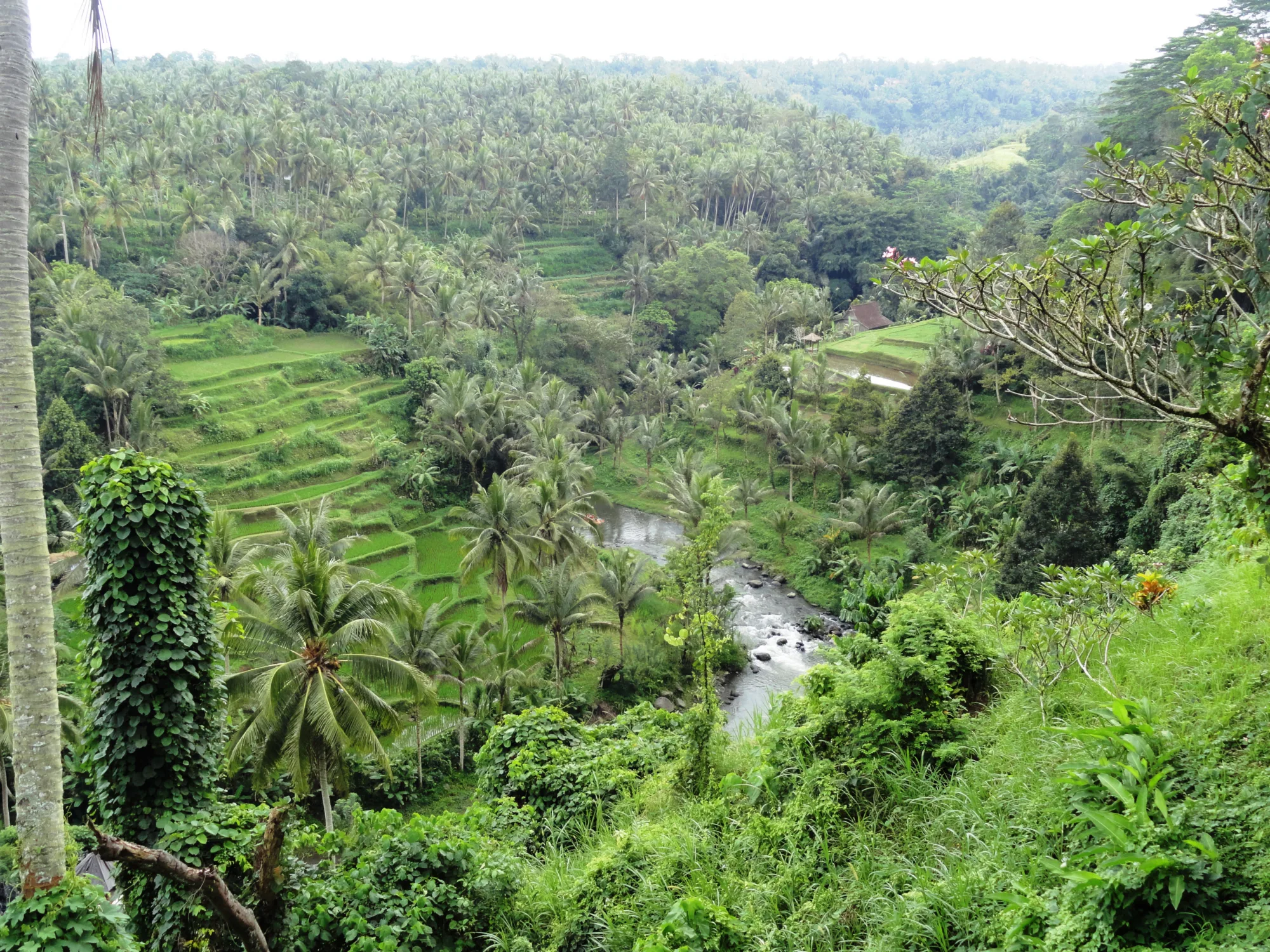
The park is located in Kedewatan village, Ubud District, Gianyar Regency—an area known for its hilly terrain and views of the Ayung River valley, also popular among rafting enthusiasts. The location makes Taman Dedari a convenient addition to a route through northern Ubud, including natural and spiritual attractions in the region, without needing to make a separate trip towards the southern coast of the island.
Infrastructure: Restaurants, Parking, Temple
The park features ample parking, restrooms, a prayer pavilion (musolla), and its own temple—a detail that highlights that the place combines tourist and religious functions, rather than existing solely for the entertainment of visitors. The on-site restaurant offers a diverse menu, allowing you to combine viewing the sculptures with a full dinner or lunch, justifying the effectively free entrance.
Daytime and Evening Visits — Two Different Impressions
The park is open from 10:00 AM to 11:00 PM, allowing for a fundamentally different visit format. During the day, the statues are visible in all their architectural details against the backdrop of the valley’s greenery, while in the evening decorative lighting is switched on, transforming the sculptures and creating a noticeably more mystical, “magical” atmosphere that fully reveals the legend of nymphs descending to the river in darkness. Many visitors, judging by local selections, prefer an evening visit for this contrast in lighting.
Practical Checklist
- 50 Dedari nymph sculptures, including 4 giant figures approximately 10 meters high along the Ayung River.
- Entrance is free—you only pay for food and drinks at the on-site restaurant.
- Located in Kedewatan village, Ubud District, Gianyar Regency.
- Open from 10:00 AM to 11:00 PM—decorative lighting of the statues is switched on in the evening.
- The park features parking, restrooms, a prayer pavilion, and its own temple.
Frequently Asked Questions
How much does it cost to enter Taman Dedari?
Entry is free; you only pay for food and drinks at the restaurant on site.
How many statues are in the park?
50 Dedari nymph sculptures: 4 giant ones, about 10 meters high, 4 medium-sized ones, 5–6 meters high, and around 42 smaller figures.
Is it better to visit during the day or evening?
Both times offer different experiences: you can see the architectural details of the statues during the day, while in the evening the lighting is switched on for a more mystical atmosphere.
How far is this from Ubud center?
The park is located in Kedewatan village, in the northern part of Ubud regency, in the Ayung River valley area.
What’s Next
Check out the guide to Hidden Canyon and Kanto Lampo and explore Nuanu Creative City for planning your route around the Ubud region.
Restaurant opening hours and menus are subject to change – check the latest information before visiting.