The Mekong's Irrawaddy dolphins — fewer than 90 individuals in the world. How to see them near Kampi village outside Kratie: prices for a boat and a kayak, the best season and an honest talk about the ethics of watching.
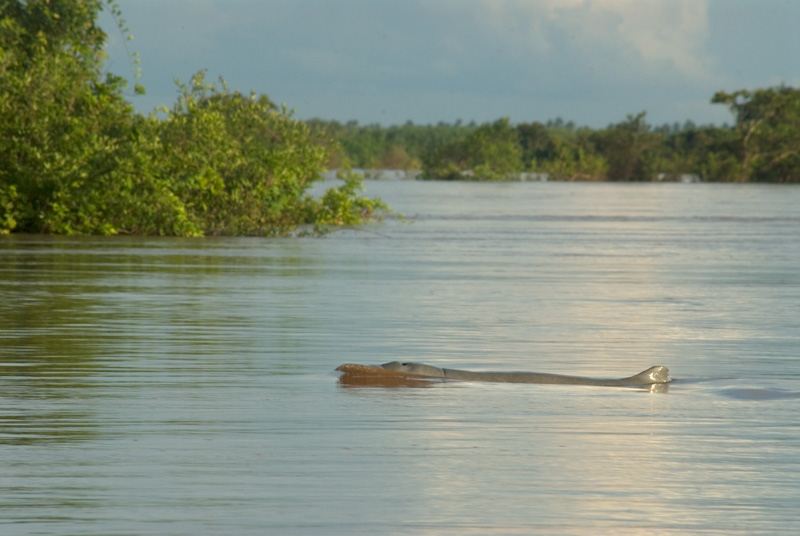
Fewer than ninety individuals remain in the whole world — roughly as many as fit into one metro car at rush hour. The Mekong’s Irrawaddy dolphin has no sharp “beak” like its marine relatives from documentaries: a round head, a short body, an almost shy manner of showing on the surface for literally a second — and it is precisely this rarity that makes a half-hour boat trip on the river near the Cambodian town of Kratie more each year not an ordinary entertainment for tourists but a chance to see what the next generation of travellers may no longer find.
From Laos to the delta — now only 120 kilometres of river
Irrawaddy dolphins once inhabited a huge stretch of the Mekong — from the Laos–Cambodia border, through Tonle Sap Lake, all the way to the delta in Vietnam. Today the whole range has narrowed to a 120-kilometre stretch of river — from the Friendship Bridge on the border with Laos in Stung Treng Province to the town of Kratie — and the population itself was recognised by the International Union for Conservation of Nature as critically endangered back in 2004. The causes of the decline are usual for large freshwater mammals in densely populated river basins: fishing nets in which dolphins get entangled and die, electrofishing, dams upstream that change the river regime, and general water pollution.
There is also an encouraging part of the story. According to the latest WWF data, the survival rate of calves to adulthood is 4.22%, the highest in the last decade of observations, and the population size itself has stabilised in recent years after decades of rapid decline. This is thanks to the ban on gillnets in specially designated “dolphin zones” and protection programmes involving local communities, which practically any guide in Kampi will tell you about — a rare case where conservation work on the Mekong has really begun to give a measurable result.
Kampi: the village that became the observation headquarters
The main point for meeting the dolphins is Kampi village, about 15 kilometres north of the town of Kratie upstream on the Mekong. Small boats depart from here, usually designed for one group or family and not crammed full of tourists — in an hour (in the dry season, November–May) or an hour and a half (in the rainy season, when the river is wider and the dolphins stay farther from the shore) the boatman takes guests past several known pools where the dolphins regularly surface for air. The ticket costs 9–10 dollars per person; for those who prefer a slower and quieter format, kayak tours along the flooded forest and sandbanks also operate — more expensive (about 50 dollars), but without the noise of an engine.
When to go and what to realistically expect
The dry season, November to May, is unambiguously the best time: the water level is lower, the dolphins concentrate in a limited number of pools rather than being scattered across the wide high water of the rainy season, and the probability of seeing them on one trip reaches almost 95%. Late afternoon is considered the most active period of the day. It is worth setting realistic expectations: Irrawaddy dolphins do not leap spectacularly out of the water and don’t swim up to the boat like the bottlenose dolphins of shows — a typical sighting looks like a brief appearance of a rounded back and a splash at the breath a couple of dozen metres from the side, sometimes several times in a row, sometimes just once. It is this restraint, not a circus trick, that is a real, unprocessed contact with a wild animal on the brink of extinction.
FAQ
Is seeing dolphins guaranteed? No, but in the dry season the probability is high — about 95% by local operators’ experience; in the rainy season the chances are lower and the trip itself is longer.
Is it ethical at all to go and watch them if the species is so rare? Organised boat tours from Kampi operate within officially protected “dolphin zones” with limits on the number and speed of boats precisely in order to reduce disturbance to the animals — unlike uncontrolled fishing, this format of observation is considered part of, not a threat to, the conservation model.
How many dolphins are left in all? By the latest estimates — about 89–92 adult individuals across the whole world range of the species in the Mekong, with signs of the population stabilising after decades of decline.
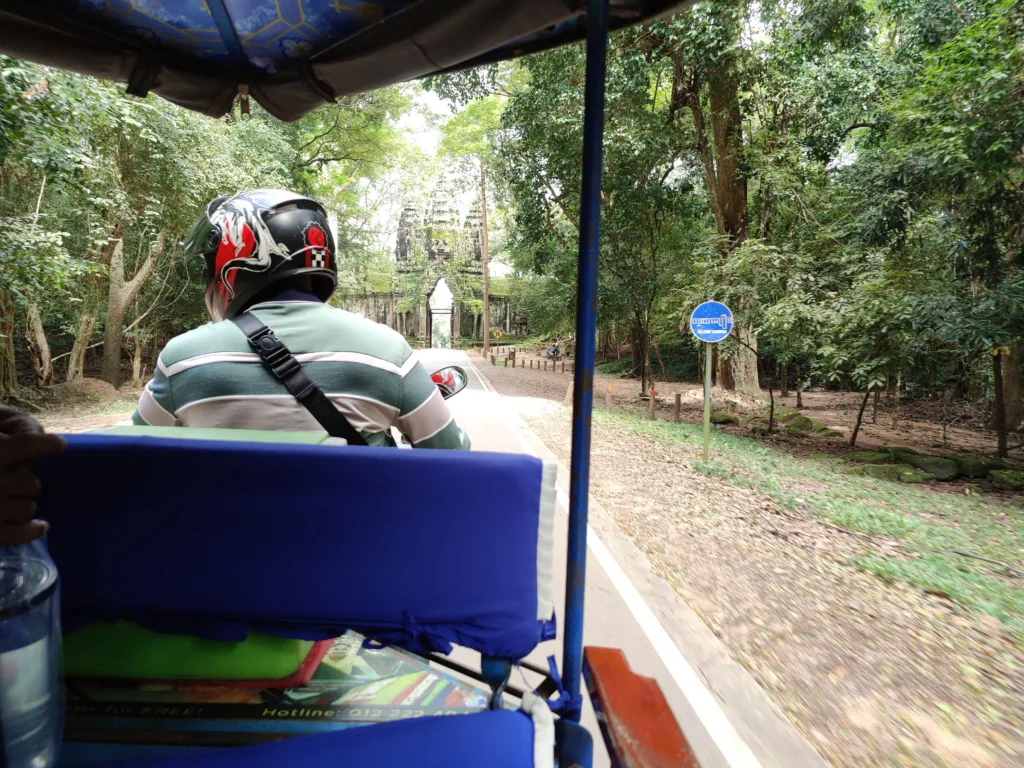
How do I get to Kratie? By bus or car from Phnom Penh (about 3–4 hours) or from Siem Reap, and from the town of Kratie itself to Kampi village is a short trip by tuk-tuk or motorbike taxi, about 15 km.
Is it worth choosing a kayak instead of a motorboat? If silence and a slow pace matter — yes, a kayak tour is more expensive but completely removes the engine noise, which can scare animals and interfere with observation on shorter motorboat tours.
Prices and tour conditions may change — check current information before the trip.