How the Khmer save: life hacks on food, transport, the temples of Angkor, shopping, connectivity and housing in Cambodia, including the riel-dollar exchange trap — tips from locals.
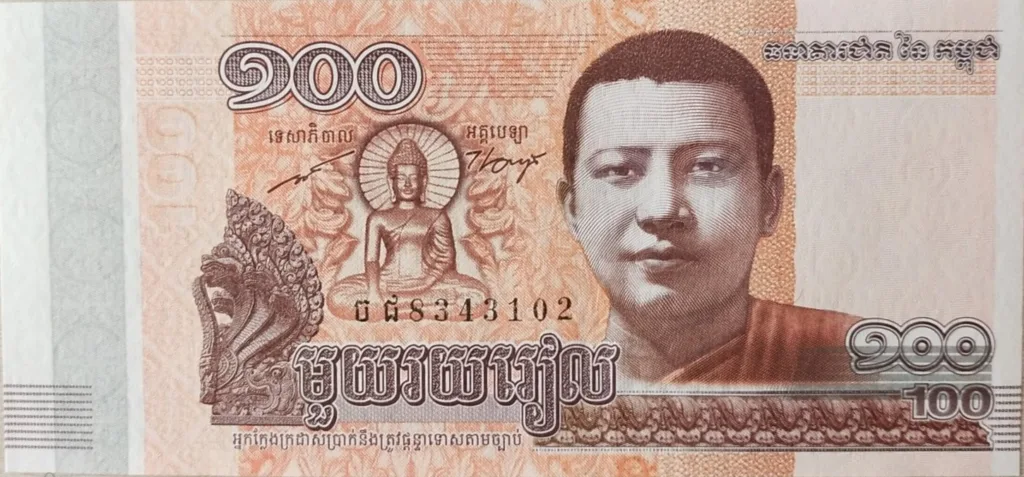
Money in Cambodia works in an unusual way: the official currency is the riel, but the country is really run by the US dollar — it is used to pay for housing, tours and almost everything that costs more than a couple of coins. The riel is used here mainly for change on small sums, and it is on this small change that many tourists unwittingly lose money, not understanding the unfavourable exchange rate at the till. Locals and tuk-tuk drivers count in two currencies at once, and a foreigner who is unaware of this system pays more at almost every step. In this article: specific life hacks used by the Khmer themselves and experienced travellers — how to save on housing, food, transport, temple excursions, shopping and connectivity in Cambodia.
- Currency: the country effectively runs on two currencies — the dollar for large spending, the riel for change; the exchange rate at the till is often unfavourable.
- Food: a plate at a local market is 1.5–3 dollars versus 5–8 in a café for tourists.
- Transport: a tuk-tuk for the whole day for the temples of Angkor is 15–20 dollars, cheaper than individual rides.
- Connectivity: a local SIM from a roadside shop is 3–5 dollars versus 8–10 at the airport.
- Tours: the Angkor ticket is cheaper when bought in advance online and without intermediaries.
- The main principle: count your change in riel carefully — that is where money is most often lost.
The dollar, the riel and the trap at the till
Cambodia is one of the few countries in the world where a foreign currency de facto replaces the country’s own in everyday transactions. Housing rental, tours and entry tickets to Angkor are almost always quoted and paid in dollars, while the riel is used mainly for change on sums of less than a dollar. The problem is that the rate at which sellers convert dollars to riel at the till is almost always rounded against the buyer — usually 4,000 riel to the dollar, whereas the official rate fluctuates around 4,100. On a single purchase the difference is unnoticeable, but over a trip these small losses add up to a noticeable sum. Locals, who count in both currencies daily, know the exact current rate and notice when they are short-changed; a tourist should keep at least an approximate benchmark in mind and not be shy about recounting change.
Food: markets versus cafés with laminated menus
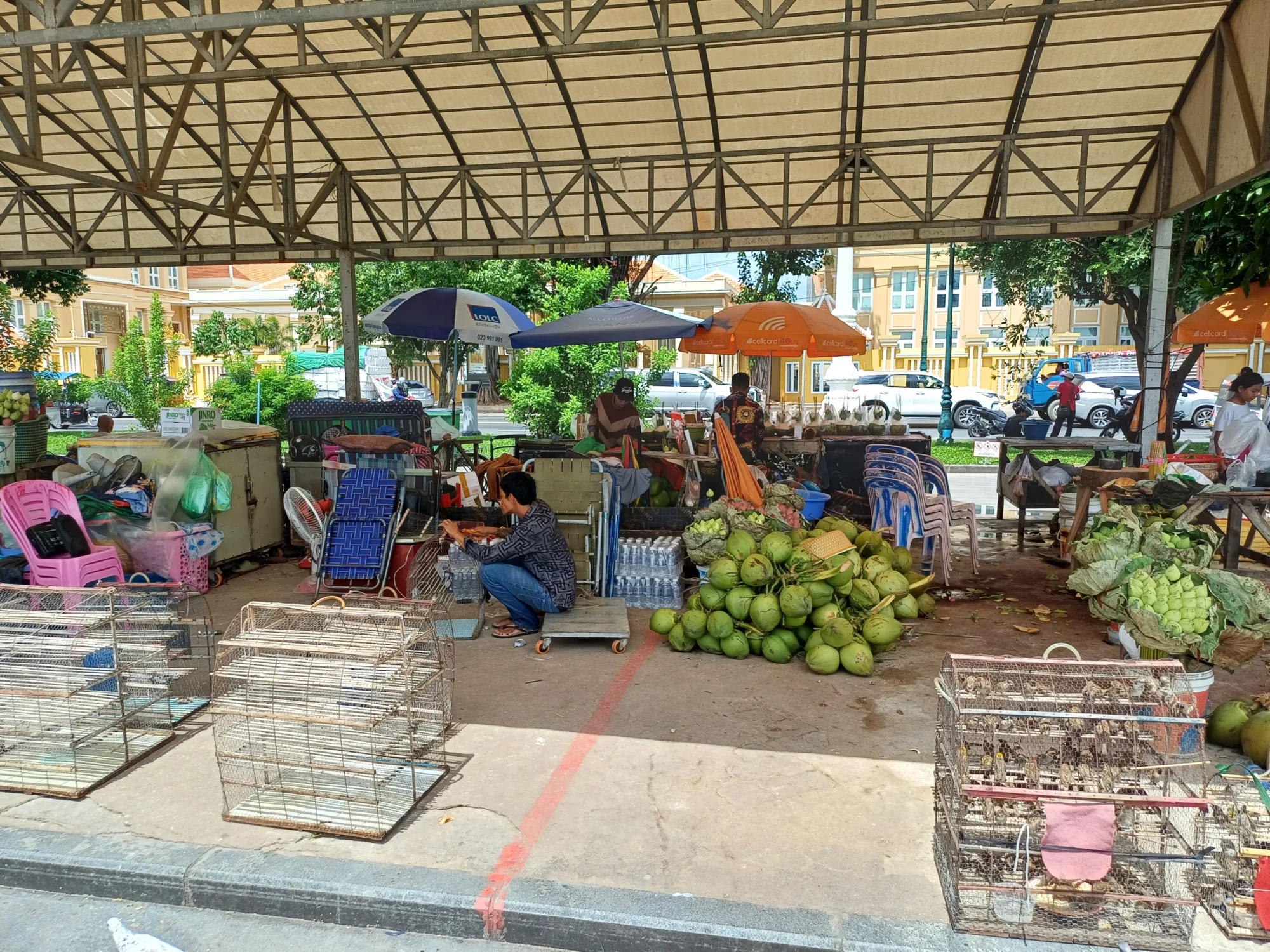
As in the neighbouring countries, the most reliable indicator of a fair price is a queue of local people. A plate of noodles, rice with meat or samlor korko at a market costs 1.5–3 dollars, while in a café with an English menu and photos of dishes it costs 5–8 dollars for a similar portion. The difference does not always mean deception: a café has higher rent, air conditioning and English-speaking staff, but if the goal is to save, look for places without a sign for foreigners. In Phnom Penh and Siem Reap there are separate markets oriented to local people a couple of blocks from tourist streets — prices there are noticeably lower than at central markets like Psar Thmei or in the night rows of Siem Reap that tourists specially go to.
Transport: a tuk-tuk for the day and apps instead of street haggling
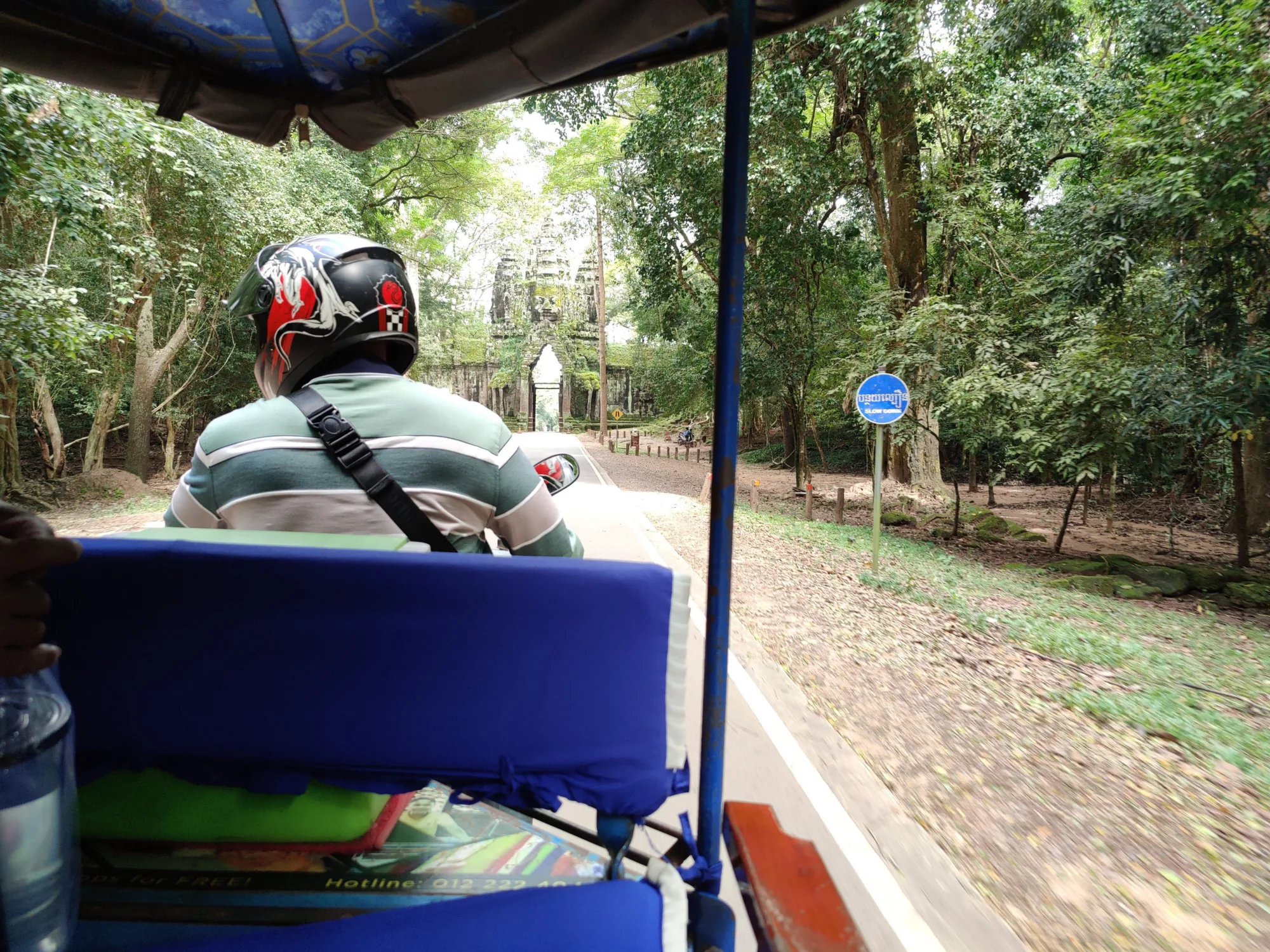
The main Cambodian life hack for seeing the temples is to agree with a tuk-tuk driver for the whole day rather than paying for rides one by one. The standard price of such a hire in Siem Reap is 15–20 dollars for the whole day with waiting at each temple, and it is better value than paying for individual transfers between complexes. The administrator of your guesthouse almost always knows a trusted driver and can arrange a fair price — this works better than accepting the first driver who offers his services on the street by the hotel. In the cities local apps for ordering tuk-tuks and motorbike taxis such as PassApp and the international Grab operate: they give a fixed price before the ride and spare you haggling, especially in the evening, when street drivers raise the price for foreigners several times over.
Angkor tickets and excursions: how not to overpay intermediaries
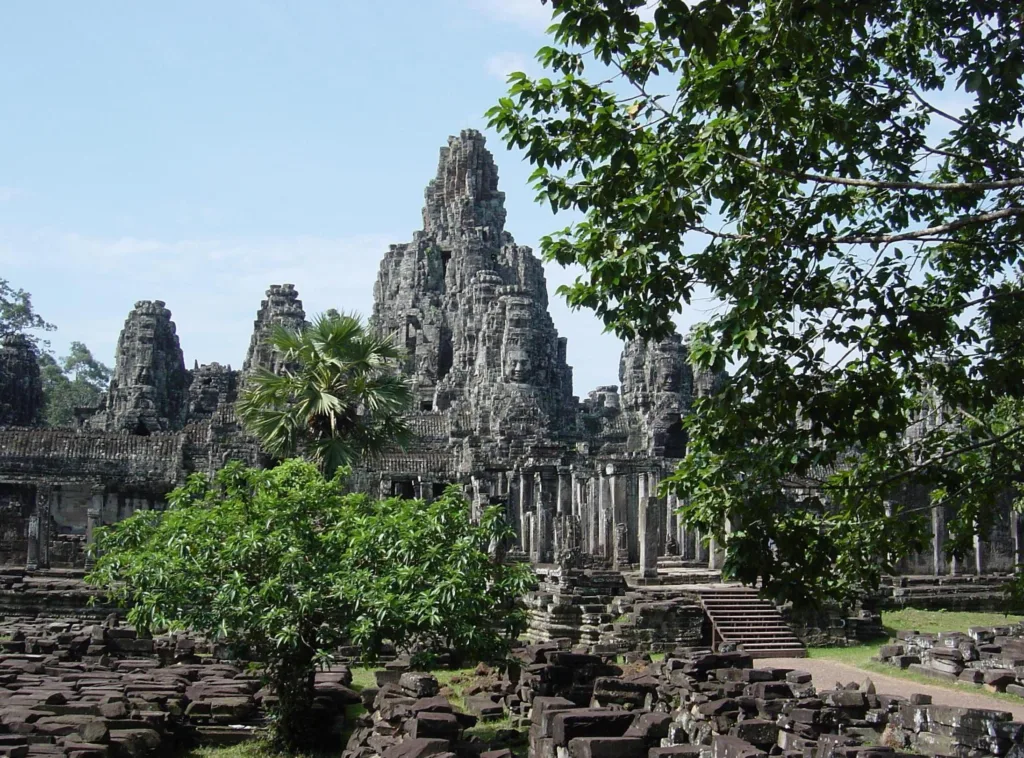
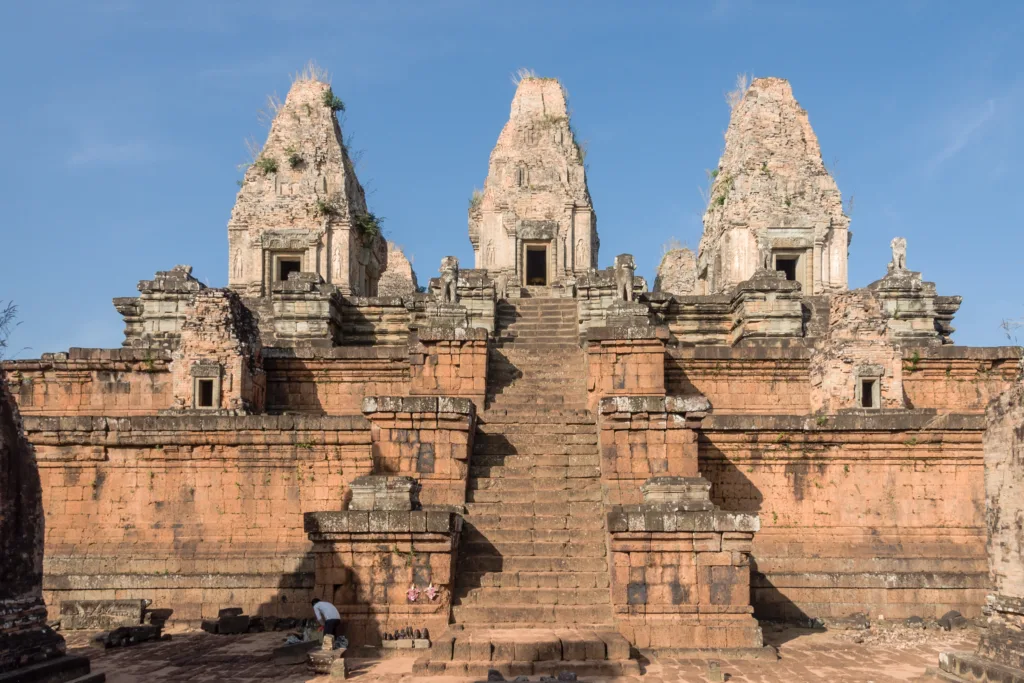
The entrance ticket to the Angkor temple archipelago can and should be bought directly at the official ticket office or on the official website — tickets offered through a hotel or travel agency with a markup cost more than the same price with no additional benefit. The ticket offices work from early morning, and if you want to catch the sunrise at Angkor Wat, get there in advance: buying a ticket takes time, and the queue before sunrise is real. For less well-known temples — Beng Mealea, Koh Ker — entry is paid separately and on the spot, without prior booking, which also saves compared with tour packages in which these temples are included with a markup. For more on tickets and routes see our articles Angkor: tickets and temples and Beng Mealea, Koh Ker and Banteay Srei.
Housing: a direct agreement with a guesthouse
Guesthouses in Siem Reap and Phnom Penh are often family businesses, and owners are happy to lower the price for a direct booking via WhatsApp or email, bypassing booking sites with their 15–20% commission. If you are already in the country and planning the next city, ask the administrator of your current guesthouse for a recommendation — Cambodian owners of small hotels often know each other and will suggest a fair price at your destination. For a booking of a week or longer a long-stay discount is almost never shown on the site but applies practically everywhere — you just need to ask directly.
Shopping: markets without price tags and borders with Thailand
At markets without price tags — Psar Thmei and Psar Chas in Phnom Penh, the night markets of Siem Reap — the starting price for a foreigner is two to three times higher than what is named to a local buyer. Haggling politely and with a smile is normal practice; the final price usually comes to half to two thirds of the initially named one. If your route crosses the border with Thailand, note that some goods in the Thai border towns are cheaper than Cambodian analogues, and experienced travellers sometimes stock up on purpose on the way. For the specifics of crossing the border see the article on the Siem Reap — Bangkok border.
Connectivity: a local SIM and mobile internet
SIM card counters at the Phnom Penh and Siem Reap airports charge one and a half to two times more than the same card in an ordinary mobile shop in the city. Registration takes five minutes with a passport, and a week’s package with internet costs 3–5 dollars versus 8–10 at the airport. The main operators — Cellcard, Smart and Metfone — sell tourist SIM packages in almost every roadside shop, and the price is practically the same at all of them, so there is no need to look specially for the “best offer” — it is enough not to buy the card at the airport.
Five rules used by the Khmer themselves
Check your change in riel. The rate at the till is often rounded against you — a small loss on every transaction adds up to a noticeable sum over a trip.
Agree on a tuk-tuk price for the whole day. It is better value than individual rides between temples and sights.
Buy Angkor tickets directly. A markup through a hotel or agency gives no additional benefit.
Ask your guesthouse for a recommendation. It works both for housing in the next city and for trusted drivers.
Don’t buy a SIM card at the airport. The difference from a city shop is one and a half to two times for the same package.
Apps and messengers the Khmer use
Grab works in Phnom Penh and Siem Reap and gives a fixed price before the ride, but the local app PassApp often turns out cheaper on short city routes — comparing both before ordering takes a few seconds and can save a couple of dollars. For food delivery in Phnom Penh Nham24 and Grab Food are used, where discount coupons regularly appear. For communication and arrangements about housing directly, Cambodians, like the Vietnamese, are switching more and more to Telegram and WhatsApp — many small guesthouses list a number for exactly these messengers on their social media pages, and writing there directly is often better value than booking through an aggregator.
Neighbouring borders: where locals stock up
Cambodia borders Thailand and Vietnam, and residents of border towns have long been used to crossing the border for shopping. In Poipet and Koh Kong many everyday goods — from household chemicals to clothing — are cheaper to bring from Thailand than to buy locally, and local people do this regularly. For a tourist this is not always practical because of visa formalities with repeated crossings, but if your route already involves a land crossing between countries, it is sensible to buy what you need on the way rather than in the tourist shops of Siem Reap or Phnom Penh.
Sugarcane and street drinks: the price of a local treat
Sugarcane juice, freshly pressed right on the cart, is one of the cheapest and most refreshing drinks in the heat, and usually costs 0.5–1 dollar from street sellers, who are easy to recognise by the hand press for cane. In a café for tourists a similar drink served with ice in a pretty glass can cost three times as much. The same goes for coconut water: from street sellers with a cart it costs cents, while in restaurants at major sights it is a dollar or more for the same coconut. The difference is almost always not in quality but in the markup for the location of the point of sale.
Medicine: state and private options
Private clinics for foreigners in Phnom Penh and Siem Reap cost much more than similar services in clinics oriented to the local population, but the quality and equipment outside the capital may be noticeably inferior. A sensible compromise used by many long-term expats is to go to trusted private clinics for an initial consultation and simple cases, and to deal with serious situations through insurance with evacuation to Bangkok, where international-level medicine costs comparably or even less than in expensive private clinics in Phnom Penh. Always carry a copy of your insurance policy and a list of contacts in case of an emergency.
What even experienced travellers often forget
Insurance rarely makes it into the daily budget, but in the event of an injury or health problems in a country with poorly developed private medicine outside the capital, its absence costs far more than all the savings on transport. Some areas of Cambodia, especially far from tourist routes, still contain minefields — you must walk strictly on well-trodden paths, and we wrote about this in detail in the article on safety in Cambodia. The deposit for a motorbike rental is sometimes not returned in full — photograph the vehicle before and after rental. And finally, cash dollars must be carried in perfect condition: banks, exchangers and even some sellers in Cambodia may refuse to accept crumpled, torn or marked notes — a local peculiarity that few warn about in advance.
Tips and small expenses that add up
In Cambodia tipping is not mandatory, but in tourist venues it is increasingly tacitly expected, and a service charge is sometimes added to the bill automatically — check the receipt so as not to pay twice. Small expenses such as toilet fees at temples (usually a quarter of a dollar) or bottled water at the entrance to sights seem insignificant, but over a multi-day trip through several temple complexes they add up to a sum comparable to one proper lunch. Bring your own water bottle and fill it at the hotel — this both saves money and reduces the amount of plastic, which is already a problem for local waste-recycling infrastructure.
Long-term stay: Siem Reap as a base
If you plan to stay in Cambodia for a month or longer, Siem Reap remains one of the most affordable cities in the region for this format: a monthly rent of a room or studio, inexpensive food at local markets and developed infrastructure for short- and long-term guests make it a convenient base. A detailed breakdown of a monthly budget is in the article on the monthly budget in Siem Reap. For moving around the country see the article on transport in Cambodia, and for the seasonality of prices Cambodia’s seasons.
FAQ
Which currency is best to pay in Cambodia? US dollars for large spending; the riel is used mainly for change, and its rate at the till is worth checking.
How much does a tuk-tuk for a day to the temples of Angkor cost? Usually 15–20 dollars with waiting at each temple — cheaper than individual rides.
Where is it better to buy a SIM card? In a city telecom shop rather than at the airport — a difference of one and a half to two times.
Is it worth buying an Angkor ticket through an agency? No, a direct purchase at the ticket office or on the official site is no more expensive and carries no commission.
Do I need to haggle at markets? Yes, the starting price for a foreigner is usually two to three times too high.
What is most often forgotten in the budget? Insurance, a motorbike deposit and a reserve of clean, undamaged dollar notes.
Prices and rules change depending on the season and currency rates — check current information on the spot.