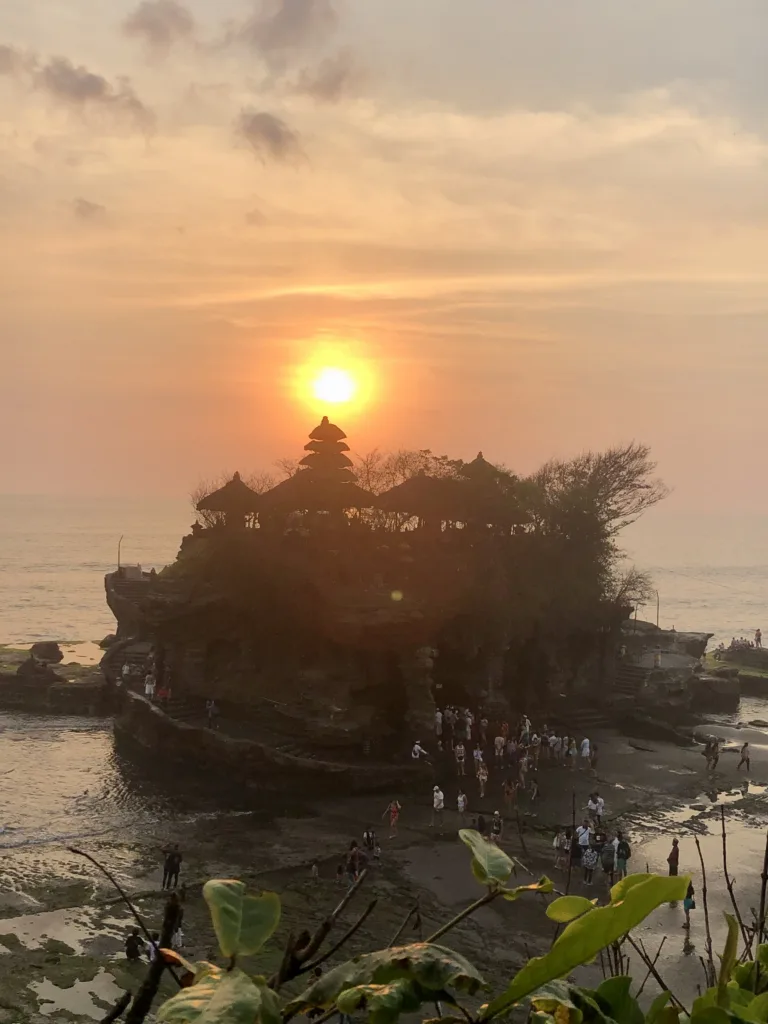
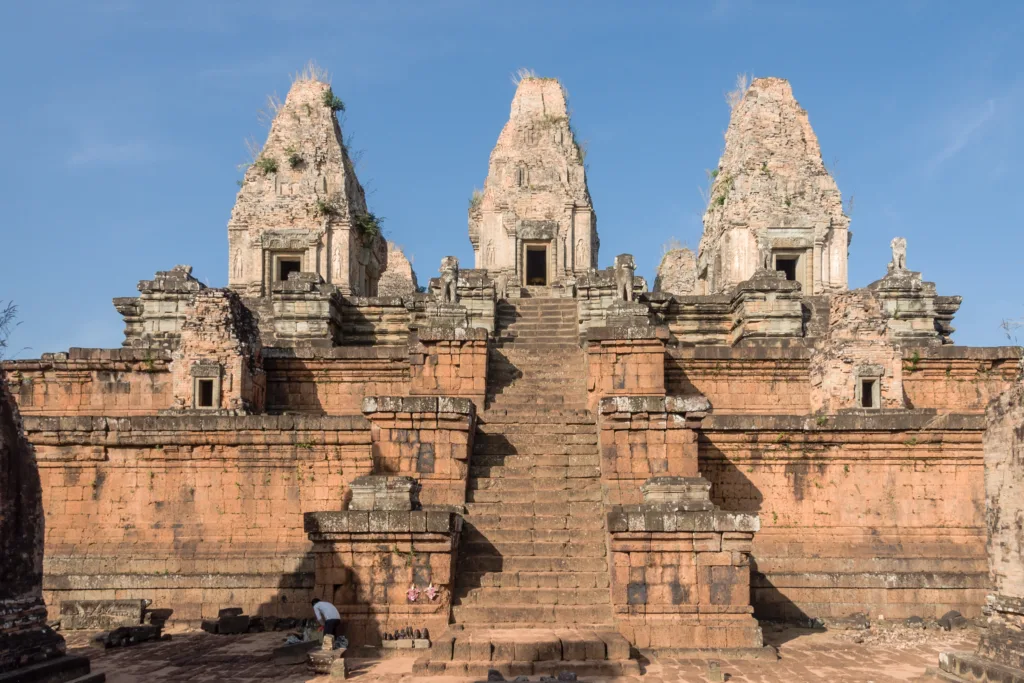
Cambodia's most expensive hotels: Shinta Mani Wild, Song Saa, Amansara, Zannier Phum Baitang, Rosewood Phnom Penh and Raffles — nightly prices, character and guest reviews.
Cambodia is rarely associated with luxury. Rather with a backpack, a tuk-tuk and a glass of iced coffee for a dollar. But it is here, in a country that until recently lacked roads, that some of Asia’s most unusual hotels have appeared: a tented camp in a national park to which guests are delivered by zipline over a river; a private island with a coral reserve; a former royal guesthouse that became a refuge for visitors to Angkor; a skyscraper in Phnom Penh where the pool faces the Mekong. Prices match the exclusivity: one night in the most expensive costs more than three hundred thousand roubles, and in the rest from thirty to over a hundred thousand. What stands behind these figures? How does the Shinta Mani Wild tented camp differ from Song Saa island, why go to Amansara and Zannier Phum Baitang, and why are the colonial Raffles in Phnom Penh and Siem Reap also about luxury, just a different kind? This article covers Cambodia’s most expensive hotels according to Trip.com data at the time of collection: nightly prices, the character of each place, real guest reviews and advice on choosing.
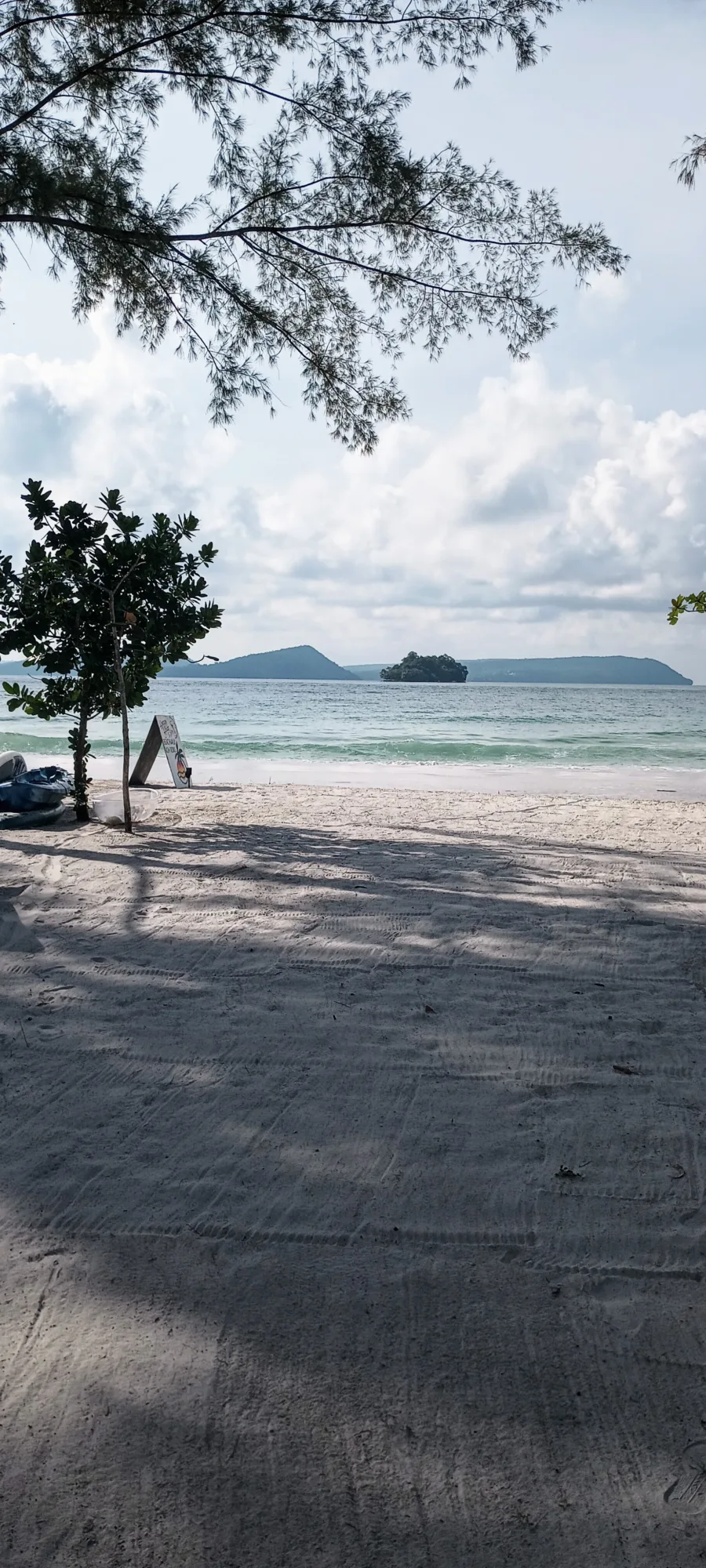
- The most expensive: Shinta Mani Wild — about 341 thousand ₽ a night, but it is an “all inclusive” format with accommodation, meals, drinks and treatments.
- Next: Song Saa Private Island (about 102 thousand), Villa Dam Duong in Kep (about 101 thousand — a private villa, few reviews).
- Luxury in Siem Reap and Phnom Penh: Amansara (about 42 thousand), Zannier Phum Baitang (about 34 thousand), Rosewood Phnom Penh (about 32 thousand), Raffles (15–18 thousand).
- How to read the prices: minimum values on Trip.com at the time of collection; higher in season and on holidays.
- Season: the dry period is November to April; in the rainy season the jungle and waterfalls are especially impressive.
- Main tip: for remote camps and islands allow time for the journey and check the transfer in advance.
Why luxury in Cambodia is so unlike the rest
Cambodia is a small country, but it concentrates very different landscapes: the temples of Angkor, rice fields, rivers, the Cardamom Mountains, an island and a coast. Luxury hotels are built not around a beach with sunbeds but around the idea of a place. The tented camp is a story about protecting wildlife, the private island about a coral reserve, Amansara about the era of King Sihanouk and Angkor a few minutes away, the colonial Raffles about the era of the French protectorate. Hence the special logic of the price: guests pay not for square metres but for access to rare stories and territories. Our overview of Cambodia events in 2027 includes festivals that strongly affect hotel occupancy.
Comparison table
| Hotel | Where | Guide price per night | Guest rating |
|---|---|---|---|
| Shinta Mani Wild (all inclusive) | Kampong Speu, the jungle | about 341 thousand ₽ | 5.0 |
| Song Saa Private Island | Koh Rong, a private island | about 102 thousand ₽ | 4.8 |
| Villa Dam Duong | Kep | about 101 thousand ₽ (villa) | 5.0 (few reviews) |
| Amansara | Siem Reap | about 42 thousand ₽ | 4.9 |
| Zannier Phum Baitang | Siem Reap | about 34 thousand ₽ | 4.9 |
| Rosewood Phnom Penh | Phnom Penh | about 32 thousand ₽ | 4.8 |
| Raffles Grand Hotel d’Angkor | Siem Reap | about 18 thousand ₽ | 4.2 |
| Raffles Hotel Le Royal | Phnom Penh | about 16 thousand ₽ | 4.9 |
Data is from Trip.com at the time of collection; the actual price depends on the date, category and rate terms. For Shinta Mani Wild the price includes meals, drinks and a programme; for the others, accommodation.
Shinta Mani Wild: a tented camp in a national park
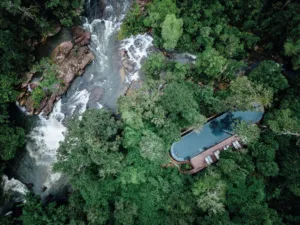
The most expensive hotel in our database — and one of the most unusual in Asia. The camp stands on a river, by a waterfall, in a national park in the Kampong Speu area. It has 15 spacious tent villas with an outdoor bathtub and a veranda over the river. Arrival is by zipline over the river, departure by jeep. Each guest has a personal “adventure butler” who plans the programme, and the price includes meals, wine, massages and activities. According to guests it is a “once in a lifetime” experience: they note the design, the beds, breakfast on a pontoon on the river and especially the staff. The guest rating is 5, the “health” 5. More in our article Shinta Mani Wild and on the hotel page.
Song Saa: a private island
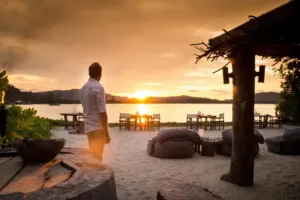
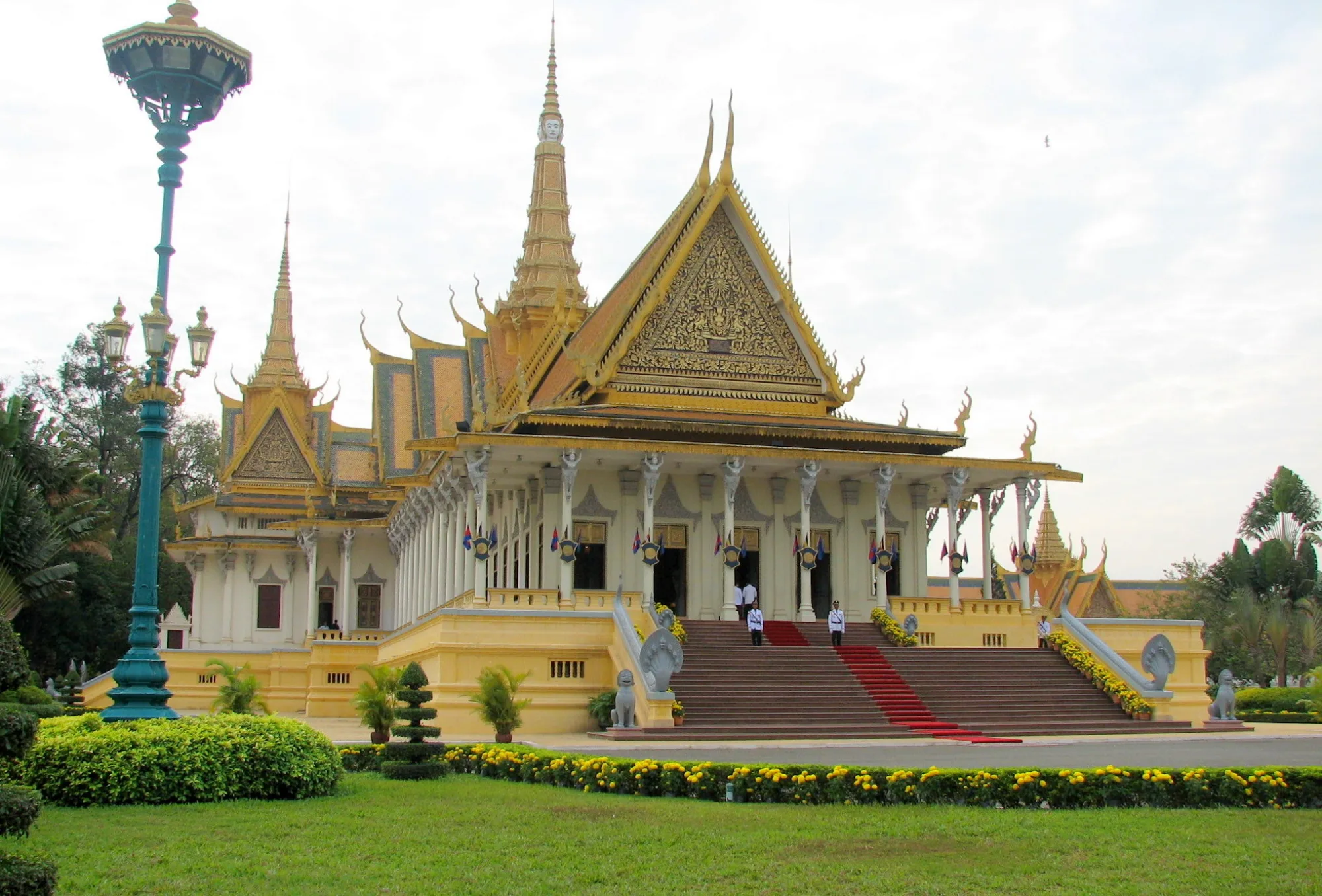
Song Saa Private Island is a resort on a small island in the Koh Rong archipelago: villas over the water and on the shore, a coral reserve nearby and a marine conservation programme. The price guide is about 102 thousand roubles a night, the guest rating 4.8, the “health” 5. It is a hotel for those who want a beach without crowds; you get there by boat. For the neighbouring islands read the guide to Koh Rong and Koh Rong Sanloem, and for more about the hotel the article Song Saa and the hotel page.
Siem Reap: Amansara, Zannier and Raffles
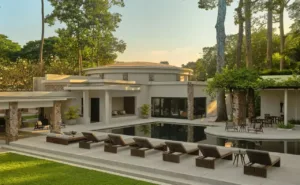
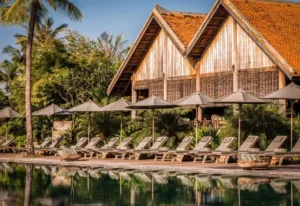
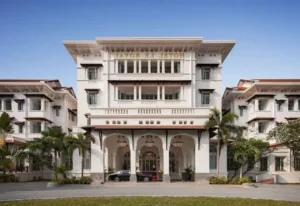
Amansara is a boutique Aman hotel in a building put up in the 1960s as a guesthouse for the high-ranking guests of King Norodom Sihanouk, not far from the road to Angkor: the guide is about 42 thousand roubles, the “health” 4.7. It is convenient from here to go to the temples; more — Amansara and the hotel page. Zannier Phum Baitang is a village of villas among rice fields, with a guest rating of 4.9 and a “health” of 5: more — Zannier Phum Baitang. Raffles Grand Hotel d’Angkor is a colonial hotel of the 1930s in the centre of Siem Reap; read about it in the article Raffles Grand Hotel d’Angkor. For the temples themselves see the guides Angkor: tickets and temples and Beng Mealea, Koh Ker and Banteay Srei.
Phnom Penh: Rosewood and Raffles Le Royal
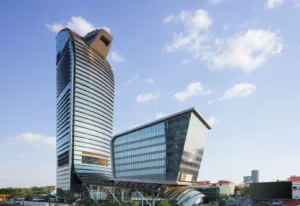
Rosewood Phnom Penh occupies the upper floors of a high-rise in the centre of the capital: the guide is about 32 thousand roubles, the “health” 4.9 from 36 reviews. River and city views come in handy here. There are two entries under this name in the database (44294 and 469), so check current conditions. Raffles Hotel Le Royal is a colonial hotel operating since 1929: the guide is about 16 thousand roubles, the rating 4.9, the “health” 4.8 from 74 reviews. More in the article Rosewood Phnom Penh and on the pages for Rosewood and Raffles Le Royal. For the capital read the guide to the Tuol Sleng Museum and the article on the water festival Bon Om Touk 2027: on festival days hotels are full in advance.
Kep and private villas
The Kep coast is known for its calm and its crab market. There are many private villas here, and one of them, Villa Dam Duong, has a price in our database of about 101 thousand roubles a night, but there are few reviews so far, so we do not undertake to describe the service. If the private villa format interests you, also pay attention to the hotel Knai Bang Chatt: more — Knai Bang Chatt.
What “all inclusive” means in a tented camp
The Shinta Mani Wild format is unusual for those used to ordinary hotels. The nightly price includes not only accommodation but also meals with no strict schedule, wine and drinks at the bar, daily spa treatments and activities with the “adventure butler”: jungle walks, swimming by the waterfall, jeep trips and evenings on the river. The guest sets the rhythm of the day: you can spend it on the tent veranda over the river, or set off into the forest in the morning. That is why, when comparing with an ordinary hotel, you need to mentally add the cost of dinners, excursions and treatments that you would pay for separately. Don’t forget about the deposit: according to the booking platform, a considerable sum is blocked at check-in — check the terms in advance.
Nature conservation as part of luxury
A distinguishing feature of Cambodia’s most expensive hotels is their link with nature conservation. Shinta Mani Wild positions itself as a wildlife protection project, and Song Saa works next to a coral reserve and runs marine conservation programmes. For guests it is a chance not just to rest but to take part: support local communities, buy products made nearby, choose excursions that do no harm to animals. If the ethics of the trip matter to you, ask the hotel questions: what programmes it runs, how many staff are local residents, what happens to waste. Good hotels answer willingly.
Siem Reap, Phnom Penh and the islands: how to combine them in one trip
The most convenient route for a first trip to Cambodia is built around three points. Siem Reap — the temples of Angkor, dinners and small workshops; two to three days. Phnom Penh — the palace, museums and the river; one to two days. An island or the south — sea and quiet; from two days. Between them you need to allow time for roads: Siem Reap — Phnom Penh takes about six hours by bus or an hour by plane, and the islands are reached by bus and boat. If you include a remote camp like Shinta Mani Wild in the route, set aside separate days for it with slack for the journey. For the route itself and events see our guide to the floating villages of Tonle Sap.
With children and as a couple
For couples Song Saa, Amansara and Zannier suit better: seclusion, candlelit dinners, views of water and rice fields. For families — Raffles in Siem Reap and Phnom Penh and Rosewood: spacious rooms, pools and service. The tented camp and the island require travel by boat or along uneven roads, which can be hard with small children, so check age restrictions in advance. Bring repellents, sun protection and light clothing, and comfortable shoes for active programmes.
When hotel prices are highest
In Cambodia prices depend strongly on season and holidays. The highest demand falls in the dry period from November to March: at this time the weather is comfortable and there are many guests. Separate spikes come with Khmer New Year in April, the Bon Om Touk water festival in November and the Christmas–New Year holidays. In the rainy season, from May to October, prices are lower, and some roads and boat routes become harder. If saving matters to you, choose the start of the rainy season or the end of the dry period, when the weather is still pleasant.
What you pay for in Cambodia
The price is made up of several parts. Isolation: to reach a camp or island you need a car, a boat or a zipline, so you won’t meet crowds. Nature: a national park, a coral reserve, rice fields. Service: personal butlers, dinners by the water, nature conservation programmes. History: colonial buildings and royal houses. All inclusive: at Shinta Mani Wild the price covers meals, drinks and a programme, so it cannot be compared with ordinary hotels. But there are downsides here too: distances are large, roads can be long, and the weather in the rainy season may change plans. So read the reviews and choose the season.
How to choose: three questions
What is closer to you: wild nature, the sea or the city and history? For wild nature — Shinta Mani Wild; for the sea — Song Saa; for the city and temples — Amansara, Zannier, Raffles, Rosewood. Which season? The dry period is November to April; read about seasons in the article on Cambodia’s seasons. How are you getting there? For remote camps and islands allow time for the road. By answering, you will narrow the choice to two options.
How to save
Look for dates outside the peak: in the rainy season prices are noticeably lower, and nature is especially impressive. Choose a smaller category. Look at packages with transfer and meals. Consider hotels “a step lower”: the colonial Raffles give history and service at a substantially lower price than Amansara. Read the cancellation terms: for exclusive camps they can be strict, and the deposit considerable. And take out insurance.
Practical tips
Book in advance for the dry season and holidays. Prepare for heat and humidity and bring repellent. Study the rules and safety: etiquette in Cambodia and safety; for payments — payments in Cambodia, and for trips — transport. Remember the ethics of dealing with animals and nature on trips to see elephants and dolphins: choose trusted operators.
Lastly: don’t turn the choice of a hotel into a race for the highest number. In Cambodia expensive places are valued not for their number of stars but for the fact that they let you feel the country differently: a night in a tent over a river, breakfast on the water, the silence of an island or an evening in a colonial hall where travellers of the early 20th century once stayed. Decide what exactly you want to bring home from the trip, and choose a hotel for that feeling. Then the price stops being the main argument, and the trip is remembered not for the sum on the bill but for the moments for which it was conceived.
FAQ
Which hotel in Cambodia is the most expensive? Shinta Mani Wild — about 341 thousand roubles a night with meals and a programme.
Where is it better to live — Siem Reap or the islands? Siem Reap for the temples of Angkor, the islands for the sea and seclusion.
How do I get to Shinta Mani Wild? The journey is long; arrange arrival and transfers in advance with the hotel.
When is the best time to go? In the dry season, November to April; in the rainy season it is cheaper and nature brighter.
Can I save money? Yes: dates outside the peak and the colonial Raffles give history and service for less.
Is there luxury in Phnom Penh? Yes: Rosewood Phnom Penh and Raffles Hotel Le Royal.
Prices are guides based on Trip.com data at the time of collection; the actual cost, terms and services depend on the date and rate — check when booking.