Why Sunrise at Angkor Wat is a Test, Not Just a Pretty Picture
The classic shot of Angkor Wat’s five towers silhouetted against a pink-tinged sky is one of Cambodia’s most reproduced images, and that’s precisely why thousands of people gather in the pitch dark each day by the northern pond in front of the temple. More than 4,000 visitors a day isn’t an exaggeration; it’s real: a dense crowd with tripods, elbows, and phones vying for the best spots by the water an hour before sunrise. For those who came seeking a peaceful moment of contemplation rather than battling for a place in the frame, this can significantly detract from the experience of that very “main” sunrise of your trip.
Pre Rup: Almost the Same Sunrise, But Without the Crush
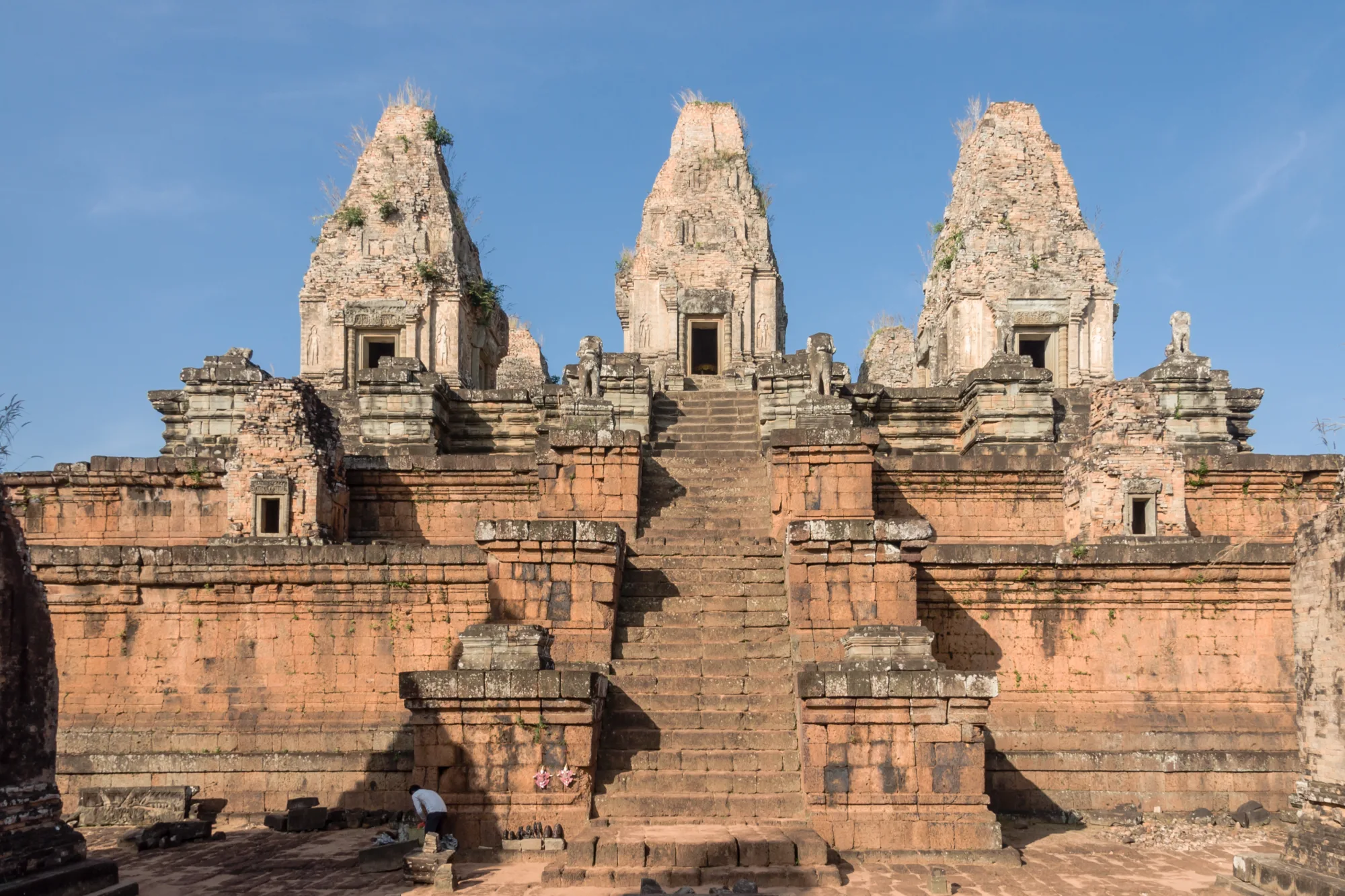
Pre Rup temple is open before dawn just like Angkor Wat and offers a 360-degree panorama from its upper terrace – not just one single viewpoint by one pond. The sun rises here about 30 minutes later than at Angkor Wat (around 6:15 AM), and the number of visitors, according to travelers’ estimates, is roughly 70% lower. This doesn’t mean you’ll find yourself completely alone – but the difference in crowd density is immediately noticeable, and you won’t have to elbow your way through dozens of strangers to reach the upper terrace.
Sra Sang: A Lake Instead of a Crowd by the Pond
Sra Srang — an artificial reservoir with a stone platform on the bank, originally serving as a royal bathing pool — is also open in the pre-dawn hours. Here, the panorama isn’t framed by the silhouette of temple towers, but by the reflection of the sky in the wide expanse of water, which creates a completely different, more tranquil sunrise aesthetic—without an architectural “anchor,” but without the crowds vying for the best angle either. This spot is especially suitable for those who have already seen the classic Angkor Wat view on a previous visit or in other people’s photos and want to capture their own, less cliché shot.
If you still want to stay at Angkor Wat — one practical tip
If the classic view is more important than peace and quiet, there’s a simple lifehack that reduces the crush without changing location: don’t head straight for the main lake in front of the temple, where most people congregate, but turn right from the main entrance. There’s also a view of the temple from there, but noticeably fewer people crowd this part of the territory—a slight deviation from the obvious route alleviates some of the congestion, even if you remain within the Angkor Wat complex itself.
Another approach: abandon the sunrise altogether
Another strategy favored by experienced travelers is to completely abandon the idea of a sunrise and visit Angkor in the afternoon, between 2:00 PM and 6:00 PM. Most tourists leave the complex by noon when the heat becomes peak, which means that daytime and pre-sunset hours are physically less crowded than early morning—although the light at this time is beautiful in its own way, it’s simply not the same iconic sunrise shot that most people come for.
Practical Checklist
- Pre Rup — sunrise around 6:15 AM (30 minutes later than Angkor Wat), approximately 70% fewer people, a 360-degree panorama from the upper terrace.
- Sra Srang — sunrise over the water of the artificial lake, a different aesthetic, also open in the pre-dawn hours.
- If you’re staying at Angkor Wat — turn right from the main entrance instead of heading to the crowded northern pond.
- An alternative to sunrise — visit in the afternoon (2:00 PM–6:00 PM) when most tourists have already left the complex.
- The Angkor ticket is valid for the entire temple complex—you can reach Pre Rup or Sra Srang using the same ticketing system, without an additional charge.
Frequently Asked Questions
How many fewer people are there at sunrise in Pre Rup compared to Angkor Wat?
Travelers estimate that it’s roughly 70% less crowded, and sunrise occurs only half an hour later.
Are Pre Rup and Sra Srang open in the pre-dawn hours?
Yes, both locations are open before dawn, just like Angkor Wat — no special additional permit is required.
Is there a way to see a less crowded sunrise directly at Angkor Wat?
Yes, turn right from the main entrance instead of heading towards the northern pond – you can still see the temple from there, but with significantly fewer people.
Is it even worth going for sunrise if you don’t want crowds?
An alternative is to visit in the afternoon (2:00–6:00 PM) when most tourists have already left the complex due to the daytime heat.
What’s Next
Check out the main guide to Angkor tickets and temples and sort out a quad bike sunset tour as an alternative way to see the region.
Opening hours of individual temples and crowd levels may vary seasonally — check for current information with a local guide.