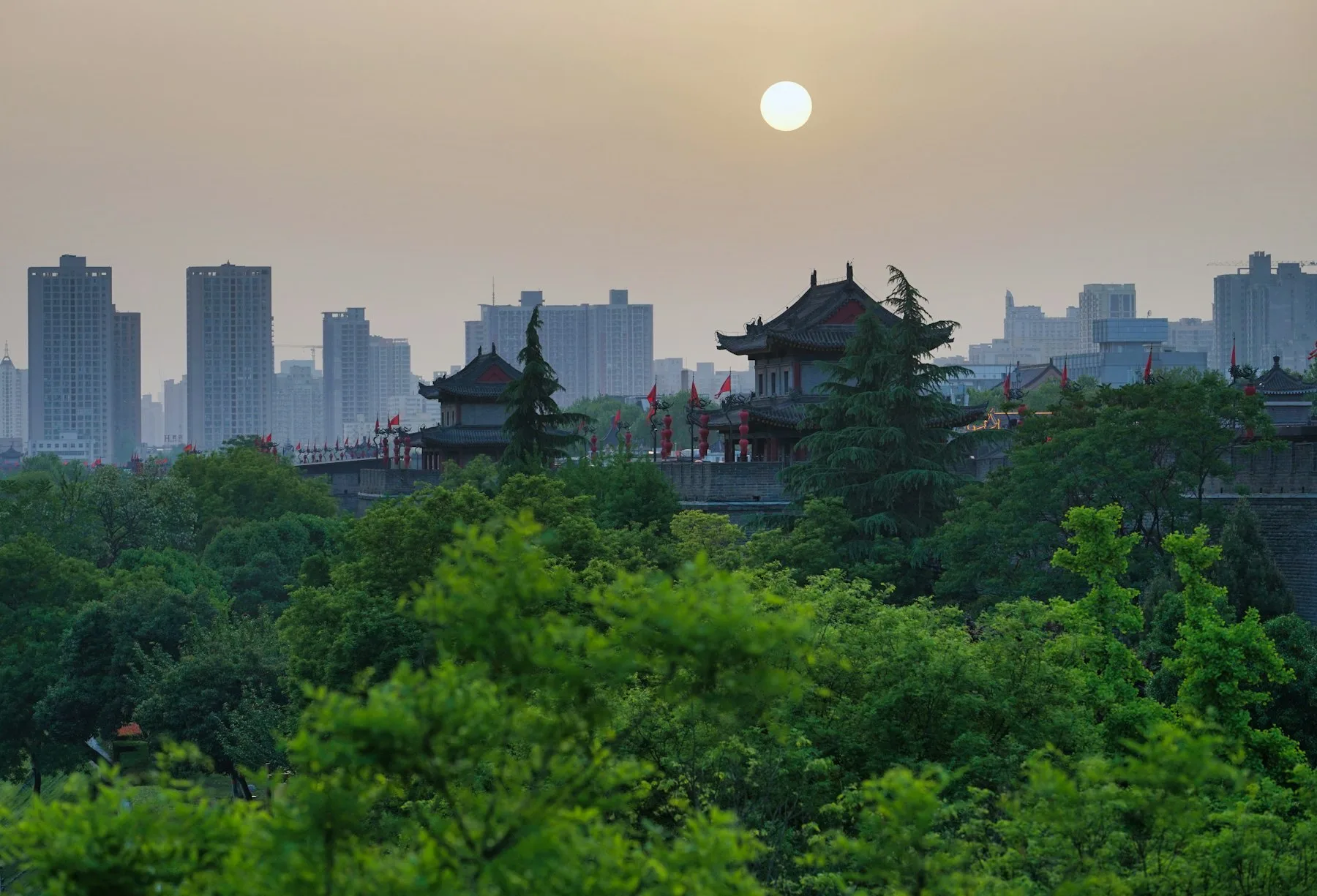
How to choose tours in Xi'an: Terracotta Army formats, the city wall at sunset, the Muslim Quarter, evening shows and Huashan, with honest tips.
In Xi’an there is a moment when you understand how long China has existed. You stand on a city wall that you can cycle along, a modern city hums below, and somewhere an hour away in the ground lie eight thousand clay warriors made more than two thousand years ago. This is not a museum abstraction: every warrior has his own face, and there is something deeply human in that feeling. But tours in Xi’an have an unexpected difficulty: almost all of them are about the Terracotta Army, and the differences between them are subtle. Let us work it out: which army format suits you, what else in the city deserves time and how not to tire yourself trying to see everything. We collected offers from the Trip.com catalogue, with duration, language and cancellation terms.
- The Terracotta Army is the main thing; formats from two hours with a guide to a whole day with Huaqing Palace.
- The city wall is best at sunset; combined with the Big Wild Goose Pagoda.
- Evening: the “Mighty Qin Empire” show or the “Song of Everlasting Sorrow” performance.
- Mount Huashan is a separate and demanding day for those who like heights.
The Terracotta Army: which format to choose
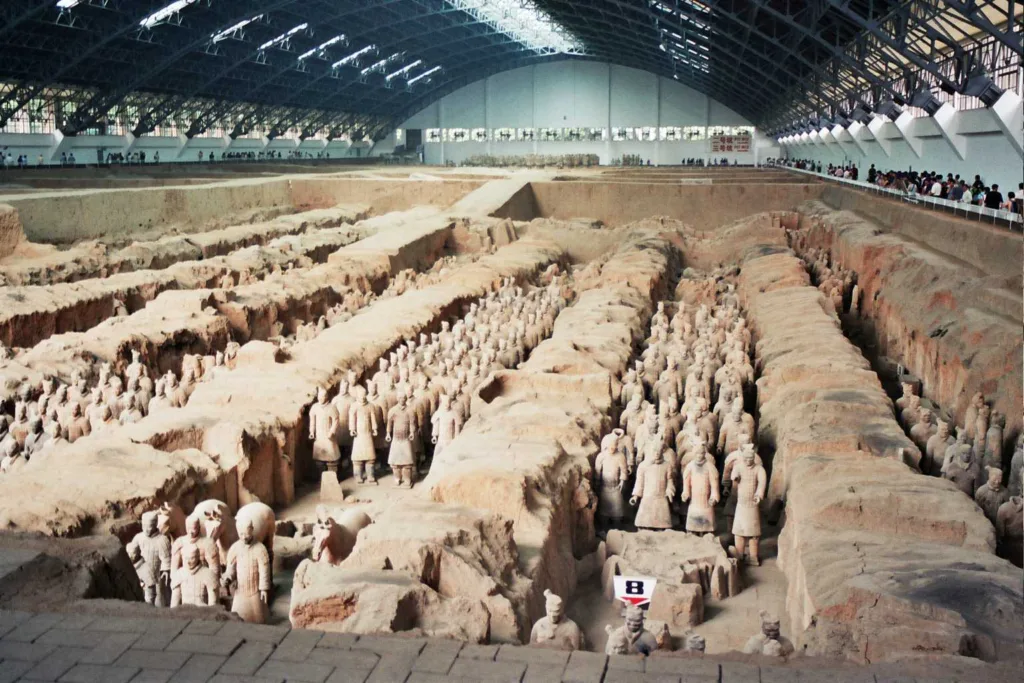
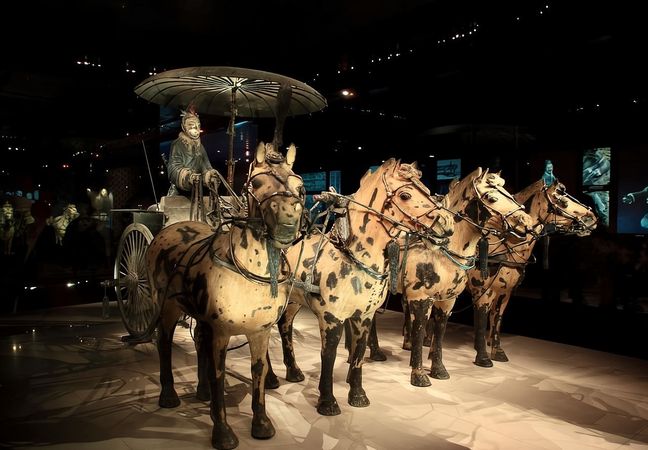
The Army is a whole complex: three huge pit halls, a museum with chariots and workshops. You can walk by yourself, but without explanations it is easy to miss the main thing: what the masters’ hands did here, why it was all buried and what archaeologists see. The catalogue has several formats, and the difference is mostly how much time you are ready to give:
- A private tour of the Terracotta Army, 2 hours, in Russian (rating 5.0);
- Terracotta Army: half a day with transfer, 2 hours, in English (4.9);
- Terracotta Army: private half day, 5.5 hours, in English (5.0);
- Terracotta Army: ticket and mini-group, in English (4.8);
- Terracotta Army and Huaqing in a day, 12.3 hours, in Russian (4.9);
- Terracotta Army, Huaqing and lunch, 9.1 hours, in Russian (4.6);
- for an independent visit, a Terracotta Army Museum ticket (4.7).
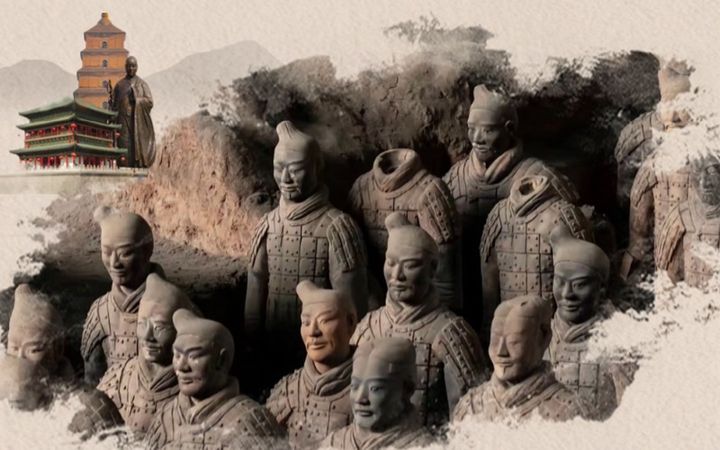 Tour from the article · ExcursionPrivate tour of the Terracotta ArmyCheck dates →Live price · Trip.com
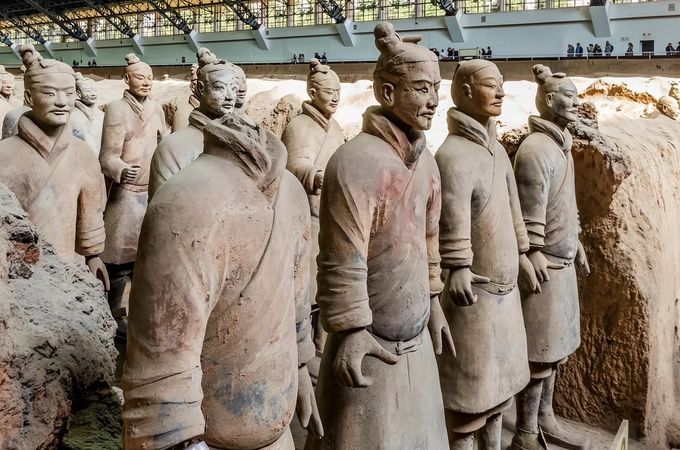 Tour from the article · ExcursionTerracotta Army: half a day with transferCheck dates →Live price · Trip.com
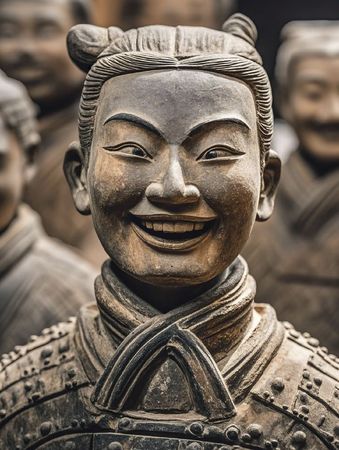 Tour from the article · ExcursionTerracotta Army: private half-dayCheck dates →Live price · Trip.com
If you have little time and want to truly understand what you see, take the short private format in Russian. If you like an unhurried pace and are ready to spend half a day, the private option suits. And full-day tours with Huaqing Palace and lunch make sense for those coming once in a lifetime who want to close everything in one day. More about the Army in our material the Terracotta Army in Xi’an.
What you actually feel before the Army
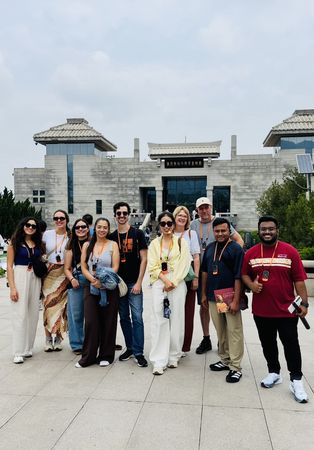
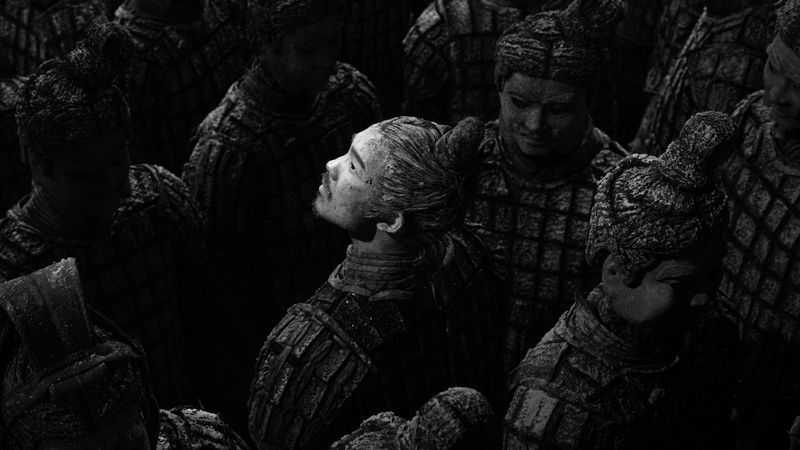
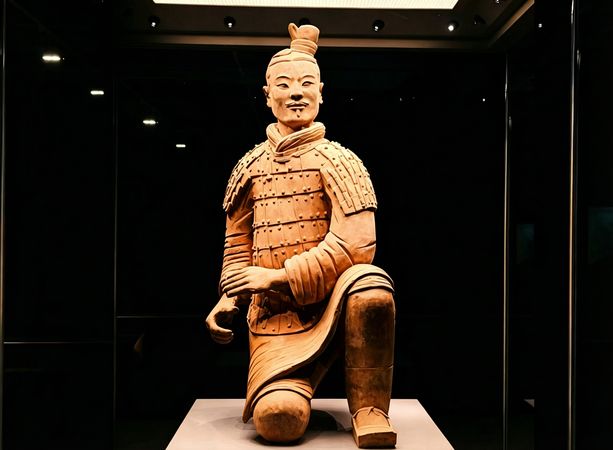
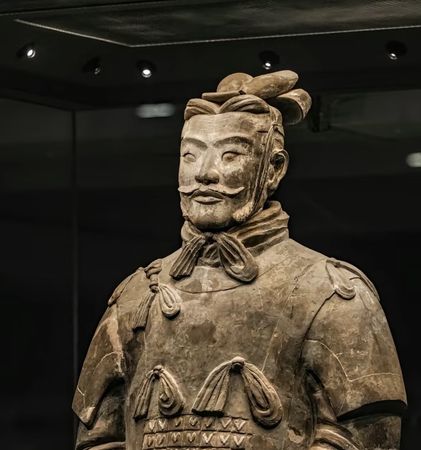
Photographs do not convey the main thing: the scale of silence. You walk into a huge hangar and before you stand thousands of figures lined in rows, as if waiting for an order. People around suddenly speak in whispers. Someone finds a warrior with a slightly mocking face, someone one with a moustache, someone very young. The masters modelled them on living people, so each looks like someone’s acquaintance. If you have time, do not hurry along the general route: stop for a minute before one face and simply look. That minute is what is most often remembered.
How not to tire and not to get irritated
The main hall can be crowded, especially by day and on holidays. Come at opening or toward evening, bring water and do not try to photograph every row. A simple rule helps: first walk through the hall with your eyes, then take out your phone. If you are with a guide, agree on pauses and a meeting point in advance. After the Army plan a calm lunch, not a new transfer: a tired person poorly absorbs even the most beautiful places.
The city wall at sunset
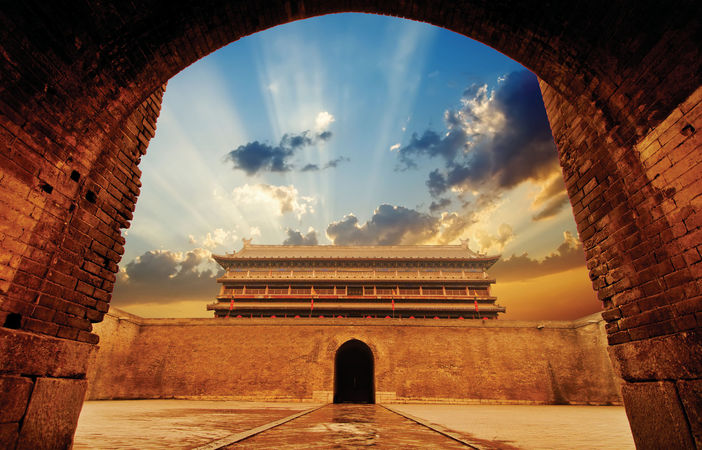
On the Xi’an wall you can cycle along the top path: the circuit is about fourteen kilometres, and it feels like a walk around the city itself from above. The best time is toward sunset, when lanterns on the towers light up and the city below becomes a carpet of lights. A Xi’an city wall ticket (4.6) can be taken separately, or choose a combined tour: the Army, the city wall and the Big Wild Goose Pagoda, 7.7 hours, in English (4.9), or A private day: market, wall and Army, 10.6 hours (4.8). For two days there is Imperial Xi’an: the Terracotta Army and the city wall, two days, in Russian (5.0).
 Tour from the article · TicketXi'an City WallCheck dates →Live price · Trip.com
 Tour from the article · ExcursionArmy, city wall and the Big Wild Goose PagodaCheck dates →Live price · Trip.com
 Tour from the article · ExcursionPrivate day: market, wall and armyCheck dates →Live price · Trip.com
Early Xi’an: the wall without people
If you love quiet, come to the wall early in the morning. Tourists are not there yet, locals jog along the path, the air is cold and clear. The view of roofs and towers at such an hour is nothing like the evening one. Take a coffee, sit on a ledge and simply look: it is the free best of what the city can give. The wall’s steps are uneven, so you need stable shoes.
The Bell Tower and the Muslim Quarter
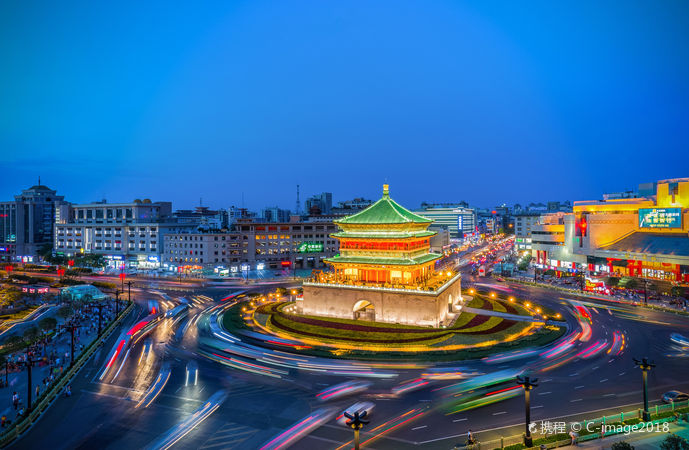
In the centre of Xi’an stands the Bell Tower (4.5), from which streets fan out. Nearby begins the Muslim Quarter: it smells of fried lamb, spices and fresh flatbread, and streets sell pomegranate juice and sweets. It is best to go in the evening when the lanterns light up and to try the local “roujiamo”, meat in a flatbread. If you have allergies, ask about the ingredients: many dishes contain nuts and sesame.
The Muslim Quarter: how to walk with pleasure
In the evening the quarter is noisy and spicy. It is better not to eat everything from the first stall: first walk the whole street, see where the queue is and where cooks work in view. Portions are small and you can try several dishes. Bring cash in small notes and wet wipes. If you feel uncomfortable in the crowd, keep to side lanes: it is calmer there and the food is no worse. Respect local customs: near the mosque dress modestly and do not photograph people praying.
Evening shows: two different moods
In Xi’an it is worth filling the evenings with a show. The “Mighty Qin Empire” show (4.9) is a large-scale spectacle about an ancient empire. The “Song of Everlasting Sorrow” performance (4.5) is a romantic story played on an open stage at the foot of a mountain. And Huaqing Palace (4.6) is linked to this legend and is beautiful in itself: springs, pavilions and paths between trees. In the evening it can be cool outdoors, so bring a wrap.
Mount Huashan: for those who are not afraid of heights
Huashan is a separate adventure. A Mount Huashan ticket (4.7) opens the way to one of the most famous peaks of China: cable cars, narrow trails along cliffs and views that take your breath away. This is not a stroll but a long, physically hard day. Go only in good health, in non-slip shoes and in clear weather. If you fear heights or have joint problems, find another way to spend the day.
With children and with parents
For children the Terracotta Army can seem boring if no story is told: invent a game “find the funniest warrior” and interest appears. On the wall both small children and older people take bicycles: it is the most fun pastime in the city. For older parents choose a short format with transfer and explanations, and do not go to Huashan. And plan time for rest: Xi’an has a lot of walking on stone.
If you have only one day
When Xi’an gets one day, do not scatter yourself. In the morning, a short private tour of the Army with a guide in Russian, at midday lunch and an unhurried rest, and toward sunset the wall and the evening city. That way you see the main things and do not feel you ran a marathon. Leave the shows and Huashan for the next visit: people return to Xi’an gladly.
Weather and clothing by season
In spring and autumn Xi’an is comfortable in a light jacket, but toward evening it is fresh on the wall. Summer brings heat and dust: take a hat, water and sunscreen, and see the Army in the morning before the hall heats up. Winter is cold and windy, but there are few people, and the wall paths on a frosty day look especially strict and beautiful. In any season leather or rubber soles slip on wet stone, so choose shoes with good tread.
What you can skip
Honestly, you do not need to take three Army tours in a row, and you do not need to head to the mountain if you dislike heights. Multi-day “imperial” programmes suit those who want everything organised for them, but if you love freedom the Army, the wall and an evening in the Muslim Quarter are enough. One show is enough: two evenings in a row quickly merge into one impression. And Huaqing Palace is more interesting in the evening combined with the performance than separately by day.
Food in Xi’an
Xi’an is a city of noodles and flatbreads. Try “biangbiang” noodles, wide hand-pulled noodles with spicy sauce, soup with hand-torn flatbread and sour cold noodles. For sweets there are seasonal peaches and persimmons and caramelised nuts. There is a lot of spice, and if you dislike it, say at once “no chilli”. If you are with children, order milder dishes and more liquid ones.
When to go and what to bring
The best months are April to May and September to October: warm and clear. Summer can be hot, winter cold and windy but with fewer people. Bring your passport, comfortable shoes, a hat and water. Where to stay is in the reviews of Xi’an hotels and hotels near the Bell Tower; ideas for walks are in Xi’an: what to see.
How to spread two days
- Day 1: the Army. The Terracotta Army with a guide in the morning, Huaqing Palace by day, a show in the evening.
- Day 2: the city. The wall in the morning, lunch in the Muslim Quarter, the evening by the Bell Tower.
Frequently asked questions
How much time do you need for the Terracotta Army?
Two to three hours with a guide is enough for the main halls; without a guide people often stay longer but understand less.
Do I need a passport for tickets?
Yes, most places require a passport, so take it with you.
Can I combine the Army and the wall in one day?
You can, but the day is dense: there are ready tours of 7–10 hours.
Useful links
- Tours in Xi’an
- The Terracotta Army in Xi’an
- Xi’an: what to see
- Xi’an hotels
Xi’an is not about seeing everything but about feeling depth: the silence before the clay warriors and the lights on the old wall when the city lights up below. The rest will follow.
Current as of November 2026. Schedules, tickets and offer terms change: check them on the tour page and on Trip.com.
Tours and tickets from this article
Live dates, availability and the final price are on Trip.com. These are affiliate links — the price does not change for you.
Tour from the article · ExcursionPrivate tour of the Terracotta ArmyCheck dates →Live price · Trip.comTour from the article · ExcursionTerracotta Army: half a day with transferCheck dates →Live price · Trip.comTour from the article · ExcursionTerracotta Army: private half-dayCheck dates →Live price · Trip.com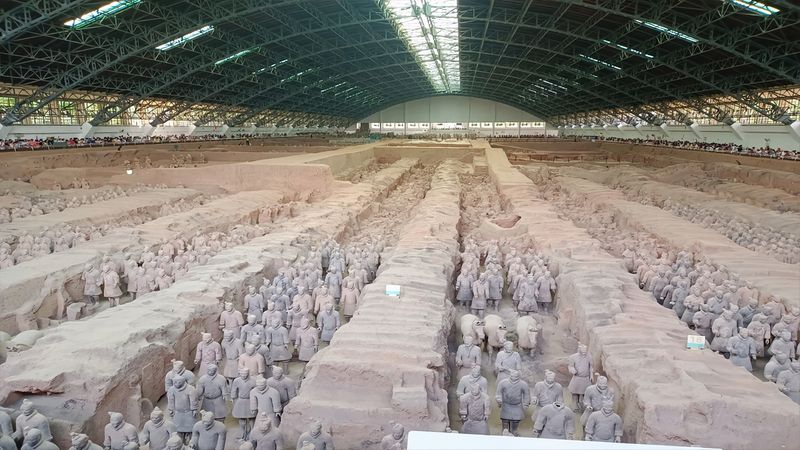 Tour from the article · ExcursionTerracotta Army: ticket and mini-groupCheck dates →Live price · Trip.com
 Tour from the article · ExcursionTerracotta Army and Huaqing Palace in a dayCheck dates →Live price · Trip.com
 Tour from the article · ExcursionTerracotta Army, Huaqing and lunchCheck dates →Live price · Trip.com