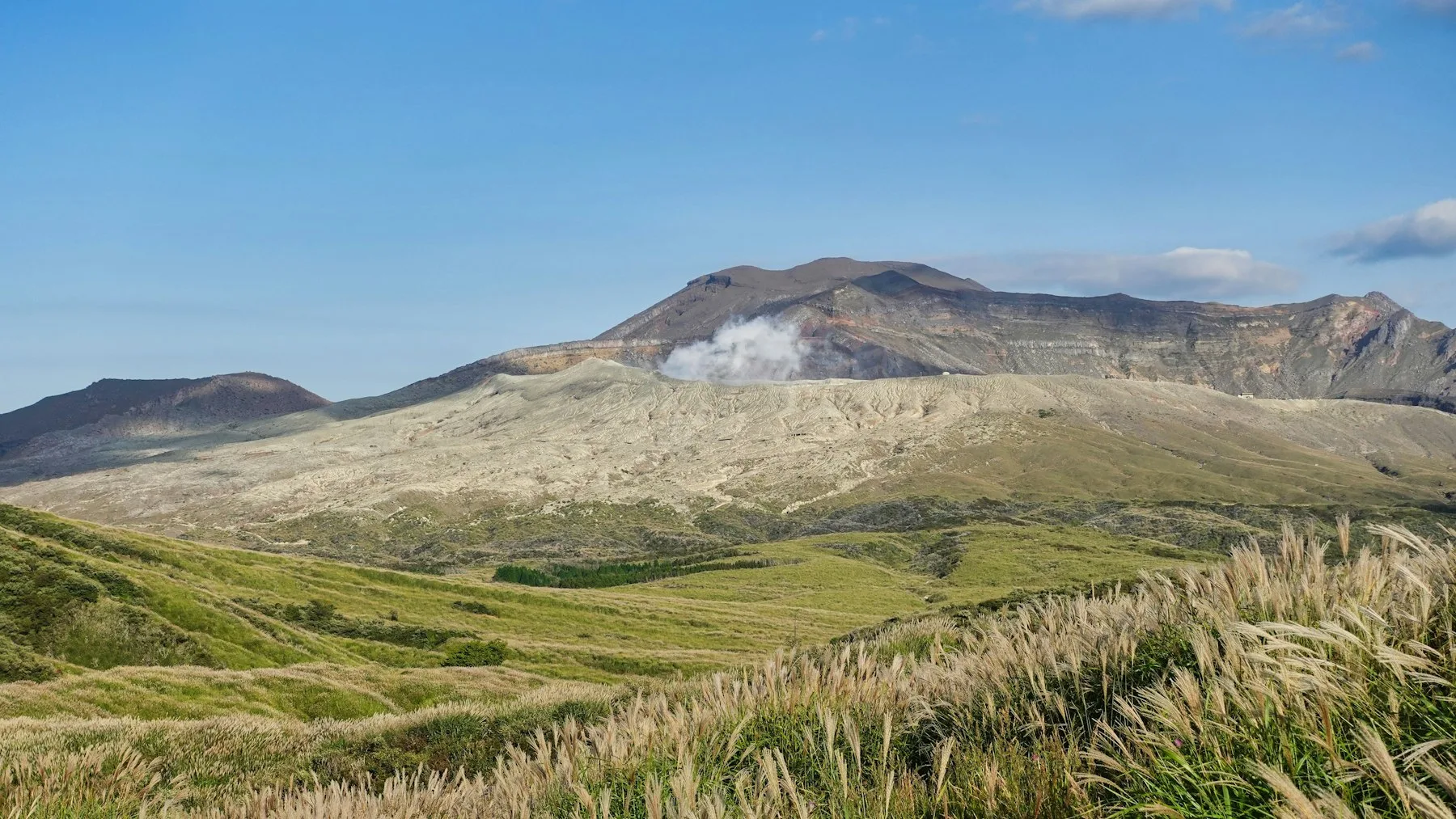
How to choose tours from Fukuoka: Mount Aso, Takachiho Gorge, Yufuin and Beppu, and Itoshima, with honest tips on what to skip.
Fukuoka is a city where you want to stay longer than you planned. In the evening ramen stalls are set up along the river and smoke from braziers drifts over heads, the streets are clean and calm, and the sea, mountains and hot springs are within reach. It is the gateway to Kyushu, the south-western island of Japan, where volcanoes smoke right beside rice fields, where in gorges the gods once hid, according to legend, and resort towns smell of sulphur and spicy broth. There are many tours from here and they differ greatly: some lead to a volcano and steppe, others to mythical shrines, others to hot springs. Let us work it out: which trip to choose, how to combine two places in one day and what you can leave for later. We collected offers from the Trip.com catalogue, with duration, language and cancellation terms.
- Mount Aso and the Kusasenri plain is the most spectacular nature day (9–10 hours).
- Takachiho and places of myth: a gorge, shrines, the goddess’s cave (6–10 hours).
- Yufuin, Lake Kinrinko and the “hells” of Beppu are for onsen lovers (7–10 hours).
- Calmer: Itoshima island and the Meoto Iwa rocks (5.6–8 hours).
Mount Aso and the Kusasenri plain
Aso is one of the largest active volcanoes, and beside it spreads a huge grassy plain where horses graze. It is the place where you notice how big the island is. Options:
- A one-day tour of Mount Aso in Kyushu: Kusasenri, 9.8 hours, in English (rating 4.9);
- Takachiho, Mount Aso and the Kusasenri plain, 9.5 hours (4.9);
- Kyushu: Kamishima shrine, Mount Aso and Kurokawa, 9.5 hours (4.9).
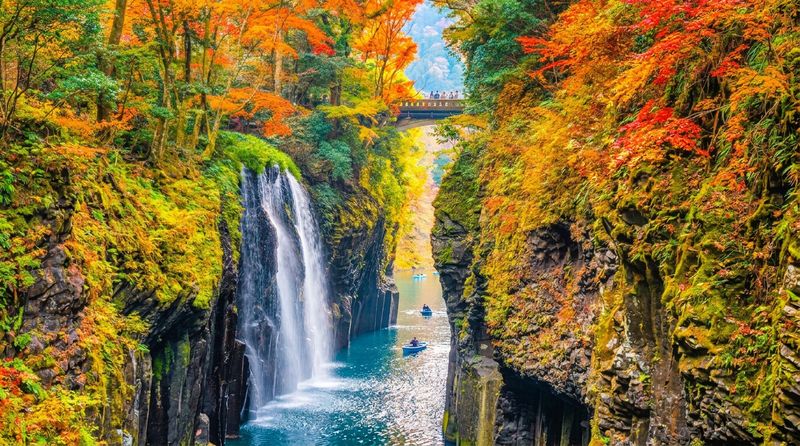 Tour from the article · ExcursionTakachiho, Mount Aso and the Kusasenri PlainCheck dates →Live price · Trip.com
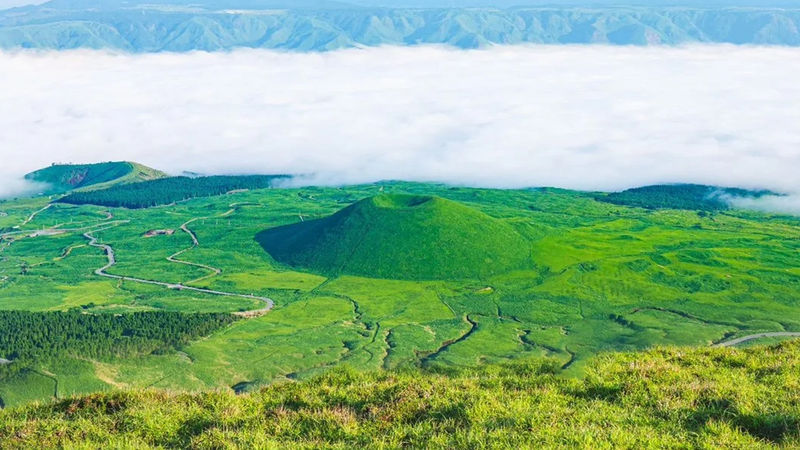 Tour from the article · ExcursionKyushu: Kamishima Shrine, Mount Aso and KurokawaCheck dates →Live price · Trip.com
The state of the crater and access to it depend on volcanic activity, so check in advance whether the viewing zone is open and what the plan is in case of closure. This is not a reason to be afraid but normal safety practice. Bring a windbreaker: on the plateau it can be windy and cool even in summer.
Takachiho and places of myth
In Japanese mythology it was here that the sun goddess hid in a cave and the world fell into darkness. Today Takachiho is a gorge with vertical walls and green water on which boats float. Tours:
- Takachiho Gorge and mythical places of Kyushu, 10.4 hours, in English (4.9);
- Kumamoto: Kamishima shrine and Takachiho, 7 hours (4.8);
- Origins of Kyushu myths: Takachiho and Amano Iwato, 6.3 hours (4.8);
- A one-day tour of the Kamono Iwasu shrine in Uesiromi, Miyazaki, 10 hours (4.9).
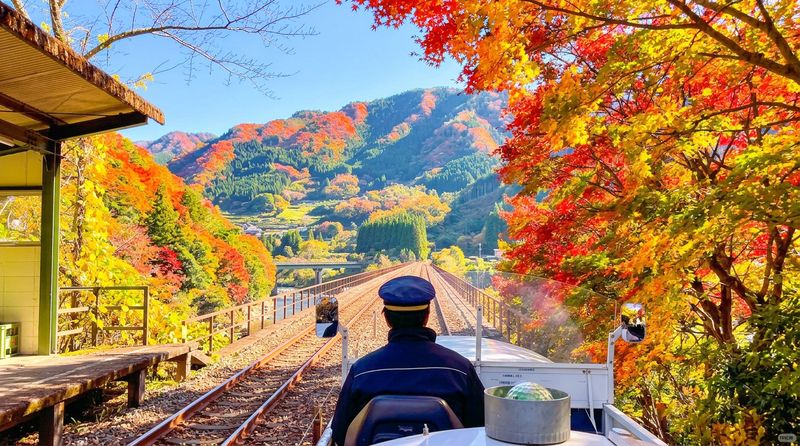 Tour from the article · ExcursionTakachiho Gorge and the mythical places of KyushuCheck dates →Live price · Trip.com
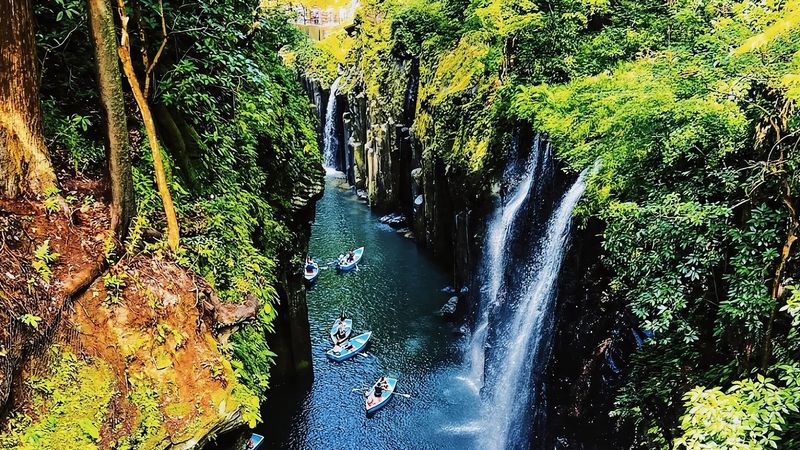 Tour from the article · ExcursionKumamoto: Kamishima Shrine and TakachihoCheck dates →Live price · Trip.com
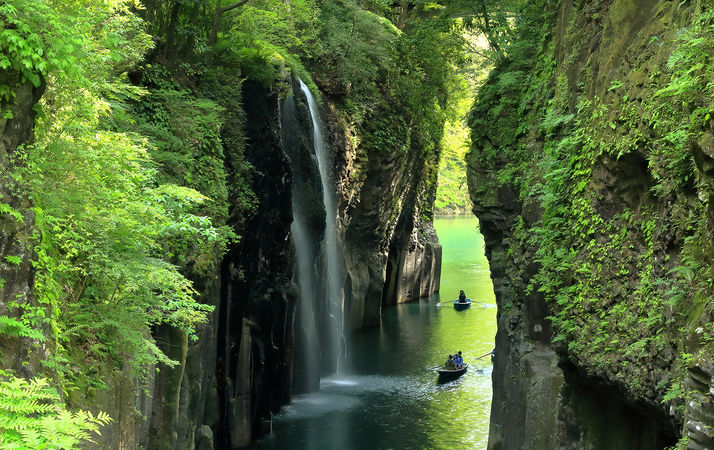 Tour from the article · ExcursionOrigins of the Kyushu myths: Takachiho and Amano IwatoCheck dates →Live price · Trip.com
A boat in the gorge is the most memorable moment, but places are limited and in season they go quickly; in overcast or rainy weather boat rental can be suspended. If you want the boat specifically, check the terms on the tour page. And the shrines here are quiet and alive: speak softly, do not photograph in places where asked not to and do not touch ritual objects.
Yufuin, Lake Kinrinko and Beppu
Yufuin is a resort town with cafes, craft shops and a lake over which steam rises in the morning. Nearby is Beppu, where hot springs coloured red and blue burst from the ground. Options:
- Yufuin, Lake Kinrinko and the “hell” springs of Beppu, 7.1 hours, in English (4.9);
- Yufuin, the Sapporo brewery and Mamedamachi, 9.6 hours (4.8).
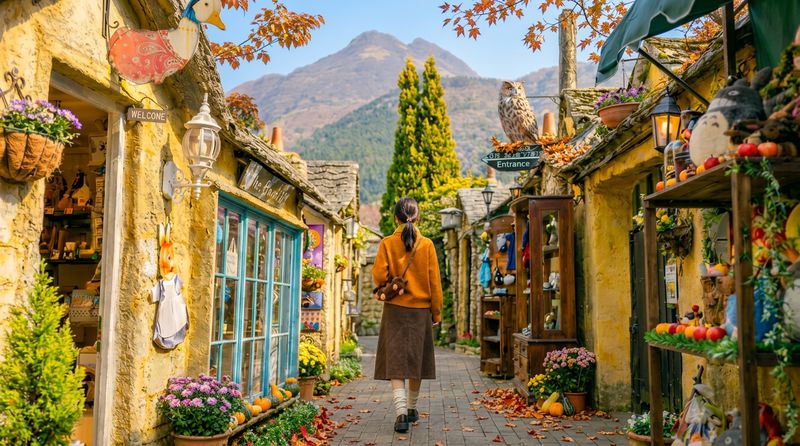 Tour from the article · ExcursionYufuin, Lake Kinrinko and the Hells of BeppuCheck dates →Live price · Trip.com
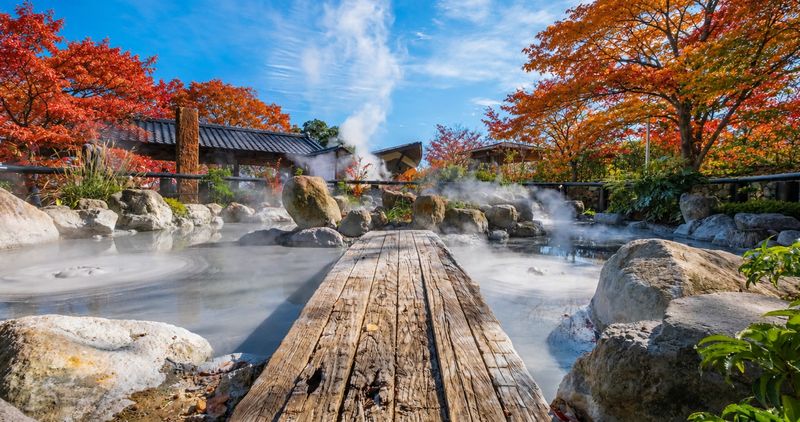 Tour from the article · ExcursionYufuin, Sapporo Brewery and MamedamachiCheck dates →Live price · Trip.com
The “hell springs” are not places to bathe but beautiful hot ponds that are pleasant to look at. For a real onsen set aside a separate evening: it is nicest to dip after a day on your feet. More about the area in our material Beppu Showaen.
Itoshima: the sea and the married-couple rocks
If you need an easier day, go to the Itoshima peninsula: a coast, cafes by the sea and two rocks joined by a sacred rope. It is a pleasant place for an unhurried walk and sunset photos:
- Itoshima island, 8.2 hours, in English (5.0);
- A one-day tour of Itoshima: the Meoto Iwa rocks, 5.6 hours (4.8).
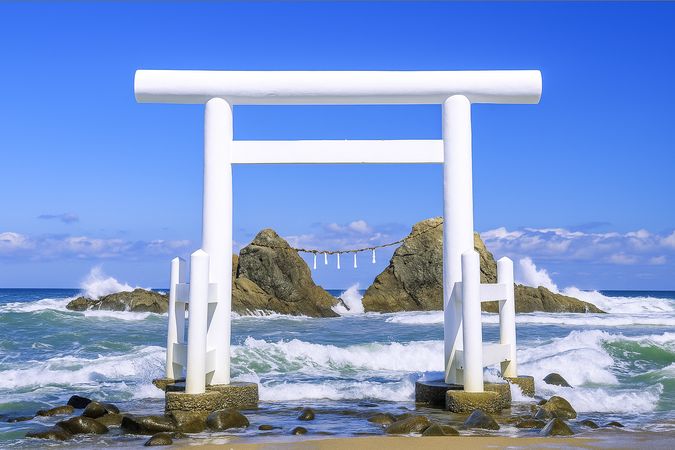
It is better to go in clear weather and toward evening: at sunset the sea and sky take on soft colours. Bring a jacket: there is wind on the coast.
Autumn and maples
In leaf-fall season Kyushu turns red and gold. For lovers of autumn colour there is a one-day trip in Kyushu to enjoy autumn foliage, 10 hours (4.9), and maple viewing in Miyazaki, 8.5 hours (4.8). The time of peak colour changes from year to year, so rely on the forecast rather than the calendar.
Fukuoka: what to see in the city
In the city itself there are the Fukuoka Tower (rating 4.7) with a view of the bay, the Marine World aquarium (4.7) and the digital forest teamLab Forest Fukuoka (4.6), an evening interactive show with light and music. For getting around the Fukuoka metro is convenient, and for trips around the island the JR Pass for Kyushu for 3, 5 or 7 days (4.9): count how many trips you will really make. For those arriving on a cruise we collected a material about Kyushu ports: Fukuoka, Nagasaki, Kagoshima. For where to stay see the review of Fukuoka hotels. Beer lovers may like the brewery at Hotel Okura Fukuoka.
An evening at a yatai: dinner by the river
Fukuoka’s main evening ritual is the yatai, small street stalls by the water. They open toward evening: a few stools, a brazier, the owner cooks ramen and grills skewers. It is customary to sit next to strangers, order a little at a time and chat if words allow. Ramen in Fukuoka is made on a thick creamy broth and differs noticeably from what you know. If you do not eat pork, ask about the ingredients in advance. Bring cash, and do not linger too long if others are waiting.
Hot springs: rules and etiquette
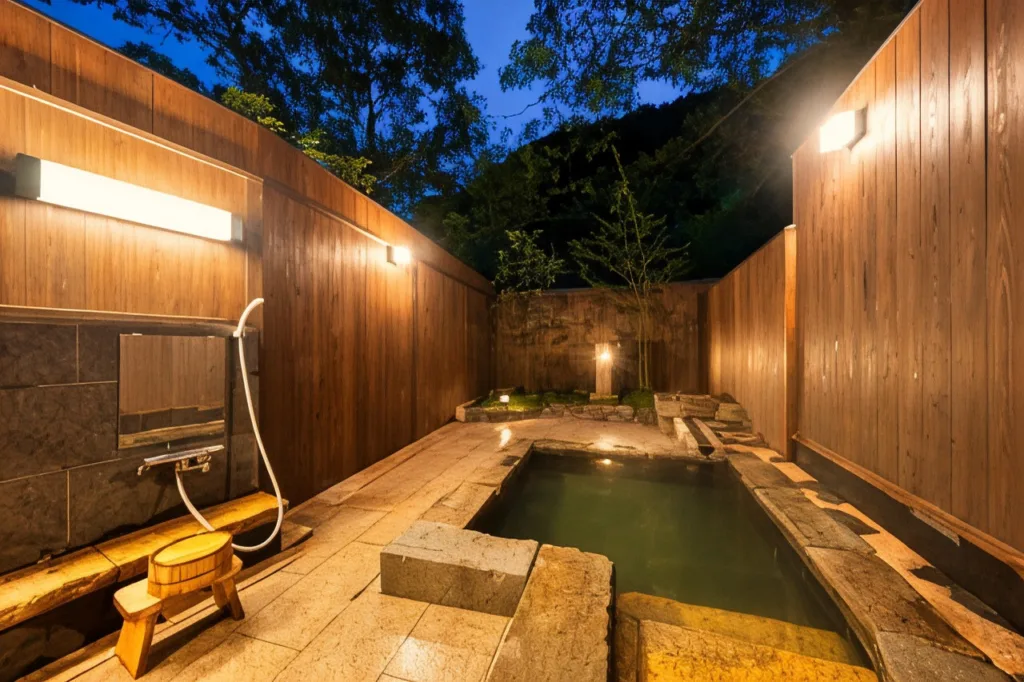
Kyushu is a land of onsen, and a few rules make rest more pleasant. Wash and rinse before immersion, do not enter the water with a towel and do not swim. It is better to tie up hair and leave gadgets in the changing room. If you have tattoos, check the rules of the place in advance: in some onsen they are restricted, but there are also private baths. Drink water before and after: hot water tires more than it seems. And do not stay too long if you feel weak.
Clothing and gear
In spring and autumn bring a jacket and layers: cool in the morning and evening, warm by day. Summer is hot and humid: light clothes, a hat, water. In winter it is cold and windy on the volcano, so a warm jacket and hat are needed. Comfortable shoes are a must: there is a lot of walking in the gorge and on the plateau. A raincoat or folding umbrella is always better in the backpack: weather in Kyushu changes fast.
With children and with parents
For a family Kyushu is convenient: safe, clean and beautiful. Children will like the aquarium, the sea at Itoshima and the digital forest. With older parents choose one outing a day and no more: the road is tiring. For Takachiho Gorge check whether there are age and health restrictions on the boat. And plan time to rest: even calm tours take a whole day.
Morning in Kyushu: how to start the day
If you want to catch the real Kyushu, go out early. In the city at this hour it smells of fresh bread, older people jog in parks, and in coffee shops nothing is heard but the coffee machine. Outside the city the morning is even more beautiful: a cloud hangs over the volcano, there is dew on the plateau and haze stands over the gorge. A light breakfast, a cup of coffee and silence are an excellent start to a day after which any tour seems twice as good. Do not hurry to leave right after dawn if you feel uneasy: for most places it is better to arrive after tourist buses have dispersed.
How to behave in shrines
Japanese shrines are living places, not scenery. At the entrance bow and walk along the edge of the path: the centre is left to the gods. At the purification fountain rinse your hands and mouth; before the altar throw a coin, bow twice, clap twice and bow once more. You need not know all this by heart: it is enough to behave quietly and respectfully, and if in doubt, watch what others do. Photography inside is often forbidden, and signs about it are usually clearly visible.
If you are here for the first time
Kyushu often stays in the shadow of Tokyo and Kyoto, and wrongly. There are fewer crowds here, more nature and a living, unhurried life. At first it seems the programme is simple: a volcano, a gorge, springs. But that simplicity is the point. After several days you see how the Japanese live not for tourists: they go to the market, drink tea, relax in an onsen. And that feeling is worth more than a dozen “must-see” places.
What you can skip
Honestly, you do not need to take two similar tours with a volcano and a steppe. One Aso is enough. If you dislike the road, stay in the city and add Itoshima. Breweries and “towns with shops” are not for everyone: if you want nature, skip Mamedamachi. And the “hell” springs of Beppu are more about spectacle than bathing: look, but do not count on rest.
When to go
The best time is spring and autumn: clear, warm and beautiful. Summer is hot, humid and can bring typhoons; winter is cool but with fewer people, and hot springs are especially pleasant. For boat trips in the gorge consider the season and weather. In leaf-fall and blossom season tickets and places are snapped up in advance, so book several weeks ahead.
How to spread four days
- Day 1: the city. The tower, a walk on the embankment, a yatai in the evening.
- Day 2: Aso. The volcano and the Kusasenri steppe.
- Day 3: Takachiho or Yufuin. The gorge and shrines, or the resort town and springs.
- Day 4: Itoshima. The sea, rocks and sunset.
Frequently asked questions
What to choose: Aso or Takachiho?
Aso is about scale and nature, Takachiho about myth and the gorge. If you choose one, look at the season and weather.
Do I need a JR Pass?
Only if you plan many trips around the island; for one or two outings a tour is simpler.
Can I travel without Japanese?
Yes: tourist places have enough English signs, and a translator in your phone helps with menus.
Useful links
- Tours from Fukuoka
- Fukuoka hotels
- Kyushu ports
Kyushu is not about driving around everything but about standing on the edge of a huge crater, drinking hot tea after the gorge and sitting down at a counter by the river in the evening. The rest will follow.
Current as of November 2026. Schedules, tickets and offer terms change: check them on the tour page and on Trip.com.
Tours and tickets from this article
Live dates, availability and the final price are on Trip.com. These are affiliate links — the price does not change for you.
Tour from the article · ExcursionTakachiho, Mount Aso and the Kusasenri PlainCheck dates →Live price · Trip.comTour from the article · ExcursionKyushu: Kamishima Shrine, Mount Aso and KurokawaCheck dates →Live price · Trip.comTour from the article · ExcursionTakachiho Gorge and the mythical places of KyushuCheck dates →Live price · Trip.comTour from the article · ExcursionKumamoto: Kamishima Shrine and TakachihoCheck dates →Live price · Trip.comTour from the article · ExcursionOrigins of the Kyushu myths: Takachiho and Amano IwatoCheck dates →Live price · Trip.comTour from the article · ExcursionYufuin, Lake Kinrinko and the Hells of BeppuCheck dates →Live price · Trip.com