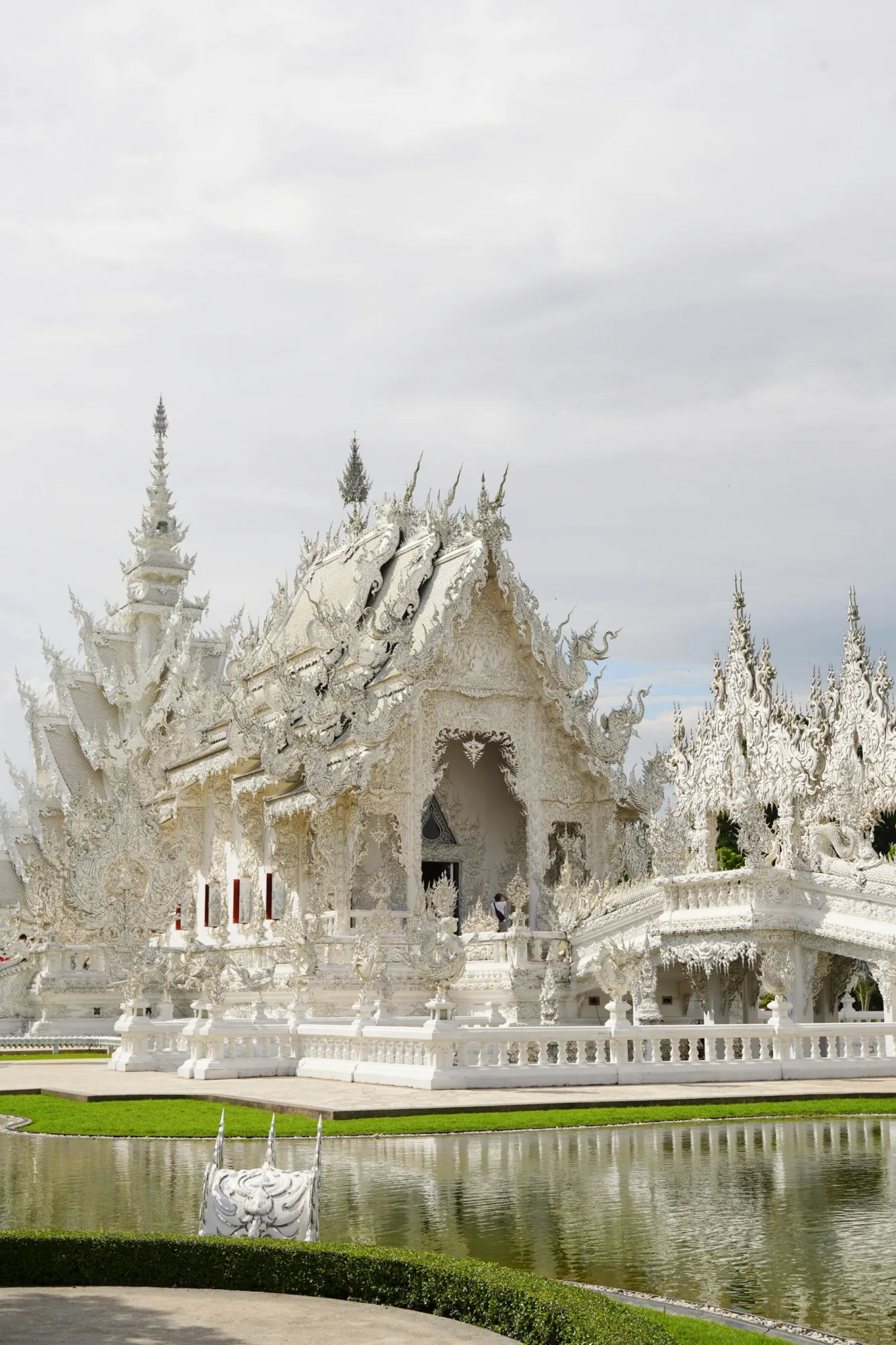
How to choose tours from Chiang Mai: ethical elephant camps, the White and Blue temples of Chiang Rai, Doi Inthanon, night Doi Suthep and cooking classes, with honest tips.
Chiang Mai wakes up slowly. First a bell sounds, then the smell of coffee and fried bananas drifts along the narrow streets of the Old City, and at dawn monks in orange robes walk out for alms, noticing nothing around them. After Bangkok’s furious heat the north of Thailand feels like another country: cooler, softer, greener. Here you want to wander without a plan, but also not to miss the main things: elephants in eco-parks, night Doi Suthep with its view of the lights, Chiang Rai’s white temple that looks like an ice palace, and mountains where mist spreads in the morning. There are many tours, names repeat, and it is easy to spend a day on something you will not like. So let us work it out: what is really worth your time, how to choose elephants without riding and what to do if you want peace. We collected offers from the Trip.com catalogue — with duration, language and cancellation terms.
- The Old City in half a day (3.5 hours) and night Doi Suthep with Wat Umong (3 hours) — a gentle introduction to the city.
- Elephants: eco-parks and camps without riding; choose consciously and read reviews.
- Chiang Rai: the White, Blue and Black temples — a long day of 8–13 hours, better to leave early.
- Doi Inthanon — the highest mountain in the country and cool waterfalls.
The Old City and night Doi Suthep
If you have an evening or half a day, begin with the centre. The Chiang Mai Old City in half a day takes 3.5 hours (rating 4.8): you walk along the moats and walls, look into temples that smell of incense and understand why this city is called the “rose of the north”. In the evening it is good to go up the mountain: a night trip to Doi Suthep and Wat Umong — 3 hours (4.8). It is colder at the top than below, and underfoot is a sea of city lights. Wat Umong is an old forest temple with tunnels where in the silence you hear only cicadas. For an independent walk there is a visit to temples in Chiang Mai. And if you want to see the city at its most beautiful moment, read our guide to the lantern festival Yi Peng in Chiang Mai 2027.
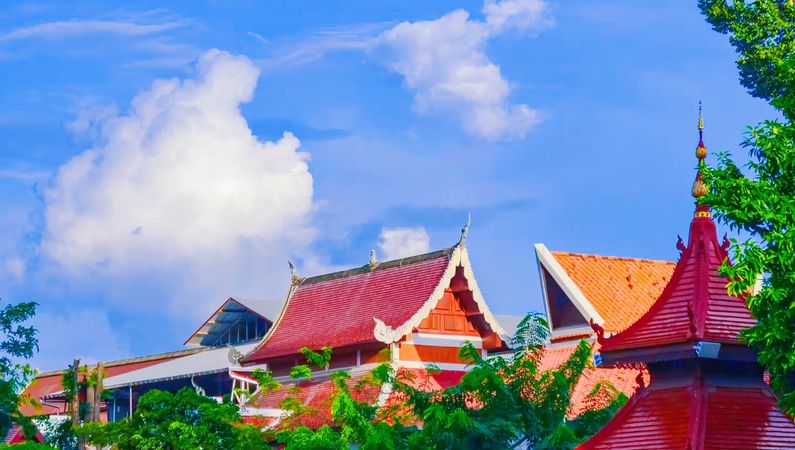 Tour from the article · ExcursionChiang Mai Old City in half a dayCheck dates →Live price · Trip.com
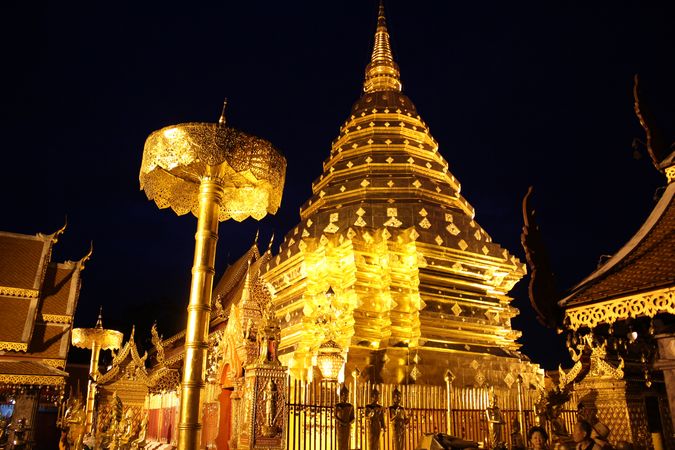 Tour from the article · ExcursionNight trip to Doi Suthep and Wat UmongCheck dates →Live price · Trip.com
Elephants: how to choose honestly
Elephants are the main reason many people go north, and here it is worth being attentive. Elephant riding has long been criticised: animals suffer, and good camps have already given up this practice. Choose places where elephants are fed, bathed and watched without saddles and hooks. Options from the catalogue:
- KERCHOR elephant eco-park — 6 hours (rating 4.9);
- Chokchai elephant camp — from 30 minutes to 6 hours (4.9);
- Mae Taeng elephant camp — 6.7 hours (4.6);
- Sticky Waterfall and Cafe Elephant — 6 hours (4.5).
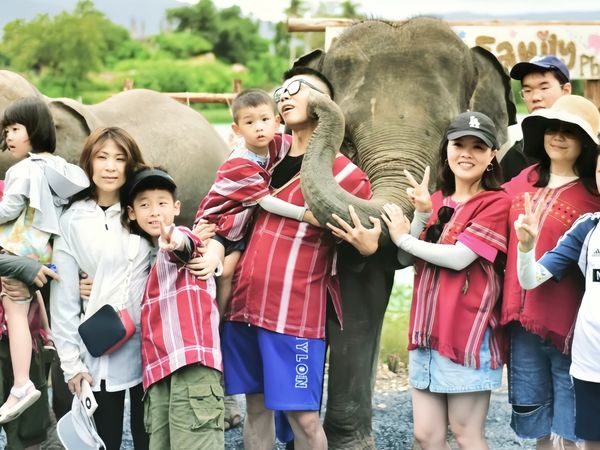 Tour from the article · ExcursionKERCHOR Elephant Eco ParkCheck dates →Live price · Trip.com
 Tour from the article · ExcursionChokchai Elephant CampCheck dates →Live price · Trip.com
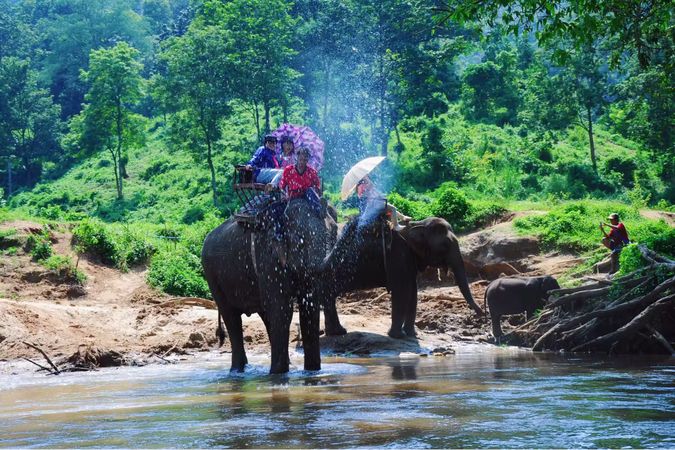 Tour from the article · ExcursionMae Taeng Elephant CampCheck dates →Live price · Trip.com
Read reviews, ask the organiser whether elephants are ridden and how they are treated. If ethics matter to you, it is better to choose watching and feeding rather than a “show”. And do not expect elephants to behave “on order”: they live their own lives, and the best impressions are when you simply stand next to them and watch.
Chiang Rai: white, blue and black
Chiang Rai is three or four hours’ drive from Chiang Mai, and this day is remembered for a long time. The White Temple, Wat Rong Khun, is a work of art: dazzlingly white, with mirror mosaic, it sparkles in the sun and seems unreal. The Blue Temple greets you with bright colour, and the Black House is dark, gloomy and strange like a dream. Options:
- Chiang Rai: the White and Blue temples and the Black House — 9 hours (rating 4.4);
- White and Blue temples and the Black House with a Karen village — 8.6 hours (4.6);
- Chiang Rai: Red, White and Blue temples — 9.5 hours (4.7);
- Black House, the Baan Dam museum and Chiang Rai temples — 9.5 hours (4.6);
- a one-day tour of Chiang Rai: White, Black and Blue temples — 7.5 hours (4.7);
- Chiang Rai: 7 places worth visiting and a buffet lunch — 9–10 hours (4.8);
- a private tour of Chiang Rai temples — 12–13 hours (4.9).
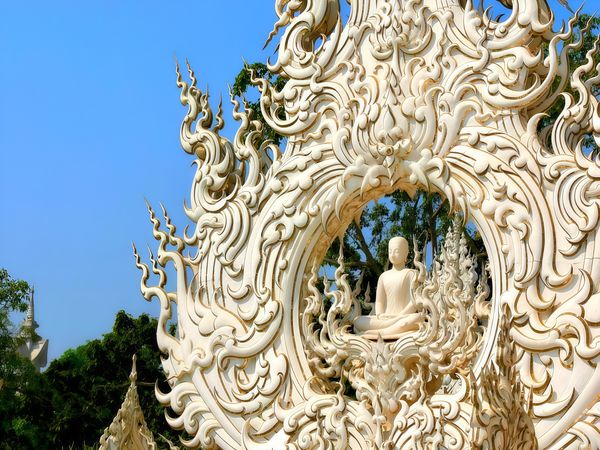 Tour from the article · ExcursionChiang Rai: White and Blue Temples and the Black HouseCheck dates →Live price · Trip.com
 Tour from the article · ExcursionWhite and Blue Temples and the Black House with a Karen villageCheck dates →Live price · Trip.com
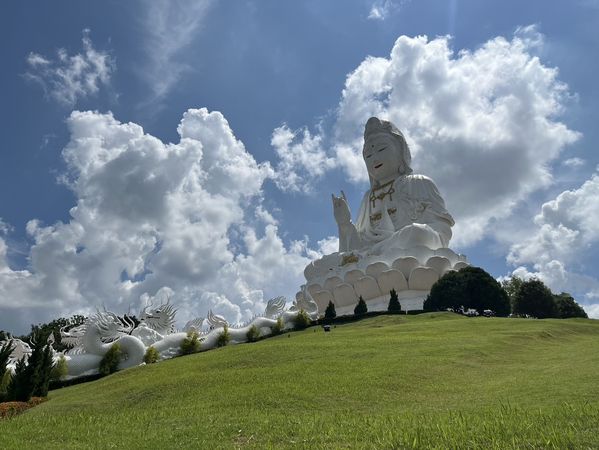 Tour from the article · ExcursionChiang Rai: Red, White and Blue TemplesCheck dates →Live price · Trip.com
If you want to reach the White Temple before the crowds, leave as early as possible: early in the morning it is quiet here, and by noon buses fill the courtyard. For an independent trip there is a tour of Chiang Rai or a transfer within Chiang Rai only (8–12 hours). Temples need covered shoulders and knees; at the White Temple scarves and skirts can be taken on the spot.
Doi Inthanon: coolness above the clouds
Doi Inthanon is the highest mountain in Thailand, and it is really cold here in the morning. Doi Inthanon National Park — 8.3 hours (rating 4.4): waterfalls, misty forests, viewpoints and the king’s and queen’s pagodas. If you have a day, it is better to bring a warm jacket, water and a light snack. In the rainy season views are often hidden by clouds and roads are slippery, so check the forecast; in winter it is fresh and clear here in the morning.
Adventures and family places
For adrenaline lovers and families there are Skyline Adventure Chiang Mai (rating 4.7), a flight over the jungle in Chiang Mai and the Chiang Mai Night Safari (4.6). To get to know the culture — Thai costumes and a photo shoot at Baan Orjao (4.7) and the Grandma’s Home cooking school (4.5): you go to the market, choose products and cook curry and som tam yourself, then eat your own. About crafts and local workshops see our article Weave Artisan Society in Chiang Mai.
A private guide and freedom
If you do not like groups and crowds, think about a private guide in Chiang Mai with an individual transfer (12 hours). It is convenient for a family, a group or those who want to choose where to stop: a temple in the morning, a quiet waterfall by day, dinner at the market in the evening. A private day costs more but has more human warmth and less rush.
The morning worth getting up early for
Chiang Mai has a special morning. Around six the streets of the Old City are still quiet, the air is damp and fresh, it smells of jasmine and smoke from braziers, and monks with alms bowls walk along the pavements. Locals come out of their homes, kneel and put rice and fruit into the bowls. It is not a performance for tourists but everyday life, and so you must watch quietly: do not use flash, do not block the road and do not get into the frame. Then you can step into the first cafe, order coffee and eggs and simply sit while the city wakes.
If it starts to rain
The rainy season in the north is not a catastrophe but a special beauty: the hills have turned green, the waterfalls are full and the air smells of wet earth. But tours in the rain work differently: it is better to visit elephants in the morning before trails are washed out, and Doi Inthanon is often covered by clouds. Plan two or three points a day, bring a raincoat and bags for equipment and keep a spare day. Rainy evenings are good for Thai massage, a cooking school or a coffee shop with a bookshelf, and on cloudy days choose temples and museums.
With children and elderly parents
The north of Thailand is kind to families: people smile, landscapes are soft and the pace of life unhurried. With children elephant eco-parks, the night safari, waterfalls and a cooking school suit best; Chiang Rai with its long road will tire little ones, so choose a private tour with stops. For elderly parents a private guide and an air-conditioned car are more convenient: fewer transfers, more rest. Bring water, hats, wet wipes and light snacks; it is cool in the mountains, and a warm sweater comes in handy even in the hot season.
Safety and respect
Various peoples live in the north, and in Karen and other community villages it is customary to behave modestly: ask permission for photos, do not touch children and do not buy small things from them for crazy money. In temples cover shoulders and knees, take off shoes and do not turn your back to Buddha statues. Look after nature: do not leave rubbish in forests and at waterfalls, do not feed wild animals. And be careful on the road: mountain serpentines are slippery after rain, and on a scooter it is better not to ride them without experience.
What you can skip
Honestly: in the north you do not need to do everything. Chiang Rai is the best day, but it is long, and repeating it after elephants and Doi Inthanon is not worth it. If you love unhurried travel, leave two days for the city, one “big” adventure — elephants or Chiang Rai — and one day for rest. The night safari and parks are interesting for families but not essential if you come for temples and quiet. The best of Chiang Mai is not a list but an evening in a cafe under a fan while rain drums outside.
Food worth going out for in the evening
The north of Thailand cooks differently from the south: less sweet and spicy coconut, more herbs, fried pork crackling and thick soups. Try khao soi (noodles in curry with chicken), sai ua (northern sausage with herbs) and nam prik (spicy paste with vegetables). The evening market on Sankamphaeng and the night bazaar near Tha Phae are places where you can eat almost anything and try ten dishes for little money. Look for stalls with queues of locals; do not fear spice, but if you do, say “mai phet”. Coffee in the north is special: it is grown in the mountains and roasted here, and the coffee shops around Nimmanhaemin can fill a whole evening.
When to go and what to bring
The best time for the north is from November to February: cool, clear, with mist on the mountains in the morning. In March and April smoke from burning fields stands over the valley and the sky is murky; in the rainy season (June to October) everything is green but roads can be slippery. For choosing a season in detail see the article Thailand in winter 2026–2027: the north and the islands. Bring a light jacket for mountains and evenings, comfortable shoes, covered shoulders for temples and mosquito repellent. Where to stay is in the guide to hotels in Chiang Mai, and the choice of area in the article Old City or Nimman: where to stay. If you are thinking of staying longer, look at the budget for a month in Chiang Mai, and for a general route Thailand itinerary for 10–14 days.
How to spread four days
- Day 1 — the Old City. Temples, a walk along the walls, the market and dinner in the evening.
- Day 2 — elephants. The eco-park in the morning, back for lunch, rest.
- Day 3 — Chiang Rai. The White and Blue temples, the Black House.
- Day 4 — Doi Inthanon or Doi Suthep. Mountains and coolness, the city lights in the evening.
Frequently asked questions
How many days does Chiang Mai need?
Three to four days are enough for the main places; with Chiang Rai and the mountains, five to six.
How to choose an ethical elephant camp?
Read reviews, choose places without riding and without shows, where elephants are fed and watched.
Do I need to book in advance?
In season and on holidays (for example Yi Peng) popular tours sell out several days ahead, so book in advance.
Useful links
- Tours from Chiang Mai
- Hotels in Chiang Mai
- Yi Peng 2027
- Thailand itinerary for 10–14 days
Chiang Mai is not about seeing everything but about stopping: drinking a coffee, listening to a bell, seeing an elephant that simply stands next to you and looks at you. The rest will come by itself.
Current as of November 2026. Schedules, tickets and offer conditions change: check them on the tour page and on Trip.com.
Tours and tickets from this article
Live dates, availability and the final price are on Trip.com. These are affiliate links — the price does not change for you.
Tour from the article · ExcursionChiang Mai Old City in half a dayCheck dates →Live price · Trip.comTour from the article · ExcursionNight trip to Doi Suthep and Wat UmongCheck dates →Live price · Trip.comTour from the article · ExcursionKERCHOR Elephant Eco ParkCheck dates →Live price · Trip.comTour from the article · ExcursionChokchai Elephant CampCheck dates →Live price · Trip.comTour from the article · ExcursionMae Taeng Elephant CampCheck dates →Live price · Trip.com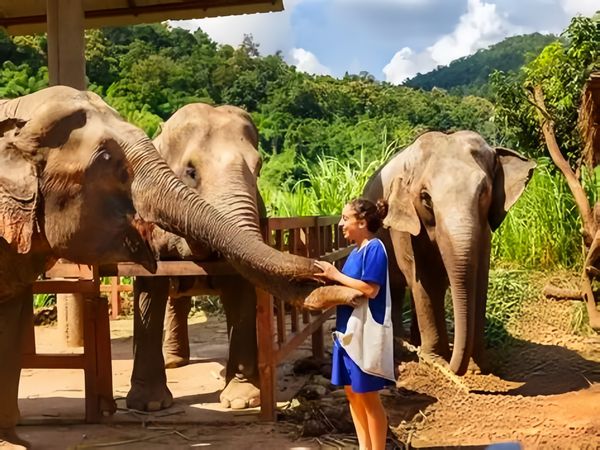 Tour from the article · ExcursionSticky Waterfall and Cafe ElephantCheck dates →Live price · Trip.com