Yi Peng and Loy Krathong 2027 in Chiang Mai (13–15 November): sky lanterns, krathongs on the Ping River, where to release them, safety rules, weather and where to stay.
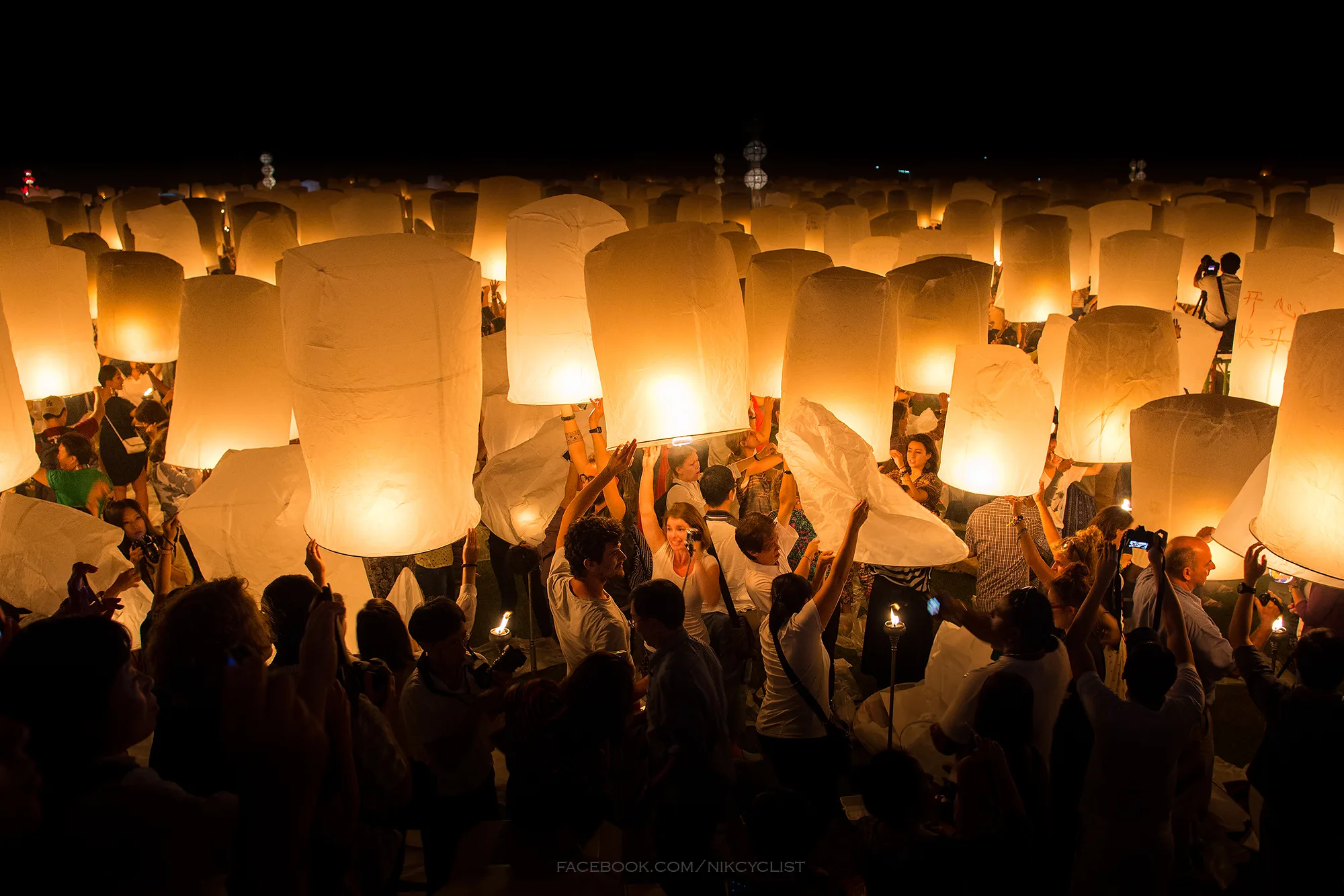
Sometimes the most beautiful minute of a trip lasts only a short while. You stand on a riverbank in Chiang Mai with a paper lantern in your hands, the warm air smells of wax and fried bananas, and hundreds of people whisper around you. Someone counts to three, you let go — and the lantern slowly, as if reluctantly, rises towards a thousand other little flames. The sky over the city turns into an upside-down sea of light, while tiny rafts with flowers and candles float on the water below. This is Yi Peng, the northern festival of lanterns, which in Chiang Mai merges with the nationwide Thai Loy Krathong. In 2027 the main days are expected to fall on 13–15 November, with the night of Loy Krathong on 14 November. It is one of the most beautiful festivals in Asia and at the same time one of the hardest to organise for: crowds, soaring prices, dozens of dubious offers. Let’s work out what is real and what is a tourist trap, how to choose a spot, when to book accommodation and how to spend three nights so that you come back with the best memories rather than exhaustion and disappointment.
- Dates: Yi Peng in Chiang Mai is expected on 13–15 November 2027; Loy Krathong falls on the night of 14 November (full moon).
- What happens: sky lantern releases, krathong rafts on the Ping River, lantern processions, fairs and concerts.
- Exact programmes: organisers publish them closer to the date; check with the municipality and tourist centres.
- Weather: November is the start of the cool, dry season — pleasant by day and fresh in the evening.
- Main tip: book accommodation in Chiang Mai six months ahead or more, and buy tickets for closed venues only from reliable organisers.
What Yi Peng is and how it differs from Loy Krathong
The two festivals fall on the same full-moon night, so they are often confused. Loy Krathong is the nationwide Thai water festival: people set small krathong rafts made of banana leaves, flowers and candles afloat on rivers, ponds and canals, thanking the Goddess of Water and asking forgiveness for polluting her. Yi Peng is a festival of northern Thailand, the historic region of Lanna. The name comes from the northern dialect: “yi” means “two” and “peng” means “full moon”, i.e. the “full moon of the second month” in the Lanna calendar. On this night in the north paper khom loi lanterns are released into the sky, and temples are decorated with garlands and lamps. It is believed that together with the lantern the troubles and misfortunes of the past year float away, and a wish made at the moment of release comes true. In Chiang Mai both festivals run in parallel and form a single spectacle: lights in the sky, lights on the water. Read more about the nationwide festival in our article on Loy Krathong, and for the calendar of other events in the country see the overview of Thailand events in 2027.
How the three days unfold
Although the exact schedule is announced closer to the date, the general structure of the festival is similar from year to year. By day the city holds parades: decorated floats with paper lanterns and flowers move along the streets, dancers in national costume walk past, and orchestras play. In the evening thousands of lanterns are lit: in the Old City garlands of paper lamps are hung along the moat and on the bridges, and crowds gather at Tha Phae Gate and on the bank of the Ping River. Then comes the main event — the lantern release. In some places it is organised as a separate event for guests at closed venues outside the city centre, in others it happens spontaneously on the riverbank and at temples. Krathongs are floated on the Ping River during all the evenings of the festival, especially on the night of the full moon.
It is important to understand that releasing paper lanterns in the centre of Chiang Mai is restricted. The city lies close to the airport, and the authorities regularly introduce bans and rules on releases in certain areas for flight safety. That is why mass releases are usually held at specially designated sites outside the city. Don’t fall for offers to “release one in the centre by your hotel”: it may be illegal and unsafe.
Where to release lanterns: an honest look at the options
Organised venues outside the city. The best known are the ticketed mass releases held at special venues and on university grounds near Chiang Mai. It is beautiful and well organised: participants are usually guided through a programme, given instructions and served refreshments, and the release itself is synchronised, at a single moment. The downsides are price and crowds. Tickets and tours are sold in advance and are heavily traded by middlemen, so buy only from reliable operators and check the terms on official resources. Don’t pay cash to strangers on the street and don’t transfer money through unverified links: there are plenty of fakes.
Free options. Some events need no tickets: you can walk around the city, admire the decorations, watch the processions and look at the sky from the riverbank. Light lanterns are sold at markets and near temples — but remember local rules and don’t release them in prohibited zones.
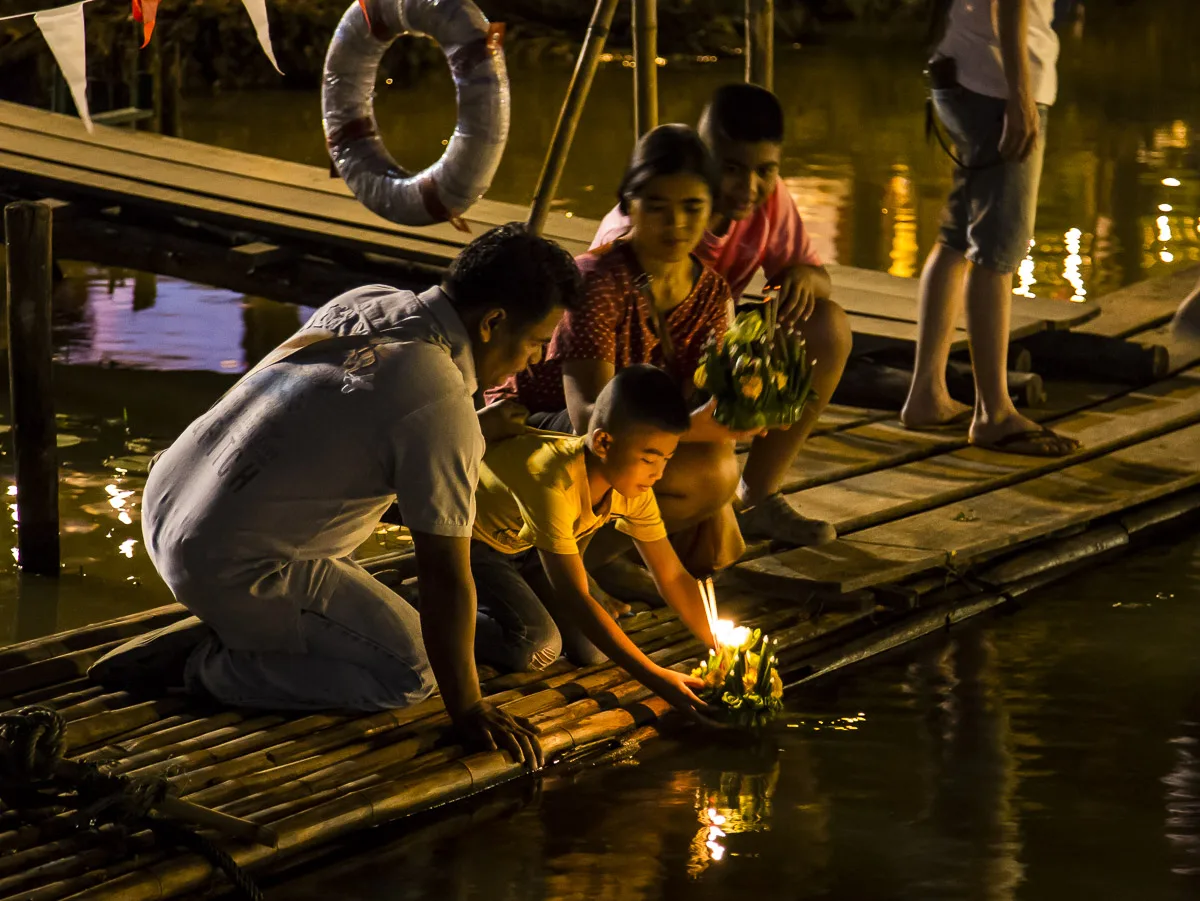
A krathong on the Ping River. The most accessible and touching ritual. A raft of banana leaves with flowers and a candle can be bought right on the bank for a small sum. Choose natural materials — banana trunk, leaves, flowers — and avoid polystyrene: environmental rules have tightened in recent years, and Chiang Mai promotes care for the river.
Temples. Many temples are decorated with hundreds of lanterns and garlands on these days, and services and ceremonies are held. This is the most intimate and profound way to feel the festival: come modestly dressed, keep quiet and don’t disturb those who are praying.
Ethics and safety: what you need to know
The festival is beautiful, but it has a dark side. Sky lanterns are fire, and they can fall on a roof, into a forest or onto power lines. Release them only at permitted venues, not in windy weather and not near trees or power lines. Choose lanterns of paper and bamboo without metal frames and wire: the latter are dangerous for animals and equipment. Pay attention to announcements from local authorities: rules can change from year to year. The same goes for krathongs: the more natural the materials, the better for the river. And watch your belongings: thefts happen in crowds, and the riverside can be tight, so keep your bag in front of you and don’t carry anything unnecessary.
What else to see in Chiang Mai during the festival
The festival is a reason to get to know the city. By day stroll around the Old City, surrounded by its ancient moat, and look into the temples: Wat Phra Singh, Wat Chedi Luang, Wat Chiang Man. The climb to Doi Suthep temple on the mountain above the city opens a view over the valley, and in the November evening it is especially beautiful here. Don’t miss the night markets and street food: northern cuisine is known for fragrant soups, sausages, spicy dips and desserts. A good addition are workshops on making krathongs or paper lanterns: you will learn how they are made and can make your own. If you want to see elephants, choose only ethical sanctuaries where the animals do not work with tourists and you observe and feed rather than ride: read recent reviews before booking.
Lanna: the land where Yi Peng was born
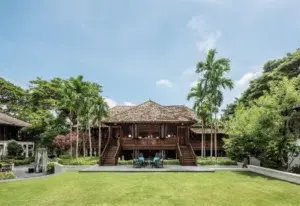
To feel the festival more deeply, it helps to know where it comes from. Lanna was a historic kingdom in the north of present-day Thailand, with its capital in Chiang Mai, founded in the late 13th century. The word means “a million rice fields”, and the culture of these places differs from the central one: its own dialect, its own cuisine, its own temple architecture with multi-tiered roofs and teak carving. Yi Peng is part of this heritage: in the Lanna era, on the full moon of the second month, people thanked the gods and ancestors, decorated temples, lit lamps and sent lights into the sky as a sign of gratitude and hope. Today the festival has kept this face: you will see locals bring flowers and candles to temples, listen to monks and hang paper lanterns on their house gates. Try not only to photograph the lights but also to watch these scenes — they are the real heart of the festival.
Make a krathong yourself
One of the most pleasant ways to join the festival is to make a krathong with your own hands. In Chiang Mai, workshops are held on festival days at cultural centres, guesthouses and markets. The base is a slice of banana pith or trunk, leaves and flower petals are pinned around it, and a candle and incense sticks are placed in the centre. The meaning is symbolic: you let go of your troubles, ask the water’s forgiveness and make a wish. Lower the finished krathong into the water carefully, without hurrying, at the places set aside for it. Don’t leave plastic, coins in unsuitable places or rubbish on the river: every year the authorities and volunteers clean the banks after the festival, and you can help by leaving the place clean.
For photographers: how to shoot the lights
Lights in the sky are a difficult subject for a camera. Use a tripod or a steady support, raise the ISO, open the aperture and don’t be afraid of exposures of a couple of seconds: that turns lanterns into trails of light. Shoot when the sky is already dark but still keeps a shade of blue: such frames look more three-dimensional. On the water, reflections and faces lit by candles are interesting. Remember respect: ask permission, don’t flash into participants’ faces and don’t interrupt ceremonies. Sometimes the best shot comes when you lower the camera and simply look: the seconds of silence before the release are worth more than a hundred pictures.
Yi Peng with children
The festival suits families but needs preparation. By day there is a lot of beauty in the Old City: parades, garlands, workshops. In the evening the crowd is denser, so come early and hold children by the hand, agreeing on a meeting place. Explain the safety rules to your child: a lantern is fire and is held only together with an adult. Bring water, a light sweater and a snack. If your little one is tired, don’t try to sit it out to the very end: it is better to retreat to the quiet of the hotel and watch the lights from a terrace or window.
How much it costs
The festival in the city is free: you can walk the decorated streets and float krathongs without tickets. Costs add up from the flight, accommodation, food, transport and, if you choose an organised lantern release, the event ticket. Ticket and hotel prices depend on the year and the venue, so check current offers at the booking stage. There is a simple rule: the earlier you book, the calmer your budget. And remember the small expenses — a krathong, a lantern, a treat, a songthaew: they seem minor, but over three evenings they add up to a noticeable sum.
How to avoid the traps
The festival’s popularity attracts not only guests but also unscrupulous sellers. The most common stories are fake tickets for closed venues, “exclusive” tours at inflated prices and pushy offers to buy a lantern “right now, or there won’t be enough”. Buy tickets only from organisers and agencies with a clear reputation, keep confirmations, read recent reviews and don’t transfer money to strangers. Agree the price of a taxi or songthaew in advance, and treat extra promises like a “guaranteed spot by the water” sceptically. If an offer seems too good, it probably is.
Weather and clothing
November is one of the most comfortable months for a trip to northern Thailand. The rainy season is behind, the air is cleaner, it is warm by day, and evenings and nights are noticeably cooler, especially in the mountains. Bring light clothing for the day and a sweater or thin jacket for the evening. Wear comfortable shoes, since you will walk a lot, and in a crowd it is better not to wear open flip-flops. Take sunscreen, a hat and repellent: there are mosquitoes on the riverside in the evenings. And for the lantern release choose clothes that are not afraid of wax and smoke.
Getting there and getting around
Flights to Chiang Mai arrive from Bangkok and other Thai cities, as well as international flights. Tickets for the festival days get more expensive and sell out in advance, so buy them as early as possible. Night trains and buses from Bangkok are an alternative, but they are also snapped up for the festival days. Within the city the most convenient ways to get around are on foot in the Old City, on the local red songthaew pickups and by taxi through apps. On the days of the main events the streets around the riverside and Tha Phae Gate are closed and traffic jams grow, so plan walking routes and set out ahead of time.
Where to stay
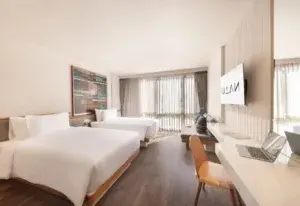
Chiang Mai during Yi Peng is one of the busiest cities in Asia. The best areas for the festival are the Old City and the surroundings of Tha Phae Gate, as well as the area along the Ping River and Nimmanhaemin. Hotels by the river let you reach the embankment in minutes, but prices are higher and there is more noise. If you want quiet, choose an area outside the centre: in the evening you will return to a peaceful place, and by day you can reach the festival by taxi or songthaew. Book six to twelve months ahead, choose options with free cancellation and check whether the hotel has a terrace or roof from which the sky is visible.
Itineraries
“Three evenings of lights” — 4–5 days. Chiang Mai: a day for the Old City and temples, an evening on the river with a krathong, an evening of the lantern release, a trip to Doi Suthep.
“The north and the capital” — 8–10 days. Chiang Mai for Yi Peng, then a flight to Bangkok and an evening on the Chao Phraya River, where krathongs are also floated.
“Cradle of the festival” — 8–9 days. Chiang Mai, then Sukhothai, where, according to tradition, the krathong custom began.
FAQ
When is Yi Peng in 2027? It is expected on 13–15 November; Loy Krathong falls on the night of 14 November. Organisers announce exact programmes closer to the date.
How does Yi Peng differ from Loy Krathong? Yi Peng is the northern festival of sky lanterns, Loy Krathong is the nationwide festival of water and rafts; in Chiang Mai they take place at the same time.
Can I release lanterns in the city centre? As a rule, no: restrictions apply near the airport, so releases are held at special venues.
Do I need to buy a ticket? For organised releases, yes; watching the city and floating krathongs on the river can be done without one.
When should I book accommodation? Six months to a year ahead, with free cancellation.
What is the weather like in November? Dry and warm by day, cool in the evening.
Dates, rules and programmes may change — check with the official sources of the Chiang Mai municipality and the Tourism Authority of Thailand.