Krabi and Phi Phi: Railay, Ao Nang, Maya Bay after its closure, the Hong Islands, Tiger Cave Temple, the season, how to get there and how to choose a base for a holiday on the Andaman coast.
Limestone cliffs rising straight out of turquoise water, beaches that no road leads to, longtail boats rattling their engines at dawn and sunsets painting the sky in peach and violet — that is Krabi. To the south of it, out at sea, lie the Phi Phi Islands — the very “paradise from the movies” that, after the film The Beach came out, turned into one of the most famous and most tourist-crowded corners of Asia. You can find everything here: noisy beach parties and quiet coves, climbers’ tent camps and luxury resorts, cheap hostels and villas over the sea. The mistake most travellers make is trying to see everything in a day or two and spending the holiday on the road and in queues. In this guide: how to choose between Krabi, Railay, Ao Nang and Phi Phi, what is really worth seeing, when to go, how to get there and how to avoid the most common disappointments.
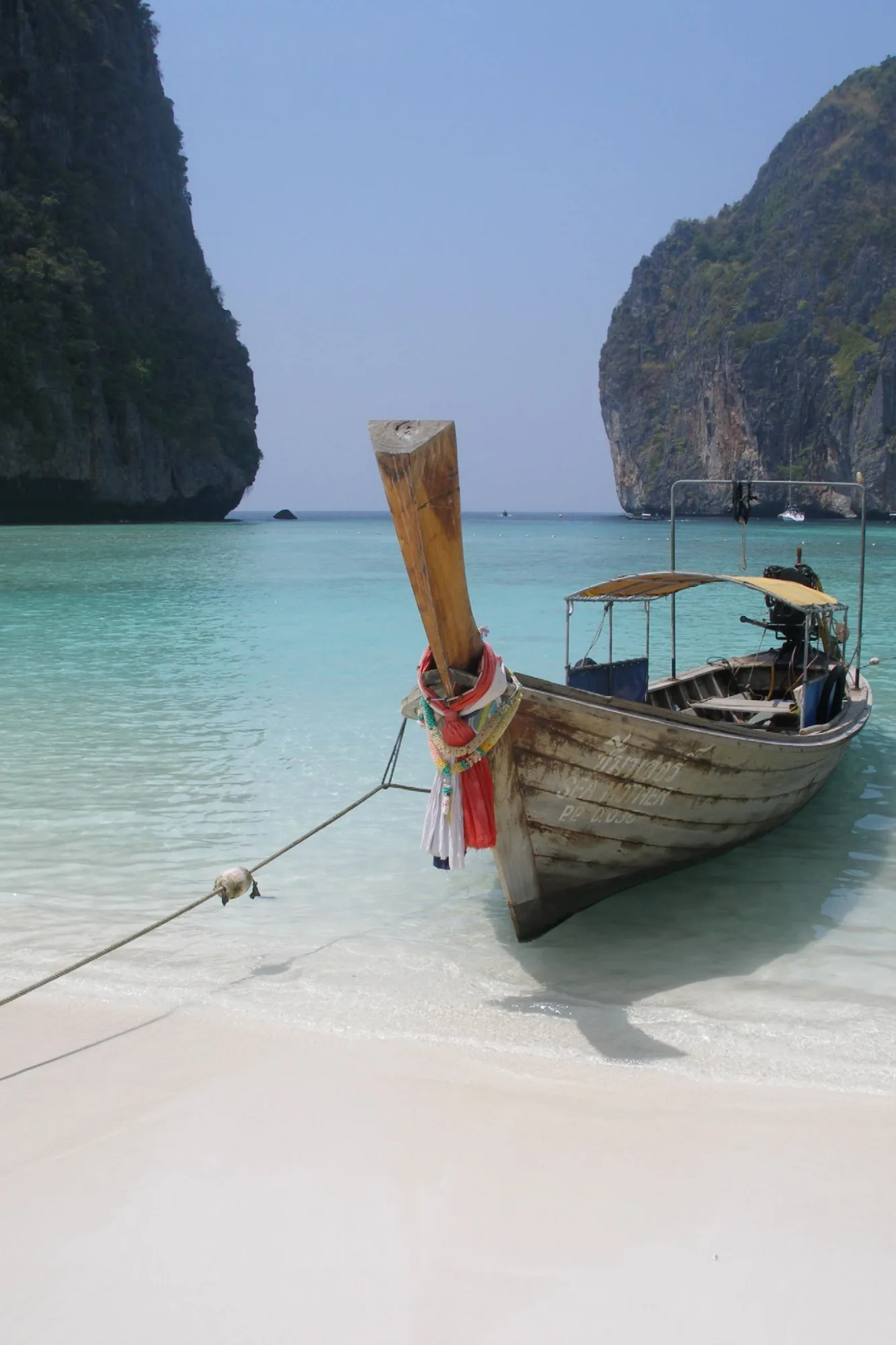
- Where: Krabi province on the Andaman coast of southern Thailand; the Phi Phi Islands are about two hours by boat from Krabi or Phuket.
- Best time: roughly November to April; in the rainy season some routes are closed and the sea is rough.
- Maya Bay: after its closure to restore the coral reefs, limits apply on the number of visitors and the time of stay; the rules change, so check.
- Railay: a peninsula that no roads lead to: you reach it by boat from Ao Nang or Krabi.
- Main tip: don’t try to see everything in two days: choose one base and make trips from it.
Krabi: how the region is laid out
Krabi province is not one resort but a set of completely different places united by a common coastline. The main town, Krabi Town, is a business centre with a river market and an evening food market, but there is no beach here. Ao Nang is the main tourist village: a long beach, rows of cafés, shops and agencies, from which boats leave for the islands. Railay (Rai Leh) is a peninsula cut off from the mainland by cliffs, reached only by boat; it is quieter, more beautiful and more expensive. Tonsai, Klong Muang and Noppharat Thara are calmer beaches along the coast. And to the south lie Koh Lanta and the group of Phi Phi Islands. The choice of base determines the whole holiday: Ao Nang suits those who value infrastructure and transport, Railay those who want beauty and rock scenery, and Koh Lanta lovers of calm.
Railay and Phra Nang: beaches without roads
The Railay peninsula is one of the most beautiful spots in Thailand. No road leads here, and from Ao Nang longtail boats deliver guests in ten to fifteen minutes. Railay West beach is wide and shallow, and to the east are mangroves. From here it is a five- to ten-minute walk to Phra Nang beach — white sand, turquoise water and tall cliffs; on the beach there is a cave that locals consider sacred. Railay is a climbers’ mecca: there are hundreds of routes of varying difficulty, and instructors give lessons for beginners. In the evening, when the tide rises, some of the beaches disappear under water, so keep an eye on the boat and tide schedules. In season Railay fills up quickly, and prices are higher than in Ao Nang, so book in advance.
Phi Phi: a paradise that had to be closed
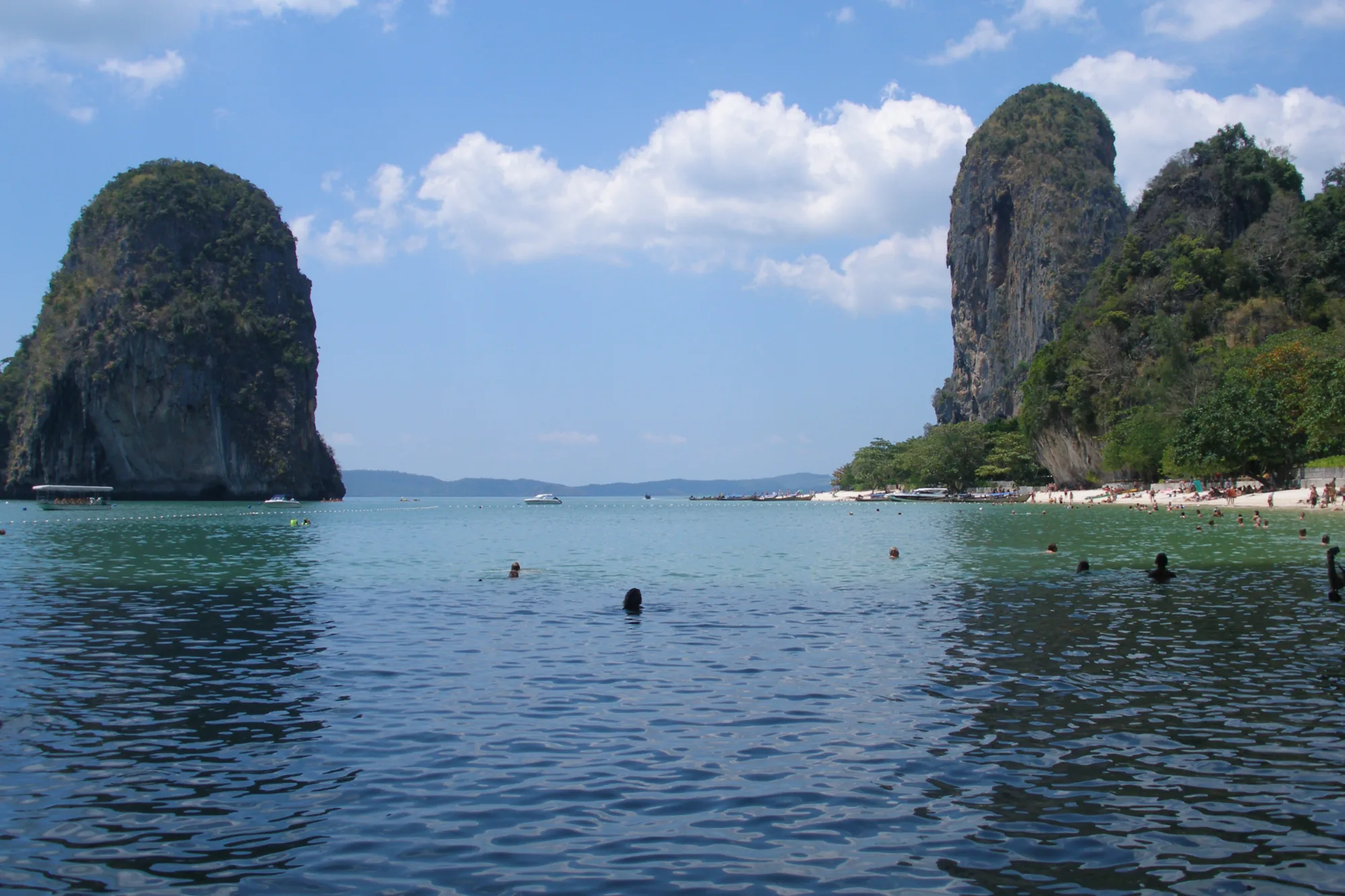
The Phi Phi archipelago consists of several islands. Phi Phi Don is the large, the only inhabited one: it has a village with hotels, bars and a pier, as well as two beautiful beaches. Phi Phi Leh is an uninhabited island that is home to the famous Maya Bay, which became the setting of the film The Beach in 2000. After the film crowds poured into the bay: in high season several thousand people a day came here, and boats destroyed the coral reefs. In 2018 the bay was closed to visitors to let nature recover, and in 2022 it reopened with new rules. Now boats do not enter the bay itself, visitors land on the other side of the island, for a limited time and in limited numbers; swimming in the bay is forbidden, and the national park entrance fee is paid separately. The exact rules, hours and closure dates for the rainy season change, so check fresh information with the operator. It is worth going at least to see what a place that took so long to recover looks like.
Besides Maya Bay, there are other interesting spots around Phi Phi: Viking Cave, Pileh Lagoon with its green water, Monkey Bay and reefs for snorkelling. A day trip usually includes three to five stops, lunch and time for snorkelling. It is better to choose small boats and early departures: that way you will reach the bay before the main crowd. Staying overnight on Phi Phi Don lets you see the islands in the morning and evening, when the day boats have gone. Note that the island is noisy: bars work late.
Island tours from Ao Nang
Besides Phi Phi, other popular routes leave from Ao Nang. “Four Islands” is the classic: a boat trip among cliffs and shallow lagoons with stops for snorkelling and a picnic. The “Hong Islands” are lagoons with green water and tall limestone walls; it is beautiful here, but crowded. “Poda Island and Chicken Island” are small islands with a sandbar that connects them at low tide. You can hire a private longtail for a few hours and choose the route yourself — it is more expensive, but more flexible and often calmer. Before choosing, read recent reviews and check what is included in the price: equipment, lunch, park fees.
What else to see on land
Tiger Cave Temple (Wat Tham Sua). A Buddhist monastery on top of a hill: you climb a stone staircase of more than a thousand steps. It is better to start early in the morning while it is cool. At the top there is a statue of the Buddha and a panorama of the surroundings.
Emerald Pool and hot springs. Natural pools in the forest not far from Krabi; the water in them is warm and a beautiful colour. It is a popular place, so come early.
Waterfalls and nature parks. The national parks around Krabi offer trails, waterfalls and viewpoints. In the rainy season there is more water, but the trails are slippery.
Koh Lanta. An island to the south, calmer and simpler than Phi Phi. It has long beaches, small hotels and an old fishing village. Suitable for a holiday without bustle.
Climbing at Railay: anyone can try
Railay is one of the best-known climbing spots in Asia. Limestone walls of different difficulty levels, beautiful sea views and hundreds of marked routes attract both professionals and beginners. If you have never climbed, sign up for a half-day course: the instructor will issue the equipment, show the basic techniques and pick a route within your strength. Pay attention to the school’s reputation, the condition of the equipment and insurance. It is better to climb in the morning or evening, when the rocks are in shade, and in summer with a large supply of water. Even if you don’t want to climb, a walk along the walls and watching the climbers is great entertainment.
What to eat in Krabi
The cuisine of southern Thailand is known for its heat and intensity: coconut-milk curries, fresh seafood, pickled vegetables and grilled fish. Try massaman curry, crispy roti flatbreads with a sweet filling, fried fish and prawns on the waterfront, and rice noodles with spicy sauce. Krabi Town has an evening market with hundreds of stalls: prices are lower than in resort restaurants and the choice is bigger. Ao Nang has many tourist restaurants with Thai and European food; look for places where locals eat and choose dishes prepared in front of you. If you don’t like spicy food, ask for “not spicy” in advance — southern cuisine is generous with chilli.
Snorkelling and diving
The waters around Krabi and Phi Phi are a paradise for those who love the underwater world. Simple snorkelling routes are available to everyone: a mask, snorkel and life jacket are enough. For diving there are numerous schools and centres with courses for beginners and dives for the experienced. Visibility is best in the dry season, while in the rainy season waves stir up the water. Don’t touch the corals, don’t chase fish and don’t go too far from the boat. Before booking, check the centre’s licences and reviews and don’t agree to dives without an instructor.
With children and with parents
Krabi is good for families: many shallow beaches, calm bays and hotels with pools. With small children choose Ao Nang or Koh Lanta: transport and food are easier there. Railay is beautiful but requires boarding a boat and walking on sand. For elderly parents trips on longtails may be uncomfortable: waves, a steep ladder, wet feet. Tiger Cave with its staircase is not suitable for people with joint and heart problems. Bring sun protection, water and hats, and choose boats with a roof for shade and life jackets of the right size.
For photographers: cliffs, sunsets and boats
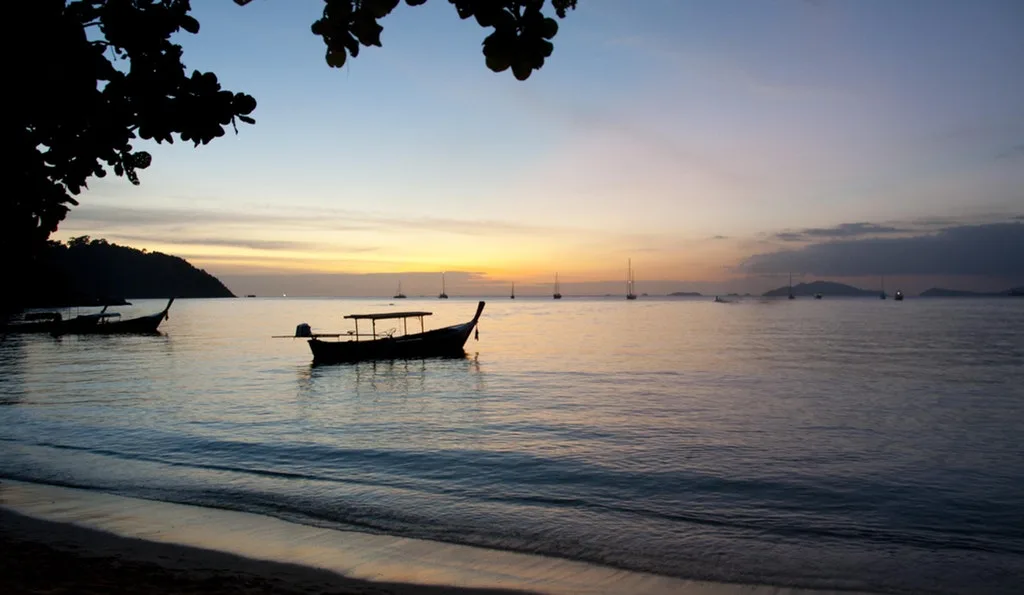
Krabi is a paradise for landscape photography. The best light is in the morning and at sunset, when the cliffs take on warm colours and the water becomes mirror-like. At Railay shoot the cliffs with a long focal length and the boats with a wide angle. In Maya Bay and on Phi Phi try to catch boats against the cliffs and people in the water: they give scale. Drones in national parks are, as a rule, restricted, so check the rules in advance. And protect your gear from water and sand: beach winds and spray do their work.
When to go: season and weather
The Andaman coast has distinct dry and wet seasons. The best time is roughly November to April: the sea is calm, the sky clear and boats run on schedule. From May to October it rains, waves are higher, and some trips and excursions are cancelled; Maya Bay closes for several months in the rainy season. On the other hand, prices are lower at this time and places are quieter. Demand is highest from December to February, especially for the Christmas and New Year holidays: accommodation must be booked six months ahead. For the seasons of the country as a whole see the article on Thailand’s seasons, and for the events of the year the overview of Thailand events in 2027.
How to get there
The nearest airport is Krabi, which receives flights from Bangkok and other cities as well as international ones. From the airport to Ao Nang it is about thirty to forty minutes by taxi. You can fly into Phuket and from there go to Krabi by bus or transfer: the road takes about two to three hours. Ferries and speedboats to Phi Phi leave from Krabi, Ao Nang and Phuket; the journey takes from an hour and a half to two hours. You reach Railay by boat from Ao Nang or from the port of Krabi. For trips around the province people take taxis and songthaews (tuk-tuks) and rent bikes, but traffic in Krabi can be dangerous and roads slippery, so caution is a must. For motorbike trips see our articles on the country’s transport, transport in Thailand.
How not to be disappointed
The main complaints about Krabi and Phi Phi repeat. The first is crowds: in high season boats queue at Maya Bay and beaches are full. The solution is early departures and small groups. The second is rubbish and water: after the season floating rubbish remains on some beaches. Look at fresh photos. The third is weather: in the shoulder season the sky clouds over and the view of the islands is not what it is on postcards. The fourth is ethics: don’t feed animals, don’t touch corals, don’t leave rubbish, don’t buy souvenirs made of shells and corals. The fifth is safety: use life jackets, don’t swim far from boats and don’t get into boats without identification marks.
Where to stay
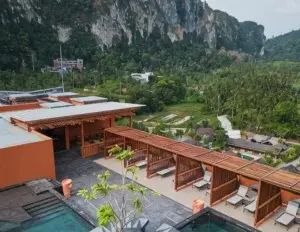
For a first time the best option is Ao Nang: it is easy to make trips to the islands and parks from here, and there are places to have dinner in the evening. Railay suits those who seek beauty and are ready to pay for quiet; Koh Lanta for a calm holiday. Phi Phi Don is suitable for one or two nights, not for a week. Below is a selection of hotels from our database. Look at the reviews and the “Hotel health” block, and check the distance to the beach and transfer terms.
How much it costs and how to save
Krabi is one of the most affordable regions of southern Thailand, but the cost depends on season and area. The main expenses are accommodation, boat tours, national park entrance fees, food and transport. To save, stay in Ao Nang rather than Railay, choose group tours instead of private boats, eat in local cafés and markets rather than in waterfront restaurants, and book hotels in advance with free cancellation. Don’t buy tours from random touts on the beach: compare the offers of several agencies and check what is included in the price. Exact sums change, so check current information and keep a reserve of cash for small expenses.
Three ready-made itineraries
“Krabi in a week”. Three days in Ao Nang (Railay and Phra Nang, “Four Islands”, Tiger Cave), two days on Phi Phi Don, a day of rest.
“Peace and quiet” — 5–7 days. Koh Lanta without hurry, a day on Phi Phi and a day at the viewpoints of Krabi.
“The Andaman coast” — 10–12 days. Phuket, Krabi and the Similan Islands: read about them in the guide to the Similans, and about other beaches in the article on the best beaches of Phuket and Pattaya.
FAQ
When is the best time to go? Roughly November to April; in the rainy season some routes are closed.
Can I visit Maya Bay? Yes, but with limits on the number of visitors and time; it is closed in the rainy season, and swimming in the bay is not allowed.
Where should I stay the first time? In Ao Nang: it is convenient for trips to the islands and has infrastructure.
How do I get to Railay? By longtail boat from Ao Nang, in ten to fifteen minutes.
Is one day enough for Phi Phi? Enough for Maya Bay and snorkelling; for the experience it is better to stay overnight.
What else is worth seeing? Tiger Cave, the Emerald Pool, the Hong Islands and Koh Lanta.
National park rules, prices and boat schedules change — check current information with the operator and the hotel.