The Cu Chi Tunnels — 200 km of underground passages near Ho Chi Minh City, dug by hand since 1948: punji traps, tunnel rats, two different sites to visit and a range with a real AK-47.
A hole in the ground barely larger than a rabbit burrow — the guide lifts a cover of leaves, and you can see: down there is darkness you have to squeeze into sideways, sucking in your stomach. This, and not through a front door, is how the descent began for those who really hid here half a century ago. The tourist entrance a couple of metres away has been widened for Western shoulders, but the idea itself remained the same: beneath the peaceful fields 40 kilometres from Ho Chi Minh City, an entire underground army lived for a decade and a half.
200 kilometres dug with hands and hoes
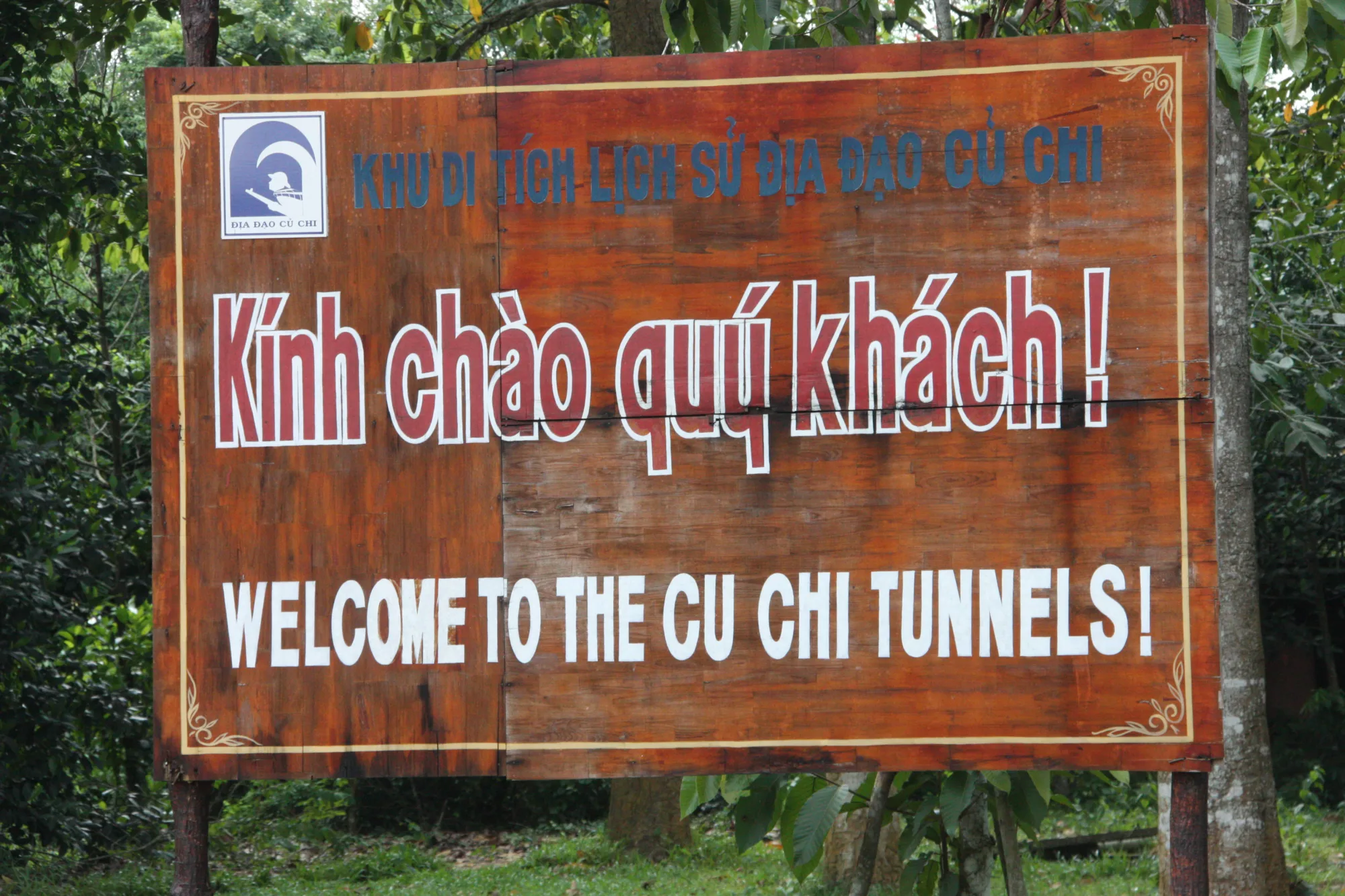
Construction began back in 1948, when Viet Minh fighters needed shelter from French air raids — long before the next generation would fight in these same passages against a completely different enemy. By 1965, at the height of the war with the US, the network had grown to colossal proportions — by various estimates, up to 200 kilometres of passages dug by hand, without machinery, in the hard laterite soil of the province, which American troops later nicknamed the “Iron Triangle” for the density of its underground fortifications. The tunnels linked living quarters, weapons workshops, hospitals, kitchens and command posts into a single network a few metres underground — practically a city, whose existence ground forces for a long time only guessed at from the enemy’s rare, inexplicable appearances and disappearances literally from under the earth.
Traps still studied in the world’s military museums
A separate, truly ingenious and ghastly part of the defence system is the homemade traps on the approaches to the tunnels. The best known is the “punji”: sharpened bamboo stakes planted in a camouflaged pit, often smeared with excrement or poisonous plant sap to guarantee infection even from a small wound. There were also mechanical devices — the “folding chair” that breaks a leg when stepped on, swinging balls with metal spikes on branches, ankle traps with built-in points, tripwires with grenades capable of disabling several people in a group at once. It was against this system that the US trained special fighters — “tunnel rats”, as a rule of small stature, armed only with a pistol, a bayonet and a torch: their task was literally to feel their way in the dark for traps and the enemy where an ordinary soldier simply could not turn around.
Ben Dinh and Ben Duoc: two different tunnels, two different experiences
Today two sections of the complex are officially open to visitors, and the difference between them is tangible. Ben Dinh is closer to the city and the most visited: the tunnel loop for tourists here is about 100 metres with three exit points, so you can get out earlier if you don’t like it, and the passage itself is widened for Western dimensions. Ben Duoc is farther from the centre (about 70 km), five times larger in area, and it is there that the tunnel sections are preserved closer to their original size: some passages require literally going on your haunches rather than just ducking, but there are noticeably fewer people here — tour groups rarely wander so far.
Shooting real weapons — a separate, controversial attraction
On the grounds of the complex there is a range where you can fire weapons of the war era — the AK-47, M16, a carbine, the RPD light machine gun and other models — at a price of about 60,000 dong per round, with a minimum purchase of 10 rounds per visit. The format arouses mixed feelings even among travellers themselves: on one hand this is the genuine weaponry of that conflict, on the other the sound of shooting carries across the whole memorial grounds, which for many feels like an inappropriate neighbour to a place that tells of a real tragedy and the deaths of people. The decision whether to go to the range is worth making consciously, not out of inertia of “since we’re here”.
How to get there and what to expect in terms of time
The road from Ho Chi Minh City takes about two hours one way, so the visit is logically planned for at least half a day, and better with lunch on site (many tours include a tasting of tapioca with salt and peanuts — the very food the guerrillas lived on underground). You can get there on your own by public bus, but most travellers choose an organised tour — a group one starts from $17, a private one is noticeably more expensive but spares you the crowds at the narrowest sections of the tunnel.
FAQ
Isn’t it scary for people with claustrophobia? The Ben Dinh tourist section has been widened precisely with foreign guests in mind and is equipped with several exit points — you can get out before the whole loop ends. At Ben Duoc the passages are narrower and closer to the original size — if the claustrophobia is serious, it is wiser to choose Ben Dinh or skip the underground part altogether, limiting yourself to the above-ground exhibition.
Which section should I choose — Ben Dinh or Ben Duoc? Ben Dinh — if you want it quick, with a group and without big physical effort. Ben Duoc — if a more authentic atmosphere and fewer tourists matter, and you are ready for a narrower and physically harder passage.
Is it worth going to the range? The decision is personal — it is genuine historical weaponry, but many visitors find the sound of shots inappropriate on the memorial grounds; try first going through the main exhibition and deciding on the spot, rather than booking in advance “just in case”.
How much time should I allow for the trip? Realistically half a day including the road (about 2 hours one way from Ho Chi Minh City); if you want to combine it with other stops on the way, allow a full day.
Is this place suitable for children? The theme of war and the genuine exhibits of traps may be hard for small children — assess the child’s age and sensitivity in advance; some operators expressly do not recommend the tour for children under a certain age.
Prices and tour conditions may change — check the current information before your trip.