How to pay for the metro in China: a foreign card at the turnstile in Beijing, a QR code in Alipay, Yikatong transit cards and single tickets — four ways and which to choose.
Why the metro in China is not the same as at home
The metro in Chinese megacities is one of the most modern, fast and cheap in the world: trains run on schedule to the minute, stations are clean, and the network of lines in Beijing and Shanghai exceeds in length the metros of most European capitals put together. But for a tourist the main question is not “is it convenient” but “how to pay” — there is no single system for the whole country here, each city has its own transit card, its own app and its own rules for foreigners. We go through the payment methods — from the simplest to the most troublesome.
Method 1: a foreign card right at the turnstile (Beijing)
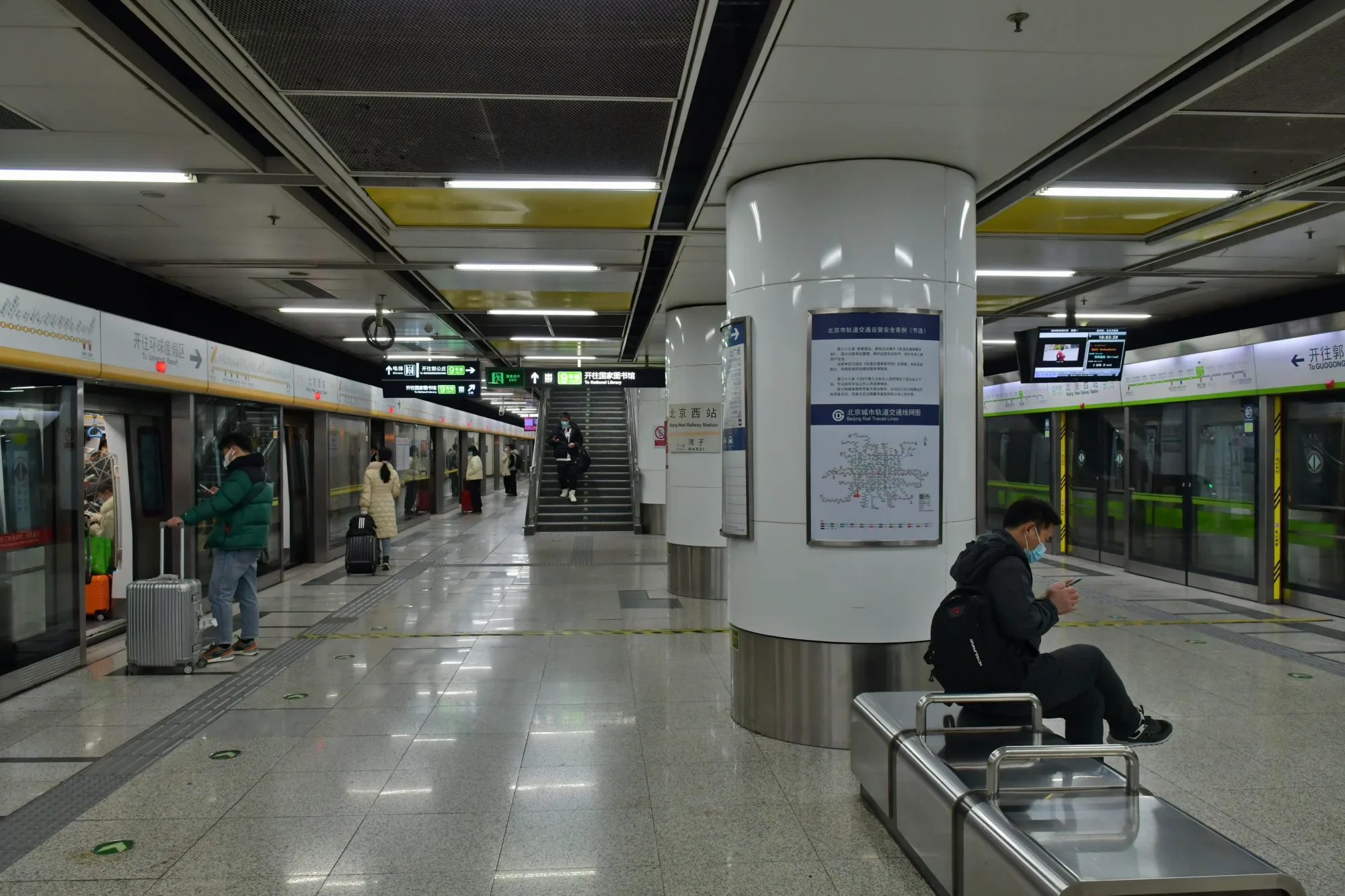
The simplest option, not yet available everywhere but already really working — Beijing became the first city in mainland China where you can tap an ordinary foreign Visa or Mastercard right on the turnstile at the metro entrance, without buying a ticket and without installing apps. The method works on all 27 city lines and on the S2 suburban line. For a tourist this is the best option of all: nothing needs to be set up in advance, no Chinese phone number is needed, a contactless card that you usually pay with at home is enough. In other cities of China this function is not yet so widespread — before counting on it, check on the spot or look for signs with the Visa/Mastercard logos at the turnstiles.
Method 2: the metro QR code in Alipay
The second most convenient option is the built-in metro function in the Alipay app, which works in practically all large cities of China, including Beijing, Shanghai, Guangzhou and Shenzhen. The procedure is this: open Alipay, find the “Transport” section, choose “Metro” at the top of the screen and press “Get now” — after entering your payment password Alipay will generate a QR code, which you hold up to the scanner at the turnstile on entering and on leaving. The code is valid for a limited time (about five minutes), so it is worth generating it right before passing through, not in advance. Both Chinese and foreign bank cards linked to Alipay are suitable for this method — how to do that without a Chinese bank is covered in detail in our piece topping up Alipay and WeChat from Russia. Alipay has a switch of the interface to 15 languages, including English, which greatly simplifies navigating the app for a beginner.
Method 3: a physical transit card
The classic option is a plastic transit card for a specific city: Yikatong (一卡通) in Beijing, the analogous Shanghai Public Transportation Card in Shanghai, and their own cards in other large cities. Such a card works not only in the metro but also on buses and sometimes in taxis, which is convenient if you plan to use different kinds of transport actively. You can buy the card at the ticket window at a metro station — self-service machines often require a Chinese phone number or a document, so for a tourist it is more reliable to go directly to the window attendant with a passport. For the Yikatong card in Beijing a deposit (about 20 yuan) and a minimum top-up (also about 20 yuan) are usually required; the deposit can be returned when handing the card back before departure, although return points are not at every station. A plus of the physical card is that holders get a cumulative discount: after a certain amount of transport spending in a month, part of the following trips become cheaper, sometimes significantly. The minus is that the card is tied to a specific city and does not work in another, and carrying several different cards for different cities is not always convenient.
Method 4: a single ticket for cash or from a machine
The simplest in theory and the most troublesome in practice is to buy a single paper ticket from a machine at the station. The machines almost everywhere support an English interface and cash yuan (in some cities only coins and small notes, with no change given for large bills), and the result is a paper token or a ticket with a QR code, which is held to the turnstile on entering and dropped into a receptacle on leaving. This method suits one or two trips if you categorically do not want to install apps, but for active use of the metro over several days it is less convenient: each time you have to work out the line map and the cost of the specific route again, which depends on distance.
What to choose: which method for which trip
If you are going to Beijing for a few days and want minimal preparation — take an ordinary contactless Visa or Mastercard and tap it right on the turnstile, it is the fastest start without a single setting. If you plan a longer trip through several cities of the country — it is worth setting up Alipay with the metro function in advance, before the flight: the same QR code mechanism will work practically everywhere there is a metro, with no need to deal with the local card of every new city. A physical card makes sense if you stay in one city for a long time and use both the metro and buses actively: the cumulative discount pays for the time spent on getting it. A paper single ticket is a backup option in case both the card and the phone have let you down, or for one chance trip that you don’t want to complicate with settings.
A practical checklist
- In Beijing first try a contactless foreign Visa/Mastercard right on the turnstile — the simplest option without preparation.
- For a trip through several cities, set up the metro function in Alipay in advance — it works practically everywhere and does not require a physical card.
- For a long stay in one city, get a local transit card at the window (with a passport, not through a machine) — it gives a cumulative discount and works on buses.
- Keep a little cash yuan in case the card or the phone does not work at a particular station.
- The metro QR code in Alipay is valid for about five minutes — generate it right before passing through the turnstile, not in advance.
Frequently asked questions
Can I pay in the Chinese metro with an ordinary Russian card?
Directly at the turnstile — only in Beijing, where foreign Visa and Mastercard are accepted. In other cities, to pay by card you need to link it to Alipay or WeChat Pay.
Do I need a Chinese phone number for a transit card?
For buying a physical card at the window — usually not, a passport is enough. But self-service machines often require a Chinese number, so it is more reliable to go to the window attendant.
Does one transit card work in all cities of China?
No, each large city has its own card and its own system — Yikatong in Beijing does not work in the Shanghai metro and vice versa. The only method that works practically the same everywhere is the metro QR code in the Alipay app.
Can I get the deposit for a transit card back before leaving?
Yes, usually you can, but not every station has a return point — find out in advance where exactly you can hand in the card and get the deposit back.
How long is the metro QR code in Alipay valid?
About five minutes, so create it right before passing through the turnstile, not ahead of time.
Conclusion
The metro in China is convenient and cheap, but the way of payment is worth thinking through in advance rather than finding out on the spot at a turnstile with a queue behind you. For Beijing the simplest is an ordinary contactless card, for a trip through several cities Alipay with the metro function, for a long stay in one place a local transit card. Any of these options works reliably if you set it up before you find yourself at the entrance to the underground with a suitcase in one hand and a phone in the other.