Pharmacies in China: the Dashenlin and Yifeng chains, the difference between a Western and a traditional pharmacy, antibiotic prescriptions, what to bring from Russia and how to pay — a practical guide for tourists.
Why look for a pharmacy in China at all and what to expect
A cold, an upset stomach from unfamiliar food, a sunburn or a plaster that has run out — sooner or later on any long trip around China you will need a pharmacy. Good news: there are many of them, they are on every corner in any city, and some work around the clock. Bad news: the system is arranged differently than in Russia or Europe — prescription policy is stricter, signs are almost everywhere only in Chinese, and in one pharmacy packs of familiar pills often sit next to jars of dried beetles and roots for decoctions. Working this out in advance means not wasting time on explanations through a translator at the moment when you really feel bad.
Who holds the market: the main chains
China’s pharmacy market is first of all large national chains, not a state monopoly. The leader by number of points is Dashenlin (大参林), with more than 17 thousand pharmacies across the country; next comes Yifeng Pharmacy (益丰大药房) with more than 14 thousand points. Alongside them operate Guoda (国大药房) and Nepstar (海王星辰), which are also found in practically every district of a large city. The signs of these chains are the most reliable landmark: if you see one of these names (usually with the characters 大药房 — “big pharmacy” — or 药房/药店 at the end), inside you will almost certainly find a familiar set of Western medicines, not just herbs.
Cosmetics and skincare are a separate story: for them it is better to go not to an ordinary pharmacy but to the Watsons (屈臣氏) chain, which in China works more as a drugstore than as a classic pharmacy and offers both world brands and local dermatological cosmetics with active ingredients like niacinamide and retinol at prices noticeably lower than in Russia.
A Western pharmacy or a traditional one: how to tell them apart
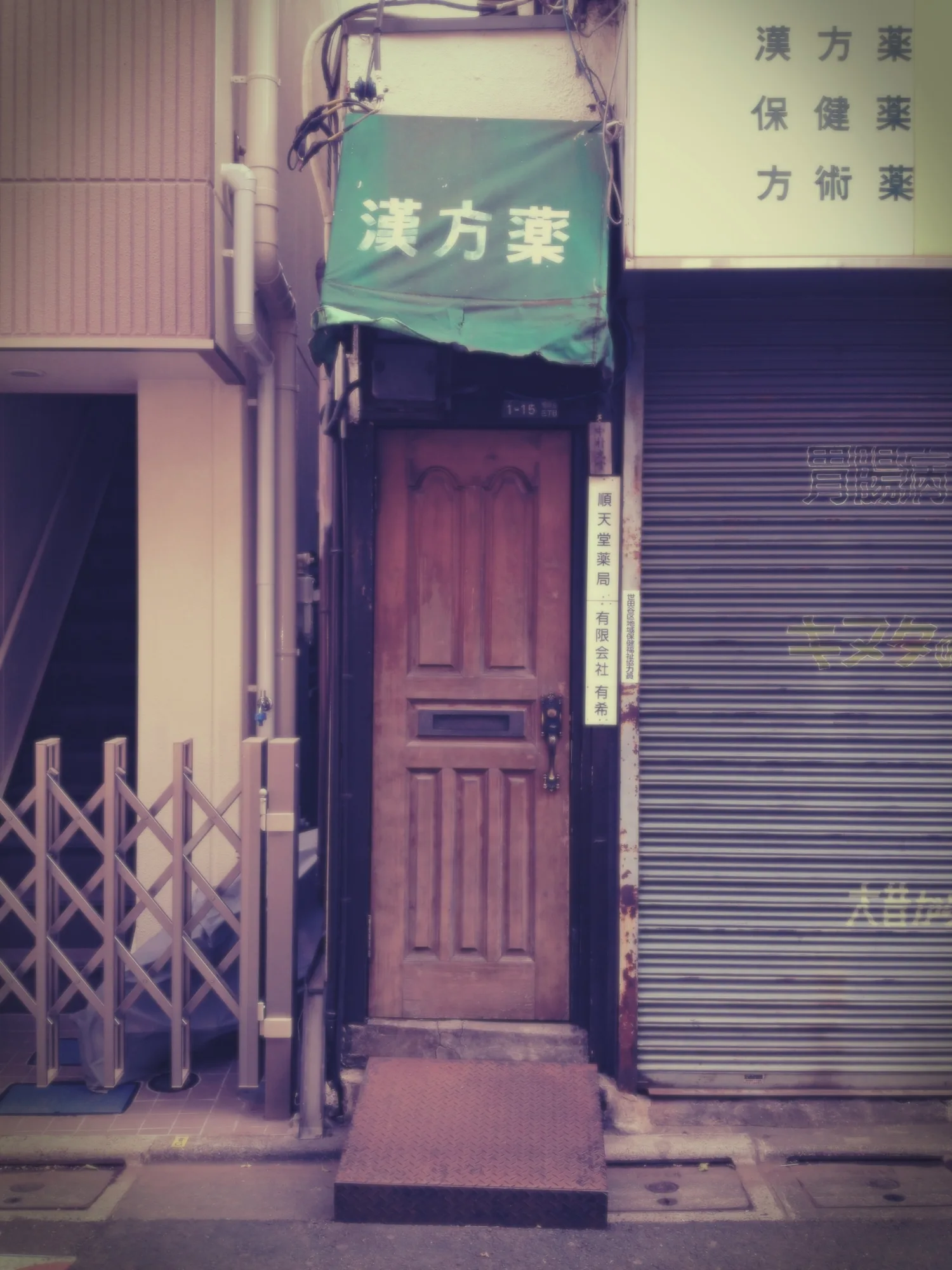
In China two approaches to treatment historically coexist, and this is directly reflected in how pharmacies are arranged. A “Western” pharmacy (西药房) is the familiar set of factory pills, syrups, ointments and plasters in recognizable factory packaging, often with English instructions for well-known international brands. A “traditional” Chinese medicine pharmacy (中药房) is a completely different world: behind glass display cases and in wooden boxes lie dried herbs, roots, powders, and in some establishments — really beetles, lizards, snakes and other ingredients that an ordinary tourist will find more like a museum exhibit than a medicine. The pharmacists of a traditional pharmacy tend to treat “the organism as a whole” rather than a specific symptom, and are often skeptical of “chemistry” — antibiotics there may simply not be offered, on the view that the body will cope on its own. Large chain pharmacies like Yifeng and Dashenlin usually combine both formats under one roof: in the front part the familiar preparations, in the back or on separate shelves the herbal mixtures.
Prescriptions and antibiotics: what is important to know in advance
Antibiotics, strong painkillers and most drugs for treating chronic diseases in China are sold strictly with a prescription from a Chinese doctor — a prescription written at home is not recognized by local pharmacies. In practice there is a workaround for a foreigner: in some pharmacies a prescription drug is still sold without a doctor’s paper if the buyer writes a note saying they are buying the medicine consciously and taking responsibility for possible side effects. You should not count on this as a guaranteed option — much depends on the specific pharmacy and the pharmacist’s mood. A more reliable path in case of serious deterioration of health is to go to an international clinic or a hospital department for foreigners, where a doctor can write a prescription on the spot.
Simple over-the-counter categories — fever reducers, anti-diarrheals, antihistamines, plasters, ointments for burns and insect bites — are sold freely almost everywhere, and here everything works as simply as in any other country.
What to bring in advance and what you won’t find in China
Several home remedies familiar to a Russian tourist are either absent from Chinese pharmacies or sold under completely different names that are hard to recognize from a description: Corvalol, Validol and zelyonka (brilliant green) are almost impossible to find — it is a specifically post-Soviet set that has no direct Chinese analogue on the shelf of a mass pharmacy. A sensible strategy is to take a small supply of remedies familiar to you personally on the trip: a painkiller, a medicine for an upset stomach, an antihistamine, plasters and whatever you take regularly, with a sufficient reserve and, if possible, a copy of the prescription in English for declarations at the border.
How to find a pharmacy and recognize the sign
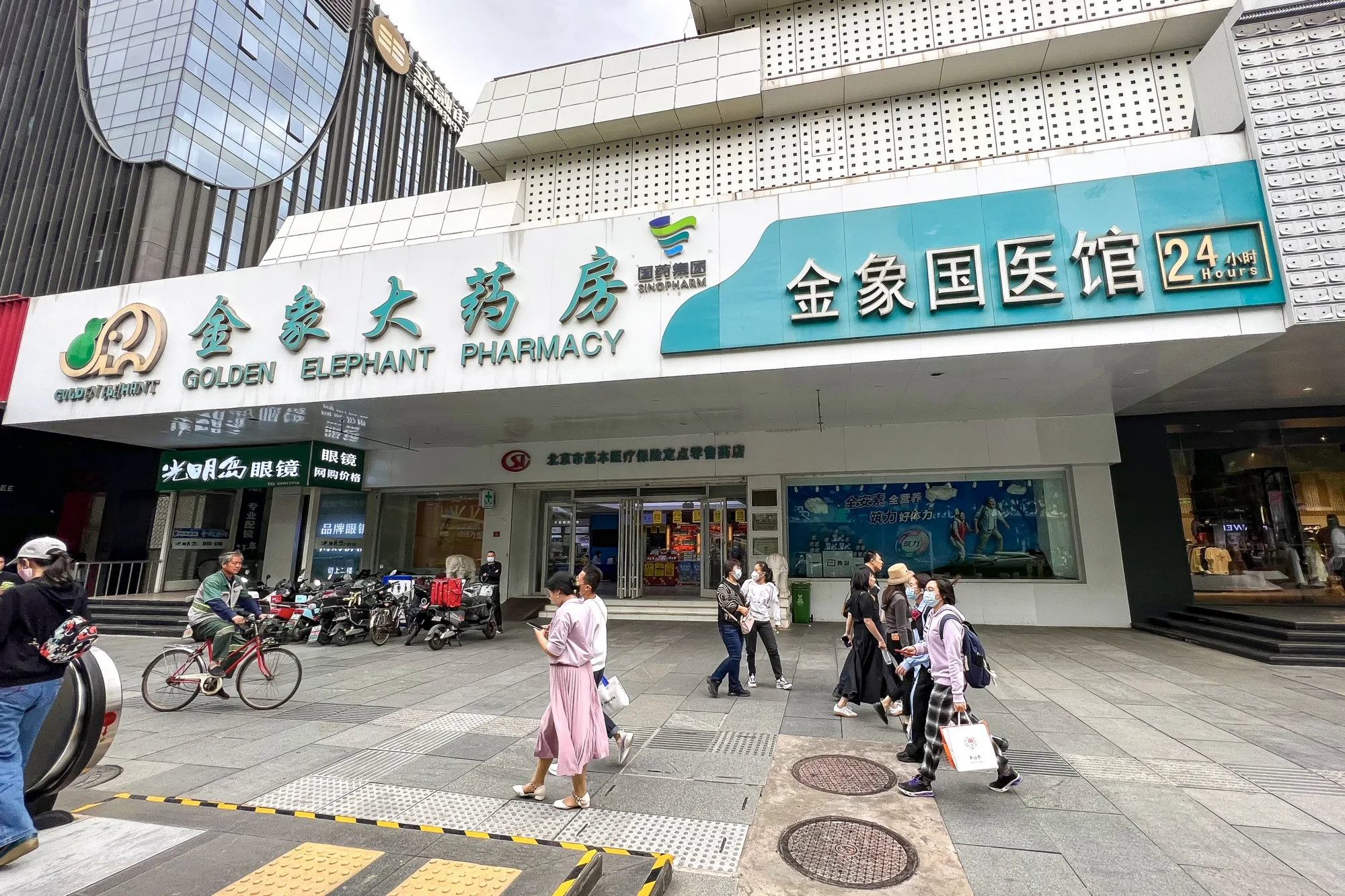
Look for the character 药 (yào, “medicine”) — it is almost always in a pharmacy’s name: 药房 (yàofáng, “pharmacy”), 药店 (yàodiàn, also “pharmacy”), 大药房 (“big pharmacy”, usually at large chains). The sign is often supplemented with a green cross or an image of a snake with a cup — the same symbols used in other countries. In cities with a large flow of foreign tourists — Beijing, Shanghai, Guangzhou, Dalian, Xiamen, Harbin — the name is often duplicated in English with the word Pharmacy, and in cities bordering Russia like Heihe and Manzhouli — directly in Russian as “Аптека”, which greatly simplifies the search for a Russian tourist. Many pharmacies in large cities work around the clock, which is convenient with a sudden indisposition late in the evening.
How to pay
As everywhere in China, the main way to pay is Alipay or WeChat Pay by scanning the QR code at the checkout; cash yuan are also accepted almost everywhere. You should not count on a foreign bank card directly — details on how to link a Russian card to Chinese payment services are in our piece topping up Alipay and WeChat from Russia. Chinese pharmacies reliably issue receipts, which is convenient for later insurance compensation — keep them together with the packaging of the medicines you bought.
A practical checklist
- Look for the large chains — Dashenlin, Yifeng, Guoda, Nepstar — by the character 药 and the green cross on the sign; in tourist cities the name is often duplicated in English or Russian.
- Simple over-the-counter remedies (a fever reducer, anti-diarrheal, antihistamines, plasters) are sold freely almost everywhere.
- Antibiotics and strong painkillers — only with a prescription from a Chinese doctor; a foreign prescription is not valid.
- For cosmetics and skincare go to Watsons, not an ordinary pharmacy.
- Bring a supply of remedies familiar to you personally and Corvalol/Validol/zelyonka — they can’t be found in China.
- Pay through Alipay, WeChat Pay or cash yuan — a foreign card at the checkout almost certainly won’t work.
Frequently asked questions
Can I buy antibiotics in a Chinese pharmacy without a prescription?
Formally no, antibiotics are a prescription drug. In practice some pharmacies sell them against a written note from the buyer accepting responsibility, but you should not rely on this as a guaranteed option.
Do pharmacies in China work around the clock?
Many pharmacies in large cities work 24/7, especially in central districts and near hospitals, but it is not a universal rule — in small cities and residential districts the working hours may be limited.
How does a traditional Chinese pharmacy differ from an ordinary one?
A traditional pharmacy (中药房) sells herbs, roots and powders for decoctions, sometimes including exotic ingredients like dried insects, and is oriented toward comprehensive treatment of the body. An ordinary (“Western”) pharmacy sells familiar factory preparations in standard packaging. Large chains often combine both formats under one roof.
Can I pay in a Chinese pharmacy with a foreign card?
In practice no. The main way of payment is Alipay or WeChat Pay via a QR code or cash yuan.
Do Chinese pharmacies have familiar Russian medicines like zelyonka and Corvalol?
No, it is a specifically post-Soviet set without direct analogues on the shelves of mass Chinese pharmacies — such remedies are better brought from home.
Conclusion
A pharmacy in China is not a problem to find, it is a matter of understanding what exactly you will find inside. Large chains like Dashenlin and Yifeng provide a familiar set of Western medicines for simple cases like a cold or an upset stomach, while herbal treatment and prescription restrictions are what to be ready for in advance, and not to find out on the spot through a translator with a temperature near forty. Bring a small first-aid kit from home, master payment through Alipay or WeChat, and the question “what to do if I get sick in China” will cease to be a cause for anxiety.