How to choose tours in Hiroshima: the Peace Park, Miyajima Island, kayaking to the torii gate and the JR Pass, with honest tips on what to skip.
It is quieter in Hiroshima than in other Japanese cities, and that is no accident. Here is the Peace Park, where on the river bank stands the lone frame of the Atomic Bomb Dome, a museum where it is impossible to speak loudly, and thousands of paper cranes that schoolchildren from all over the country bring to the memorial. It is not entertainment but a place of remembrance, and it is better to come without haste, not to pose with a smile and not to put it in the programme as something to “tick off”. But Hiroshima has another face too: a lively modern city with tasty food, where okonomiyaki is cooked in layers and not mixed, and Miyajima Island, where a red torii gate rises from the water. Let us work it out: which tours in Hiroshima are truly worth your time, how best to combine the memorial and the island and what you can skip. We collected offers from the Trip.com catalogue, with duration, language and cancellation terms.
- Hiroshima and Miyajima in one day: a bus tour or a walking programme (8 hours).
- The Peace Park and Miyajima Island with a guide; kayaking to the torii gate (2 hours).
- For a large route, a Hiroshima, Osaka, Kyoto tour (8–12 hours).
- For independent trips, the JR Pass for the Hiroshima and Okayama region.
Hiroshima and Miyajima in one day
The most convenient format for a first acquaintance is a tour that combines the city and the island. In the morning you devote time to the Peace Park, by day cross to Miyajima, and by evening return. Options:
- Peaceful Hiroshima and Miyajima: a one-day bus tour, 8 hours (rating 5.0);
- Hiroshima: a tour of the Peace Park and Miyajima Island (5.0);
- Hiroshima and Miyajima: a one-day bus tour (4.0).
The difference between them is the amount of time at each place and whether there is a guide telling the story. For the Peace Park a guide is especially valuable: he explains what exactly you see and helps make sense of it. Do not try to fit everything in too tightly in a day: on Miyajima you need time simply to sit by the water.
Miyajima and the gate in the water
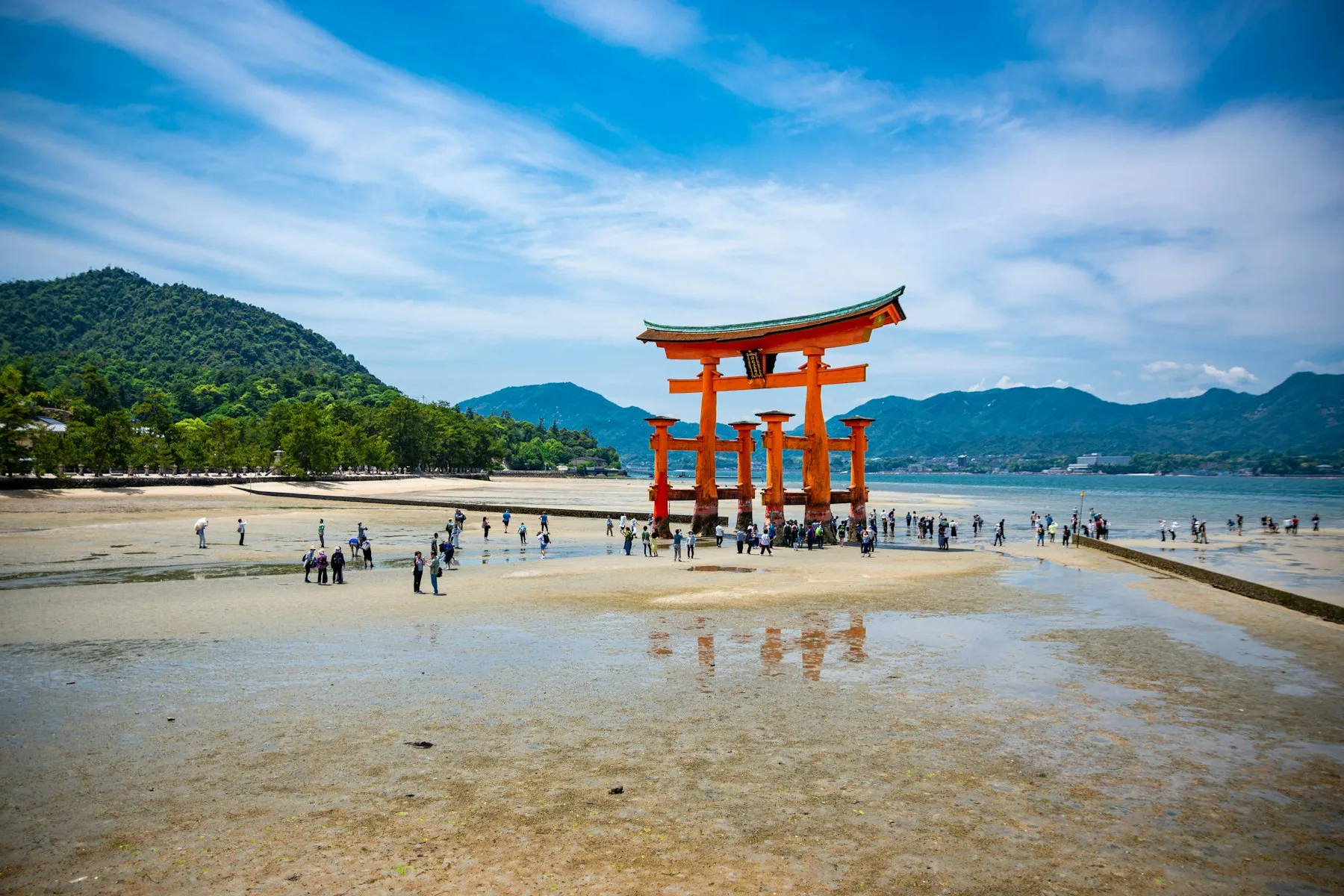
The red torii gate stands right in the sea: at high tide it seems to float, and at low tide you can walk to it over wet sand. The island is surrounded by hills, and tame deer walk the streets. If you want to see the gate from the water there is a kayak tour to the torii gate on Miyajima, 2 hours (4.8). It is an unusual way to look at a shrine, but it depends on weather and tide, so check the terms and time. Do not feed deer with food and do not tease them: they look sweet but can be persistent. More about the island and the city in our material Hiroshima and Miyajima.
Hiroshima, Osaka and Kyoto in one day
For those travelling from Osaka or Kyoto there is the format Hiroshima, Osaka, Kyoto: a one-day bus tour, 8–12 hours (4.3). It is very long and intense. For a memorial place where quiet is needed, such a race is not the best choice. If you can, it is better to give Hiroshima a separate day or at least half a day and not hurry.
Independently around the region
If you love freedom, the region is convenient to explore on your own: the JR Pass for Hiroshima and Yamaguchi railways (4.8) and the Okayama–Hiroshima region JR Pass (4.9). Count how many trips you will really make: sometimes separate tickets are better value. For where to stay see the review of Hiroshima hotels.
The Peace Park: how to behave
The Peace Park is not an amusement park. Speak quieter, do not run and do not joke near memorials. Do not pose in positions that may seem inappropriate and do not climb fences. In the museum many exhibits are hard to bear: if you are with children, talk to them in advance and decide what they are ready to see. It is no shame to pause and step into the fresh air: it is normal. You can leave a paper crane in a designated place or simply stand in silence by the Dome. Respect for the place is the main thing required of you here.
Food: okonomiyaki and oysters
Hiroshima is famous for okonomiyaki, “Japanese pancakes” of cabbage, noodles, egg and meat or seafood laid in layers on a hot plate. Try them in a special shop or in a row of cafes where cooks work before your eyes. On Miyajima they sell fried oysters and maple-leaf cakes momiji manju. If you have a seafood or gluten allergy, warn people in advance. For table manners in Japan see the material etiquette in Japan.
Morning on Miyajima: how not to get lost in the crowd
The most beautiful time on the island is early morning, before the first groups arrive. Deer walk the streets, shops are closed and the torii gate stands in quiet water. If you can stay overnight on the island, do not miss the evening: when the last ferry takes tourists away, the island becomes almost empty and the gate is lit. For those coming for a day, the best option is to take an early ferry and walk to the gate before crowds come.
Clothing and practicalities
For a trip to Hiroshima and Miyajima bring comfortable shoes: you will walk a lot. A light jacket will come in handy in any season and an umbrella in the rainy season. The island has stairs and climbs, so you need stable shoes. Yen in cash will be useful in small shops. Keep your passport handy for tax-free purchases. And do not forget water and a small snack: there are long walks between stops.
With children and with parents
For children the Peace Park is a serious and important experience, but it can be heavy. Teenagers and older children are better prepared in advance, and small ones should not be taken to the museum. Miyajima is liked by everyone: deer, shops and the gate in the water. For older parents choose short tours and consider the stairs on the island. And do not forget rest: the day is emotionally dense, and fatigue comes faster than it seems.
Evening in Hiroshima: the quiet embankment
Toward evening lights come on on the embankments of the Motoyasu River, boats glide on the water and people who are in no hurry stand on bridges. It is the right time to walk without purpose, sit on a bench and reflect on what you saw by day. Do not plan anything loud for this evening: after the Peace Park you want quiet. Go into a small restaurant, order okonomiyaki and simply sit. Many say such evenings help understand why such places are needed.
How to prepare for visiting the museum
The Peace Museum is a heavy place, and it is worth preparing for it emotionally. Do not plan an overly dense programme before it and leave free time after. For many people the first halls are especially hard, and that is normal: go at your own pace, pause and do not be ashamed to step out into the fresh air. Decide in advance whether you will see everything or only the main part. Taking an audio guide or going with a guide is a good way to get explanations and not be left alone with your feelings.
Practical details that save a day
Buy ferry and museum tickets in advance if possible and learn the tide timetable for Miyajima. Put water, a light snack and a phone charger in your backpack. Dress so that you are comfortable both in a temple and on the street: shoulders and knees covered, comfortable shoes. Write your hotel name in Japanese and save a map offline. These small things greatly reduce stress and let you concentrate on the most important.
Weather and a backup plan
Weather by the Seto Inland Sea is usually mild, but rains and typhoons happen. For Miyajima they matter especially: strong wind and waves can suspend ferries and kayaking. Check the forecast and cancellation terms in advance, and keep a city plan in reserve: museums, cafes and covered galleries. If the day turns out rainy, do not be upset: the Peace Park in rain looks especially focused, and sometimes it is in such weather that it is remembered most strongly.
If you are here for the first time
The first impression of Hiroshima is often unexpected: a modern, green and very welcoming city. The contrast between its history and today both moves and teaches. Do not try to “embrace” everything at once: choose the main thing, give yourself time and let the place speak. You may leave with a feeling that you understood something important, even if you could not put it into words.
What you can skip
Honestly, you do not need to take a “three cities in a day” tour if you want to truly feel Hiroshima. One calm day is worth more than a marathon by bus. It is not necessary to climb Mount Misen on Miyajima if you dislike climbs: the gate and the shrine give enough impressions. Kayaks are for those who want an unusual angle, and others can do without them. And souvenirs near the Peace Park are better chosen consciously: not all items are appropriate.
When to go
The best time is spring and autumn: clear, comfortable and beautiful. Summer is hot and humid, winter cool but with fewer people. Holiday days and the cherry blossom season make the island crowded, so book accommodation in advance. For kayaking and the torii gate consider tides: timing depends on the day and the sea. We collected the events calendar in the material Japan events 2027.
How to spread two days
- Day 1: Hiroshima. Morning in the Peace Park, the museum, an unhurried lunch with okonomiyaki, evening by the river.
- Day 2: Miyajima. An early ferry, the torii gate, a walk around the island, kayaking or a calm day.
Frequently asked questions
How much time do you need for Hiroshima?
At least half a day for the Peace Park and museum; with Miyajima, a whole day or two.
When is it best to see the torii gate?
High and low tide give different views: at high tide it stands in water, at low tide you can walk to it; check the tide timetable.
Is Hiroshima suitable for children?
Yes, but prepare them in advance and do not take small children to the museum.
Useful links
- Tours in Hiroshima
- Hiroshima and Miyajima
- Hiroshima hotels
Hiroshima is not about doing everything but about standing in silence by the river and in the evening watching the red gate slowly go into the water. The rest will follow.
Current as of November 2026. Schedules, tickets and offer terms change: check them on the tour page and on Trip.com.