Tashirojima is an island with four times more cats than people, and Okunoshima is a former secret chemical-weapons factory overrun by thousands of tame rabbits. Two of Japan's most unexpected islands.
Imagine an island where there are four times more cats than people — and all of them are sure that you have sailed in precisely to feed them. Now imagine another island, with a photograph of it hard to find cuter anywhere on the internet — hundreds of fluffy rabbits run out to meet the ferries along a dusty road — but which seventy years ago was wiped from all official maps of Japan because chemical weapons were secretly produced on it. Both places really exist, both are a couple of hours from major Japanese cities — and both rarely make it even into the most detailed travel guides to the country.
Tashirojima: the island where cats are gods of luck
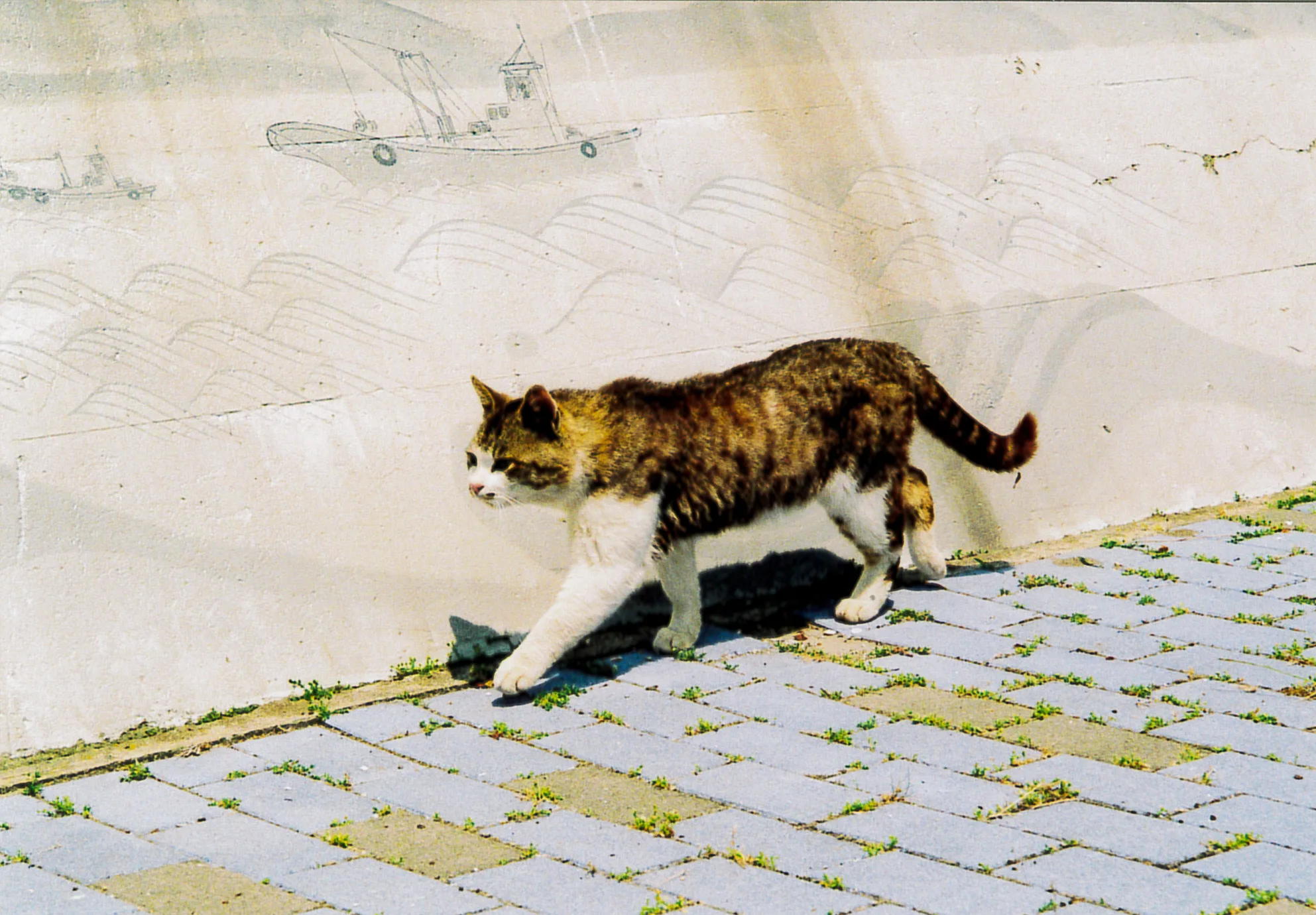
The story began in 1603 not with a love of animals at all but with silk: silkworms were raised on the island, and cats were used to scare off the mice that hunted the precious larvae. Then happened what happens almost everywhere fishermen and animals live side by side: cats began to come to the taverns where fishermen stopped for the night before going out to sea, begging for scraps — and the fishermen, instead of driving them away, began to watch their behaviour. Over time a belief took shape: how the cats behave predicts the weather and the behaviour of the fish. Killing a cat on the island was considered not just cruelty but directly bringing misfortune on oneself and the whole village.
Today, as the island’s population rapidly ages and shrinks, cats have long outnumbered people — and the main occupation of locals and tourists has become the same as fishermen’s for centuries: feeding, stroking and photographing cats sprawled in the sun along the island’s main (and, in fact, only) road. A separate shrine in the centre of the island, Neko-jinja (“the cat shrine”), is dedicated to them — a rare case where literally the whole public space of a small Japanese island is built around animals rather than in spite of them.
How to get there: from Sendai on the JR Senseki Line to Ishinomaki station (about 1 hour 15 minutes), then by taxi or bus to Ajishima port (15 minutes), from where a ferry runs to the island three times a day (45–60 minutes in transit).
Okunoshima: the island that was erased from maps — and now rabbits live on it
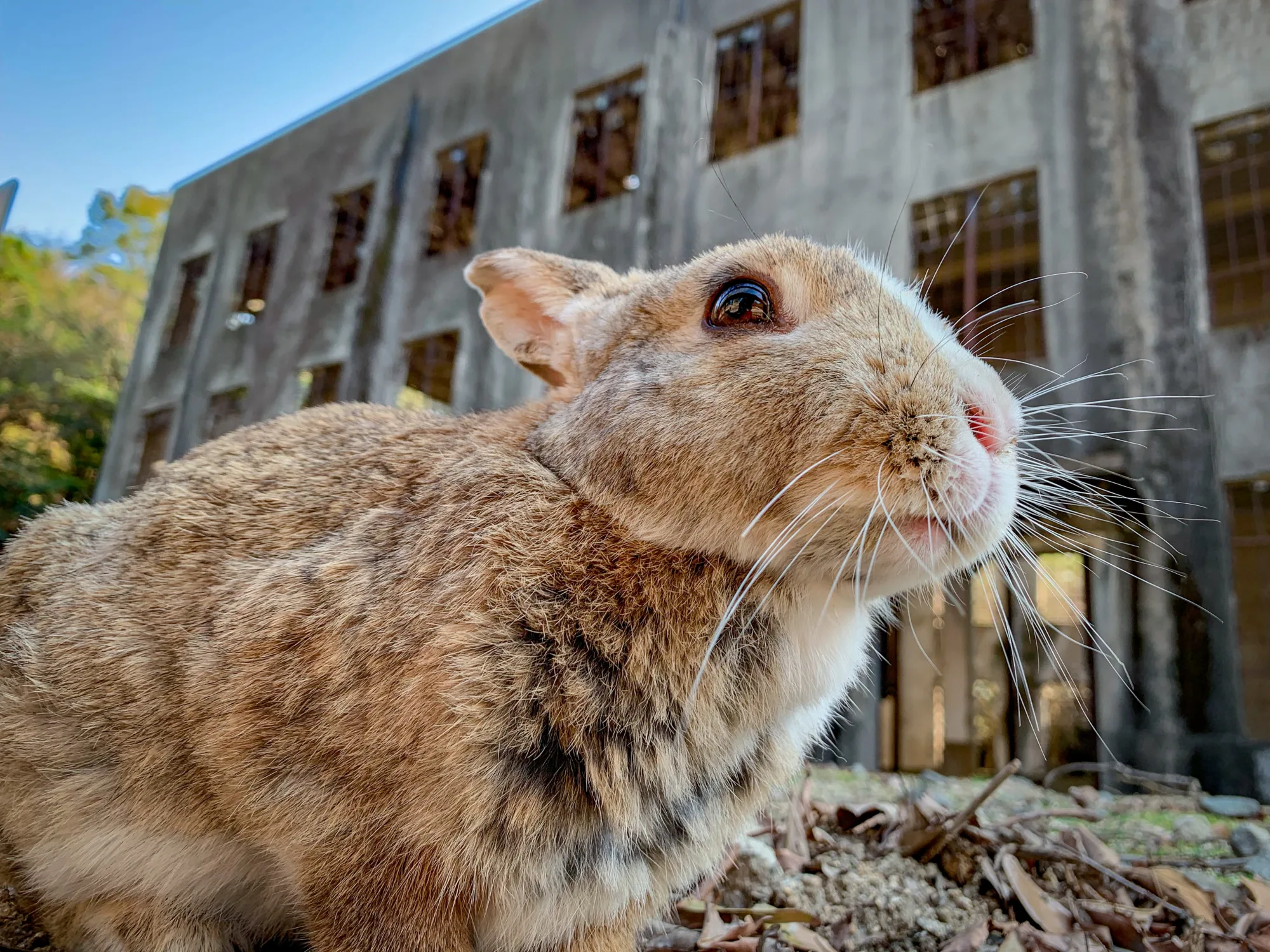
Here the story is exactly the other way round: first the gloom, then unexpected light. From 1929 to 1945 Okunoshima was a secret military facility: mustard and tear gas were produced here for the needs of the Imperial Army — more than 6,000 tonnes of toxic agents, a significant part of which was used against China during the Second World War. The operation was classified so thoroughly that in 1938 the island was officially removed from all non-classified maps of the country — for cartographers and most Japanese, Okunoshima simply ceased to exist. More than 6,000 people worked at the factory, and the price of this secrecy for their health and fates is a separate, heavy page, which is told in detail today by the Poison Gas Museum on the island itself.
And then, in 1945, the war ended, the factory was dismantled, and the island was converted into a public park. According to one version, in 1971 local schoolchildren released eight rabbits on the island. There are no natural predators on Okunoshima, tourists fed them cabbage and carrots for years — and the colony, as usually happens with rabbits without limiting factors, exploded in number. Today there are hundreds of them here, they run out to meet every ferry, climb onto the laps of tourists sitting on the grass and are completely unafraid of people — it is hard to imagine a more striking contrast with what the island was seventy years ago.
How to get there: from Hiroshima on the JR Kure Line to Tadanoumi station (about 1.5 hours, ¥1,170), then a 5-minute walk to the pier and by ferry to the island (15 minutes, ¥360 one way). It is worth buying rabbit food in advance at the shop by the terminal — it isn’t sold on the island itself.
Why this is not just “aww” for social media
It is easy to reduce both islands to a ready formula of “cute animals + pretty shots for Instagram”, and that is how they are most often presented in short videos. But what really hooks you in these places is not the chance to stroke a cat or feed a rabbit — you can do that at a petting zoo much closer to home — but that both islands tell a real, lived human history through the lens of animals. On Tashirojima it is centuries of fishermen’s superstitions and a slowly ageing village for which cats are the last reason anyone comes to the island at all. On Okunoshima it is a wartime state secret that cannot be fully understood just by scrolling a feed of photos of fluffy rabbits, but which unfolds as soon as you walk into the Poison Gas Museum and see the documents, protective suits and testimonies of the factory workers. It is precisely this combination — a very light, almost fairy-tale foreground and a very heavy, real background — that makes both islands a rare example of a tourist place that is remembered not for a week but for years.
What is important to know before travelling to either island
There are practically no shops or restaurants on Tashirojima — bring food and water with you, especially if you plan to spend the whole day on the island and not just the time until the next ferry. On Okunoshima, for all the charming accessibility of the rabbits, there is the Poison Gas Museum with preserved remains of factory buildings — this is not entertainment “for contrast” but a genuinely heavy and important part of the island’s history, which is worth including in the route rather than skipping in pursuit of cute photos. On both islands you should categorically not pick up or grab the animals by force — Tashirojima’s cats are used to hands but remain semi-wild, and Okunoshima’s rabbits, despite their tame nature, are a wild population without veterinary control, and rough handling can end in a scratch or a bite.
Ferry schedules in both directions are infrequent — several sailings a day, not every hour — so the route should be planned in advance, allowing half a day, or better a whole day, for the visit, including the journey.
FAQ
Can I visit both islands in one trip? Technically yes, if the route includes several days in Japan and you are ready to travel between Sendai (for Tashirojima) and Hiroshima (for Okunoshima) — but you can’t combine both islands in one day, they are in different parts of the country.
Is it safe to be on Okunoshima — chemical weapons were produced there, after all? Yes, completely safe: the factory was dismantled back in the 1940s, the territory has been checked and remediated many times, and the remains of buildings you can see today are preserved historical ruins, not a source of contamination.
Do I need to buy food for the animals in advance? For Okunoshima’s rabbits — yes, definitely at the shop by the ferry; food is not sold on the island itself. For Tashirojima’s cats special food is not necessary, but many tourists bring treats — although the cats are happy with attention even without treats.
Are there other “animal islands” in Japan? Yes, Tashirojima and Okunoshima are the best known but not the only ones: the country has several more small “cat islands” with less developed tourist infrastructure — but it is these two that remain the most accessible and visited by foreign tourists.
Ferry schedules and museum opening hours may change — check the current information before your trip.