Okinawa is subtropical Japan that was a separate kingdom until 1879: Shuri Castle, diving in "Kerama blue", the cuisine of the long-lived and beaches worth flying halfway around the world for.
Forget everything you know about Japan. No neon signs of Shinjuku, no prim politeness bordering on aloofness, no feeling that you are a guest in a perfectly tuned machine. Okinawa is a Japan that until 1972 was not Japan at all: its own kingdom, its own language, its own cuisine, its own history — and a completely different pace of life, in which long-lived grandmothers smile at tourists, and in the evening on the beach instead of sushi they serve fried bitter melon with tofu and pour strong rice moonshine. It is an archipelago that rarely makes it into the standard Tokyo–Kyoto–Osaka route — and that is exactly why it leaves the strongest impression on those who do make it there.
A kingdom that no longer exists
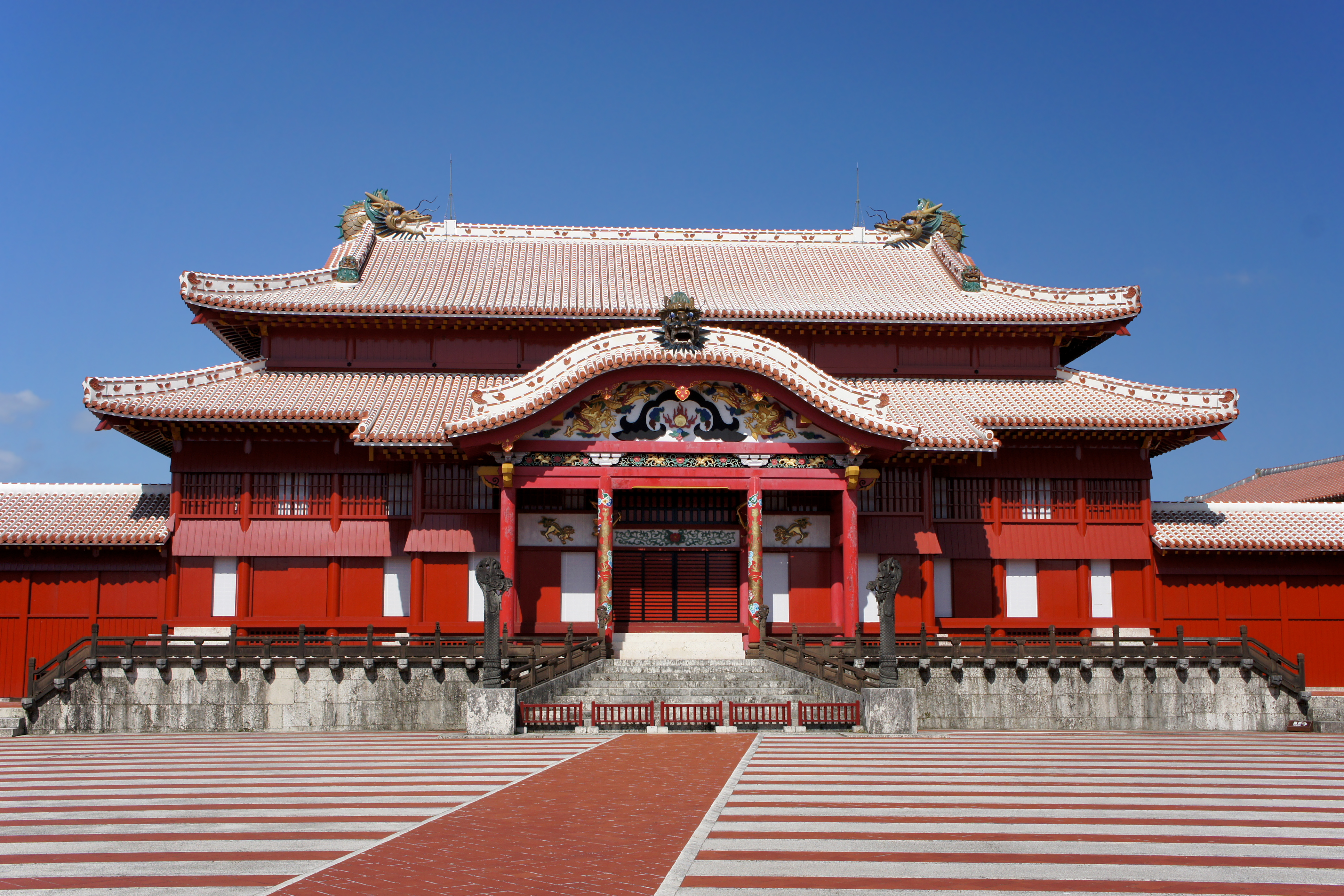
For almost five hundred years, from 1429 to 1879, the independent state of Ryukyu existed here — with its own king, its own diplomacy and trade ties with China, Korea and Southeast Asia at once, long before the island became part of Japan. The capital and spiritual centre of the kingdom was the city of Naha, and its heart was Shuri Castle, the residence of the Sho dynasty, included by UNESCO on the World Heritage list. Over its history the castle burned several times and was rebuilt — and on the night of 31 October 2019 it burned again: the fire completely destroyed the main three-tiered Seiden hall and five other buildings. Restoration is under way right now, and this is a rare chance to see with your own eyes how a monument is restored bit by bit, rather than just photographing a finished postcard.
Another, far heavier page of history is the Battle of Okinawa in the spring of 1945, the bloodiest battle of the entire Pacific campaign, which took the lives of a huge number of soldiers and civilians of the island. Every year on 23 June, the day organised fighting ended, a memorial ceremony is held in the Peace Memorial Park in the city of Itoman — the Cornerstone of Peace preserves the names of all the dead, regardless of nationality. Going there is not the most “touristy” but perhaps the most honest way to understand what this island went through before it learned to smile again.
Water that seems to exist in a different palette
And Okinawa really does have something to smile about. Here are some of the best diving spots in all of Japan — water visibility at the Kerama Islands reaches 30 metres, and the colour changes from emerald in the shallows to deep cobalt above the reef — the locals call this shade “Kerama blue”. From spring to autumn manta rays come here, off the coasts of Ishigaki and Iriomote you meet reef sharks and hammerheads, and in season — whale sharks. For those not ready to dive with a tank, a mask and snorkel are enough: the coral gardens at the Kerama and Zamami islands are visible right from the surface.
Furuzamami Beach on Zamami Island (Kerama) is one of those places worth taking a ferry for: the whitest sand, a shallow lagoon for swimming with children and a coral reef twenty metres from shore for those who need a bit more adrenaline. On the main island of Okinawa the best-known beach is the artificial Emerald Beach next to the Churaumi Aquarium, which was also named among Japan’s top 100 beaches by the Ministry of the Environment.
The cuisine of an island where it is not customary to die young
Okinawa has long and deservedly borne the title of the “island of the long-lived” — here is one of the highest concentrations in the world of people who live to a hundred with a clear mind. The secret is partly in the unhurried rhythm of life, partly in the food: the local cuisine, which Okinawans themselves call “chanpuru” (from an Indonesian word for “mixture”), is built on vegetables, tofu and a minimum of processed food. The calling card of the table is goya chanpuru: fried bitter melon with egg and tofu, a dish with a characteristic, unlike-anything-else bitterness that you quickly get used to and then miss. Okinawa soba is not at all the noodle of the rest of Japan: a thicker wheat noodle in a light pork broth, a dish in its own right with its own culture of serving. And in the evening — a glass of awamori, a strong rice distillate that for centuries was served at the table to Chinese envoys and Japanese lords, when Ryukyu still conducted its own diplomacy.
Which island to choose
“Okinawa” is not one island but an archipelago, and the route changes radically depending on the choice of a specific spot.
- Okinawa (the main island). Here are Naha with Shuri Castle, the American military bases (a noticeable part of the island’s everyday landscape), the Churaumi Aquarium — one of the largest in the world — and convenient logistics: an international airport, hotels for any budget, car rental without complications.
- The Kerama Islands. 30–50 minutes by ferry from Naha — that very “Kerama blue”, world-class diving and snorkelling without having to fly anywhere else. An ideal option for a one- or two-day excursion from the main island.
- Miyako. A flatter relief, but for that very reason — some of Japan’s best dive sites by underwater landscape: caves, arches and tunnels in limestone. Its own airport, direct flights from mainland Japan.
- Ishigaki and the Yaeyama archipelago (including Taketomi and Iriomote). The wildest and most remote part of Okinawa: mangrove thickets, kayaking, the jungles of Iriomote with an endemic wild cat that almost nobody has seen alive. People come here who have already been to the main island and want to go deeper.
For a first trip it makes sense to take the main island plus Kerama for a day or two — that is enough to understand whether you will come back for Miyako and Yaeyama as a separate journey.
The sound of the island: sanshin, eisa and drums at sunset
Even before you see the first beach, Okinawa gives itself away by sound — the thin, rattling picking of the three-stringed sanshin, an instrument with a snakeskin-covered body that you will hardly meet in mainland Japan. Local ballads are sung to it, and to it in the evenings on squares people dance eisa — an energetic ritual dance with big taiko drums, originally performed to see off the souls of ancestors during the Obon festival, and today the calling card of any Okinawan celebration and part of weddings, shop openings and simply a good mood on Fridays. If you are lucky enough to find yourself in Naha or on one of the islands in the middle of a local festival, it is worth any rearranged plans: the drum rhythm carries across the neighbourhood, passers-by spontaneously join the dancers, and tourists for a second stop feeling like tourists.
Another detail that immediately gives away “not quite Japan” is the stone guardian lions, shisa, on the roofs of almost every house: a pair of figures by the entrance, one with an open mouth (scaring off evil spirits), the other with a closed one (keeping luck inside). The souvenir version of the shisa is one of those rare fridge magnets that you are not ashamed to bring home, precisely because there is a genuine belief behind it rather than a tourist conveyor belt.
A neighbourhood that is hard not to notice
An honest conversation about Okinawa is impossible without mentioning what catches the eye already on the road from the airport: a significant share of the American military bases in Japan is concentrated precisely here, on a relatively small territory. This is not an abstract political detail but part of the everyday landscape — low-flying military helicopters, a barbed-wire fence in the middle of a residential neighbourhood, English-language signs near the bases. The topic remains a subject of debate within Japan itself, but for a tourist it is essentially just one more layer in the island’s already multilayered identity — the kingdom, the tragedy of war, the American presence and a stubbornly alive Ryukyuan culture coexist here at once, and that is what makes Okinawa far deeper than just “the beaches of Japan”.
A sample 5-day route
If you have not been to Okinawa before and don’t know where to start, here is a working framework for a route that you can adjust to yourself:
- Day 1. Arrival in Naha, check-in, in the evening — the Kokusai-dori district with the market and the first goya chanpuru of your life.
- Day 2. Shuri Castle and the park around it, the Okinawa Prefectural Museum — compact, but in a couple of hours it gives more context about the Ryukyu Kingdom than a dozen articles on the internet.
- Day 3. A ferry to the Kerama Islands — snorkelling or diving in “Kerama blue”, Furuzamami Beach on Zamami, return to Naha in the evening.
- Day 4. The Churaumi Aquarium and Emerald Beach in the north of the main island, on the way — the Peace Memorial Park in Itoman, if you want to add a more serious, thoughtful stop to the route.
- Day 5. A free day of your choice: another beach, renting a car and driving along the coast, or — if the schedule allows — a short flight to Miyako to take a glimpse of the farther archipelago.
How to get there and how much it costs
There are no direct flights from Russia to Japan — people fly with a connection in Istanbul, Dubai, Doha or via China to Tokyo or Osaka, and then on a domestic flight to Naha (the Tokyo and Osaka airports are connected to Okinawa by many flights of local carriers, including low-cost ones). A Japanese visa for Russians is arranged in advance and free of charge through the VFS Global visa centre — the process is the same as for a trip to any other part of the country.
The budget varies noticeably depending on whether you limit yourself to the main island or add ferries and domestic flights to Miyako and Yaeyama. Roughly, a week per person, including mid-range accommodation, food, transport and one or two diving or snorkelling trips, costs 60,000–150,000 ₽ excluding the international flight to Japan.
When to go
The golden time is late spring (April–June) and autumn (October–November): the water is already or still warm enough for swimming, humidity is lower, and the typhoon season, which lasts from June to October with a peak in August–September, has either not begun or has already ended. A typhoon can completely stop ferry service to the remote islands and flights for one to three days — if the trip is tied to fixed dates, build this into the plan and don’t schedule a flight to a remote island right up against your flight home. Winter (January–early March) is the cheapest and least crowded time, but the water for swimming is already cool, although for diving in a wetsuit this is no obstacle.
FAQ
Do I need a separate visa for Okinawa? No, Okinawa Prefecture is part of Japan, and the ordinary Japanese visa applies; no separate permit is needed for the archipelago.
How many days should I allow for Okinawa? At least 4–5 days for the main island and Kerama; if you want to add Miyako or Ishigaki — another 3–4 days for each, because travelling between the far islands eats time.
Is it true that people live longer in Okinawa than anywhere else in the world? The island really is one of the world leaders in its share of the long-lived, although in recent decades the statistics have moved somewhat closer to the Japanese average — the change of diet among younger generations shows. But the traditional cuisine that many come here for is still alive in cafés and at markets.
Can I reach Okinawa without a domestic flight in Japan? Technically you can by ferry from Kagoshima, but it is long and irregular; it is more practical to fly a domestic flight from Tokyo or Osaka — there are noticeably more options in both price and schedule.
Is it worth going to Okinawa not for the beaches but simply to see a different Japan? Yes — this is exactly the case where the architecture, the cuisine, the language (the local Ryukyuan dialect is alive in songs and part of everyday speech) and the very pace of life let you feel a country that had a completely different history from mainland Japan.
Prices and conditions may change — check the current information before your trip.