Russian cards do not work in Japan. How much cash to bring, where to withdraw yen without surprises and why you need a Suica — with an honest budget split.
Japan’s currency is the yen, and it is one of the few developed countries where cash still decides things. You can eat a 900-yen ramen with a contactless card in Shinjuku and the same day be left without lunch in Kyoto, because the noodle shop accepts only coins. This article is about the money itself: what yen look like, how much to bring, where to exchange and withdraw, and how to top up the Suica and Pasmo IC cards. Which cards work at all is covered in the article which cards work in Japan, and the general payment scheme in the piece how to pay in Tokyo and Japan.
- Currency: the Japanese yen, JPY, symbol ¥. Dollars and euros are not accepted in shops — they are exchanged for yen.
- Rubles are not quoted in Japan: exchange them at home for dollars or euros, and get yen on the spot.
- Russian cards do not work; you need a foreign card and cash.
- Withdrawing yen: 7-Bank ATMs (7-Eleven) and Japan Post Bank.
- IC cards Suica, Pasmo, ICOCA: transport and small purchases; a physical card is topped up with cash.
- Declaration: over 1,000,000 yen in cash and payment instruments.
What currency is used in Japan
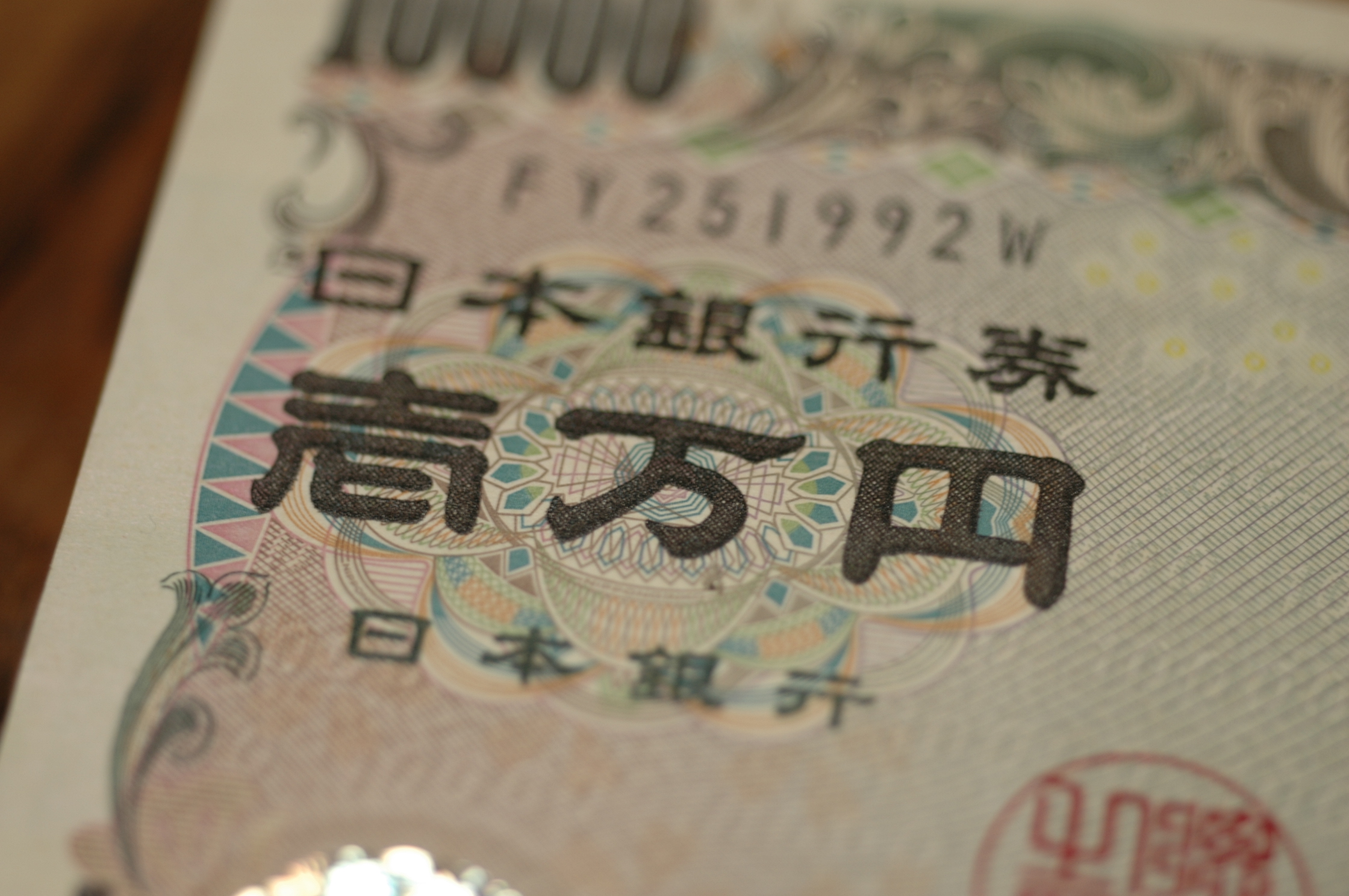
The Japanese yen (円, ¥, code JPY) has been in use since 1871. There are no subunits: the smallest coin is 1 yen, so the amounts on price tags look large (a cup of coffee is a few hundred yen, lunch about a thousand). Coins: 1, 5, 10, 50, 100 and 500 yen. Banknotes: 1,000, 5,000 and 10,000 yen; the rare 2,000-yen note is almost never seen. The 5- and 50-yen coins with a hole in the center are a Japanese peculiarity. New banknotes have been issued since July 2024, and the old ones remain in circulation, so when exchanging and withdrawing you may receive both.
The yen rate changes daily, so this article has no fixed rate. Check the current rate in your bank’s app or at the exchange point before exchanging: the difference between the “official” rate and what you get depends on the exchange point.
A cash country: where you definitely need yen
Cards are accepted in hotels, department stores and chain venues in Japan, but there are places where you can’t do without yen:
- small noodle shops, snack bars and family cafés, especially outside tourist areas, often with an ordering machine that accepts cash only;
- temples and shrines: entrance fees, donations, amulets;
- markets, souvenir shops, vending machines;
- coin lockers at stations (some also accept an IC card);
- ryokan and family guesthouses (check when booking);
- rural buses and small stations.
Any trip around the country without cash risks turning into a search for an ATM. That does not mean a card is not needed: a foreign card covers hotels, shops and big expenses. Pick the balance according to your route: in Tokyo and Osaka a smaller cash reserve is enough, in rural areas and when visiting temples a larger one.
How many yen to bring
There is no single norm. As a guideline, keep on hand cash for one to two days of expenses — transport, food, topping up the IC card, lockers, temples — and withdraw the rest as needed. If you have a foreign card, the budget is often split roughly 30% in cash and 70% by card; this is not a rule but a starting point for planning. If you do not have a foreign card, you will have to bring the whole sum in cash (in dollars or euros to exchange), and that is also a workable option: Japan is considered a safe country with a low level of street crime, but it is still worth spreading your money across different places. A budget by day and city is in the article how much money you need for Japan.
Where to exchange money for yen
- At home. Don’t exchange rubles directly for yen: in Japan it is impossible, and at home it is usually unfavorable. Exchange rubles for dollars or euros.
- At the airport. The rate is usually worse than in the city, but for the first days (transport to the hotel, dinner) it makes sense to exchange a small amount.
- In the city. Banks, large hotels and licensed exchange points. Take your passport — you need it for exchange. Compare the rate and the fee in two or three places.
- At an ATM. If you have a card from a foreign bank, withdrawing yen at an ATM is often easier and more favorable.
Do you need a “there and back” conversion? It is better to spend leftover yen at convenience stores and the airport (or keep them for the next trip), because converting back loses money. The balance on a Welcome Suica is not refunded — keep that in mind.
Where to withdraw yen
The most convenient ATMs for tourists are 7-Bank in 7-Eleven stores (there are more than 20,000 of them in the country): they accept foreign cards, work around the clock and have an English interface. Limits and fees depend on the card, so see the exact terms on the bank’s website. Japan Post Bank ATMs at post offices also accept foreign cards but work during branch hours. Ordinary ATMs of Japanese banks often do not recognize foreign cards. More on which cards and how they work in ATMs at all is in the piece about working cards. Choose to be charged in yen and decline the ATM’s conversion rate.
Suica, Pasmo and ICOCA IC cards
An IC card is an electronic travel pass that also serves as a wallet for small purchases. Suica is issued by JR East (the Tokyo region), Pasmo by Tokyo’s private and municipal carriers, ICOCA by JR West in Kansai. Since 2013 Japan’s main IC cards have been merged into a common network, and any of them works across the country. There is no need to buy an ICOCA separately for Kansai.
| Option | Features |
|---|---|
| Suica / Pasmo (physical) | 500-yen deposit; machines at stations; topped up with cash |
| Welcome Suica | A tourist card with no deposit, 28 days; the balance is not refunded |
| Welcome Suica Mobile | An iPhone app, 180 days, top-up via Apple Pay |
For Android without a Japanese phone the app option is, as a rule, unavailable, so people take a physical card. Topping up mobile Suica with a foreign card depends on the bank and the device — check in the app before you fly. You can pay with an IC card at convenience stores, vending machines, many cafés and lockers, and on transport. Shinkansen bullet trains require a separate ticket — more in the article transport in Japan. A physical card is topped up with yen — for example at machines at stations and at 7-Bank ATMs.
Convenience stores as a financial center
7-Eleven, Lawson and FamilyMart accept IC cards and foreign cards, and there is usually an ATM inside. If you are unsure where to withdraw yen or what to pay with, the answer in most cases is the nearest convenience store. What to buy there and how the chains differ is in the article convenience stores in Japan.
Tipping, tax free and departure
Tipping is not customary: money left on the table may be returned to you as forgotten. In a restaurant a service charge is sometimes added, and it is already in the bill. Tax refunds for foreign tourists are changing: the conditions from November 1, 2026 are described in the article tax free in Japan from November 1, 2026, and the departure levy in the piece the Japan departure tax. On entry and exit you must declare cash and payment instruments over 1,000,000 yen. From Russia you may take out no more than 10,000 dollars in equivalent without a declaration.
Next, study the visa for Japan, the Japanese’s money-saving hacks, etiquette and seasons. Connectivity on the spot — an eSIM for Japan.
Frequently asked questions
What is the currency in Japan? The Japanese yen (JPY, ¥). Other currencies are not accepted in shops.
Can I pay in dollars in Japan? No. Dollars must be exchanged for yen at a bank, an exchange point or a hotel.
Can I exchange rubles for yen in Japan? No, the ruble is not quoted there. Exchange rubles for dollars or euros at home, and for yen in Japan.
How much cash should I bring to Japan? At least for one to two days of expenses; withdraw the rest as needed. For trips to rural areas and temples, increase your cash reserve.
Where can I withdraw cash with a foreign card? At 7-Bank ATMs (7-Eleven stores) and Japan Post Bank. Ordinary ATMs of Japanese banks often do not accept foreign cards.
Can I go to Japan without a foreign card? Yes, but you will have to bring the whole budget in cash in dollars or euros and exchange it on the spot. Put the money in different places.
What is Suica and how does it differ from Pasmo? They are two IC cards from different operators; they work the same way and are interchangeable across the country.
Do I need to leave a tip? No, it is not customary in Japan.
How much cash can I bring into Japan? Up to 1,000,000 yen in equivalent without a declaration. More must be declared.
Do convenience stores take cards? Yes, the large chains accept foreign cards, IC cards and cash.
Current as of October 2026. Rates, ATM limits and bank rules change — check before your trip.