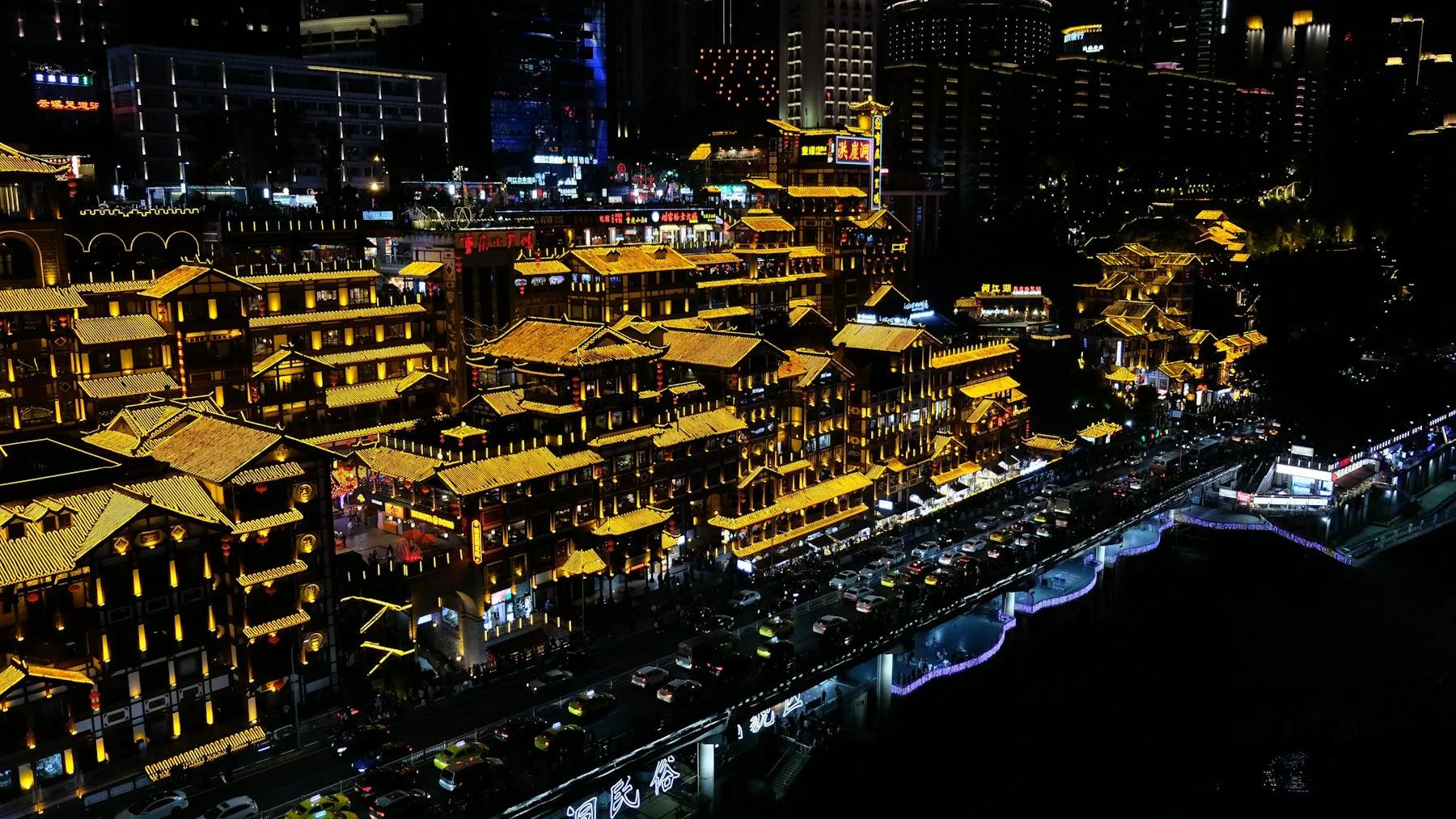
How to choose tours in Chongqing: Hongyadong at night, the metro through a building, Wulong natural bridges, immersive dinners and hot pot, with honest tips.
Chongqing is a city that cannot be described until you have walked through it. It climbs hills, houses stand on top of each other, bridges curve over two rivers, and the metro suddenly goes into a multi-storey building and emerges from the eighteenth floor. In the evening on the bank of the Jialing Hongyadong flares up like a temple from a dream, and in a pot on the table a broth boils so hot that tears flow by themselves. It is a cyberpunk city and at the same time very alive, warm and noisy. But it is here that many get lost: there are few tours, the names are unclear and distances are deceptive. Let us work it out: what to see in the city, where to go for a day beyond it and how not to break down at hot pot. We collected offers from the Trip.com catalogue — with duration, language and cancellation terms.
- In the city — Hongyadong in the evening, the metro through a building, a cable car over the Yangtze and the “Eye in the Clouds” viewpoint.
- Beyond the city — Wulong: natural bridges, gorges and the Wujiang River (10–12 hours).
- For the evening — the Chongqing 1949 theatre and immersive dinners in the style of the Ba kingdom.
- Multi-day programmes of 2–5 days, including in Russian and combined with Chengdu.
Hongyadong, the metro through a building and the cable car
If you have an evening in Chongqing, start with the Hongyadong waterfront. The multi-storey complex on the slope, hung with lanterns, glows gold, reflects in the river, and inside it smells of fried sesame and sweet tea. About this place in detail see our article Hongyadong in Chongqing; nearby stands the old house Kuimeilou. And the “train through a building” is the famous Liziba station where the metro passes through a residential building: more in the article the train through a building in Chongqing. For crossing over the river there is a cable car over the Yangtze (rating 4.2): the cabin floats over the water, and underfoot are the river and shipping. For a view from above the “Eye in the Clouds” viewpoint (4.8) fits. The city looks best in the evening and after rain: lights reflect on wet pavements and everything looks like a frame from a film.
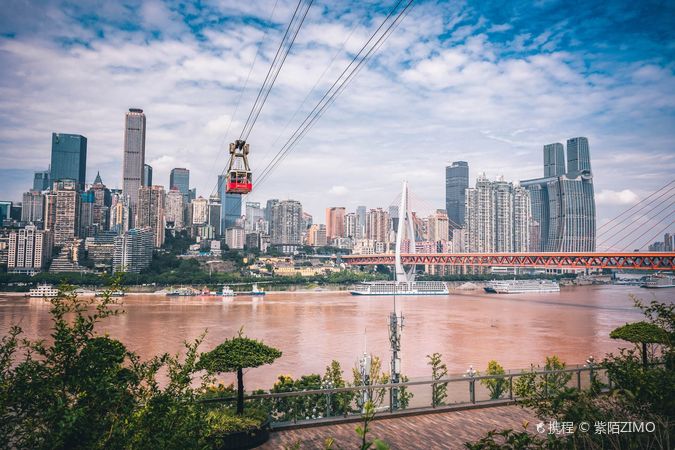 Tour from the article · TicketYangtze River CablewayCheck dates →Live price · Trip.com
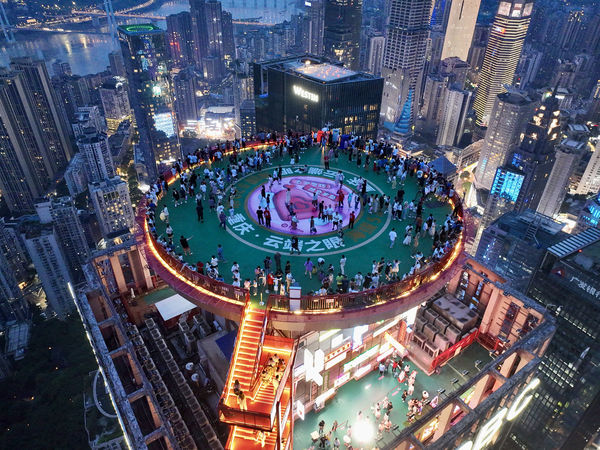 Tour from the article · Ticket"Eye in the Clouds" viewing platformCheck dates →Live price · Trip.com
An evening in the style of the Ba kingdom
In Chongqing the evening is a performance of its own. The Chongqing 1949 theatre (rating 4.8) and Chongqing 1949: the revolving stage (1.1 hours, 4.8) take you to the city of the mid-last century; spectators walk through the scenery while actors play around them. For gastronomy an immersive banquet in the style of the Ba kingdom (3 hours, 4.8) and a gastronomic show in palace style — 2.5 hours, in Russian (4.7) fit. These are evenings when food turns into a performance and you forget to look at the clock. Book in advance: in season seats go fast.
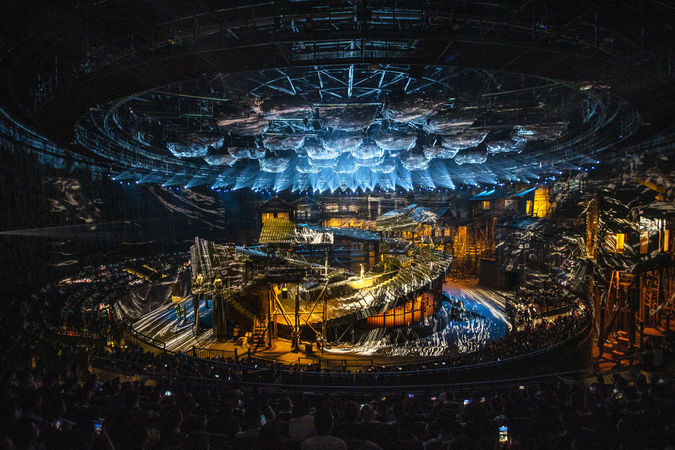 Tour from the article · TicketChongqing 1949 TheaterCheck dates →Live price · Trip.com
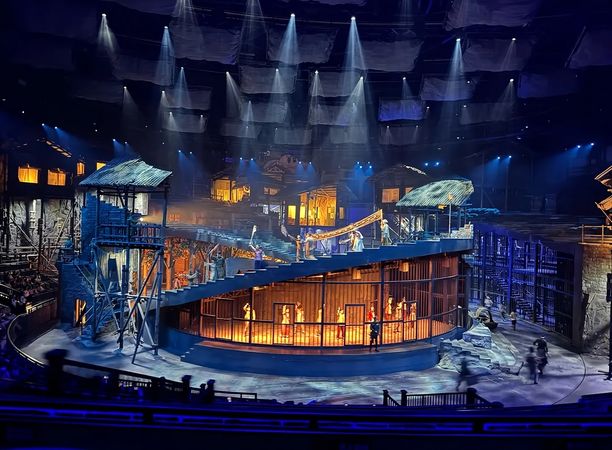 Tour from the article · Ticket"Chongqing 1949": the revolving stageCheck dates →Live price · Trip.com
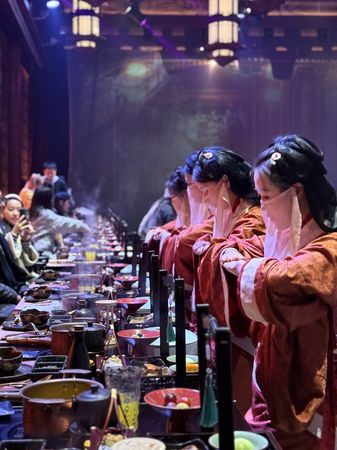 Tour from the article · ExcursionImmersive banquet in the style of the Ba KingdomCheck dates →Live price · Trip.com
Wulong: natural bridges and the Wujiang River
If you have a whole day, go to Wulong — a karst area two to three hours from the city. Huge stone arches, gorges where “Transformers” was filmed and the turquoise Wujiang River with boats. Options:
- Wulong: the Tiansheng bridges, Longshuixia and the Wujiang River — 10.5 hours (rating 4.9);
- Wulong: a Wujiang River cruise for a group of up to 8 — 10 hours (4.9);
- Wulong: a small tour with a panoramic view — 12.3 hours (4.9);
- Wulong and the town of Qiyu Jiulicheng with a cruise — 10.2 hours (4.9).
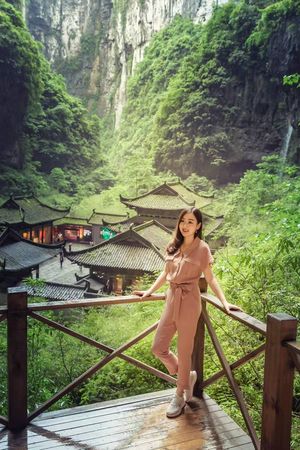 Tour from the article · ExcursionWulong: Tiansheng Bridges, Longshuixia and the Wujiang RiverCheck dates →Live price · Trip.com
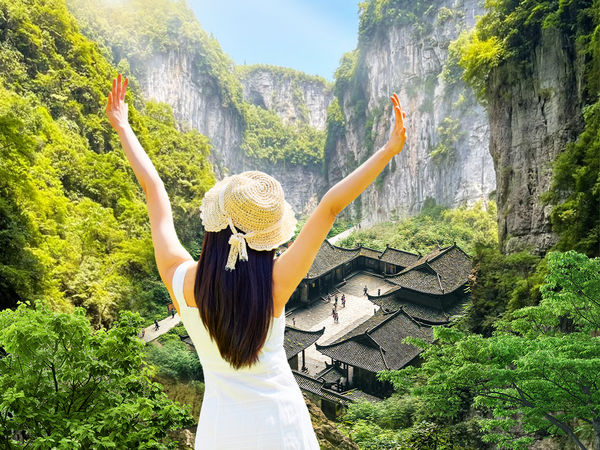 Tour from the article · ExcursionWulong: Wujiang River cruise for a group of up to 8 peopleCheck dates →Live price · Trip.com
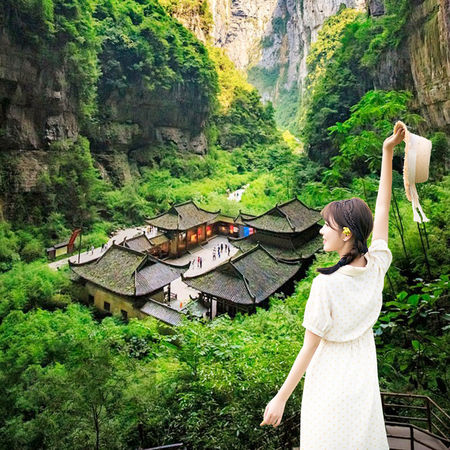 Tour from the article · ExcursionWulong: short tour with panoramic viewsCheck dates →Live price · Trip.com
For an independent trip there are tickets to the three natural bridges of Wulong (4.6) and the Wulong Karst tourist area (4.6). The day is long but worth it: nature here is on another level. Bring water, comfortable shoes and an umbrella: it rains in the mountains.
Pandas and the zoo
For getting to know pandas and family rest there is the Chongqing Zoo (rating 4.7). Pandas are better watched in the morning when they are active, and in heat they more often sleep in the shade. If you want to see pandas up close and without fuss, think about a trip to Chengdu: more in our article tours from Chengdu.
Multi-day programmes
To avoid assembling the route yourself you can take a ready programme: Chongqing in 2 days: pandas, the metro through a building and the cable car in Russian (rating 5.0), Chongqing and Wulong in 4 days (5.0), Chongqing in 4 days: Hongyadong, the train through a building and night views (in Russian and Chinese), Chongqing and Dazu in 2 days: Baodingshan rock carvings, and combinations with Chengdu: in 5 days: twin cities and pandas and Sanxingdui. For those who want a Yangtze cruise there is a Chongqing — Yichang Three Gorges cruise in 6 days; more about it in the article Yangtze cruise: the Three Gorges.
Hot pot: how not to get burned
Chongqing is the homeland of hot pot, and no one leaves here without it. In the centre of the table stands a pot with boiling red broth in which chilli and Sichuan pepper float, from which lips go numb. You put in meat, vegetables, tofu and mushrooms, quickly take them out and dip them in sesame oil with garlic. If you are not used to spice, ask for “wei la” — mildly spicy, or ask for a divided pot where one side is broth without pepper. Take water and warm milk: they relieve the burn best. Do not be shy to eat slowly: hot pot has no “correct” speed, and the best conversations happen at it.
Night on the bridges: when the city turns on its lights
The strongest impression of Chongqing comes around nine in the evening. The river is black as glass, bridges glow with golden lines and hillsides flare with thousands of windows. Come to the water at Hongyadong or stand on a bridge: boats sail below, cars hum above and around it smells of fried tofu and hot oil. It is a city in which you want to walk aimlessly, stop, photograph, then drink a glass of cold water and walk on. Do not hurry back to the hotel: after ten the lights burn no weaker, and there are fewer people.
If it starts to rain
Chongqing is often wrapped in haze and rain, and it is not an obstacle but a special beauty. Wet asphalt reflects lights, bridges drown in fog and steam above pots in street eateries rises in thick clouds. In rain theatre programmes, immersive dinners and hot pot work great: hot broth warms better than any tea. For walks bring a raincoat and shoes with a good sole: stairs are slippery and railings cold. Photos in the rain come out especially cinematic.
Safety and small things
Chongqing is safe, but it has its quirks. Stairs and slopes tire, so do not neglect elevators and escalators. In the metro at rush hour it is crowded: keep your bag in front. Taxis and apps work well but do not always understand English, so save the address in Chinese. A passport is needed to enter many places, and cash for small shops. And do not forget water: spicy food and heat dehydrate quickly.
Food beyond hot pot
Chongqing is not only hot pot. Try xiao mian noodles with spicy sauce, grilled chuan-chuan skewers, spicy chicken with pepper and sweet rice balls. The best places are small eateries near the metro where locals eat: a queue is a good sign. Bring small money or a payment app, do not be shy to point and smile. And if the spice is too strong, wash it down with warm soy milk — it saves better than water.
What you can skip
Honestly: in Chongqing you do not need to do everything. If you have two days, leave Wulong for a third, and in the city choose Hongyadong, the metro through a building and an evening of hot pot. Many viewpoints are alike, so one or two are enough. And do not try to walk: the city is hilly, there are many stairs, and distances on the map are deceptive. Take the metro and taxis and save your legs for evening walks.
Hills, stairs and weather
Chongqing is a vertical city: to get from one street to another you sometimes need to take an elevator or climb twenty floors of stairs. Bring comfortable shoes, try not to plan more than three points a day and do not neglect elevators and escalators. The weather is changeable: summer is hot and muggy, winter damp and foggy, spring and autumn are the nicest. In rain the city is especially good for photos, but it is slippery, so hold the railings. Fog in the evening wraps the bridges and the lights become soft, as in an old film.
With children and elderly parents
For children Chongqing is a real amusement park: a train that goes through a building, lights, a cable car and pandas. But stairs tire: with toddlers bring a stroller and plan transport, and for elderly parents choose elevators and taxis. Hot pot for children is better without pepper; bring water, wipes and some snacks. Do not forget your passport: it is needed for metro tickets and entry to some places.
When to go and what to bring
The best time for Chongqing is spring and autumn: warm and without heat. In summer it can reach forty degrees, and in winter it is damp and grey. Bring light clothing, an umbrella, comfortable shoes and a power bank. Payment apps and cash are needed for small shops; without internet in China it is hard, so take care of connection. More about the city in the articles Chongqing: what to see and Cyberpunk Chongqing: 2–3 days; about hotels in the guide to hotels in Chongqing; and on holidays take tickets in advance, having read the Golden Week guide.
How to spread three days
- Day 1 — the city. The metro through a building, the cable car, Hongyadong in the evening and hot pot.
- Day 2 — Wulong. Natural bridges and the Wujiang River.
- Day 3 — pandas and a performance. The zoo by day, Chongqing 1949 in the evening.
Frequently asked questions
How many days does Chongqing need?
Two to three days are enough for the city; with Wulong, three to four.
Are there tours in Russian?
Yes: the two-day programme with pandas and the gastronomic show run in Russian; the rest more often in English.
Do I need to book in advance?
In season and on holidays seats for performances and popular tours are better booked in advance.
Useful links
- Tours in Chongqing
- Chongqing: what to see
- Hongyadong in Chongqing
- Hotels in Chongqing
Chongqing is not about seeing everything but about getting lost in it: in stairs, lights and a broth that burns harder than you expected. It is in this lostness that you will feel the city is alive.
Current as of November 2026. Schedules, tickets and offer conditions change: check them on the tour page and on Trip.com.
Tours and tickets from this article
Live dates, availability and the final price are on Trip.com. These are affiliate links — the price does not change for you.
Tour from the article · TicketYangtze River CablewayCheck dates →Live price · Trip.comTour from the article · Ticket"Eye in the Clouds" viewing platformCheck dates →Live price · Trip.comTour from the article · TicketChongqing 1949 TheaterCheck dates →Live price · Trip.comTour from the article · Ticket"Chongqing 1949": the revolving stageCheck dates →Live price · Trip.comTour from the article · ExcursionImmersive banquet in the style of the Ba KingdomCheck dates →Live price · Trip.comTour from the article · ExcursionWulong: Tiansheng Bridges, Longshuixia and the Wujiang RiverCheck dates →Live price · Trip.com